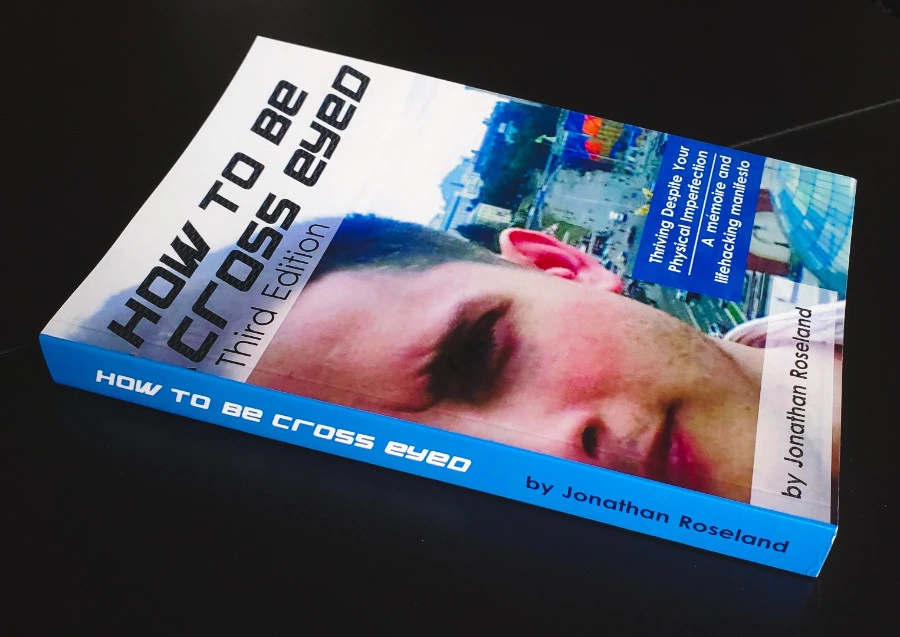
The Definitive Guide to Escaping the Mediocrity Trap
You’ve been sold sweet lies by the mainstream personal growth pop culture.
That you should “just be yourself.” That you should “go with the flow” of life more. That you can “manifest” the life you want via positive thinking. That you should “be kind to yourself” no matter what. That obsessive self-improvement feeds an inherent psychological defect somewhere in the murky depths of your being. That you should do less to get what you want. These lies are comforting, and perhaps they work for some people. But not for me, and they probably won’t help you. Those peddling them, for profit, or just because they are popular, underestimate just how detrimental a physical imperfection can be (we’ll explore this more in chapter 2). Doesn’t it seem that these bland platitudes often come from people - authors, influencers, gurus - who are conventionally attractive (or were for decades of their lives)? They are almost certainly also underestimating the significant advantage of being good-looking while misattributing their success to personal growth principles that appeal to the natural human bent toward laziness.If you, like me, were cursed with a conspicuous physical imperfection, you must lifehack relentlessly. You need the underground, unconventional, barely legal, ride-the-ethical-edge shortcuts to what you want. If you’re not occasionally called a “control freak,” you’re underestimating the amount of agency you need to bring to bear in life. And when you’re called that, just do what I do: smirk.You need to bring sharper tools to the project of architecting a beautiful life.
As its subtitle implies, you don’t have to be cross eyed to read this book, but it is also not for a general audience of people interested in personal development. It’s for that one or two percent of the population that has a conspicuous physical imperfection.
Which I fall into. I’m cross eyed; if you’re reading this, perhaps you are too. I have fairly conspicuous strabismus, which you can see here…
I think this uniquely qualifies me to write a book on thriving despite having a physical imperfection. There are certainly people out there with more conspicuous physical imperfections—who have it worse than I do. However, the eyes are said to be the windows to the soul; they are indeed a part of nearly every important human interaction. Not having normal eyes has been a disadvantage that I’ve needed to develop a specific set of skills and life strategies to overcome.
I was discussing this book with my lovely fiancée, and she asked me if the book’s purpose was to help people with physical imperfections boost their self-esteem.Not really.This book is about the lifehacks that I’ve employed over the past 15 years: strategies, methods, and tools that really work to help you overcome the challenge of a physical imperfection and thrive. These things will likely improve your self-esteem, but they will also work if you have low self-esteem, or no self-esteem (or too much self-esteem — as I’m sometimes accused of having). Self-esteem is not my primary focus; there are better books on the subject. My focus is on things that work.
This is not your typical self-help book…
I don’t share my life on social media just to show off —actually, I hate our pop culture of digital narcissism and pixel-powered jealousy — I share because anyone can write anything online. Sharing photos and vlogs of my awesome life is just the best way of proving that my lifehacking philosophy actually works!
I’ve had a pretty interesting life. I’ve dated a politician’s daughter in Medellin, Colombia. I hung out with spies in Kyiv, Ukraine. I’ve almost died underwater twice, I participated in a bank robbery, and I lost my virginity to a spy (yes, really! That story is in my second book) I’m a pretty good storyteller so I think a memoir is the right format for me to write a book as opposed to the problem>generalization>platitude>strategy formula that most personal development books follow.
About the third edition
This is actually a slimmer version of the book I first published in 2018, which will serve you better.
Since then, I’ve become a real stickler for good grammar. As a few reviewers pointed out, the original book contained more than a few glaring grammatical imperfections. I’ve done my best to correct those here, with the one remaining that cross eyed is actually supposed to be hyphenated (cross-eyed). These two words appear so many times in this work, reflecting my own persistent physical imperfection, that I’ll leave them as they are.
The original book contained numerous lurid tales and details of my life as a seducer across three continents. This element of the book was there to illustrate how someone might overcome their conspicuous physical imperfection and enjoy a lively dating life by employing an uncommon set of social dynamics strategies. But this may sully the empowering message of the book for some; it may come across as bragging, or compel female readers to throw the book away in disgust. So I’ve cut some chapters and stories.If lurid tales and details aren’t so off-putting to you, more recently, I wrote a book for men specifically about dating, seduction, and ultimately finding meaning in the enduring embrace of a virtuous woman. Gents, if you’re frustrated with dating or the quality of the women that you find yourself entangled with, read Don’t Stick Your Dick in a Blender: How to meet a nice girl instead - from a tantric husband with a better sex life than you!
I was banned as an author by Amazon without a cogent explanation of what in my work was unacceptable. This is doubly frustrating, as I had made a genuine effort to adhere to their content guidelines in the manuscripts I uploaded. The book before you is the uncensored edition. I make no effort here to appease the nonsensical and vague sensitivities of our big tech overlords!
Getting the most out of this book
A few guidelines for high-leverage reading…
* I’m a big fan of digital books because it’s so easy to highlight, take notes, and bookmark resources that you want to implement.
* You’ll notice that the book consists of many short chapters, as opposed to a few longer chapters. This is to make it more consumable and easier for those who may want to jump between sections.
* Due to the book’s storytelling format, I think you’ll enjoy it more if you read it from cover to cover. However, it has been modularized, so you won’t be totally lost if you skip a chapter or two that doesn’t particularly interest you.
* While listening to audio programs is more convenient and allows you to multitask, your comprehension does take a hit. I’d encourage you to actually read the book if you can. When I listen to audiobooks that I want to learn something from, I usually listen to the chapters multiple times, and I listen to them while I’m doing something else that’s relatively mindless, like cardio at the gym or commuting.
* You’ll notice that this book contains a lot of discussion of brain science and health. I’ve tried to strike a balance between proving what I’m saying with scientific references and readability. If you’re skeptical of a biohack that I talk about, check out the science I cite or search on my website, where I have hundreds of detailed articles in which I provide significant clinical evidence for anything mentione
You May Also Like

Worship & Wonder Daily Devotional
Westminster Presbyterian Church

Scrolls & Secrets
Scrolls & Secrets

Renascença - Pergunte ao Pe. Paulo Franco
Renascença

Darrers podcast - Ràdio Cubelles
Ràdio Cubelles

Darrers podcast - Ràdio Ciutat de Badalona
Ràdio Ciutat de Badalona

CHURCH on SermonAudio
Various Speakers

Church Unity: The Forgotten Treasure
Paul J. Bucknell

Unter Büchern mit Katrin Schumacher
Mitteldeutscher Rundfunk

Podcast Paris United
Paris United
Baptists on SermonAudio
Various Speakers
Worship & Wonder Daily Devotional
Westminster Presbyterian Church
Scrolls & Secrets
Scrolls & Secrets
Renascença - Pergunte ao Pe. Paulo Franco
Renascença
Darrers podcast - Ràdio Cubelles
Ràdio Cubelles
Darrers podcast - Ràdio Ciutat de Badalona
Ràdio Ciutat de Badalona
CHURCH on SermonAudio
Various Speakers
Church Unity: The Forgotten Treasure
Paul J. Bucknell
Unter Büchern mit Katrin Schumacher
Mitteldeutscher Rundfunk
Podcast Paris United
Paris United
Baptists on SermonAudio
Various Speakers
Community discussion