Show full transcript 1:00 What made me so excited to work on Grockbot is it was the first time for non-coding tasks 1:07 that I felt like I could truly delegate work to AI, not have to think about it, and I would come back and it's done. 1:15 What is it that you think you did that is so different, that made Grockbot so successful? 1:19 It was two early decisions that at the time definitely did not feel obvious, but in hindsight 1:26 I think are critical to what makes Grockbot work. 1:30 Today my guest is Roman Ugarte. 1:33 I'm going to keep this intro very short so we can get right into it. 1:35 Roman was employee number 15 at Cursor. 1:38 He's had a growth for the last two years. 1:40 Most recently he helped incubate Grockbot, a product that I'm obsessed with. 1:44 It has changed my life. 1:45 I use it a hundred times a day for all kinds of things. 1:49 And I think it's safe to say it is the hottest and most exciting new AI product in the world 1:54 right now. 1:54 Roman leads product for GROCKBOT. 1:56 He's been part of the core team from early prototype until today. 2:00 And we get into how it all started, where it's all going, and all the things that 2:03 he and his team have learned since it launched just a few weeks ago. 2:07 With that, I bring you Roman Ugarte. 2:12 Roman, thank you so much for being here and welcome to the podcast. 2:16 Thank you. 2:17 it is great to be here. I am so excited to have you here. I am so hooked on Grockbot. I have it 2:24 over here in my window. I have like 15 bots that I use every day all the time. I went to a meetup the 2:30 other day, a Grockbot meetup. There were hundreds of people there standing room only, people sharing 2:36 all the ways they're using Grockbot. It's very clear to me that you guys have built something 2:41 very special. It's very hard to break through the noise in the AI world. GROCKPOT is the 2:49 hottest AI product in the world right now. That is a very high bar. There's a lot of 2:54 competition for that slot. I've personally noticed I've moved a lot of my use cases 2:58 from co-work and codecs into GROCKPOT just like, just like very quickly, which again 3:04 feels like a really big deal and a very special moment. And so I'm excited to talk 3:08 about so many things. I want to understand how you guys did this, where this came from, 3:12 where this is going, what you've learned about the journey so far. First of all, just nice 3:18 job. Nice, nice work. This is very hard, which you've done. 3:21 Thank you. I mean, I remember onboarding you by hand about a month ago, and I think 3:27 you were skeptical at first, but we're very glad that you've been using it. It's 3:31 been great to see so many people really take advantage of RockBot. 3:36 I'm gonna talk about that onboarding. That was a very interesting element of how this worked 3:41 I actually remember in that onboarding 3:42 I tried it you asked me to do like a let's try something and I was like, okay 3:46 I tried to come up with a tweet to promote my latest podcast episode, so I'm just like 3:51 Come up with a tweet to promote my last episode. That's it and it was actually very good 3:56 It figured out what the hell the last episode was how to promote 3:59 So I actually remember it in the moment being like wow, this is really good 4:02 So, let's actually start with the origin story. 4:05 Where did the start? 4:06 What was kind of the original idea and when did the work on this begin? 4:12 Yeah, it started really as a blank page completely from scratch, built from zero exercise, where 4:23 I think we'd been feeling for a long time that we wanted to build something that wasn't 4:27 just a great product for developers and engineers, 4:31 which is really where we started. 4:33 And I think we've gained a lot of intuition 4:34 about how to build great Asians and useful products that way. 4:38 But what would that product look like for knowledge work? 4:43 And we decided to kind of create 4:46 this very small team internally. 4:48 It was really just a handful of people 4:50 to go off into a cave for about a month 4:52 with the sole objective of build an amazing knowledge 4:56 work product that brings agents to the rest of the company. And I think from the first line of code 5:03 to when we released this prototype internally, it was only about a month. It was like a very quick, 5:09 you know, scrappy prototype that was pulled together. And I think in hindsight, this would not 5:14 have been possible if it had been, I think a much bigger group. I think it took a small 5:19 focus group that was completely isolated from the rest of the company. And I mean that 5:24 There's like a separate part of the office where this team sat private Slack channels and the goal. 5:30 And I think in hindsight, it was a lot of what allowed us to move so quickly on this was we needed to make a lot of micro decisions every day. 5:39 Some things that maybe we'll talk about a bit later that were not obvious. 5:42 We're not really things that we'd done on other product surfaces before. 5:46 And I think if it had been a very big group of people and we were kind of thinking about this six to 12 month long vision, 5:52 we just wouldn't have really gotten to the place 5:55 that we ended up landing at. 5:57 And so that was about a month from first line of code 6:00 to here's a functional, useful product 6:02 that the core team is excited about. 6:05 So then there was a moment of rolling this out 6:07 across the company, 6:08 rolling this out across all the SpaceX Act. 6:11 And so there was an all hands 6:12 where we kind of shared the progress 6:15 that had been made so far. 6:16 There's this brand new product. 6:17 We would love for you to use it. 6:19 And I think what was most encouraging, 6:21 because at that point, we were excited about it. 6:25 I think we were using it constantly, 6:26 but it's easy to use the thing that you built 6:28 and you kind of understand the mechanics 6:30 and what it's good for. 6:31 And so this was a real pressure test with reality. 6:34 Like are people actually going to switch 6:36 from other internal tools, other external tools 6:39 to use GrockBot as their primary agent surface? 6:43 And in that first week after that all hands, 6:47 I mean, I can't even tell you just the out core 6:50 of love for Grogbot from people that maybe you wouldn't expect or from groups of the company 6:55 that maybe you wouldn't expect. People who were daily driving chat GPT or like a chat interface, 7:02 switching all of their day-to-day agentic tasks over to Grogbot as like their primary 7:08 surface for doing work. And so the internal reception was really extraordinary. Can tell 7:13 some kind of funny stories from that week or two period. And then once we saw, 7:19 I think the internal reception, we immediately switched 7:21 into let's get this ready for the world. 7:23 There's a lot of work to do to scale this out 7:25 to millions of users. 7:26 And then that led to the GA launch 7:29 that we had a few weeks ago. 7:31 This episode is brought to you 7:32 by our season's presenting sponsor WorkOS. 7:36 What do OpenAI, Anthropic, Cursor, Replet, Sierra, Clay, 7:40 and hundreds of other winning companies all have in common? 7:43 They are all powered by WorkOS. 7:45 If you're building a product for the enterprise, 7:47 You've felt the pain of integrating single sign-on, skim, R-back, audit logs, and other features required by large companies. 7:55 WorkOS turns those deal blockers into drop-in APIs with a modern developer platform built specifically for B2B SaaS. 8:02 Literally every startup that I'm an investor in that starts to expand up market ends up working with WorkOS. 8:08 And that's because they are the best. Whether you are a seed stage startup trying to land your first enterprise customer or a 8:14 Unicorn expanding globally. 8:16 WorkOS is the fastest path to becoming enterprise ready 8:19 and unblocking road. 8:21 It's essentially Stripe for enterprise features. 8:23 Visit workOS.com to get started 8:25 or just hit up their slack 8:27 where they have actual engineers 8:28 waiting to answer your questions. 8:30 WorkOS allows you to build faster 8:32 with delightful APIs, comprehensive docs, 8:34 and a smooth developer experience. 8:36 Go to workOS.com to make your app enterprise ready today. 8:41 Okay, so many questions. 8:42 One that is really interesting here. 8:45 So obviously there's enthropic open AI. 8:48 They went from this coding agent that they're like, 8:50 holy shit, this is a big opportunity. 8:52 And then they're like, okay, people are using this 8:54 for knowledge work. 8:54 Let's build a knowledge work component. 8:57 So there's co-work evolved out of that within the product. 9:00 And then codex they've invested in, 9:02 let's make this useful for all kinds of things. 9:05 Interestingly, you guys decided, 9:07 okay, we're not going to build this into cursor. 9:10 We're going to start something fresh. 9:12 Was that was that just like obvious from the beginning? Okay. This is not going to work in site cursor the product 9:16 We need to start fresh how but how like controversial was that decision? It was not obvious at all 9:21 I think you're completely right that that was one of those original decisions that 9:25 At the time we had a lot of discussions about and I'm very glad with where we landed and I think to your point 9:31 It being a brand new product that you control every pixel of the experience and you have this 9:37 Consistent vision about where knowledge work is going and it's all contained in this and this new thing 9:40 I think it has contributed a lot to the success, but there were a lot of discussions about, you know, cursor, for example, and some of our coding products, people use it for non-coding tasks all the time. 9:53 And, you know, these coding agents are really excellent at some of these things, but you run into small paper cuts. 9:59 Sometimes the product itself is kind of intimidating to non-technical users. 10:03 There's a brand association with these things. 10:05 And so, I think we evaluated that path, and I think we saw what maybe some of our competitors 10:11 have been doing of, this is all just one surface, you add new tabs for each new form factor. 10:18 And it feels a little cluttered, and I think for users, they can feel that, that this 10:22 was not a single consistent vision of the way that work should work. 10:28 And instead, it's three different visions that all kind of share a screen and you 10:31 can hop between. 10:32 But it is kind of a shipping your org chart style thing that I think users are reacting negatively to and so we decided 10:39 Let's just start completely from scratch. Let's see where we can get from there 10:43 There might be some really amazing opportunities to bring people from other surfaces 10:47 Into this more about native experience 10:49 But it's really important for people to just have like an amazingly simple and amazingly powerful experience 10:54 That is a really valuable lesson for people to take away here 10:58 just that that might be the solution instead of adding 11:01 in complicated and existing product. 11:03 So interestingly codex went the other direction. 11:07 And it's like a different path and a different product, 11:09 but it's interestingly they're like, 11:10 now we're gonna make it one thing. 11:12 So there's, you know, there's many ways to make it work. 11:14 And it also feels like the path you take there 11:16 will kind of lead you, but maybe, 11:18 maybe we'll look back and be like, 11:19 that was not maybe the best idea. 11:21 Something you mentioned that you did 11:22 that is also really unique is this onboarding 11:25 of early users. 11:26 I heard you and your team onboarded two to 300 people manually, including me. 11:33 Talk about why you thought that was necessary and what you learned from that experience 11:37 and just like how long that period was of this kind of manual onboarding. 11:41 I mean you just learned so much and the first few onboardings were pretty painful. 11:47 I'm glad you got a good one, Lenny, but there were some that were kind of rough and 11:52 And we learned a lot and I think it was important for the core team to be in the room for those 11:57 and to just sit on a call for 20 minutes when the computer isn't spinning up or when someone's 12:02 in onboarding and they're just incredibly confused. 12:05 So that immediately after you're like, that can never happen again. 12:08 We need to solve this tomorrow because tomorrow I'm onboarding this person and it needs to 12:12 go better. 12:13 And so there was about a two week period where we were in that mode and onboarded 12:18 a couple hundred people. 12:19 And not only did we learn a lot about the product, I think we didn't really know. 12:25 I think sometimes with these products, there's some group think of ways to use them. 12:30 And I think internally, because people inside of SpaceX AI were just constantly 12:35 sharing tips and tricks for how to use Grockbot. 12:37 Some patterns were starting to emerge that we thought would be useful to the world, 12:42 but we weren't really sure and we definitely didn't want to bias the world. 12:46 Is there an example of that? 12:47 So when we rolled out Grockbot, internally, there was about a week or two where the common 12:53 pattern of the way people would interact with the product was you would have five to 12:57 ten bots. 12:57 In each bot, you would give a different scope, a different domain, and it was kind of shorthand 13:02 for different lanes of work. 13:04 And then around the end of week two, we started to see these messages internally 13:08 in slack of people promoting one of their bots who was a bit of a standout performer. 13:14 And it was like, they're kind of primary personal assistant 13:18 promoting that to their chief of staff. 13:20 And then they would actually mostly talk 13:22 to their chief of staff and the chief of staff 13:23 would fan out all of these tasks to the other bots 13:27 and would kind of manage the team. 13:29 And there are some funny screenshots of people 13:32 like actually telling their, you know 13:34 the bot they're promoting that they're promoted 13:36 and the bot is asking if they get a raise 13:38 and you know, is their token budget higher 13:40 all of these things. 13:41 And we kind of took note of that. 13:43 And I think more of the company started to slightly shift in that direction, 13:46 but it was not the majority of the company. 13:48 People use this product in very different ways. 13:50 And so in some of the onboarding sessions, 13:52 and just from the Early Access program in general, 13:54 we really did not want to lead the witness and say, 13:57 you know, create a Chief of Staff bot, 13:59 here's exactly the way that, you know, 14:01 that Chief of Staff should manage all of the other bots 14:03 and see if Early Access users would get there themselves. 14:07 And we actually did see that many of them did. 14:09 And so then we had a bit more of an opinionated take 14:12 in the product of, this feels like a pattern that's working, this feels like a pattern 14:16 that we should slightly encourage, but it shouldn't be a one-way door. 14:19 And there are a few other examples of internal theses that we really wanted to make sure 14:25 would bear out an actual external usage without us imposing that in the product. 14:29 Is there anything else there, any examples come to mind? 14:32 Yeah, I think another thing we really tried to pay attention to in the early onboardings 14:38 was just how much users wanted to see. 14:43 And I think it is something a bit shocking 14:46 or just different about GrockBot 14:49 when you first start using it 14:50 versus some of the other products that you mentioned, 14:53 where a lot of the internal mechanics 14:56 of how GrockBot works are not shown to the user. 15:00 And the reason for that is we think 15:03 as these models get smarter, 15:05 the same way that your teammates, 15:07 You know you wouldn't ask for second by second updates of exactly all the buttons. They're pressing and websites 15:12 They're going to I think it's too much to ask your bots to do that too 15:16 And I think it's honestly just overwhelming 15:18 And can create more harm than good and so we moved completely in the other direction of you send a message 15:24 You tell your boss to do something it just starts doing it 15:28 It sends you progressive updates as it sees fit and you just see that like typing indicator and the little green, you know active 15:37 active circle kind of slack like that it's it's active it's doing work it'll 15:41 get back to you soon but you don't see the internal mechanics you don't see the 15:44 tool calls you don't see exactly every little click it's making on its own 15:48 computer and we really wanted to take a strong stance that users did not need 15:54 to see all of those mechanics and so that's where we started and we did get 15:57 some feedback that's like I would love to see my bots to-do list I 16:00 would love to see roughly how it's prioritizing tasks and what it's 16:03 doing. And that's great feedback. But it was useful to hear that 16:07 nobody wanted the like long stream of just text streaming 16:11 out and chain of thought sequences. So that also gave us 16:14 more confirmation that that was the right direction. 16:17 The fact that you did two to 300 onboarding calls on us with a 16:20 small team, I knew that I know the team grew over time, but 16:23 just that is a huge time commitment. And you could argue 16:27 a distraction from the building, clearly, not a distraction, 16:30 clearly a core part of the success, do you feel like that's the volume people need to do to 16:38 figure out what actually needs to happen? Well, one thing to emphasize is the early access group 16:44 is not necessarily just people that are highly influential taste makers. You're in this category, 16:53 Lenny, and we certainly wanted to get a lot of your feedback just from being very close to 16:58 the many other products on the market 17:00 and just being a power user of these things. 17:02 But we also wanted to get early access 17:05 to kind of more unconventional profiles 17:07 that we as a company had never really interacted with. 17:10 So one example is there's a coffee shop owner 17:14 that was a friend of a friend through the company 17:16 who had heard about Grockbot and, you know, 17:19 one day somebody on the core team 17:20 had kind of shown them a demo of the test flight 17:23 and got very excited. 17:25 And this coffee shop owner ended up being 17:27 not only amazingly, an amazing power user of GraphBot, 17:31 but also a rich source of feedback for us. 17:35 We have a very lively thread with many, many bugs 17:38 that get identified or feature requests, 17:40 and it's a completely different use case 17:42 of running a small business. 17:43 And so, for example, if the Shopify integration 17:48 was a bit flaky, or if it wasn't writing copy 17:51 for products in a particular way, 17:54 we would get really rich feedback on that, 17:55 Which is pretty different from the type of feedback 17:57 we'd get from dog fooding this internally. 18:00 And so I think it was an important exercise 18:02 for us to check our blind spots and say, 18:04 A, this is going to be a very general product 18:07 that is not just a thing that developers use. 18:10 In fact, it is likely that this is most powerful 18:12 for non-developers. 18:13 We need to understand that group much better. 18:16 And then B is we absolutely live in this 18:18 kind of Silicon Valley AI bubble, 18:21 which I think is a useful place to be 18:23 to kind of push the frontier and push the future of how these products are evolving. 18:28 But we need to actively get out of that because I think a product like this is the chance of 18:32 really being the way that the mainstream user and the mainstream kind of business customer 18:38 can interact with AI in a way that's useful. 18:41 Let's go back to the timelines real quick just to kind of understand that. 18:44 So it was a month from first line of code to internal beta and then what happened after that? 18:50 It was about three weeks from internal beta to public launch. 18:55 And then I think we're about three weeks out from public launch as of recording this. 19:00 Wow. 19:00 Okay. 19:01 So month of building the first thing, three weeks only of iterating and then it's been 19:07 only three weeks since launch. 19:09 It feels like it's changed the world from my vantage point. 19:13 So, wow, okay. 19:14 Yeah. 19:15 What most changed in those, I don't know, in those three weeks of internal data, let's 19:21 say? 19:21 We unshipped a lot. 19:26 I wish I could have shown you what things looked like maybe two weeks out from launch, 19:32 where I think we'd realized that the core team, we had a lot of experimental features 19:37 that we wanted to get internal feedback on, which was useful. 19:41 we also were kind of putting pseudo-developery 19:46 like visibility tools into GrockBot 19:49 instead of having like a separate observability pain 19:53 for those things. 19:54 So for example, we actually did expose sometimes 19:56 a lot of the internal thinking of the models 19:58 and the specific memories it would store 20:00 and all of these things, 20:01 which was useful to debug issues. 20:03 And if you're building the product, 20:05 you didn't want to go somewhere else 20:06 to maybe pull that context, 20:07 but we had to really aggressively trim 20:10 what we think the user absolutely needs to see 20:13 in the surface versus what they don't. 20:15 I think there's even more room there to run, 20:18 which is something the team's focused on right now 20:20 is how can we just ruthlessly simplify this product 20:23 and abstract away anything the user 20:25 doesn't need to actively be thinking about. 20:28 So that was one big push, was unship a lot of jank. 20:33 And then I think the second big push those few weeks 20:37 was making it just work and I think a lot of what people want from AI is not 20:44 this thing with lots of drop-down menus and bells and whistles but just a thing 20:49 that you describe a task, a task that's meaningful to you and it goes and it 20:54 does it and it comes back with complete work or it comes back with 20:57 something for you to react to and then steer it and it's kind of next 21:01 cycle and so in order to actually deliver on that promise it's actually 21:06 not a lot of feature product road map style stuff. It's like hill climbing five really 21:12 important problems in the back end that many users don't directly experience, but you totally feel 21:18 when you know your bot is going off and doing something and can't click the right button 21:24 or your bot is off and doing something and can't log into a website and it just completely 21:28 stalls your ability to make progress on that task. And so those few weeks we collected a 21:33 really rich set of what are tasks that people actually are giving, but how can we quantify 21:38 these things and how can we see week over week that across those categories of tasks 21:42 that we're hill climbing on very important dimensions to making that just work behind 21:47 the scenes. 21:48 Is there an example, one of those hills you were climbing that was kind of a technical 21:51 breakthrough or technical challenge you overcame that really helped it just work? 21:55 Yeah, one example was from rolling out Grockbot, one group inside of the company that 22:02 that was actually incredibly bought-pilled, 22:06 so to speak, was our go-to-market team, was sales. 22:10 And there are a bunch of tools that sales uses 22:14 that do not have well-supported MCPs or APIs. 22:18 And I think that's a lot of what made bot 22:20 so before and after powerful for this group, 22:23 was these were things that they just could not 22:24 give another AI tool reliably. 22:27 We would get stuck at some part in the process. 22:29 and then bot kind of felt like they had an assistant 22:33 or kind of felt like they onboarded someone 22:35 to their personal team. 22:36 They gave it a laptop and they could just run. 22:39 And so there were a bunch of small things 22:42 and probably a list of 10 or 20 of them 22:45 of places where for whatever reason, 22:49 the mouse would just not have fine enough control 22:51 to click on exactly that part 22:53 of the Salesforce dashboard or something like that 22:57 that we would have to take back 22:58 to the the core team working on really the infrastructure to say here's a very concrete case 23:03 of where the agent not having this visibility into the browser or this visibility into the pixels 23:10 on the screen is making it impossible for this task to be done. And that was just a lot more 23:16 tangible than seeing a number on a dashboard slowly creep up. It was kind of like new chunks 23:21 of work getting unlocked and you would immediately feel the feedback where you would ship an 23:26 improvement. It was kind of behind the scenes, kind of 23:29 infrastructure-y. And then the next day, you would just get 23:31 this outpour of, you know, love and appreciation from the 23:35 sales team that now this workflow that was failing the last 23:38 seven days finally works. And it's just a constant 23:40 exercise of finding those next tasks to unlock and then 23:44 solving them. 23:45 So it was computer use, basically, improvements seems 23:49 like a big unlock. I heard also the, I had Adam Ward on 23:52 the podcast, who's head of recruiting how to firing 23:55 basically ahead of talent. I heard his team was like one of the top users of Glockbot. 24:01 Yes, the recruiting team gave us a lot of great feedback. Anytime the product, especially in 24:06 the early days, if there was a little bug, we'd get a ping from some folks on the recruiting team. 24:12 Yeah, I think the main use cases for recruiting that were particularly interesting 24:18 was first, it was incredibly valuable as a sourcing tool. And I think one thing Adam 24:23 talked about on the podcast with you and it's a big part of our hiring 24:28 philosophy internally is be looking for a job being on the market is not a 24:34 precondition for us trying to hire you and in a lot of ways you know the best 24:40 way to hire is really just look at the biggest problems at the company that 24:45 needs someone to own it or take it to the next level find out of the total 24:50 universe of people in the world who would be best and then ruthlessly go after them 24:55 and try to convince them to join. And this is a lot of the philosophy from the very beginning 24:59 of the company. And so if that's your mindset, really the best recruiting work stream is not 25:04 or workflows to automate are not, you know, hear a bunch of resumes, read through them, 25:09 help sort them. The most useful thing is here's an entire universe of potential people 25:15 help match that to this very concrete business problem or this very concrete 25:19 role that we're recruiting for and help me get in touch with them, help me get 25:23 coffee with them, let's just throw everything at it. And so there have been 25:27 some cases of really kind of unexpected ways of finding top talent that is 25:36 beyond even just you know looking on LinkedIn and trying to find interesting 25:40 people. But who are the co-authors of this paper and the PDF doesn't exist 25:46 on Google Scholar. It just exists on this conference website. I want you every morning to go to the 25:52 conference website, download the PDFs. If there are any new ones, you should find every new name 25:57 that we've not yet tracked. You should add that name to a spreadsheet. You should do research. 26:01 You should look at everybody at SpaceX AI, see if there's anyone directly connected. 26:06 If so, you should send them a Slack message asking for an introduction. Like it's those 26:10 those types of always on sourcing use cases that I think in the past were incredibly manual 26:19 and now it's the type of thing AI is superhuman at and our team can focus on closing great 26:23 candidates and getting conversations with great candidates and not pulling these huge 26:27 lists. 26:27 Wow. 26:28 That is such a cool example. 26:30 First of all, someone's about to take the transcript of what you just said put into 26:33 a bot and create their version of this, which is great. 26:35 On the other hand, I think you guys could sell a template of this bot for a billion 26:39 dollars. 26:39 I think it basically used Adam's team strategy for finding the best people and just turned 26:46 it into a lot. 26:46 Holy moly. 26:48 Democratizing. 26:49 Hiring. 26:50 I want to come back to a few things. 26:51 One is, you made this point about unshipping. 26:55 Such an important point, I think, that people can overlook because AI is not good at telling 27:03 you what to take out. 27:05 It's very good at, okay, here's more ideas. 27:08 here's more stuff and something that's come up a number of times on the podcast is that's a big 27:12 opportunity that's a big space for humans to continue to be very important and valuable is 27:17 knowing what not to ship and what to cut and what not to do and so it's so interesting to hear 27:25 that that's been a big part of the internal evolution of from prototype to launches deciding 27:30 okay we need to cut a bunch of stuff anything more there yeah so one thing we talk about 27:36 internally is for anything that we're working on for GrokBot, 27:41 what is the launch post? 27:43 Like what is the thing that we would actually tell users? 27:46 And if it's not true. 27:47 The launch tweet, I imagine. 27:48 Launch tweet. 27:49 And if it's not compelling, maybe we shouldn't be working on it. 27:52 If it's not something that users will directly feel in the product. 27:56 And to take that even one step further, 27:58 I think there is this old school software tendency 28:02 to say things like Grockbot now has. 28:08 And when you think of completing that sentence, 28:10 it would be like a new button to press 28:12 or it'd be a new dropdown 28:13 or it'd be a new integration 28:15 that you can press plus and add. 28:17 And instead to reframe it as Grockbot can now 28:21 which is I think a much more human way 28:24 of kind of describing these capabilities. 28:25 And I think it's forced us to think more in the frame 28:28 of what are tools and what are capabilities 28:31 these that we can give Grockbot not what are new things we can add to the 28:35 product. Like adding things to the product is not the goal. That's not the 28:39 thing that's gonna push this this product forward and make it more useful to 28:42 more people. Making your bots reliably do really impactful work for you behind 28:48 the scenes in a way that just works and giving them the capabilities to do 28:51 that. Like that's what users actually care about. And so I think in the 28:56 context of on shipping there have been a lot of Grockbot now has things 29:00 that we've realized are actually just capabilities 29:03 that don't need pixels. 29:05 You know, let's kill as many pixels as we can. 29:07 Those can just be things that your bot manipulates 29:10 behind the scenes for you 29:11 and you don't need to directly control. 29:13 And I think one example of this is 29:15 the way that many of our competitors 29:17 you set up automations or routines 29:20 is you go into a sidebar, you press plus, 29:23 you select, you know, what the trigger event is, 29:26 you then select, you know, 29:28 what action it should take after that 29:29 and you might describe it in natural language. 29:32 And it's just really clunky. 29:33 And it means that people don't set up many automations 29:35 for many things. 29:37 We certainly have seen this in the coding realm. 29:39 And so I think what Grockbott did in response to that 29:42 was actually you should just define automations 29:44 in natural language. 29:45 And you should tell your bot, remind me that, 29:47 at 8 AM every day, please. 29:48 And then it should just do it. 29:50 And you should never, ever have 29:51 to see that interface of creating an automation. 29:54 And so that's kind of the decision that we've made. 29:56 And now that's how 99% of automations on the platform 29:59 get built. And I think there are a bunch of other places where we can do things like that. 30:03 So I tweeted about how much I love GrockBot when it launched. And a lot of people replied, 30:07 they're like, wait, can't you just do all this with codecs and code work? And you can. 30:11 Technically, everything, as far as I know, you can do with GrockBot, you can do with 30:16 the other foundational models, the coding assistance. So let me just ask you this big 30:20 question. What is it that you think you did that is so different that allowed that made 30:26 I think Grockbott's so successful. 30:28 I think it was two early decisions 30:31 that at the time definitely did not feel obvious, 30:35 but in hindsight I think are critical 30:37 to what makes Grockbott work for people. 30:41 And the first is you should never have to think 30:44 about local and cloud and where are these workflows running? 30:50 Does my computer have to be awake? 30:52 If I kick it off from my phone, 30:53 does it need to be tethered to my computer back at home, like there's so much jank happening 30:58 right now when people are trying to conceptualize where this runtime lives. And we made a really 31:05 early decision that this should just all be in the cloud. And if it's in the cloud and it's 31:09 this persistent colleague that has its own computer, it can do its own work, it has the 31:15 same state everywhere you interact with it, it opens up a lot of really amazing opportunities 31:21 to text your bot, kick it off from your phone. 31:24 In the future, you should be able to call your bot 31:26 from anywhere, and it should be able to do real work. 31:28 Like this is its own entity, 31:30 and it lives separately from your device. 31:33 And I think that was a very important decision 31:35 that current products, I think, 31:37 haven't made that same decision, 31:39 and I think it has a bunch of paper cuts 31:41 as a result of it that users feel every day. 31:43 I think the second decision was kind of 31:46 to take that one step further 31:48 of not only should this be an agent loop 31:51 that kind of runs in the cloud 31:52 and you can interact with it in various ways. 31:54 It's actually really important that these bots have their own computer. 31:59 And part of it is what I described earlier of 32:01 there are a bunch of tasks that don't have well supported MCPs and APIs. 32:06 We as humans don't do our jobs via MCPs and APIs. 32:10 Like we use a computer and we click on pixels 32:12 and we kind of type things in input boxes. 32:15 And it's very important that your bot has those baseline capabilities as well. 32:19 But even to go one step further, I think we're in a really weird moment right now 32:24 that I think we're going to look back on and be like, 32:26 I'm surprised that this is the way that a lot of people worked with AI 32:29 where you're onboarding these super intelligent new colleagues, these AI bots, 32:34 and you're asking them to share the same computer that you have. 32:38 It's crazy. 32:39 Like if you were onboarding someone to your team and you said, 32:42 it's your first day, I'm gonna onboard you. 32:45 You don't have your own laptop. 32:46 You're gonna sit next to me. 32:48 We're gonna share this laptop forever 32:50 and constantly trip over each other. 32:52 You're gonna have access to my credentials. 32:54 I'm gonna have access to your credentials. 32:55 Like that's just, there's a good reason 32:57 why that's not the way people operate. 32:59 And I think bots and these kind of AI colleagues 33:02 of the future will also need, you know, 33:05 a way to onboard them that's somewhat similar 33:07 and we've tried to push the product in that direction. 33:09 That is so funny. 33:12 Um, why do you think the other companies didn't do this? 33:16 My guess is they were building off of their existing coding 33:19 assistant platform and approach. 33:21 And this was like a pretty big shift. 33:24 I think a lot of it comes down to starting from scratch and how 33:29 freeing that is. 33:31 And we felt that ourselves where a lot of the primitives in 33:34 Grockbaad, we had attempted or we had built in other ways. 33:40 Um, you know, cloud infrastructure. 33:41 structure we'd built for coding agents, the way that you could maybe name agents and talk 33:47 to them as discrete entities. 33:48 It's a pattern that we're also seeing for developers kind of bringing specific named 33:54 agents into Slack. 33:55 But instead of kind of trying to retrofit those concepts into some new surface or 34:02 into an existing surface, which I think would have been the strong default, I think 34:06 for many companies, we decided to start from scratch and we decided to just try 34:10 to get these things really right for general knowledge work, which is a new audience. 34:15 And then second, for the point in time that we're at now where the models are very capable 34:20 and if you give them the right tools and the right infrastructure, they can do a lot. 34:23 But a lot of these ideas, these aren't strokes of genius on our part. 34:27 And I think for good reason, I think these are primitives that had already been getting 34:32 attention and product market fit by other products, you know, the open clause 34:36 of the world. 34:37 And I think we took a lot of inspiration from that and tried to productize it into a bit of a tighter surface, 34:43 something that required a little bit less setup and I think was more accessible to more people. 34:47 And so I think our competitors and other tools that have been trying to solve these types of problems, 34:54 I think we're all seeing the same opportunity. I think we're seeing a lot of the feedback from the market. 34:59 But I think it's just been hard to act on if you're stuck in the existing paradigm. 35:05 And if you have a lot of kind of sunk cost in that existing paradigm, it's very painful 35:10 to create a new thing from scratch. 35:12 And I think a lot of that is what allowed the product to just work and click for so 35:16 many people. 35:17 So what I'm hearing here is the keys to success of what made this breakout, a cloud-based 35:23 computer for every bot instead of locally, a name kind of like specific bot. 35:30 And by the way, there's this, like, we're all moving from agents to bots now. 35:32 Nice job. 35:33 But like, it feels like you guys have pushed it over now. 35:37 Okay, we're all bots now. 35:38 So a bot per kind of task use case, very unique, 35:41 versus like a thread conversation or something, 35:43 or like a one-off job. 35:45 And then I feel like it just works, 35:48 was a core part of this. 35:49 And you talked about how long it took to get to that place 35:52 of like, okay, now it actually works really well. 35:55 You mentioned Open Claw. 35:58 Obviously, this is inspired by that, 36:00 which to me, when I first used Open Claw, 36:02 I'm like, holy shit, this is the future. 36:05 How could we not have this? 36:08 And then the Hermes came out and everyone's been trying 36:10 to build the open claw that works very easily for everybody. 36:14 Can you say more about just like how open claw 36:16 and that story informed the way you guys thought about it? 36:20 Yeah, so I think open claw got two major things right 36:24 that when we were seeing the way the market 36:26 was reacting to open claw and ourselves using the product, 36:30 we found quite exciting. 36:31 I think the first thing was the models are really smart and they're going to continue to get smarter 36:37 But even at current capability levels if you can just give your bought 36:43 Access to the tools that you do that you use to do your job 36:48 It can get a lot of the way there in a lot of the places where people think AI is is dumb or 36:54 Maybe not as impactful as it's been promised a lot of that I think is downstream of it just being harnessed in the wrong way 37:01 And so if you kind of give access to a much larger set of things that has access to its own computer, 37:07 how far can you go? And I think Open Claw, you know, really kind of forced that question for many 37:12 people. And then I think the second way Open Claw changed the mental model of the AI was really 37:19 viewing these things much more as colleagues and teammates and people and personifying it a bit 37:25 more and it being this helper entity that has access to your life and can kind of extend 37:32 you even further. 37:33 And so we took a lot of that. 37:35 And I think what Grockbott maybe extended was, A, it needs to be really easy to set 37:42 up. 37:43 And the hacky, you know, you have a VPN at home and a Mac mini set up. 37:48 Clearly it was not going to scale to millions of users. 37:51 clearly is not going to be the way, importantly, that businesses take advantage of this technology. 37:57 And so we really wanted to build an amazing product with that in mind. 38:00 And then second is I think there are a lot of places, a lot of rough edges to stand down 38:06 and just make a delightful product experience and make these things just work 38:09 and try to remove some of the abstractions that power users of AI are very familiar with. 38:16 Things like skills, for example. 38:17 How can we make a GROCKBOT user not even have to know what a skill is? 38:22 They should never have to type a slash command. 38:25 These things should be created in the background as a useful primitive that the bots have access to. 38:29 But something that users, you know, it's not incumbent on them to always be on the cutting edge of the AI. 38:35 So that's really where we tried to innovate. 38:38 And I think there's still more room to go there. 38:40 As you say that, I have my Mac mini with my formerly a live open claw on there. 38:45 and that was an era and it's so awesome the work that it has inspired. I know it 38:52 continues and there's still a lot of value to Open Claw but when I saw Claire 38:55 Rowe who's been like the biggest proponent of Open Claw and has it's 39:00 like become a core part of the way she lives and works with her kids and does 39:04 all her work, she just switched all over Open Claws, she shut them all down 39:08 and switched to Frogbot. That's a huge, like it sounds funny but that's 39:13 actually a huge milestone of just how much things have shifted. What's kind of the vision 39:22 for Grockbot? What's like, where does this go? What does this look like in the future? What's 39:27 like the ideal platonic version of Grockbot? The ultimate vision of Grockbot is incredibly simple, 39:34 which is you should have a team of AI bots that help you with your job and help 39:43 you with your life. And it should really feel like a team. It should really feel 39:47 like teammates that are autonomous are helping you. You can steer them in various 39:52 ways. You don't have to micromanage them. They have access to the tools 39:56 necessary to do great ambitious work. And one thing we really use as a 40:03 North Star on the product side in building this is, 40:07 as we kind of get closer to this teammate future, 40:10 how can we, in every product decision we make, 40:13 think about this less from the perspective of a SaaS product 40:17 and more from the perspective of, 40:19 we're trying to build useful AI teammates. 40:22 And so there have been a bunch of examples 40:23 where we kind of have to push ourselves 40:25 to be more like colleague-pilled in a way. 40:29 We sometimes use that term 40:30 from where we're having a product debate about something, 40:33 there are good arguments on one side, 40:35 there are good arguments on another side, 40:37 both paths feel sensible, like in product land, 40:41 this maybe doesn't feel like there's a clear cut answer. 40:45 And then you zoom out a little bit 40:46 and you remove yourself from the tech company-ness of it all. 40:50 And you start thinking, how would a human do this? 40:54 Like, what would you want from your teammate 40:56 in this exact situation? 40:58 And oftentimes the answer is really clarifying and pretty unanimous. 41:03 There's oftentimes not a lot of disagreement among the room of, like, 41:07 how a human teammate you would prefer to work with in a certain way. 41:10 And then once that answer is there, well, then we just need to build it. 41:14 And there are product implications, there are model implications. 41:17 There's a lot of things that need to go right to actually deliver on that experience. 41:20 But in some ways, it's not rocket science. 41:22 It doesn't require you being a genius. 41:25 you just need to ask the question of what would you want from a human teammate? 41:29 And can we push AI to behave in a similar way? 41:32 And so to give some examples of that, 41:34 I mean, we've been thinking about what the right voice experience with these bots should be. 41:40 And I think in the context of a human, for example, 41:43 we have a really good analog of a lot of times I'm slacking back and forth with a teammate. 41:47 We're sharing context. 41:48 And a lot of times it's just much simpler to get on a five-minute huddle with them 41:52 and just press huddle, talk back and forth, I share my screen, I show exactly what's on my mind, 41:57 they share their screen, we hop off, and then we continue async from there. 42:01 And that's not really an experience that any AI product has gotten right right now. 42:05 And it is deeply integral to the way that I think humans collaborate. 42:09 And so we want to build something like that. 42:10 And there are a bunch of other examples of these like very clear patterns that just work 42:15 that I think you should also feel when working with AI. 42:18 I love this term colleague build such it's come up so many times over the course of this 42:23 channel already how that is kind of a through line to making these decisions. 42:28 For example, the computers, hopefully it was so good, obviously people would have their 42:33 own computer. 42:33 The naming piece is also a very important part of that. 42:36 A big question on my mind in the space and I'm so curious to get your take is 42:41 the separation between work and personal. 42:44 You think people will have two different assistants or work in a personal or do 42:47 you think it'll be one? 42:48 When people think about a work product 42:51 versus a consumer product, 42:54 I think there's just a lot of baggage 42:56 that comes from the last decade or two 42:59 of horrible B2B software 43:03 that leads to people seeing a product 43:06 that is very simple. 43:08 In some ways, chatGPT was like this. 43:10 I think Grockbot has many of these properties 43:13 and assuming that it's not a work product 43:16 or assuming that it's not a power tool. 43:18 And when you think of a power tool in this kind of last generation, 43:23 I in my head picture something a bit like Photoshop, for example, 43:28 where there are all of these different dials to turn very precisely. 43:33 You know, the user of the tool is this kind of, you know, ultimate cockpit flyer 43:40 who knows exactly what all the knobs do and can like use them perfectly. 43:44 And I think power tools of the future will actually be very different from that, 43:50 where it is mostly just intent being expressed and good steering on the part of the human. 43:57 And these AI tools abstract away all of the knobs. 44:01 You should never see them unless you need to directly manipulate it, 44:04 which might happen and there should be a great affordance for that. 44:07 But ultimately it really is just working with a teammate. 44:10 And so the interface for that is quite conversational. 44:12 And so, in a lot of ways, Grockbot, when you look at it, when I walk by someone's desk 44:17 and I see Grockbot up on their computer, for me, for a split second, I'm like, oh, are 44:21 they on a messaging app? 44:22 And it's like, no, this is actually the primary tool that they're using to do much of their 44:28 work. 44:28 And so I think to your question of, are you going to have a different set of bots 44:33 for your personal life and a different set of bots for your work life, I do think 44:39 there will be a separation. 44:40 for many people, they want a separation between personal and work life. And I think that's, 44:45 I think that's great. I think that's important. And I think there are a lot of common sense 44:48 reasons why those things should be separate, even from the perspective of an enterprise. 44:53 But I think our goal and the thing we're trying to build towards 44:56 is Grockbot should be the way that a large portion of the things you do day to day in 45:02 your work, you should be able to delegate a lot of that to Grockbot and focus on the 45:06 higher leverage things. 45:07 And then it should similarly be the way that you delegate 45:10 a lot of the low leverage parts of your personal life. 45:13 And those two things actually are not different problem sets. 45:17 In a lot of ways, the product form factor 45:19 and the ways of solving those problems 45:21 is pretty much the same. 45:22 And so my instinct is that I think one product 45:25 will be the best form factor for both of those things. 45:29 And that's really what we wanna build. 45:30 Bam, that's a big tam right there. 45:33 I love to hear it makes so much sense. 45:35 Obviously, the question is, how do you avoid cross-contamination, you know, personal stuff, 45:41 somehow, infiltrating, exfiltrating stuff from work. 45:45 But it feels like that's kind of, okay, so what I'm hearing is that's the direction. 45:48 The question is just how to do that and make people feel super safe. 45:51 Have kind of like the sock-tooth stuff in place and also just feel really fun. 45:55 This episode is brought to you by Mercury, radically different banking, now with spend. 46:00 I've been a Mercury customer for so many years now. 46:03 I switched all my business banking to Mercury and honestly, I could not be happier 46:07 It's what online banking feels like when it's built by product people not by bankers 46:12 And now with spend you can give your team individual cards set spending limits per person or per team and have expense receipts 46:20 Automatically pulled in from Gmail or over text 46:24 You can even give your AI agents their own cards with their own limits and policies 46:27 Most founders start out the same way one card used by everybody at the company 46:32 It works until it stops working. 46:35 Someone goes over, a receipt disappears, you spend two days trying to figure out who spent 46:39 what and why. 46:40 Spend is expense management built directly into Mercury, all your team's cards, budgets 46:46 and reimbursements all live in the same place as your business thinking. 46:49 No chasing, no manual reviews, no end of month scramble. 46:53 The result is a team that can move fast in a founder who is no longer the bottleneck. 46:57 Learn more and get signed up at mercury.com. 47:00 Mercury is a fintech company, not an FDIC-insured bank. Banking services provided the choice 47:05 financial group and column in a member's FDIC. The IOCART is issued by Patriot Bank and a member 47:10 FDIC pursuant to a license from MasterCard International Incorporated. Let me ask a couple 47:15 technical questions. On the computer side, what's the simplest way to think about what you get 47:21 as a part of your GROC BOT account? Is it like AVM that is running in the cloud 47:25 with multiple logins? 47:27 Is it like a separate VM instance per bot? 47:30 How do we understand that as much as you can share? 47:33 Yeah, I think to go back to the teammate frame of the product, 47:38 to kind of extend the analogy even further, 47:41 if we were on a team together, you and me, 47:45 I think the number of times that you 47:46 would have to manually take over my computer 47:49 and start clicking on things. 47:52 And you're doing this wrong. 47:54 You should go here instead and type in manually hopefully is pretty close to zero 48:00 Hopefully that is not something you have to really do with with a colleague or a teammate 48:04 And so similarly, I think right now we're in a place where computer use is good 48:09 It's getting much better and in very short order 48:12 I think the computer concept will be completely abstracted away from the user 48:17 You should never be clicking into a remote virtual machine. You should never have to take control 48:22 you know, if something, if there's like a wasteful path 48:26 and you have to kind of steer it into the correct path. 48:29 So in the medium term, I think the computer concept 48:32 will be an important concept for users to have 48:35 but will not actually be something 48:36 that they're interacting with. 48:38 So I think the right way of thinking about Grockbot 48:40 is it's a team of bots, it's a team of agents 48:43 that are, that do work for you. 48:45 And in terms of what they have access to, 48:48 they have access to a very long memory set 48:51 of your past interactions with them. 48:54 And so I think there's a current paradigm 48:56 if you create a new chat for each discrete unit of work. 48:59 I think there are a lot of problems with that. 49:02 I find myself copying and pasting 49:04 between chats all the time. 49:05 I think it's just not a great way 49:07 of grouping categories of work. 49:09 Instead, the same way on a team, 49:11 you have a good way of grouping categories of work 49:14 of kind of roles. 49:15 You should have roles of kind of different swim lanes 49:18 of work that you do. 49:19 And it should learn from you 49:20 and it should get smarter over time. 49:22 So I think that's one very critical thing 49:24 is these are long lived agents, 49:26 these are not individual one-off sessions, 49:28 and these agents get smarter over time. 49:30 And then the second thing is those agents have access 49:32 to all of the tools that you would expect 49:35 a human colleague to have, 49:36 which is the APIs, the MCPs, that's great, 49:39 but then access to its own computer, 49:41 which it can freely manipulate the way that you would. 49:44 At this meetup that I went to, 49:45 Shub, who's on the, I think, 49:47 Go to market team demoed something that blew everyone's mind because you have a computer 49:53 Within each agent you can run a lot of different things on the computer. He was running rock bot within rock bot 50:00 Like the bot can run its own rock bots 50:02 And I know he was using it for testing and watching regressions and things like that 50:07 But that's just like a mind-expanding idea and I'm curious how many levels you can go before the universe 50:12 Collapses on itself. I do that one too 50:15 That one's actually a very useful thing to do is you download grog bot for one of your bots. 50:21 Mine is like a QA tester bot and that way if there's ever bug reports or if we're kind of testing out 50:27 a new build, for example, of the desktop app, I can just say, hey, here are 10 workflows that 50:33 we need to make sure are getting better release after release. I want you to test it. I want 50:38 you to write it to this Notion document that has like an extensive list of all of the past 50:42 tests that we've done, past client versions, and compare them. 50:45 And so I think once you start breaking out of, this is AI chat with a set of 50:50 connections, which is, I think where most people are conceptually now, instead 50:54 to, this is a colleague with a computer and anything I would ask the 50:58 colleague to do on a computer, I can ask Rockbot to do it just raises the 51:01 ceiling, I think of, of what you would think to give to AI. 51:05 Are there any other mind expanding use cases or ways to use 51:08 is GROCKBOT that you've seen or you use. 51:12 One pattern that I've seen from many users that is simple, 51:18 but I think there's a lot of depth 51:21 if you keep investing and making it better. 51:24 And this is kind of where I can get kind of nerdy 51:27 about optimizing my setup is GROCKBOT 51:32 as an infovore in some ways of just consuming 51:36 huge quantities of information, removing that from your own cognitive load, giving 51:43 you peace, and then coming to you with the stuff that's important. 51:47 And I think the V1 implementation of that, which many people do, is Grockbot sits on 51:52 top of Slack, and it sits on top of email, and I tell it high level, here's my role 51:58 at the company, here's kind of what I care about. 52:00 I want you to notify me in these cases, in these cases, you don't need to ping 52:04 me directly, but you should include this in your daily roundups that I read every day. 52:09 That's like the V1 implementation. 52:11 I'm not sure what the V10 implementation is, but like maybe I'm at V3 or 4, which is you 52:17 can give these bots a complete firehose of information. 52:20 So I have mine hooked up to like every mention of grog bot ever on X, and it's interacting 52:26 with our internal context is interacting with the QA tester to like see if it can 52:31 re-pro any bugs or feedback that we're getting have hooked up to my own kind of messaging services 52:37 to like quickly act on feedback and reach out to people. And I think there's this just like always 52:42 on kind of chief of staff entity that can preserve your focus on the things that actually matter 52:51 but is always like kind of surveilling to see if there's anything that should get your attention. 52:56 And we've seen some funny cases of people actually giving their grok bots, 53:00 which I have not done this yet, that may be soon, 53:03 giving their GROCKBOTs access the ability to page them. 53:07 And so if something like super urgent happens 53:09 and they're at a coffee or whatever, 53:11 they get paged by GROCKBOT, 53:13 which is the type of thing that you only wanna do 53:15 if it's urgent and you really wanna, 53:17 if you wanna trust that GROCKBOT 53:19 does not have false positives so far 53:21 those people have reported 53:23 that it's been very helpful and successful. 53:25 But I think we're gonna see more of that type of stuff 53:27 where the agent or the bot 53:29 should actually be more proactive to you 53:32 than you reaching out to it. 53:33 And I think that will be the next shift in AI. 53:36 This touches on, there's a number of things 53:38 that I've been very impressed with watching your team operate. 53:42 One is speed, which I wanna talk about, 53:43 but the other is how you were, 53:47 like there's awareness that this is a moment in time 53:50 to capture a lot of market share 53:52 and really take as much of the market as you can 53:56 before somebody comes around and they're like, 53:57 okay, now we got something awesome, 53:59 especially one of the foundation labs. So watching just how many free accounts you guys are giving out, 54:04 also the focus on use cases so smart because it's such a novel thing. And you open it up and it's 54:11 like, what do I do with this? And there's such a focus on, okay, here's a bunch of things people 54:15 do with it. And then there's all this talk on Twitter and just like all the ways people are 54:19 using a template makes so much sense. Just these two kind of like focuses from what I can tell 54:24 So get as many people on as possible as fast as possible until somebody is like, okay, 54:29 you know, because someone's going to come around and be like, all right, here's the 54:31 next thing, super smart and also the use case focus. 54:34 I know you're a go to market person at cursor before this. 54:37 Anything you want to share there about just the approach to the, to go to market right 54:41 now for getting this out there? 54:42 I think the pattern we saw for coding will be somewhat similar to what we see 54:50 for general knowledge work. 54:51 and I think we've learned a lot from that on the go-to-market side and more 54:59 generally just building practical AI that people use and I think we as a 55:06 company have culturally really cared about not building demoware like building 55:12 actually useful stuff in the world and kind of obsessing over that and there 55:17 There are so many shiny objects and fun prototypes to build, 55:21 but ultimately that's a very different problem 55:24 than getting this in the hands of millions of people 55:26 and having it transform companies. 55:28 So that's really, I think culturally, 55:30 where we've always been focused. 55:32 And so I think on the good market side, 55:34 what we saw for coding was a very simple pattern, 55:38 which was there was an early adopter crowd. 55:42 The early adopter crowd would use these coding tools 55:44 and really push them to the limits, 55:46 And they would mostly push them to the limits on individual projects. 55:51 They would, on nights and weekends, I'm thinking like 2023, you know, kind of earlier, 55:57 people would kind of go home from work at work. 56:00 They were using a basic IDE. 56:02 This is pre AI. 56:03 And then at home, they'd work on a side project and they'd be using cursor, 56:07 or they'd be using, you know, the latest and greatest AI coding tool. 56:11 And that would give them an extreme amount of acceleration. 56:15 It would feel like they were experiencing the future and then they would come back to work and they would demand it 56:21 And they would say I cannot picture working any other way than this 56:25 I feel like I'm completely walking through molasses right now. This needs to change 56:30 And I think for knowledge work 56:31 We're gonna see a similar pattern of people really feeling the aha moment 56:36 Sometimes in a personal capacity and I think we're certainly seeing a lot of this like on x right now 56:41 you see all of these examples of 56:43 Grockfot controlling their home robot computer or home robot vacuum cleaner or Grockfot helping 56:51 them save money on their Tesla charger negotiation like all of these fun use cases. 56:57 But I think the next step is going to be this is not a consumer product. 57:02 We think this is going to transform businesses. 57:04 We think this is going to transform teams and it will be bots coming into teams and 57:09 and contributing really economically valuable work, 57:12 especially as they get much smarter. 57:14 And so on the good market side, 57:15 we're certainly making a big push on prioritizing businesses 57:21 and thinking about not just the single player use case 57:23 of working with a single bot, 57:25 but how does a bot work inside of a broader team? 57:28 How does a bot work inside of real company systems 57:32 that are complicated and there's a lot of context 57:34 and a lot of history to understand? 57:36 What does memory look like 57:38 in kind of a broader organization versus kind of a single individual you're catering to. 57:43 And I think there are a lot of unanswered questions there, but I do think GropBot is the right 57:47 primitive to create this switch to agents for the rest of the company outside of coding, 57:53 and that's a place where we're quite focused right now. 57:56 And along those lines, it's very clear you all understand the power of distribution 58:01 and how you need to find both an amazing product and get distribution right, 58:07 because, you know, Grockbott's amazing, but the combination of how smart you guys 58:13 have been with getting it out there and all these different ways is really 58:16 impressive and I think that shows you what it takes these days to build 58:18 something that's really successful. I'm gonna ask about the brand of the 58:22 different brands around this product and the company just so people can try 58:26 to understand because I know you're going through a transition, acquisition, 58:29 SpaceX, all these things. So there's Grockbott, there's Cursors, is that 58:33 to talk about like the products and the way to think about these 58:35 different brands today and I know it'll probably continue to evolve just so we 58:39 could communicate about it correctly. Definitely yeah I think there are three 58:45 big pillars right now of SpaceX AI. So the first pillar is the coding product 58:52 instead of products and right now that's cursor and grok build and I think 58:56 we're big believers that having a professional work surface for developers 59:03 and for the engineering part of the organization is going to be really critical. 59:07 And right now people use GrockBot sometimes to kick off cloud agents 59:11 or to kind of merge PRs or to do QA, a bunch of engineering adjacent tasks. 59:16 But ultimately, when you're shipping production software, 59:19 we're big believers that that is going to require, you know, 59:22 a product where every pixel is optimized for that end user. 59:26 So we're making big investments there. 59:28 The second category is general knowledge work. 59:31 And we think bot is a really exciting step in that direction. 59:34 There's a lot more work to do of making it more useful, 59:37 extending it to new surfaces, 59:39 it really feeling like an AI teammate that you can delegate work to, 59:43 especially inside of companies and businesses. 59:45 So that's kind of the second pillar. 59:47 And then third is the general model efforts. 59:49 We want to train the smartest models in the world that are really capable. 59:53 And I think one thing that somewhat distinguishes SpaceX AI 59:59 AI from other AI labs, is I think our goal is less to build, 60:05 you know, chase super intelligence or some kind of vague aspirational ideal. 60:11 And the goal is actually very practical, which is to build useful AI. 60:16 And we do that on the product side, we do that on the model side. 60:19 And I think part of that is also just cultural of like the groups of people 60:24 people contributing to these models are engineers and people who kind of came into the model 60:31 training effort from like a very applied mindset. And I think that's what gets this company going. 60:38 And I think it's actually a slightly different direction from some of the other competitors 60:42 out there. 60:42 Super interesting. Okay, there's a couple of directions I want to go. One is you have 60:47 this tweet that is I think you pinned it or maybe it's your last tweet it's up there 60:51 your timeline if people check you out. So the tweet is an AI that does 100% of the job 60:56 feels categorically different from one that gets you 90% there. I've significantly updated what I 61:02 think AI is capable of. Say more about that. I think for me what made me so excited to 61:09 work on Grockbot and contribute to it is it was the first time for non-coding tasks 61:17 that I felt like I could truly delegate work to AI 61:23 and not have to think about it 61:24 and I would come back and it's done. 61:27 And I think engineers have been feeling this 61:29 for quite some time, 61:31 for maybe a year, a year and a half, 61:32 things have been like that. 61:33 I mean, the job of a developer has completely transformed. 61:37 It is unrecognizable from what it was two years ago 61:40 and many, many words have been said on that topic. 61:44 But I think it's underrated how different 61:47 that experience is from what most people are feeling about AI right now and the way that AI 61:53 has changed their lives. And it looks quite similar to the way that people would use AI like two years 61:59 ago, where you create a new thread for a task, you type it into an input box, you hit enter, 62:07 you watch all of these steps happen, you get an output, it's not quite right, you keep working 62:12 on it. And Grockbot, I think, short circuits a lot of that. When you first kind of lay eyes on the 62:18 first screen, you're like, well, this is clearly different. Let's see if it actually works, but 62:22 this is different. And then you give it something. And it kind of works, you know, to a surprising 62:27 extent. And I think we're going to do a lot to make it work much better. And so I think what 62:32 I was expressing in that was, when you have a teammate that you only 90% trust, and you 62:40 give something to, which luckily I do not have the experience up here because I work 62:43 with great people. 62:44 But if you delegate something to someone and you're like, I know I'm going to have to be 62:48 thinking about this while you're doing it, and I know it like probably is not going to 62:52 be quite there. 62:53 I'm going to have to intervene and kind of steer it slightly. 62:56 You're not that's not 90% task completion. 62:59 You're still doing the thing and it feels that way and it's it's weighing on you 63:03 in the same way versus like truly throwing a no look pass to a colleague and being 63:08 like you got this. 63:09 here's the context go off and run. I'm excited to see what you do. Like that's a different category 63:14 and I think that's the type of thing that people feel with Grockba every day are these no-look 63:20 passes and you just trust that it can get it done and then it does and it's just a very magical 63:25 experience. Yeah I have had that experience consistently. Okay so another element of how 63:32 you all operate that has really impressed me and I've not seen this before is how fast you 63:37 I'll move. So I got added to this like Slack is yours as giving feedback with some folks 63:42 and it's just like, okay, how about, okay, tomorrow we're going to give you some free 63:45 codes to give out. You can do it tomorrow. We'll do this tomorrow or we're going to launch 63:48 your marketplace with templates. We're going to launch just in two days. I was like, what 63:51 I don't have, I don't have time for this. How do you guys with all the things going 63:55 on and all these things constantly shipping and also staying consistent and high quality 64:01 and feeling clear that it's towards a specific vision. So there's kind of like two parts 64:06 to this question, just what's the secret to how fast you all have been moving and how 64:13 do you stay aligned, moving that fast towards a vision that you all want, that you all believe 64:20 in and where you want it to go versus just like, you know, band-aiding it along the 64:24 way. 64:25 Yeah. 64:25 One thing I've been really happy has never changed is that startup feeling inside of 64:32 the company. And for context, when I joined cursor originally, 64:35 we were about 15 people, we scaled to about to over 1000. And 64:40 then now we're a part of SpaceX AI, which is kind of an even 64:43 bigger organization. And it's something that is just so fun to 64:47 be a part of when you're around this group of incredibly 64:50 talented people, everyone's moving 100 miles an hour, you 64:54 trust you deeply trust everybody to execute on their part of the 64:58 equation. And there's a clear vision that everyone is fired 65:02 up about and like knows that they need to execute on. And you know as companies grow and we've had 65:08 the fortune of hiring really great people from other companies that have gone through hyper growth, 65:13 things slow down and you kind of keep telling yourself we're still a startup we still move 65:18 quickly but you really don't and everyone knows that you don't and it's just you know it's 65:24 easier to say than to actually be and you know fingers crossed this continues to be true. 65:30 I think it's really critical for our success if this continues to be true. 65:35 But even as we scaled, it has always felt like that startup that kind of I first joined. 65:41 And I think if you define a startup by number of people or by like the funding round, 65:48 like none of those things really make any sense. 65:50 The core thing that defines a startup is exactly what you're describing, 65:53 which is this kind of scramble energy of things are kind of chaotic and kind of 65:59 disorganized. And like for a lot of people, that's not a pleasant working environment to be in. But 66:05 it has these amazing properties of you can make extreme impact in a particular direction in a 66:10 short amount of time. And you really do get out of the system what you put in. And so I think as 66:15 a culture, I think as an organization and the way we construct ourselves, it's really been to 66:20 enable that property in a way that I think some of our competitors and other AI labs have 66:26 gotten much bigger and you can feel it. And I think us, even as we scale, there is that 66:31 start up the impulse that is quite important to move quickly on these things. 66:35 Let me pull on a thread and let me ask you this big question that I've been looking for 66:39 to asking you. If you were to look at cursor from the outside, it shouldn't have worked. 66:46 It shouldn't have lasted because, one, it's in the most competitive 66:52 competitive market in the world, competing against the fastest growing companies in history, 66:57 open AI and Anthropic. 66:59 So that's one, it's like the competition is unlike anything anyone's ever experienced. 67:04 Two, it sits on top of those platforms to power it. 67:10 And what I've seen as an outsider is what has allowed Cursor to win and have this 67:16 massive exit and continue to succeed is how quickly you all adjust to the reality of the market 67:24 started as autocomplete and then things moved on to just talking to agents and then into the 67:28 cloud and now grokbot to me that feels like a core part of the success is quickly adjusting to 67:35 reality and also building the best in class experience for a thing that also exists other 67:40 places grokbot's a great example you could do this other places but it's the best thing 67:44 class experience, Cursor the ID, the best way to code. 67:48 Uh, so, so that's my question. 67:50 Maybe I answered it, but what do you think has been core to Cursor's ability 67:55 to not just survive in this crazy competitive market, but, uh, do so 67:59 incredibly well consistently for so long? 68:01 I mean, a lot of this, and it's a fuzzy answer. 68:04 A lot of this, I think is downstream from culture and the culture that you 68:08 set and the people that you bring in and the way that they approach 68:11 these problems. And I think for us, exactly as you said, we have never been complacent. 68:19 We've never felt like we've won. And it's always been about the next thing. 68:24 And I think there's been a really deep belief across the company that AI is moving incredibly 68:31 quickly. Our goal is to translate those capabilities into amazing products for customers. 68:36 But those products are going to change and they need to meet the moment as the capabilities get stronger. 68:43 And what met the moment two years ago is completely different than what's meeting the moment today. 68:49 And if we as a company can't completely reinvent ourselves every six months, 68:53 which recently it's felt even shorter than that, 68:56 of kind of complete like very significant reinventions of our priorities, the core product, what users feel we're going to lose. 69:06 And I think it's that spirit of always pushing to be on the frontier, 69:11 never thinking it's over or that we've won or that we've gotten it right, 69:15 and just constantly updating our beliefs that has gotten us to where we are now. 69:20 And to your point on the competitiveness of this space, 69:22 one thing that I think is important to point out is, 69:25 AI coding has always been competitive from when cursor first kind of came to be. 69:31 And at the time the competitors were Microsoft and others 69:35 and a handful of maybe 10 or 20 companies. 69:37 And I think it's notable that none of those competitors are 69:42 at the forefront of AI coding right now, in large part, 69:46 not because of any incorrect decisions that they made 69:48 or any lack of resources on their part, 69:51 but this cultural inability to move quickly 69:54 and to change to meet the moment as the moment's changing. 69:58 And so I think that's exactly what has led us to invest in things like RockBot, for example. 70:04 Are there any core values, just like specific ways you phrase this to kind of remind everyone 70:09 of this is how we work? 70:10 Yeah, two values that I find myself coming back to quite a bit. 70:15 The first one is this idea of deleting the product. 70:17 And I think it exactly ties back to what you're saying right now, where when you 70:22 look at every past iteration of cursor, for example, but even I think when you 70:27 you look at every pass iteration of Grockbot, 70:29 I think we will feel the same thing. 70:31 Is things going away? 70:33 Not new things getting added, 70:35 but these scaffolding product overhang style things 70:39 that get built in because the models 70:41 have not yet gotten smart enough to just do it themselves, 70:44 those things will get moved away over time 70:46 and we need to feel comfortable making 70:49 kind of hard decisions that might upset 70:51 a small set of users or a small set of us internally 70:54 to do the bigger thing 70:56 of make the product simple, make the product powerful, 70:59 and adapt to where the future is going. 71:02 So I think that's been very core. 71:04 And then the second thing, 71:04 which ties back to the kind of pace of execution, 71:08 is just do the thing, 71:10 which I find myself kind of repeating a lot, 71:13 even as we've kind of grown as a company, 71:16 is it's on you, you know, 71:18 we're all in this boat together, we wanna win. 71:21 And if you see something that you think needs to happen, 71:23 and this is not an ask for permission culture. 71:26 You go out and you fix the thing 71:28 and you pull in the resources 71:29 that you need to make it happen. 71:31 And I think that has made many people 71:33 very successful here before. 71:35 And I think it's something we really share 71:36 with the SpaceX AI as well. 71:39 Agency as you may have heard. 71:43 So interesting. 71:45 One of the big questions that comes up 71:47 and this might be my final question is around moats. 71:51 And a lot of people look at cursor 71:53 as a really interesting example of they're in a market 71:56 with technically maybe no modes, 71:58 but they've continued to win and succeed. 72:00 The two modes you think about with cursor 72:02 is the data feedback loop of people auto completing, 72:05 learning what they're doing 72:06 and training models based on that. 72:07 So that's unique. 72:09 The other is just best in class experience 72:12 and being like a high daily active user product 72:16 and finding over time what works and what people need. 72:19 What have you just learned? 72:20 And I guess any thoughts on moats in the space that might be helpful for folks that are trying 72:26 to figure this out for themselves? 72:28 Yeah. 72:28 There's a lot of talk about moats and it is a pretty interesting moment in time to be 72:35 starting a company. 72:36 So I can understand why so many founders are kind of asking themselves that and trying 72:41 to project out 12 months from now, 24 months from now, it just feels like an eternity. 72:46 I will say that I think if cursor and many other successful companies of this kind of 72:52 vintage, I think if they had thought about moats slash kind of tried to work backwards 73:00 from some strategy diagram or like, you know, maybe more abstract notion of how a company 73:08 should work. 73:08 I don't think that would have created this outcome or this product. 73:13 I think what really created the magic of cursor was an obsession with building a useful thing today. 73:22 And I think it was constantly this exercise of you can kind of see where the world is going three months from now, six months from now. 73:29 Models are going to get smarter. 73:31 A thing that isn't solvable now is finally going to be solvable. 73:34 And I think cursor was a little bit this recurring prompt of how could we pull that stuff to today? 73:40 even if it requires a little bit of engineering on top to make it work or 73:45 a lot of engineering on top to make it work, even if it requires changing the 73:49 product in a specific way so a user can interact with this new capability, how 73:54 can we bring that forward and then three months from now we should delete 73:57 all that stuff because it'll just be good and like basic you know common 74:01 bare minimum of the product and then we'll build the thing for three 74:05 months from then and then it was constantly just doing that over and 74:08 over again that I think led to users really trusting us and 74:12 placing, you know, their, their time inside of our product and 74:16 trusting that we were kind of bringing things to this next 74:19 frontier into the next future. And so I would really 74:22 encourage many founders or people starting out today to be 74:27 more grounded in that perspective of how can I 74:30 make something that is not possible now possible. Users are 74:33 going to come to me to use that thing. I'm going to pull 74:36 them to the next impossible frontier. And then through all of that, I'm going to gain a lot of 74:41 distribution advantages. I'm going to gain data advantages. There will be value there. But I think 74:47 that's really the place to play. I love that answer. Essentially, like the way I'm thinking about 74:52 is just build something people are obsessed with. Don't overthink the motes piece. And if 74:56 you can continue to do that, you'll find something which in cursor case ended up being 75:01 a few things. And that came up actually recently in another podcast I did. I don't know if 75:06 It'll come out before or after this. 75:07 This idea that moats are discovered, 75:08 not planned ahead of time a lot of times. 75:11 Okay, let me actually ask you for Grockba tips. 75:13 May I ask an actual last question? 75:15 Some people are gonna be like, 75:16 oh, shit, I gotta try this thing. 75:18 What's all this excitement all about? 75:21 Would be some advice for folks that are trying out, 75:24 let's say for people that are new to it, 75:25 just like, here's some keys to success, 75:27 and maybe some power tip for someone 75:29 that's already with it, 75:30 and just like, oh, wow, I didn't know that. 75:31 Yeah, I want to stay away from the, you know, super hacky pro tip stuff, because I think 75:38 our philosophy as a team and as a company is that those things really shouldn't exist. 75:44 There shouldn't be all these crazy knobs. 75:45 You should be able to delegate something to Grockbot and they should do it. 75:49 And so what I would encourage for someone new who's like just downloading the app, you're 75:55 looking at this, the screen. 75:57 I think the first thing is give Grockbot the context it needs to be successful. 76:03 So in a similar way as if you were onboarding someone to your team, it'd be really helpful 76:08 for them to have access to Slack and your email and the company records that you use 76:15 every single day. 76:17 So I'd give it access to the tools and then I would actually ask Grockbot what it can 76:22 do for you and let it kind of go through those connections that you've initially set 76:28 up. In my case, it might be I give it my email and give it Slack. And I was really surprised 76:32 when I was first onboarding. We didn't have any onboarding screens at this time. So this 76:36 was kind of the first task I gave it was go through my Slack, go through my email 76:40 and suggest like five things that you can take off of my place and what it would 76:44 take for you to do that. And I suggested five and like two of them were actually 76:48 really helpful. And I just immediately spun off two bots to solve those two. And that was my big 76:54 wow moment of feeling like no other AI tool in the past could have done those two things. It was 76:59 not like draft an email. It was like do a chunk of work. And so I'd encourage people who are 77:04 brand new to do it that way. And then for people who are not brand new, I kind of am 77:10 constantly finding new patterns for ways that my bots can interact with each other 77:16 and can collaborate with each other. 77:19 And so I've been creating a bit more of a scaffold 77:22 of kind of where these artifacts that Grockbots create 77:25 should live and how it can write to a place 77:28 that's very legible to me. 77:30 So I have like these frequent digests that I read every day 77:33 and it kind of pushes to a database 77:35 and I can just read it very easily. 77:37 And so I would encourage power users to think 77:40 about ways that Grockbot can actually write 77:43 to like a single store where you can organize a lot of its outputs much easier. 77:48 Damn, we need another episode of going deep on Roman's Grockbott setup, which 77:53 probably has way too much private sensitive information we can show it, 77:57 but that's okay. That's an amazing tip. Roman, is there anything that you wanted 78:01 to share or anything else you wanted to touch on before we get to our very 78:06 exciting lightning round? Nothing, nothing else on my side. We covered so 78:11 much ground. That was, I can't believe it was only an hour and a half-ish. I felt 78:14 like we've been talking for ages and covered everything I was hoping to 78:17 cover. With that, we reached our very exciting lightning round. I've got four 78:21 questions for you. Are you ready? I am ready. What are two or three books that 78:25 you find yourself recommending most to other people? Yeah, so two books for 78:29 you. One is I love Kerbonigot. So Cat's Cradle has been a fun 78:36 recommendation and a copy that I've bought many friends before. And then 78:40 And second is The War of Art by Steven Pressfield, that I find myself frequently coming back 78:46 to even if it's just a page or two at a time, and I'd recommend for anybody. 78:51 War of Art, incredible. 78:52 It's like such a short book, and it's like once you read it, and it's not the art of 78:56 war, which is what people might think either here. 78:58 Yes. 78:58 But it's The War of Art. 78:59 It's a play on that, and it's about the challenge of being creative and creating 79:03 something new and how to overcome the resistance. 79:07 I love that recommendation. 79:08 Next question, favorite recent movie or TV show if you've had any time to watch any of these things? 79:14 Yes. Recently, so every year I do a watch of Casablanca, which is one of my favorite movies. 79:21 And it instantly also has a character with my last name, Ugarte, which is like the only example of I think a Ugarte in the media. 79:30 So Casablanca, always a great rewatch. 79:33 And then on the TV side, I sometimes sneak in an episode of Monk, The Detective Show, 79:43 which was one that I watched kind of as a kid with my family, and I've come back to now 79:47 that I live in San Francisco. 79:49 And it's just a great moment in time snapshot of San Francisco in the late 90s, early 2000s 79:55 when it was shot that I really enjoy. 79:57 First Monk reference on the podcast. 80:00 Okay. 80:00 My favorite or most interesting AI product right now, you can say GROC a lot if you want, 80:05 but if there's anything else, you get bonus points. 80:07 I've always been a big AI semantic search nerd. 80:13 I love any SEM search product, especially the kind of out of the ordinary ones. 80:20 So I was like a very early user of metaphor at the time, which became Exa, and I love 80:26 of kind of using Exa to do all of these, 80:28 maybe more strange queries over the internet. 80:31 But I see a lot of examples of people building 80:33 like semantically search over, you know, 80:36 an embedded image store of the MoMA 80:38 or kind of things like that. 80:40 And I always have so much fun playing with those. 80:43 So anything semantic search engine 80:44 over like a weird data set, I love. 80:47 And Exa in particular is the one you'd recommend. 80:49 I love Exa, yeah. 80:50 Very cool. 80:51 Okay, favorite life motto 80:53 that you often come back to in work or in life? 80:55 Not as short as a single motto, but I love the disiderata, which I don't know if you've 81:03 read, but I have it on my on my door and I've had it since I was a teenager and everywhere 81:10 I move I kind of paste it there and it's a very short poem, but each line I just I find 81:16 myself finding something new in it every time I read it and I find it really grounding. 81:20 Roman, this was amazing. 81:22 amazing. What a point in time we're here right now at this moment in time of GROCBOT 81:27 of AI in general. It's going to be really fun to revisit this in a known year and be 81:31 like, wow, we were so right and so wrong about so much. Thank you so much for doing 81:36 this. I know it's a very busy time on your team right now. So I really appreciate you 81:39 carving out a couple hours to chat. Is there any place you want to point people 81:43 to? Anything you want to plug other than check out GROCBOT? Is that? 81:47 Check out Grokva, of course, and yeah, main thing would be please send feedback. 81:53 I think we're in the very early innings of this still. 81:55 I mean, we released a beta three weeks ago, 81:59 and a lot of the feedback that we've been getting from this early set of users 82:02 is directly translating to what we built and how we build it, 82:07 and so really appreciate all the input that people are getting. 82:10 Nice job, Roman and team. 82:12 I know there's a whole team behind all this. 82:15 Roman, thank you so much for being here. 82:17 Awesome. 82:17 Thanks, Lenny. 82:18 Bye, everyone. 82:20 Thank you so much for listening. 82:21 If you found this valuable, you can subscribe to the show on Apple Podcasts, Spotify, or 82:26 your favorite podcast app. 82:27 Also, please consider giving us a rating or leaving a review, as that really helps 82:32 other listeners find the podcast. 82:34 You can find all past episodes or learn more about the show at Lennyspodcast.com. 82:39 See you in the next episode.
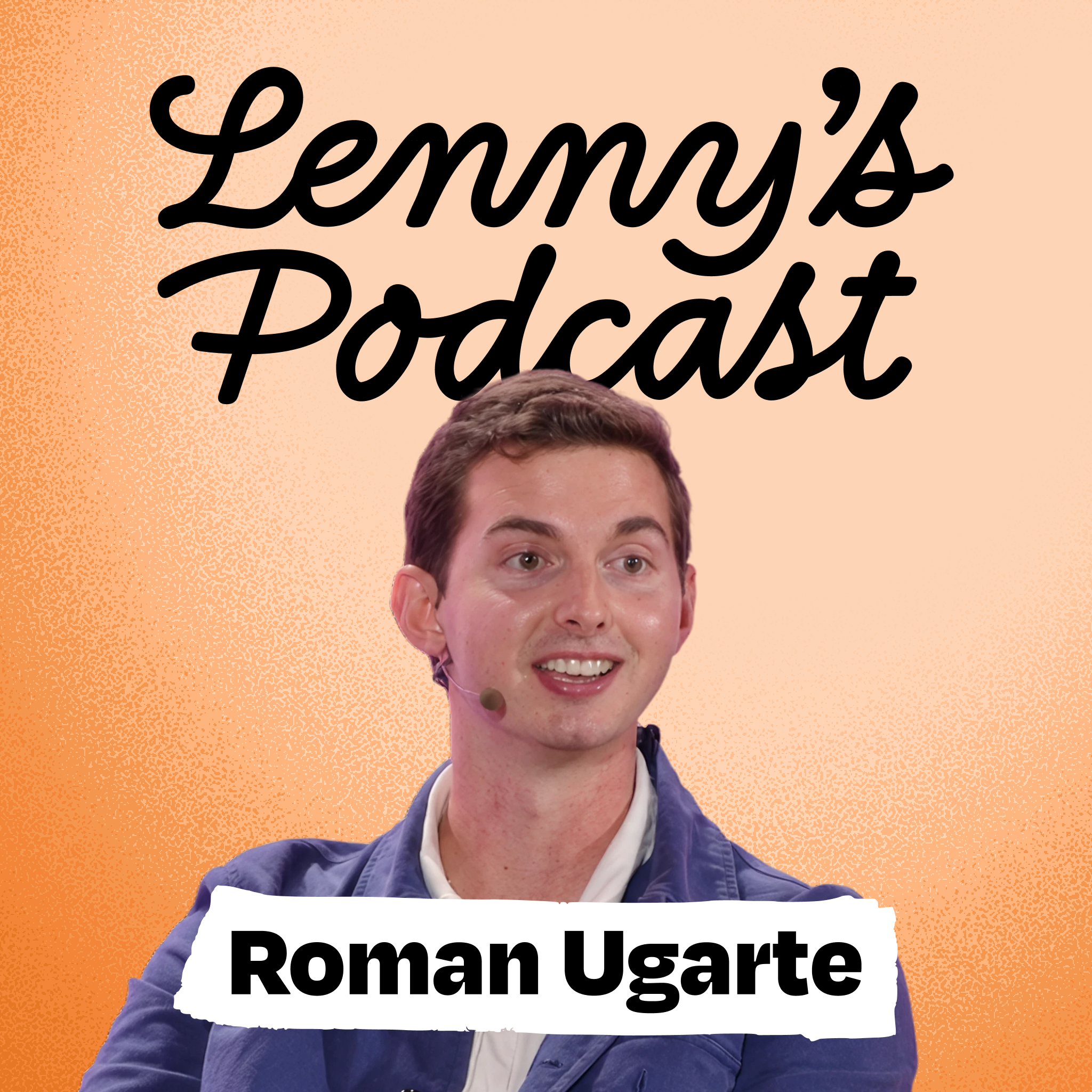






Community discussion