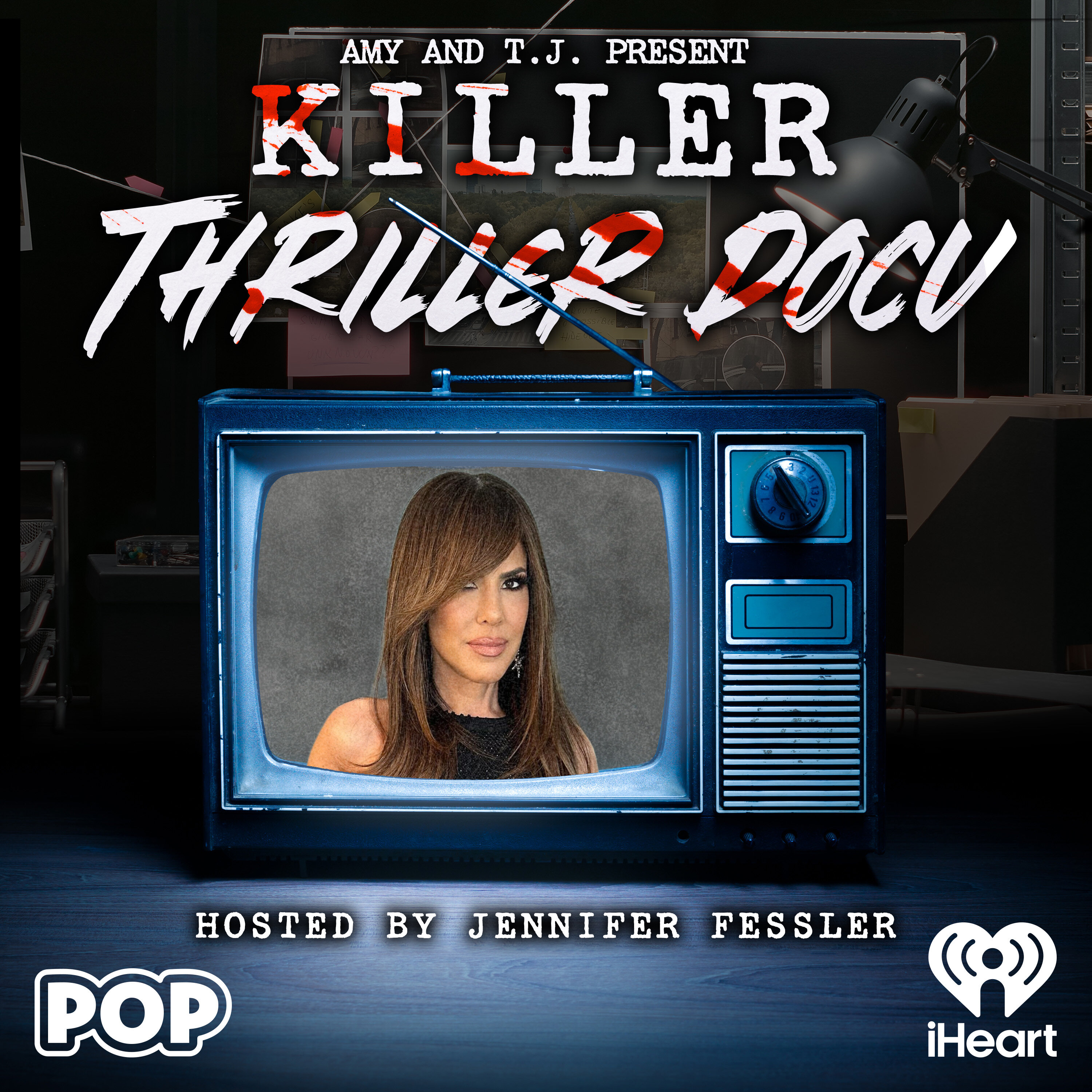
0:13 Hi guys, this is Jen Fessler, and today on Killer Thriller Documentary, we are talking about a doc that actually exposed a deeply disturbing reality on college campuses across America. 0:25 So in 2015, The Hunting Ground, directed by Kirby Dick and produced by Amy Ziering, brought national attention to campus sexual assault. Following survivors who not only had to deal with the trauma of what happened to them, but also 0:38 faced university's that often seemed more interested in protecting their reputations than holding perpetrators accountable. So this film exposes really, really troubling attitudes about consent, fraternity culture, powerful athletes, and 0:53 systems that really too often failed the very students they were supposed to protect. And I am very excited to say that joining me today is Emmy Award-winning producer Amy Ziering. Hi, Amy. Hi. Welcome. 1:07 Thank you again for joining us. And we're going to talk about, yeah, we're going to talk about what you uncovered while making the film and the stories that have, you know, stayed with you. And almost most importantly, at least to me, is whether anything has really changed in, 1:22 you know, the more than a decade since the film's release. 1:27 So I'll start with the good news first. Things have changed. 1:30 It might seem like they haven't, but they really, really, really have. You know, just as one example, the Me Too movement, I mean, I never imagined that would happen in my lifetime. The response to the Epstein files, kind 1:45 of unprecedented. It might be hard for younger generations to recognize. 1:49 But both Me Too and I think Me Too set the groundwork for that kind of response to Epstein files, which I don't think would have happened otherwise. You know, the constant outrage about that that's been ongoing. So that's 2:02 very positive. Unfortunately, we're seeing, you know, with great progress, there's great backlash, and we're kind of living in the midst of a really, really horrific rollback of women's rights across the board. So rape culture is still unfortunately alive 2:15 and well, but we have made strides. 2:18 Yeah. So when you say backlash, specifically, tell me a little bit about what you're talking about, and then I want to, of course, jump into the film. Maybe you are referring to things like what's going on at Cornell. 2:30 Yeah, exactly. The Cornell 7 case is pretty indicative of how sadly not far we've come. The response to it on social media, the response to it by the administration, the doxing of Jane Doe, the harassment and bullying of Jane Doe and her family, and the attorney. I mean, 2:54 it's not only unconscionable, it's heartbreaking, and it's you know, we are better than that. And it's, yeah. So that's the backlash part of it. 3:04 Yeah. So I want to just sort of now jump in. 3:08 And my first question is, I want to know what was the moment that you realized that you had to make the hunting ground? I don't know what kind of experience you had on your college campus and if that had anything to do with it, but was there one 3:22 particular story or experience that prompted you to make this film? 3:27 Okay, it's actually pretty interesting. So in 2008, maybe even 2006, I was reading an article online, and it was about a bunch of women who had been sexually assaulted while serving in the U.S. military. And the crazy part about 3:44 the article wasn't that they were assaulted. It was that when they went to try and report the crime, they had no access to an impartial system of justice, meaning they often had to report the crime to their commander who was probably had a conflict of interest because he 4:00 might know the rapist. It was just, and they couldn't go outside the chain of command. So that seemed crazy to me. Like women in the 21st century couldn't, in our military, if they had no access to a fair system of justice. So I called the reporter and I said, 4:20 you know, what on earth is this? How widespread is this? 4:26 And she said, Amy, it's so strange. I wasn't writing an article about assault in the military. I knew nothing about it. I was writing an article about how great it's been 10 years. Our military is now fully integrated. 4:38 You know, women are, and I just wanted to hear their stories. And she said, I called 20 women and 12 said they'd been assaulted. She said, so I pivoted and I started writing this article and I said, oh, okay, well, I'm super interested. I'm, you know, has any film, you know, 4:53 film companies contacted you? She said, no, nothing. It's silent. 4:57 So I hung up the phone with her, started doing more research, but then I got greenlit on another project for HBO. So I called her back and I said, Helen, I'm so sorry. This is going to get picked up. 5:06 I'm onto another project. Two years later, finished that project for HBO, call her back. No one was interested. The story did not go wide. So we started doing our own research. And what was interesting about that, just again, 5:20 give listeners context about how far we've come. We pitched and we saw not only was her story accurate, it was widespread, you know, across the country. It was an epidemic, you know, of assaults in our military that were going 5:34 underreported and non-adjudicated, right? So it's kind of a, you know, serial playground for predators, unfortunately. So I went to pitch that then because we were kind of a well-known film team. 5:51 We couldn't get anyone interested. So this is now 2010. Why? 5:56 People said, we're not interested in women's stories. This is in 2010. Come on. 6:00 We're not interested in women's stories? 6:02 We're not interested in stories about women who are raped. 6:04 And we're certainly not interested about women who are raped in the military. That's a direct quote. And this was from left media sources and right media sources. 6:14 That is crazy. How disheartening. Oh, my God. 6:17 So we just went ourselves without any money and just went around the country and interviewed soldiers. And we ended up making a film called The Invisible War, which played at Sundance in 2012. And when we walked into the 6:31 first screening at Sundance, someone yelled to my publicist, good luck with that rape movie. I mean, that's how little this issue was covered. I remember that. And, uh, And the film opened like a bomb. I mean, and it became the biggest film at Sundance that year. And so 6:50 I was like, oh, wow, what do we do now? Like, you know, this is, people are really responding. People are upset. 6:57 People want to know what they can do. And so we ended up, I ended up running an impact campaign that was really successful. Make a long story short, we changed 30, we passed 35 pieces of legislation and The Pentagon, we got all the, we got all the joint chiefs 7:16 to see it and changing military policy. So that, but why am I telling you all this? Because as part of that outreach campaign, we did screenings all around the country in colleges, right? Just like you. And then my mail, I started getting mail in my inbox. Dear Ms. Ziering, 7:33 you don't need to go to the military. Just come to Bowdoin. Just come to see me at Dartmouth. Just come talk to me at Harvard. And I almost thought, like, are these kids all talking to each other? Like, I swear, Jennifer, it was so weird. Do you know what I mean? Yes. What? 7:48 Is this some campaign? So that's how the hunting ground came about. It was really from students. Was it? 7:54 I'm guessing it wasn't. I'm guessing it was literally individuals. 7:57 It was literally individuals. There was no organized campaign. I really thought it was. They were from all different parts of the country. They were men and women. We saw the invisible war. Please come to see what's going on on this campus. And so that's, that's what happens. So 8:11 that's why we ended up making the hunting ground. 8:14 So you started getting these emails. Had you any idea though, at that point, how widespread the problem was? And I have, so that's the first part. So also it was interesting to me. And I don't know if, if I don't, I don't think that this is the case. There was 8:30 a lot of concentration on very academic colleges, also colleges that are very, uh, sports oriented. So in other words, like I didn't see a lot of community colleges or a lot of unknown colleges. And I'm wondering if, I don't know, I'm, I'm just kind of wondering like how 8:51 that happened. And I, is it because in part, those are the colleges with the reputations that, that they don't want sullied? Do you think that that the sort of the less that administrators listen, potentially bigger the colleges? I 9:08 don't know. That just was, I was just wondering that. 9:10 Well, that's a great question. I can't, you know, it's been a while. I'd have to remember. Typically what we tried to do was get, have a good cross section of colleges. And I don't think we, I don't think we went to the community college level, but in terms of, 9:25 I did think we had some state schools represented some IVs. 9:29 Oh yeah. 9:30 Yeah. 9:31 It was a lot of big schools whose names are, I recognize for the most part, which got me thinking, these are schools where there's a lot of money pumped in. 9:45 These are big schools with big reputations and I don't know, big donors. But anyway, I was just wondering about that. 9:53 A little bit. I don't honestly, I mean, it's a Venn diagram of things that make you converge on one. 10:00 You know, we interviewed over 200 survivors from all different schools. 10:05 And then it narrows down to who has a story that we can defend in court, you know, incontrovertible evidence, who's willing to be on camera. You know, so by the time that sorts out, you kind of land with your subject. 10:18 Yeah, and I don't mean to imply that this is not happening on smaller college campuses. I don't mean to imply that at all. More that in terms of the administration on big campuses, maybe there's a feeling that there's more to lose. But anyway, I don't know. It was 10:36 just something that occurred to me. So there's this one line in the documentary that stood out. I'm positive not only to me, but it's the people you do know you should be worried about. Why was it important for you to sort of address that sexual assault is usually 10:56 not committed by strangers? 10:58 No, it's not. And I'm really glad you said that. 11:00 And that's been a really damaging myth that our culture has had for decades, that it's stranger danger, that it's someone you don't know. You have to have a blue light on campus. 11:13 Oh, my gosh. I went, yeah, I went. it's funny because I've spoken about that. We've done some interviews in terms of, of the Cornell seven. And, and I just, for whatever reason that it came up, I toured a lot of college campuses with my kids a lot as, 11:29 you know, a lot of parents have the blue light, the blue light, the blue light. It's interesting. It's such a, it's supposed to, I guess, bring some kind of comfort that if, but it's, I keep thinking about it specifically with your film because blue light doesn't help when it's 11:50 inside the campus, when it's students that know each other. 11:54 No, it's really, yeah, it's really performative and highly ineffectual. 11:57 I mean, and I'm glad you raised that point. And I do want to say to anyone listening that, and thank you for watching the film, that the most important thing they could do for their children's safety and for their own knowledge of these crimes is to watch The 12:12 Hunting Ground. I mean, I really, and I'll say it also at the end, but it did come out in 2015, but it's still as relevant as ever. And to this day, parents come up to me and say it saved my daughter's life. 12:27 Amy, I really wish I had seen it before my daughter went to college. So, and, you know, I think I was thinking a lot about, I don't believe that my daughter, anything, that she was the victim of assault. 12:44 But I think about, you know, not all the girls are going to tell even their parents, right? They just carry it around maybe for a lifetime. And as a mom, you know, watching some of the parents that you interviewed, just how sick to my stomach that idea makes me. 13:03 Just the idea of it, right? 13:05 Yeah, no. And the film gives people information you just can't get anywhere else. And it really has a grasp and a researched understanding of this issue that isn't out there in the culture at large and that kids going to school really need to know and parents need to know. 13:20 So yeah, I'm glad you said that. And I do want to go back to your point about the nature of these crimes. It more often than not, 99% of the time, it is someone you know. And we show in the film the different ways that that person grooms 13:36 you for these crimes, you know, and uses alcohol as a weapon and isolates you. And so that's why it's important for kids to see this. And it particularly happens in environments like fraternities and sports, which we also go into, explain why in the film, where the areas are even 13:52 more likely to harbor these kind of, you know, to provide perfect storm conditions for these crimes to proliferate. So, yeah. 14:02 Yeah. So, I was also thinking about if I had shown the film to my daughter and she would have been certainly more aware, I think hyper aware of, you know, what possibilities there were in certain situations. Do you have 14:20 specific girls that take, and actually some boys, right, that can take away from this film? What would you suggest is the most important thing in terms of protecting themselves? 14:30 Have a buddy. You're going to any parties. Or walking anywhere, walk with a buddy, always know, and that person's checking in on you to make sure you're okay. Never, ever, ever, men and women, leave your drink unattended. Never, ever, ever 14:45 take a drink where you don't exactly know what's in it. 14:48 I cannot tell you how common it is now to spike drinks with substances the FBI can't even figure out what it's spiked with because the tests are not. the drug gets ahead of the testing that they're able to do. 14:59 So sometimes when they can't find it, it's not that you weren't drugged because these women and men will say, I know, I know what happens after one drink. This is not what happens to me after one drink. 15:09 Yeah. That, well, I forget her name, but the, that the girl who said she got into, I guess maybe it was a cab and she was, she was positive because she was so completely out of it and she had not had that much to drink and, you know, 15:25 my daughter now is in her early twenties. And I think it's an important movie for, for girls to watch even after they graduate college, because she lives in New York city and there is still the feel kids holding onto the college experience. And I don't know. I mean, 15:45 I am maybe ad nauseum and maybe she would tell you to a fault. I am a helicoptering and I, you know, watching her location and where are you and are you drinking and who are you with? Again, she's not, she's sort of mid twenties, she's 24 years old. And 16:02 at some point I'm going to have to trust her judgment. 16:05 But I think the movie is, you know, important after college as well. I think it has, there's so much to benefit from young women watching it. 16:15 A hundred percent. It's, it happens in bars as well. 16:18 You're very right. And it's very good that you pointed that out, actually. It's not just a college thing. So you should also, even in college, certainly keep an eye on your drink. But in any other situations, everyone should know that as well. In bars, don't put your drink 16:34 down on the counter and leave it for a minute. 16:37 And make sure you're the only one in control of it and you see what the bartender's pouring into it. 16:56 I want to talk about frat culture. And listen, we are in a moment here in time where Cornell 7 is going on. And so there's a lot of talk about frats. I have another podcast that I do. It's called Dirty Rush. And it's actually about sororities and Greek life. 17:14 And I was in a sorority in college. And it's about all of the joy that comes with being in a sorority. But it's also about the realities of it. 17:25 But we've been really focused on talking about the Cornell 7 and frat culture. And it's funny because I'm, you know, I don't know. I think about frat culture and is it so dangerous and what do we do with this, right? 17:44 And is it more likely that boys in frats, I don't know what the percentages are, but are going to commit assault? 17:53 Well, there's definitely a higher... Frat culture has a higher propensity for misogyny because it's a social bonding thing, right? 18:03 Men prove they're not. 18:06 I know. 18:06 They bond over women being their conquest. It's just a whole weird thing. So frat culture is toxic in many ways. 18:14 It's wonderful in others. And it used to be that there were den mothers living with these men. 18:19 Right. Yeah, my day there was, right. 18:21 They should not be on their own, period, end of sentence. 18:24 Every study after study says this. And so they're not able to, and they're very susceptible because the kind of person that joins a fraternity is the kind of person that wants to be with a pack and wants to have a leader. There's a certain, right? You're more likely 18:42 to want to bond that way and follow the leader. 18:44 You're not necessarily an iconoclast. You're not necessarily a maverick. 18:49 So there's a lot of group think that goes on. So, That's a problem. And so that's why, yes, there's a higher incident of sexual assault in fraternities and in sports enclaves. 19:03 But that doesn't mean that most men are rapists. Most men are not. 19:06 Of course not. 19:07 Only a small percentage of men are, but they can embed themselves in fraternities, sports, campuses, military bases. And if there's no method to fairly you know, prosecute them and adjudicate these crimes, they can keep committing these crimes at a very, very high rate. 19:26 I thought that was definitely interesting that the repeated offense and that somebody who commits it once and also just having, finding out that there was so much repeated crime by, let's say, one boy that was reported and that was ignored, right? 19:46 That's just crazy. But That's like. the likely scenario is that it's a small group of boys, men, who repeat the crime. 19:56 And they weaponize alcohol, they isolate the woman. And then what happens in fraternities and what we saw with the Cornell 7 is they then, and because the fraternity has had this culture, which has habituated that people to sort 20:09 of objectify women and not realize that that's not a cool thing to do, right? That's just kind of in the ether. Then if a situation like that arises and a text thread goes out like that, these guys wouldn't do this on their own, but with a little bit 20:22 of a push. Does that make sense? 20:25 Yeah, it makes sense to me. I was also thinking that you talk about the 50 frat boys that got this text, right? And that no one immediately went to police. 20:36 I'm picturing boys, they just get in, right? They, they're just initiated and they want, call it a pack, call it, they are trying to make friends and have a good time at college. And I just, I don't know. I hope that it wouldn't take a very special boy. Well, 20:53 maybe it would to actually take a look at that because I think that I picture that most of these kids, most of these boys are not bad boys, not bad men, but just sort of it turned blind eye. They had just gotten in. It was just too much for them to handle, right? And to take on. 21:13 Yeah, you raise a great point. And when you asked me earlier what people can do, men can get educated. 21:18 There's bystander intervention programs work. So I don't think it's a problem. These men aren't bad. They aren't educated. They aren't educated into understanding how rape works. how they can intervene in a safe way, right? It's also in our 21:39 culture that men shouldn't block anyone else's sexual activity, so they don't feel comfortable doing that. But bystander intervention programs give them the language and the authority to sort of understand, to recognize a situation that is not consensual and not cool, 21:55 to give them the language to intervene and to you know, do that. And it's interesting. There was a very famous case. 22:02 I don't know if you remember Chantel Miller. She wrote a beautiful book. She's the woman that was assaulted by the Stanford swimmer. 22:07 I have a vague memory of it. Yeah. 22:12 Oh my God. Her, her, anyone listening, if you just read what she, the reason she wrote it, the reason her case became big was because she gave this speech to the judge that was heartbreaking and poetic and just incredible. 22:26 But anyways, What happened with Chantal was she's a Stanford student. 22:31 She's assaulted. She's being assaulted. And two graduate students rode by on their bicycles. And they looked at her and they had taken a bystander intervention class. And because of that class, they said, they looked at her, they looked 22:47 at him and they said, hey, is everything okay? And he said, we're good. We're good. And she didn't say anything. 22:53 And so they, And they looked again. They said, are you sure everything's okay? And he says, we're fine. And she didn't respond. And the class told them that's what they should do, that they should ask, ask twice. And then they got off their bikes. And the second they 23:08 got off, he ran off. So basically it was, and they said they never, ever would have thought of that. 23:14 They never would have, they just kept driving. 23:15 I'm so glad the story went this way. 23:19 But that's what I'm saying. They took the class. So I think if we educate these boys, I'm very, very hopeful. 23:26 In fact, when we had our big impact campaign for the hunting ground, I do remember we showed it at some huge school in the South. I don't remember. It was packed and two lines of microphones. And these three boys came up to the microphone and they said, Amy, 23:39 before we saw your film, we thought women lied. We are horrified. We are in a fraternity. We are all in. 23:45 What do we do? So, I mean, it really does. 23:49 They're moved if they're educated. Right. 23:52 I don't know if you have kids or not. I'm not even necessarily asking, but what would you tell mothers of boys that do want to go into a frat? 24:01 I mean, would you discourage that? 24:03 No. I mean, there's a lot of good things. I would be worried, but I would educate them. I'd make them watch this movie. I'd have frank discussions with them about respecting women, not doing things that make them feel uncomfortable. 24:17 I'd make sure they had the character and fiber to be To thrive in that environment and not have it exploit their weaknesses. 24:25 I was, as I don't, can't imagine anybody watching it wasn't moved by the courage of these, of these women, young women. I wonder if, was it hard to get them to actually speak on camera? And I don't know, you know, I'm wondering about if they were worried about 24:43 their own safety. You know, it's a crazy world right now with social media, although back when was this made? 24:48 Oh no. Yeah. We had social media. 24:50 Yeah. Yeah. Yeah. 24:51 Yeah. But I'm wondering like they were already courageous and you had so many young women who got on camera. 25:01 I'm wondering how you felt about that, how they felt about that. Were there some nerves involved? 25:06 Definitely. Absolutely. But again, with any documentary subject, you really do Make sure that they have the mental fortitude before you move forward with them. I mean, no one can know or guess, but I've been around the block. Having 25:20 been around the block with Invisible War, we kind of tried to make sure that whoever agreed to be on camera knew what they were getting into. Yeah. 25:33 Was there any backlash for any of them? 25:35 Oh, there was backlash, big backlash. Yeah, huge. Mostly, unfortunately, for the woman from Harvard, which broke my heart. 25:41 Right, right. 25:43 Right. 25:43 I was going to say, are there any, are there any of the stories in particular that have just, they probably all have stuck with you, but in, in particular, any of the women that you've stayed in touch with, 25:56 you know, that just, there are certain stories that don't go away, especially, you know, I'm a true crime podcast and I myself can say, I do a lot of, we cover a lot of really scary, horrible stories. A lot of times though, what's so great about doing the 26:15 podcast is that at the end of it, you see justice, but you also see, not always by the way, but what you, I almost always see is resiliency on the part of victims. But I'm wondering if any of these young women's stories have just sort of, you know, stood 26:33 out to you after all this time. 26:36 Well, there was one story. It, uh, I mean, there's two that come to mind immediately. There are so many, but I just do remember after the film was done, I got a letter from a woman who I had interviewed on camera and we ended up not using her interview. 26:53 And she wrote me this long letter about how she was so happy we had just talked to her that she just wanted me to know that, that that meant the world because no one had believed her and she couldn't tell her parents and that She didn't care whether 27:10 she was in the film or not. It was just a beautiful, I mean, it was, that was very, very moving. 27:30 What about the young woman who didn't want her parents to look at her a certain way? I was trying to understand that. Did she not want them to carry around that pain when she said that? Was there some guilt involved in it that maybe she was projecting that 27:49 they would be shamed of her? I was trying to sort of figure out what she was afraid of only in terms of telling her parents. 27:58 She broke my heart. She, just for the listeners, there was a woman who came in and I was interviewing her and I said, how are your parents going to feel when they're watching this movie? And how did they take it when you told them? And how are they 28:15 going to feel about you being in the film and how did they take it when you first told them? 28:18 And she looked at me and this is on camera and she says, I've never told them. So I was kind of speechless and then I started to tear up. 28:25 And she had arrived at the interview holding a teddy bear. 28:29 And sat down, you know, this is like a college sophomore with her teddy bear sitting down talking to me and telling me she never told her parents. So I start to cry. I'm going to cry now. So I start to cry and she looks at me and she goes, do you want my bear? But to go back to 28:45 what you were saying, this will be an interesting. So, yeah, there is. It's not that she, you know, a lot of people don't report these crimes because they do feel ashamed sometimes. Sex is a very private, intimate act. For some people, it's not. But for a lot of people, 29:04 it is. And it's not something they want to talk about. 29:08 You know, they don't want to tell people about it, particularly not if they were assaulted. 29:12 Yeah, and I think that's, I would honor that, right? 29:16 And you never want, that's what is easier. And I do, I honor that. But, and everybody has, different relationships with their parents. But that to me also was so heartbreaking. Everything, of course, because I have this daughter, so much of this, 29:38 I picture that and picture her not being able to tell me that because she wouldn't want me and her father to look at her in a certain way. That was, like you, I just, that really, that was hard to hear and watch. And then you had another young woman 29:57 who said that the hardest part of it for her was watching her parents carry. 30:04 It oh yeah the one whose dad always wore his Notre Dame ring. 30:09 Yes he took off right right exactly and he wouldn't wear his ring anymore and that was the hardest part right yeah so do you think that now uh obviously not all college campuses but most college campuses are safer than they were back in 2015? No, unfortunately. 30:32 I think they were safer in 2018 and 2019 because people started, this film took off, it was college freshmen watched it, seniors going off to college watched it. We had like a campaign for two years and it was very successful, but then you've got to keep educating. That's 30:53 the problem. So I do think they were safer for a little while. I mean, we did pass laws in 12 states with our first campaign. But if no one's enforcing these laws, if no one's reshowing the film, if no one's doing bystander intervention training, it's not happening anymore. 31:09 If no one's talking about these issues, I should be still talking. I used to be invited on campuses to talk and just give my talking points. You guys need to know this and do what you want with this information because it does save lives. I talked to this 31:24 prosecutor where I was like, she was amazing in LA. 31:28 She was like, she prosecuted rape cases. She was like also a TV commentator. I loved her. I can't remember her name. Anyways. So she said, Amy, I was losing every case, every case in court, any rape case. I was, I was also, I was trying John's. She was defending 31:45 prostitutes had been raped where the guy didn't, you know, follow the rules. 31:48 We've seen a lot of that. I'm not to interrupt, but we've focusing on true crime as we do, we see a lot of that specifically like prostitutes and no one cared because of what they did. But go on. 32:02 Right. So here she is trying to prosecute the rapists of these prostitutes. She says, I was losing, losing, losing. 32:08 She said, so one day I just had an idea. 32:09 I sat the jurors down. I asked them all. She says, I said, everybody, okay, close your eyes. The jurors close their eyes. She says, everybody think about Your most recent best sex moment. Most recent, last time you had sex and it was just amazing. And so, okay, everybody got it? 32:32 You have enough good picture? Okay, open your eyes. Okay, raise your hand. Who wants to tell us about it? 32:38 And silence. She goes, come on. Come on, anyone stand up. 32:41 Great time. Let's hear it. You know, want to hear all of it, all the details? You know, what position? 32:45 That's powerful. 32:47 Right. And it was silence. And she said, now, why do you think my client would want to voluntarily get up and talk about the worst sex she's ever had in her life if you don't even want to talk about the best you've ever had? Right. So that's, to 33:04 your point, also about shame, about how people don't want to talk about sex even when it's great. You know, it's just like. 33:11 You know, I don't, it's, people say it's not about, well, it is, it is sex, I suppose, but it's about violence, right? 33:19 violence and power. But yeah, that's what's so awful is that it's your body and it's the most intimate parts of your body. 33:28 Yeah, and that story always stuck with me. 33:32 I was like, that's crazy. Yeah, I think that's really interesting. Yeah. Yeah. 33:37 And you don't even think that, so you don't think it's changed necessarily on campus, but in terms of how administrations at universities are handling accusations, even. 33:48 Honestly, I don't know enough to speak from a place of knowledge. I know that things changed back in the day, back, you know, in 2016, 2017. I was really involved with this issue. I didn't, you know, you move on, you make a different film. You know, I made other films 34:01 in the space, but I didn't stay involved on it as, you know, a day-to-day activist. So I just can tell by the Cornell 7 response, we still have a long way to go. And I have another interesting anecdote about that, if you, is that when we were making the movie, 34:16 I really, really wanted to get a college president to talk with us on the record. That would be important, right? 34:22 Yep. 34:23 So I called a lot of them and few called me back. And I think only one ends up in the film, right? But most of them were like, I'll talk to you, but it's got to be off the record. 34:35 There's no way I'm going on camera talking about this with you. So I said, okay. So I talked to the president of a very prestigious college and he will go, I will honor his on anonymity, but it was a big deal and a big college. And he said, Amy, 34:48 I'm with you 100%. I read all the studies. I saw that men, three men at this age living together unsupervised, not a good idea. So did you know what I did? 34:59 I abolished fraternities on my campus and I told the sports teams they cannot live in the same houses anymore, period, end of sentence. He says, guess what happened six months later? 35:07 I said, what? He said, the parents bought houses off campus so their boys could all live together. 35:14 So that reminds me of another podcast that we did, and it was about hazing. It was about boys that had died throughout that process. And how part of the problem in passing these laws is that there are so many frat boys in the political system, let's say. A 35:40 lot of our politicians, male politicians, have been in frats and loved it and are still very connected to that experience. 35:51 And so are less likely to really take a good hard look at what's going on. You know, they're still supporting their frats and whether it's financially or showing up to the tailgates with their, whatever it is, right? And that kind of boys club that, you know, permeates not 36:13 just college campuses, but even after, you know, and alumni that look back on it as their best years, right? 36:22 And wanted to remain that memory and want to protect that. 36:28 Oh, there's a tremendous amount of that going on. 36:34 Right, right. 36:35 And we really have to keep pushing back on that and protecting our girls. Yes. 36:41 I think that you're incredible. I think the film is incredible. 36:43 I'm so glad I had the chance to watch it. Thanks. Yeah, no, really. 36:48 And you're doing, you're so busy and there's so much activism that you're doing. I would be so thrilled to have you back. I know this is not your only film. 36:56 You're all about making a difference. 36:58 Yeah. 36:58 I'd love to have you back, really. 37:00 That would be great. I appreciate you. Thank you for putting a spotlight on this issue. Please, everyone will go watch The Hunting Ground. I don't own it anymore. Lionsgate does. 37:09 I don't make any money. Just watch it and have a little house party for your friends and discuss it and tell them to have house parties with their friends. 37:17 You'll be changing our culture. I mean, if you want to do one thing, I promise you, I promise, promise, promise you. 37:23 My kids are a little older, but I have plenty of friends whose kids are about to leave for college or just started college. So I don't know how much they show it on college campuses. 37:32 Not at all. Right. I've been calling around. They don't even want it. It's so sad what's going on down over there. I can't even tell you. 37:39 That's scary. 37:41 It is. So we have to be our own little ecosystem. 37:45 Okay. Take care. 37:46 Bye. Bye.





Community discussion