Making Transformers Sing - with Mikey Shulman of Suno
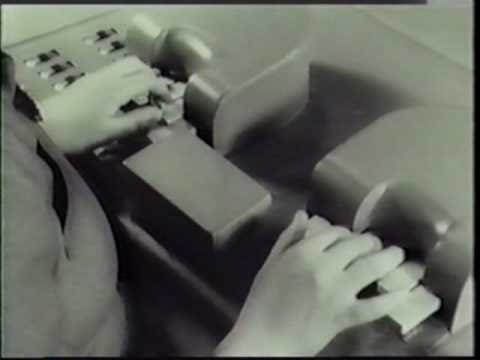
Giving computers a voice has always been at the center of sci-fi movies; “I’m sorry Dave, I’m afraid I can’t do that” wouldn’t hit as hard if it just appeared on screen as a terminal output, after all. The first electronic speech synthesizer, the Voder, was built at Bell Labs 85 years ago (1939!), and it’s…. something:
We will not cover the history of Text To Speech (TTS), but the evolution of the underlying architecture has generally been Formant Synthesis → Concatenative Synthesis → Neural Networks. Nowadays, state of the art TTS is just one API call away with models like Eleven Labs and OpenAI’s TTS, or products like Descript. Latency is minimal, they have very good intonation, and can mimic a variety of accents. You can hack together your own voice AI therapist in a day!
But once you have a computer that can communicate via voice, what comes next? Singing🎶 of course!
From Barking 🐶 to Singing 🎤
Today’s guest is Suno’s CEO and co-founder Mikey Shulman. He and his three co-founders, Georg, Martin, and Keenan, previously worked together at Kensho. One of their projects was financially-focused speech recognition (think earnings calls, etc), but all four of them happened to be musicians and audiophiles. They started playing around with text to speech + AI + audio generation and eventually left Kensho to work on it full time.
A lot of people when we started a company told us to focus on speech. If we wanted to build an audio company, everyone said, speech is a bigger market. But I think there's something about music that's just so human and you almost couldn't prevent us from doing it. Like we just couldn't keep ourselves from building music models and playing with them because it was so much fun.
Their first big product was Bark, the first open source transformer-based “text-to-audio” model (architecturally inspired by Karpathy’s NanoGPT) that went from 0 to ~19,000 Github stars in a month. At the time they felt like audio was years behind text and image as a generation modality; unlike its predecessors, Bark could not only generate speech, but also music and sound effects like crying, laughing, sighing, etc. You can find a few examples here.
The main limitation they saw was text to speech training data being extremely limited. So what they did instead is build a new type of foundation model from scratch, trained on audio, and then tweak it to do text to speech. Turning audio into tokens to do self-supervised learning was the most important innovation. Unlike TTS models which are very narrow (and often sound unnatural), Bark was trained on real audio of real people from broad contexts, which made it harder to output unnatural sounding speech.
As Bark got popular, more and more people started using it to generate music and it became clear that their architecture would work to generate music that people enjoyed, even though it might not be "on the AGI path” of other labs:
Everybody is so focused on LLMs, for good reason, and information processing and intelligence there. And I think it's way too easy to forget that there's this whole other side of things that makes people feel, and maybe that market is smaller, but it makes people feel and it makes us really happy.
Suno bursts on the scene
In December 2023, Suno went viral with a gorgeous new website and launch tweet:
And rave reviews:
Music is core to our culture, but very few people are able to create it; Mikey and team want to make everyone an active participant in music making, not just a listener. A “Midjourney of Music”, if you like.
We definitely had a lot of fun playing with Suno to generate all sort of Latent Space jingles and songs; the product is live at suno.ai if you want to get in the studio yourself!
If Nas joined Latent Space instead of The Firm:
182B models > Blink-182
The soundtrack of the post-scarcity Latent Space ranch
Scaling with Modal
Given the December launch, scaling up for the Christmas rush was a major concern. This will be a nice tie-in for loyal listeners - Suno runs on Modal (one of our featured guests from Compute Month)!
Suno V3
For those who want to appreciate someone special in their life, you can always try Suno’s special Valentines’ Day experience:
We preview this on the pod, but Suno has now officially shipped a V3 Alpha with a wealth of improvements:
and you’ll have to click through to their demos or user reviews to see:
We’ve recently become paying customers ourselves, and are having loads of fun generating music. If you have any of your own generations to share, tag @latentspacepod on Twitter or swing by the LS Discord!
The AudioGen Landscape
Mikey breaks down the landscape into 3 big categories: music, speech and sound effects (SFX). These look more like Venn diagrams than MECE categories.
Suno is the latest entry in a long series of audio generation efforts that combine both music and speech, reaching as far back as Tensorflow Magenta (we aren’t aware of prior AI music projects, please comment below if you can find a good timeline we can use with attribution!). Other efforts like Seamless blend translation and speech generation, and Audiobox combines speech and SFX. We’ve yet to see “one model to rule them all” but surely it will happen, and probably Transformers (perhaps Diffusion Transformers) will be at the heart of them.
Show Notes
* Suno
* Bark
* Parakeet
You May Also Like

Artificial Intelligence Masterclass
AI Masterclass

Hack és Lángos
Hack és Lángos
Mark Tilbury
Mark Tilbury Fan
A Beginner's Guide to AI
Dietmar Fischer

The Good Tech Companies
HackerNoon

CriptoMonedas TV
CriptoMonedas TV

Jack Hopkins
Jack Hopkins
Macworld Podcast
Foundry

Engadget News + Next
Engadget
El camionero geek
El camionero Geek
Artificial Intelligence Masterclass
AI Masterclass
Hack és Lángos
Hack és Lángos
Mark Tilbury
Mark Tilbury Fan
A Beginner's Guide to AI
Dietmar Fischer
The Good Tech Companies
HackerNoon
CriptoMonedas TV
CriptoMonedas TV
Jack Hopkins
Jack Hopkins
Macworld Podcast
Foundry
Engadget News + Next
Engadget
El camionero geek
El camionero Geek
Community discussion