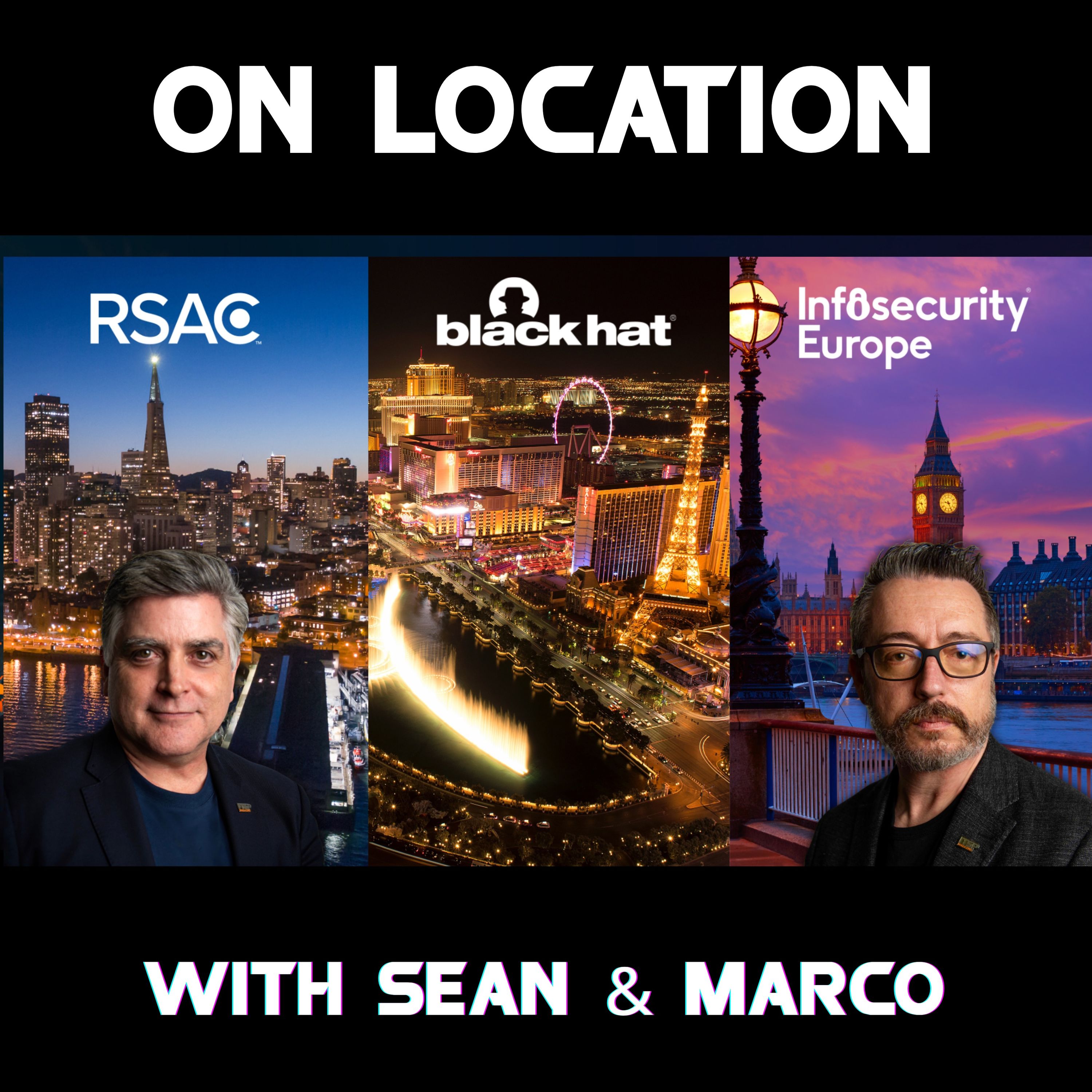
What Burnout Costs the Cybersecurity People Who Keep Us Safe | An Interview with Bronwyn Boyle | An Analog Brain In A Digital Age With Marco Ciappelli | From Infosecurity Europe 2026
PODCAST EPISODE | An Analog Brain In A Digital Age — On Location at InfoSecurity Europe 2026
On Location With Sean Martin And Marco Ciappelli
Bronwyn Boyle can talk about software vulnerabilities for hours. Talking about her own — the burnout she didn’t recognize until someone named it — turned out to be harder, and more important. We sat down at InfoSecurity Europe to talk about the human cost of guarding the machine, and whether our analog brains were ever built for this.
📺 Watch | 🎙️ Listen | marcociappelli.com
I never planned to spend time in cybersecurity. My partner Sean dragged me in, and I arrived with a sociologist’s suspicion and a communication person’s questions, looking for the humans behind the firewalls. For years the field answered me in acronyms and threat charts. Then, at InfoSecurity Europe, Bronwyn Boyle said something that cut straight through all of it.
We can talk about vulnerabilities for hours, she told me. We just can’t talk about vulnerability when it hits us.
That sentence is the whole story.
Bronwyn is the CISO of PPRO, a payments company, and a board member of Cybermindz, a non-profit that exists to look after the mental health of the people who guard everyone else’s. She came to security the long way around, through a degree in classics and philosophy, which may be why she still hears the human note in a room full of machines. A few years ago she was running CISO roles and quietly coming apart, and she had no word for it. She met Peter Coroneos, who founded Cybermindz, heard him describe the symptoms of burnout, and recognized herself in the list. The expert on resilience could not see her own exhaustion from the inside of it.
This profession breaks people, and it is not only the hours. Defenders have to be right every time. The attacker needs to be right once. You live with that asymmetry the way you would live beside a fault line, and Bronwyn, the classicist, reaches for the oldest word for it: the Achilles heel, the single unguarded spot that undoes everything around it. Add constant alerts, a culture that treats stress as the cost of entry, and a quiet hero complex that makes asking for help feel like failure, and you build a workforce that is brilliant at protecting systems and hopeless at protecting itself.
For years we filed all of that under the job description. This is what you signed up for. Bronwyn’s point, and mine, is that we were wrong, and the bill is finally arriving. Cybermindz has the numbers: most incident responders have reached for mental health support because of the work, and most security chiefs are watching good people walk away over stress. Burnout stopped being a private misfortune and became a line on the risk register.
Their answer is almost stubbornly human. At its core is iRest, a protocol the US military built to bring traumati
You May Also Like
AI Fire Daily
AIFire.co
Mark Tilbury
Mark Tilbury Fan

AI News Daily
brief.news

Late Night Linux
The Late Night Linux Family

Jack Hopkins
Jack Hopkins

Artificial Intelligence Masterclass
AI Masterclass

Theo - t3․gg
Theo - t3․gg

TBPN
John Coogan & Jordi Hays

This Week in Startups
Jason Calacanis

CISO Insights: Voices in Cybersecurity
CISO Marketplace
AI Fire Daily
AIFire.co
Mark Tilbury
Mark Tilbury Fan
AI News Daily
brief.news
Late Night Linux
The Late Night Linux Family
Jack Hopkins
Jack Hopkins
Artificial Intelligence Masterclass
AI Masterclass
Theo - t3․gg
Theo - t3․gg
TBPN
John Coogan & Jordi Hays
This Week in Startups
Jason Calacanis
CISO Insights: Voices in Cybersecurity
CISO Marketplace
Community discussion