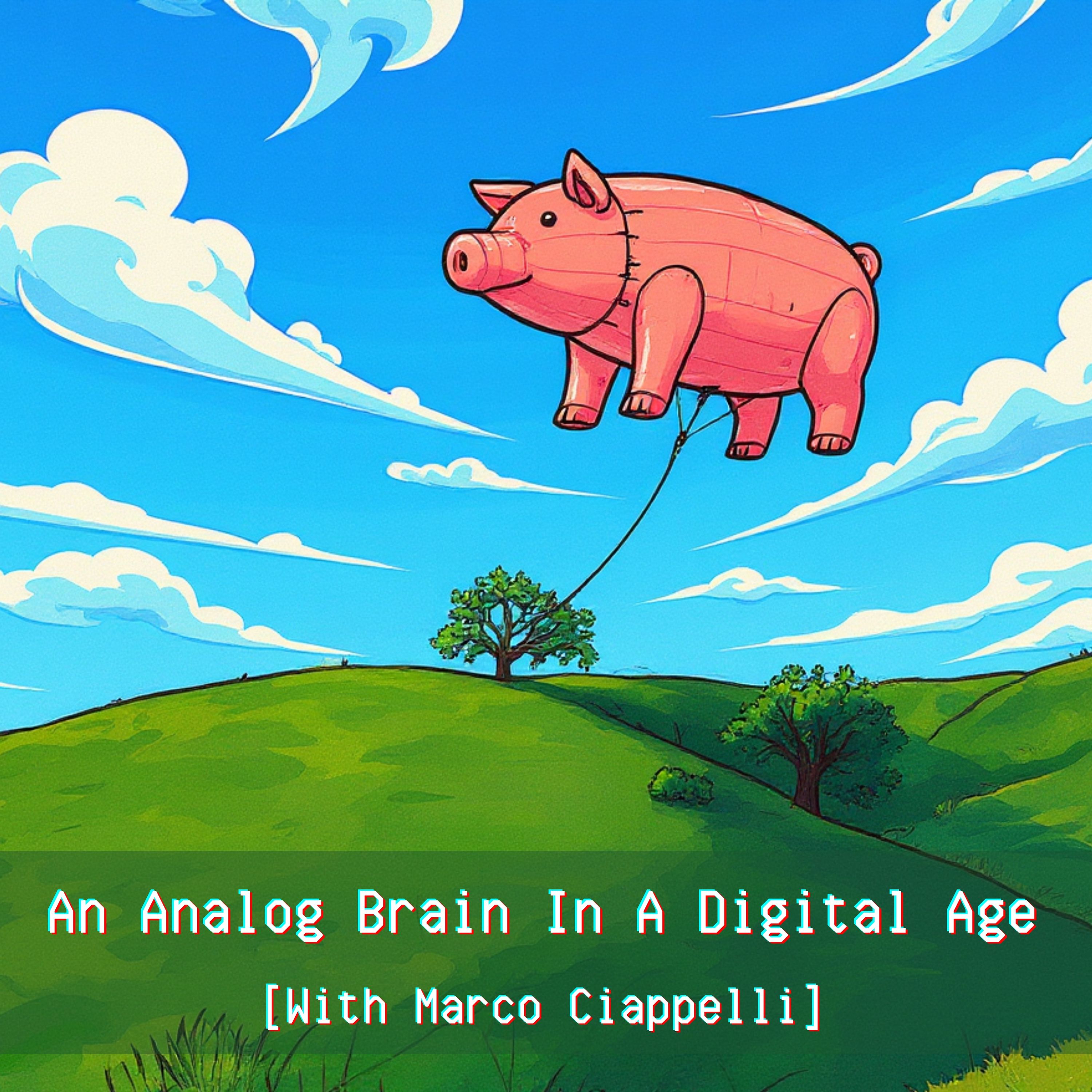
Telling the Stories of Cybercrime | An Interview with Geoff White | An Analog Brain In A Digital Age With Marco Ciappelli
PODCAST EPISODE | An Analog Brain In A Digital Age With Marco Ciappelli
Geoff White goes where organized crime and technology cross, and he comes back with stories. In this one he announces his newest BBC series — the rise and fall of the Conti ransomware gang — and we get into the thing underneath all of it: how you make a crime nobody can see feel real to people who will never see it.
📺 Watch | 🎙️ Listen | marcociappelli.com
There was a red light. A sign, really — ON AIR — that lit up the second a broadcast began, and everyone in the room understood it without a word. Quiet. We're live. I grew up around that light. Geoff White and I opened this conversation laughing about it, because you still catch it hanging behind some podcasters, a little piece of analog theater none of us can quite bring ourselves to retire.
We kept the light. What we lost is the patience.
Geoff is an investigative journalist — the kind other journalists call when they want to know what actually happened. He works where organized crime and technology cross, and his complaint about modern news is one I share. We get the big bang: something was hacked, data leaked, a hospital went dark. Then the cycle moves on before anyone asks the only questions that matter.
How did it work? Who did it? Should I be worried?
He told me he once had four minutes on Channel 4 News to explain Bitcoin. Four minutes. He called it impossible, and he's right — but the deeper trouble is that we've trained ourselves to believe four minutes is enough. That reading the headline is the same as reading the story. It isn't. It never was.
What pulled me in was the subject of his new BBC series. Conti — one of the most profitable ransomware gangs the world has seen — does not look like the hooded figure in the stock photo. It looks like a company. Payroll. Sick pay. Annual leave. A training program. Strategy meetings. A translation department, because a ransom note full of spelling mistakes doesn't get taken seriously, and these people cared, deeply, about being taken seriously. Someone, on some ordinary Tuesday, had to ask who was running payroll that month. While the gang was shutting down hospitals.
I keep turning that over. We like our villains monstrous and separate; it's more comfortable that way. But a criminal enterprise that runs on bonus schemes and brand reputation isn't a monster from the deep. It's a mirror, doing what the rest of us do, with the morality removed. Geoff says the most fascinating part of the 300,000 leaked messages — spilled because a war split the gang in two — is the mundanity. I believe him. The horror isn't that these people are alien. It's that they're familiar.
And this is where he and I actually agree on the work. He says you need three things to tell a story, and he reaches for Star Wars to prove it: a vi
You May Also Like
Mark Tilbury
Mark Tilbury Fan

Artificial Intelligence Masterclass
AI Masterclass

Tech Update | BNR
BNR Nieuwsradio

Caffe 2.0
Valentino Spataro

Al otro lado del micrófono
Jorge Marín Nieto - Editor de podcast en EOVE Productora

Thinking Crypto News & Interviews
Tony Edward

AI Fire Daily
AIFire.co

The Good Tech Companies
HackerNoon

Jak Piggott
Jak Piggott

Mobile Tech Podcast with tnkgrl Myriam Joire
WorldPodcasts.com / Gorilla Voice Media
Mark Tilbury
Mark Tilbury Fan
Artificial Intelligence Masterclass
AI Masterclass
Tech Update | BNR
BNR Nieuwsradio
Caffe 2.0
Valentino Spataro
Al otro lado del micrófono
Jorge Marín Nieto - Editor de podcast en EOVE Productora
Thinking Crypto News & Interviews
Tony Edward
AI Fire Daily
AIFire.co
The Good Tech Companies
HackerNoon
Jak Piggott
Jak Piggott
Mobile Tech Podcast with tnkgrl Myriam Joire
WorldPodcasts.com / Gorilla Voice Media
Community discussion