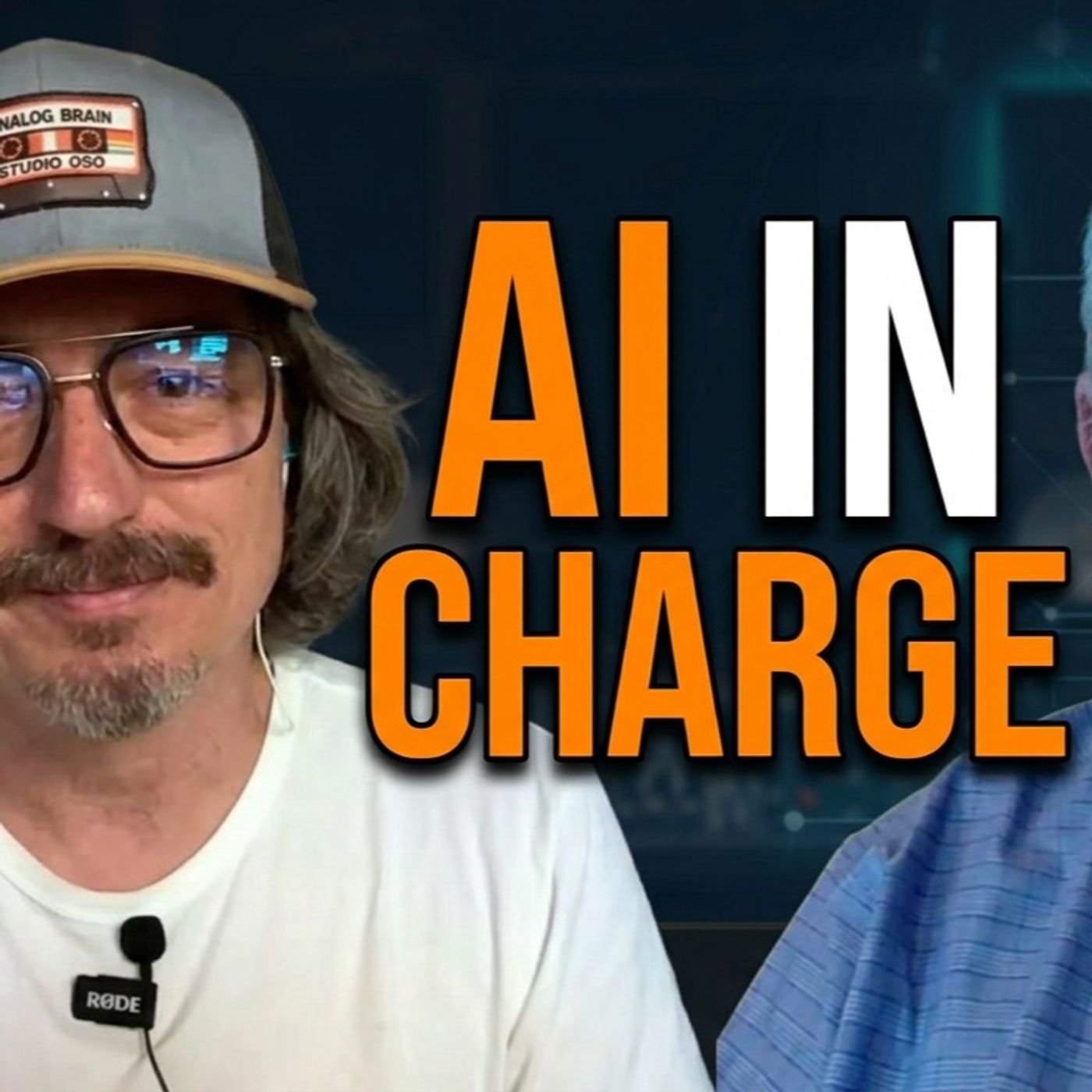
Deadly Bytes: A Book About a Serial Killer, His AI, and a Reflection on Giving Away Our Judgment | A Conversation With Author Douglas J. Wood
Deadly Bytes: A Book About a Serial Killer, His AI, and a Reflection on Giving Away Our Judgment
Confession first: I recorded more conversations than one analog brain can publish on time. This one is from a few months ago. It only got more relevant while it waited.
My wife and I can't watch a thriller in peace. Ten minutes in, I start calling it. He's the one. She won't make it. Never trust the nice neighbor. She tells me to shut up. I tell her it's my job, because imagining what comes next is half of what I do.
And sometimes I'm wrong. That's the fun part. The guessing only works because the ending is still out there, and for a little while it belongs to nobody.
A few months ago I talked with thriller writer Douglas J. Wood about his novel Deadly Bytes. A serial killer builds an AI to stay one step ahead of the FBI, and by the end he can't make a move without it. Wood described that slide in a way that had nothing to do with murder. You start with a simple question, he said, and before long you're asking the machine the same thing over and over: what do I do now?
Inspired by my conversation with Douglas J. Wood on An Analog Brain In A Digital Age — watch the full conversation
That question isn't fiction. It's a habit, and most of us are already practicing it.
It rarely starts with anything important. Rewrite this email. Is this the right word. Which of these two sounds better. Then the questions get a little more personal. Should I send it. Is this a good idea. What would you do. Nobody ever decides to hand over their judgment. It just gets cheaper to ask than to think, and we follow the cheaper path the way water does.
I use AI every day. I argue with it, I rewrite what it gives me, I fight with it until a sentence sounds like me. But I notice the pull. The answer is always there, instant, fluent, sure of itself. A machine like that never says "I don't know." Ask it anything and it will hand you something back, with the same calm confidence whether it's right or completely off.
That confidence is the problem. The machine doesn't want anything from us. It doesn't want anything at all. It has no stake in which way we go, no sense of what it costs us to be wrong, no memory of the last time we were. HAL didn't hate Dave. He just had a task. What we're building isn't menacing. It's indifferent, and very good at sounding sure.
Meanwhile, decisions are how judgment gets made. Not the big ones. The small daily ones. Choosing a word. Trusting a hunch. Getting it wrong and feeling the sting. That friction is how we find out what we actually think. Remove enough of it and you don't just save time. You lose the practice.
Scale that up and it stops being a personal habit. A society where millions of people ask before they decide is a society where authority has moved without anyone voting on
You May Also Like

Semiconductor Insiders
SemiWiki

No Tiene Nombre
elbruno

Artificial Intelligence Masterclass
AI Masterclass

The Vergecast
The Verge
EasyApple
EasyPodcast
Radio Miraya
Radio Miraya

Eye On A.I.
Craig S. Smith
Nodesignal - Deine Bitcoin-Frequenz
Die Nodesignal Crew

Jack Hopkins
Jack Hopkins

Mark Tilbury
Mark Tilbury Fan
Semiconductor Insiders
SemiWiki
No Tiene Nombre
elbruno
Artificial Intelligence Masterclass
AI Masterclass
The Vergecast
The Verge
EasyApple
EasyPodcast
Radio Miraya
Radio Miraya
Eye On A.I.
Craig S. Smith
Nodesignal - Deine Bitcoin-Frequenz
Die Nodesignal Crew
Jack Hopkins
Jack Hopkins
Mark Tilbury
Mark Tilbury Fan
Community discussion