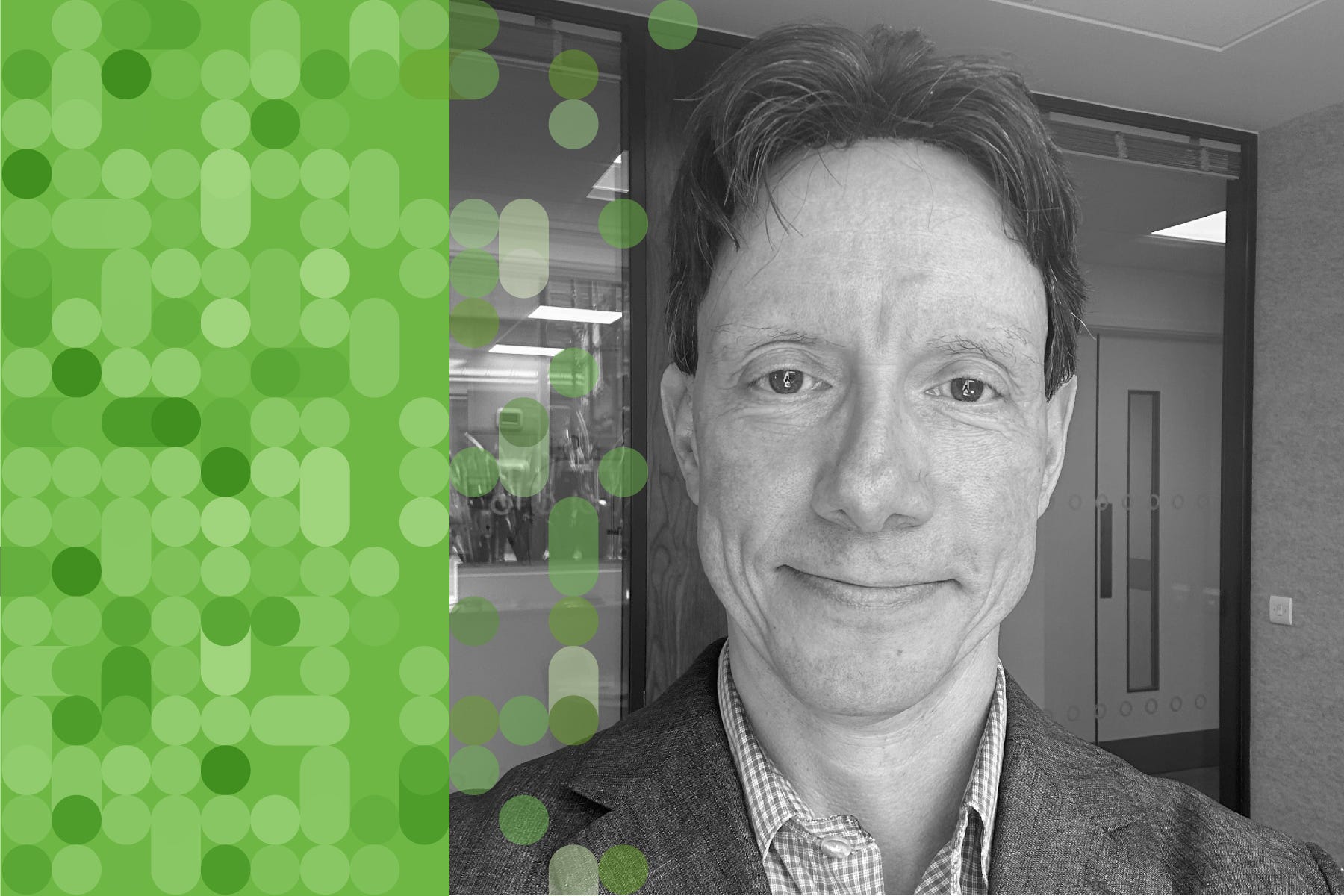
Steve Horvath: Our Epigenetic Age Clocks
Steve Horvath made the seminal discovery of the—Horvath Clock— an epigenetic clock based on DNA methylation, which is now being used extensively in medical research and offered commercially for individuals (←we talk about that!). He was on the faculty at UCLA from 2000-2022 as a Professor of Human Genetics and Biostatistics, and now works on anti-aging research at Altos Labs.
A perspective on the importance of epigenetic clocks this week’s Nature”This insight is crucial for deriving reliable biological markers of ageing in tissues or blood. Such a feat has been accomplished through the ingenious identification of epigenetic clocks in our genome. But these insights are even more important for revealing targets that enable intervention in the ageing process.”
A video snippet on vegetable intake and epigenetic clocks. Full videos of all Ground Truths podcasts can be seen on YouTube here. The audios are also available on Apple and Spotify.
Transcript with links to Audio and External Links
Eric Topol (00:06):
Hello, it's Eric Topol with Ground Truths, and I've got a terrific guest with me today, Steve Horvath. He's a geneticist, a statistician, a mathematician. He's got a lot of background that has led to what is a landmark finding in biomedicine, the Horvath clock. So Steve, welcome.
Steve Horvath (00:30):
Thank you for having me.
Eric Topol (00:33):
Well, it's really fascinating. I followed your work for well over a decade since you introduced the pan-tissue clock in 2013, and it's fascinating to go back a bit on that finding, which initially, I guess was in saliva a couple of years prior, and then you found it everywhere you looked, wherever cells had a nucleus and tissues. And what gave you the sense that these markers of methylation on the DNA would give us some clues about the aging process? How did you even come about to make this discovery?
Serendipity
Steve Horvath (01:17):
It was an accidental discovery because before the methylation clock, I had worked very hard on a gene expression clock, a transcriptomic biomarker. I mean, I was at the height of my energy levels. I worked really on weekends, really eight hour days during the week. But all the weekends I had collected a large set of gene expression data and I dredged the data. And for two years and I couldn't get anywhere, there was nothing I could do. But nowadays, of course, you see various publications where people built transcriptomic clocks. But back in the day when we had these arrays, I just couldn't see a signal. And then at some point I got roped into a study of homosexuality where my collaborator at UCLA wanted to see whether there's an epigenetic correlate of sexual orientation in saliva. And so yeah, being a biostatistician, I said, sure, I analyzed the data and I couldn't find any signal for homosexuality.
(02:48):
But then I just looked for an aging signal in the same, and really within an hour of analyzing the data, I knew that I have to completely drop gene expression. I need to go after methylation. And the signal is so profound, and as you said initially we looked at saliva samples and we thought, isn't it curious? You spit in a cup and you can measure someone's age. And we were of course, hoping that this could become a valuable readout of biologic age, but it took, of course, many years to realize that potential. Nowadays, there's several companies that offer a saliva based methylation clock test. But yeah, many years passed, and it was important to fill in the details and to build the case that methylation clocks are predictive of things we care about time to death or time to various forms of morbidity. So it took many, many years to analyze large cohort studies and to accumulate the evidence that it actually works.
Eric Topol (04:16):
Yeah, I mean, it was pretty amazing back almost a decade ago when I would see, we would take tissue or blood sample and look at your clock and it would say, age of the person is 75 years. And then we look at the actual age of the person who is 75 years to say, wait a minute, how can this be? So I mean, the plausibility of this discovery, if you look back, I mean you say, well, this is just kind of the rust of the pipes, or how do you process that the methylation is such a marker potentially of a person's biologic age? Of course, we're going to get into how it could be a way to intervene to change the aging process. But would it be fair to say that its epigenetic clocks are not the same as biologic aging or how do you put all that together?
Epigenetic Age vs Biologic Age
Steve Horvath (05:21):
Yes, for sure. An epigenetic age estimate is certainly not the same as a biologic age estimate. And the reason why I say it is because biologic age is really determined by so many things and by so many organs. And as I mentioned initially, we had a clock for saliva later for blood and so on. And so, if you only have an epigenetic readout of a certain cell type, it's really too limited to assess the whole organismal state. And arguably you would want to measure also proteomics, readouts and many other data modalities. So I typically avoid the terminology biologic age, because to begin with, we don't have a definition of it. Decades of discussions, nobody really has a precise definition of it.
Second Generation Epigenetic Clocks
Eric Topol (06:35):
Well, from the first generation Horvath clock then became this newer second generation, GrimAge, PhenoAge, the DunedinPACE of aging. How has that helped to advance the field? Because as you touched on, they're measuring different things and what is it meant by kind of a second generation clock?
Steve Horvath (
You May Also Like

Hillbilly Horror Stories Paranormal Podcast
Jerry Paulley

Forschung aktuell
Deutschlandfunk

La Science, CQFD
France Culture

Oncology Today with Dr Neil Love
Dr. Neil Love

Radiowissen
Bayerischer Rundfunk

La Terre au carré
France Inter

The 365 Days of Astronomy
365DaysOfAstronomy.org

Real Ghost Stories Online
Real Ghost Stories Online | Paranormal, Supernatural & Horror Radio

Trent Loos Podcast
Trent Loos
The Biotech Startups Podcast
Excedr
Hillbilly Horror Stories Paranormal Podcast
Jerry Paulley
Forschung aktuell
Deutschlandfunk
La Science, CQFD
France Culture
Oncology Today with Dr Neil Love
Dr. Neil Love
Radiowissen
Bayerischer Rundfunk
La Terre au carré
France Inter
The 365 Days of Astronomy
365DaysOfAstronomy.org
Real Ghost Stories Online
Real Ghost Stories Online | Paranormal, Supernatural & Horror Radio
Trent Loos Podcast
Trent Loos
The Biotech Startups Podcast
Excedr
Community discussion