AI Snake Oil—A New Book by 2 Princeton University Computer Scientists
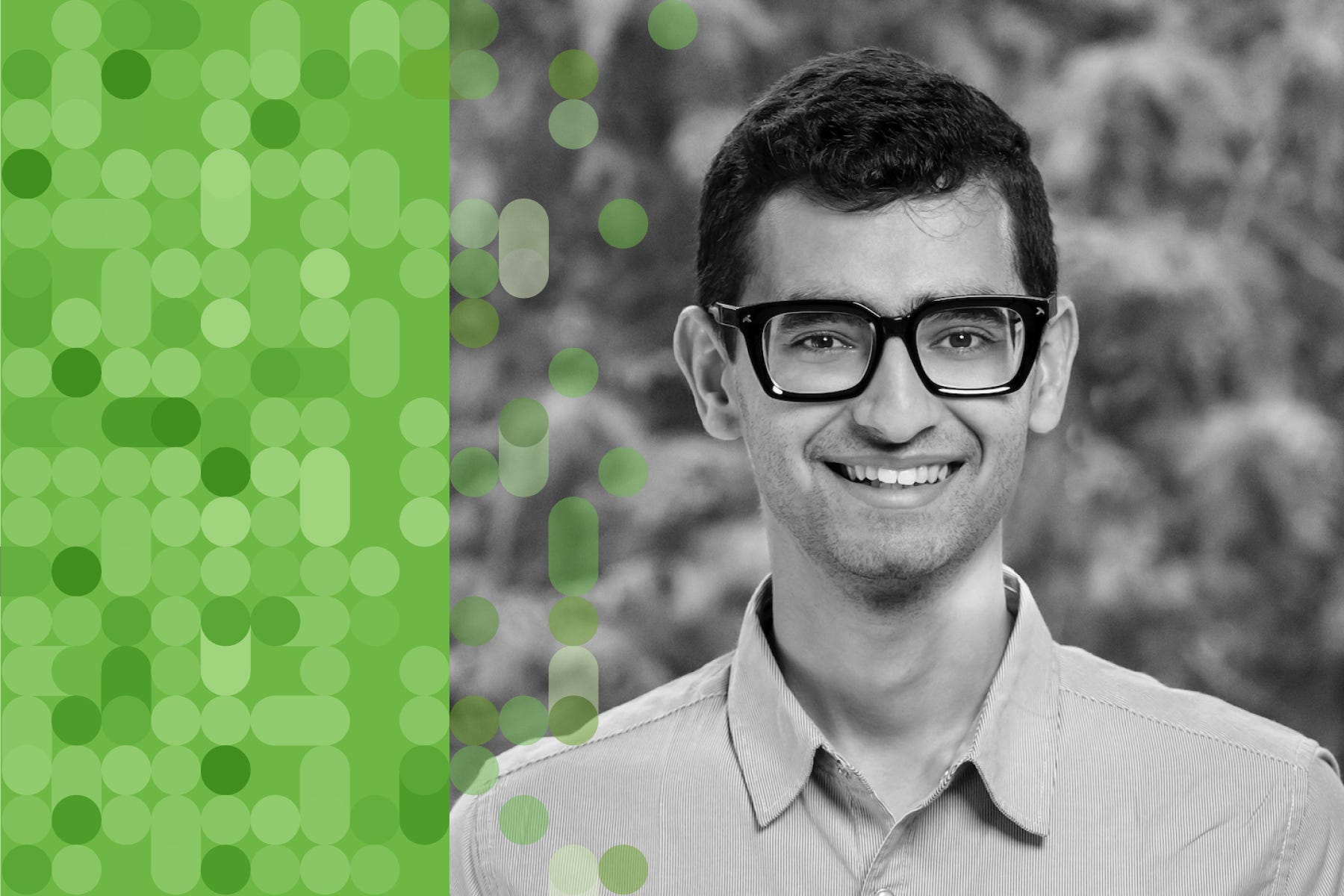
Arvind Narayanan and Sayash Kapoor are well regarded computer scientists at Princeton University and have just published a book with a provocative title, AI Snake Oil. Here I’ve interviewed Sayash and challenged him on this dismal title, for which he provides solid examples of predictive AI’s failures. Then we get into the promise of generative AI.
Full videos of all Ground Truths podcasts can be seen on YouTube here. The audios are also available on Apple and Spotify.
Transcript with links to audio and external links to key publications
Eric Topol (00:06):
Hello, it's Eric Topol with Ground Truths, and I'm delighted to welcome the co-author of a new book AI SNAKE OIL and it's Sayash Kapoor who has written this book with Arvind Narayanan of Princeton. And so welcome, Sayash. It's wonderful to have you on Ground Truths.
Sayash Kapoor (00:28):
Thank you so much. It's a pleasure to be here.
Eric Topol (00:31):
Well, congratulations on this book. What's interesting is how much you've achieved at such a young age. Here you are named in TIME100 AI’s inaugural edition as one of those eminent contributors to the field. And you're currently a PhD candidate at Princeton, is that right?
Sayash Kapoor (00:54):
That's correct, yes. I work at the Center for Information Technology Policy, which is a joint program between the computer science department and the school of public and international affairs.
Eric Topol (01:05):
So before you started working on your PhD in computer science, you already were doing this stuff, I guess, right?
Sayash Kapoor (01:14):
That's right. So before I started my PhD, I used to work at Facebook as a machine learning engineer.
Eric Topol (01:20):
Yeah, well you're taking it to a more formal level here. Before I get into the book itself, what was the background? I mean you did describe it in the book why you decided to write a book, especially one that was entitled AI Snake Oil: What Artificial Intelligence Can Do, What It Can't, and How to Tell the Difference.
Background to Writing the Book
Sayash Kapoor (01:44):
Yeah, absolutely. So I think for the longest time both Arvind and I had been sort of looking at how AI works and how it doesn't work, what are cases where people are somewhat fooled by the potential for this technology and fail to apply it in meaningful ways in their life. As an engineer at Facebook, I had seen how easy it is to slip up or make mistakes when deploying machine learning and AI tools in the real world. And had also seen that, especially when it comes to research, it's really easy to make mistakes even unknowingly that inflate the accuracy of a machine learning model. So as an example, one of the first research projects I did when I started my PhD was to look at the field of political science in the subfield of civil war prediction. This is a field which tries to predict where the next civil war will happen and in order to better be prepared for civil conflict.
(02:39):
And what we found was that there were a number of papers that claimed almost perfect accuracy at predicting when a civil war will take place. At first this seemed sort of astounding. If AI can really help us predict when a civil war will start like years in advance sometimes, it could be game changing, but when we dug in, it turned out that every single one of these claims where people claim that AI was better than two decades old logistic regression models, every single one of these claims was not reproducible. And so, that sort of set the alarm bells ringing for the both of us and we sort of dug in a little bit deeper and we found that this is pervasive. So this was a pervasive issue across fields that were quickly adopting AI and machine learning. We found, I think over 300 papers and the last time I compiled this list, I think it was over 600 papers that suffer from data leakage. That is when you can sort of train on the sets that you're evaluating your models on. It's sort of like teaching to the test. And so, machine learning model seems like it does much better when you evaluate it on your data compared to how it would really work out in the real world.
Eric Topol (03:48):
Right. You say in the book, “the goal of this book is to identify AI snake oil - and to distinguish it from AI that can work well if used in the right ways.” Now I have to tell you, it's kind of a downer book if you're an AI enthusiast because there's not a whole lot of positive here. We'll get to that in a minute. But you break down the types of AI, which I'm going to challenge a bit into three discrete areas, the predictive AI, which you take a really harsh stance on, say it will never work. Then there's generative AI, obviously the large language models that took the world by storm, although they were incubating for several years when ChatGPT came along and then content moderation AI. So maybe you could tell us about your breakdown to these three different domains of AI.
Three Types of AI: Predictive, Generative, Content Moderation
Sayash Kapoor (04:49):
Absolutely. I think one of our main messages across the book is that when we are talking about AI, often what we are really interested in are de
You May Also Like

La Terre au carré
France Inter

Vetenskapsradion Nyheter
Sveriges Radio

IQ - Wissenschaft und Forschung
Bayerischer Rundfunk

Somewhere in the Skies
SpectreVision Radio
Choses à Savoir CERVEAU
Choses à Savoir
DEKODET
Kristian Hope / Thomas Torgersen Bråttum

Vedanta Cast
Jonas Masetti

Real Ghost Stories Online
Real Ghost Stories Online | Paranormal, Supernatural & Horror Radio

The Grave Talks | Haunted, Paranormal & Supernatural
Ghost Stores, Haunted, Paranormal & Supernatural Stories

Aha! Zehn Minuten Alltags-Wissen
WELT
La Terre au carré
France Inter
Vetenskapsradion Nyheter
Sveriges Radio
IQ - Wissenschaft und Forschung
Bayerischer Rundfunk
Somewhere in the Skies
SpectreVision Radio
Choses à Savoir CERVEAU
Choses à Savoir
DEKODET
Kristian Hope / Thomas Torgersen Bråttum
Vedanta Cast
Jonas Masetti
Real Ghost Stories Online
Real Ghost Stories Online | Paranormal, Supernatural & Horror Radio
The Grave Talks | Haunted, Paranormal & Supernatural
Ghost Stores, Haunted, Paranormal & Supernatural Stories
Aha! Zehn Minuten Alltags-Wissen
WELT
Community discussion