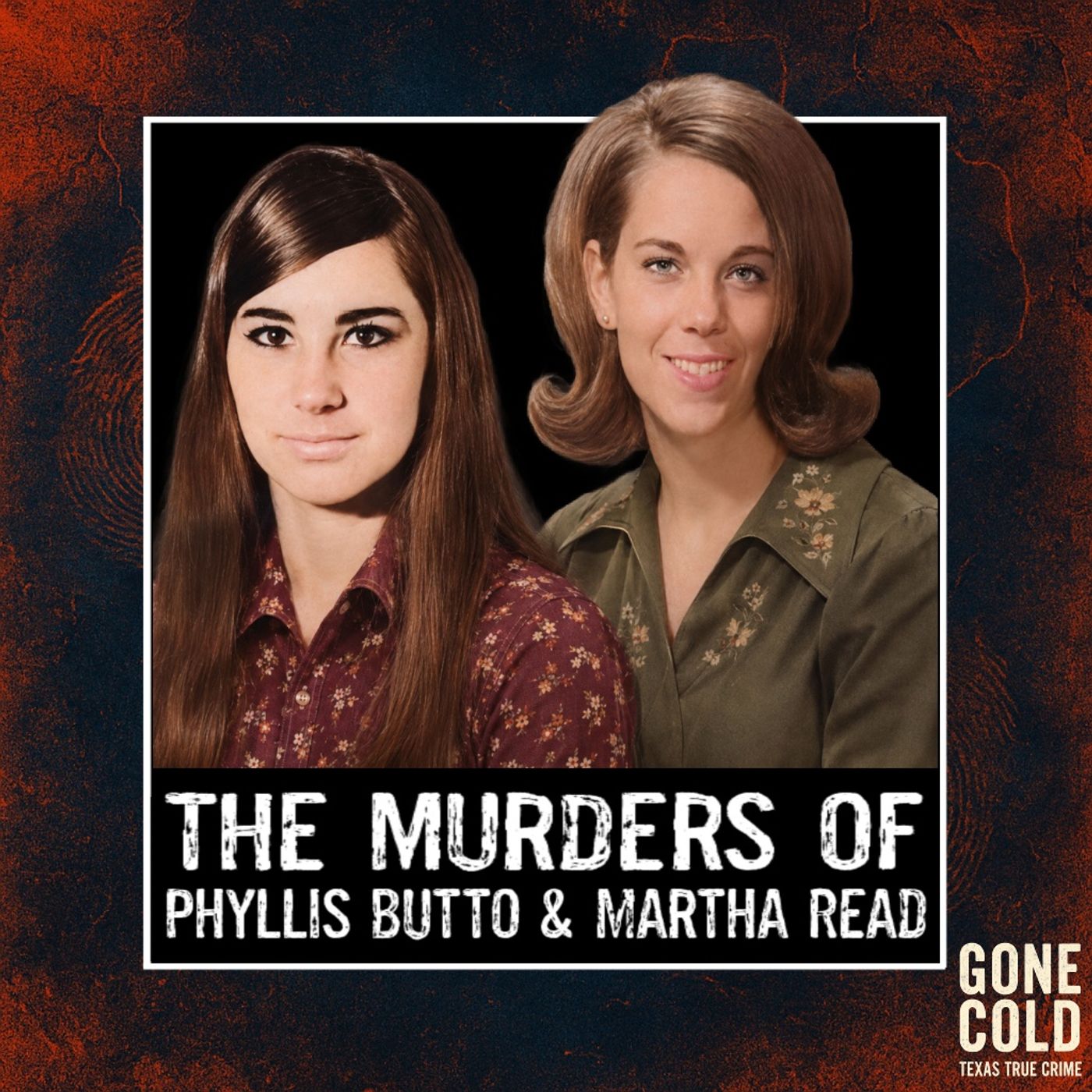
0:01 The Gone Cold podcast may contain violent or graphic subject matter. 0:05 Listener discretion is advised. In the 1970s, the capital city of Texas was changing, and you didn't have to look any further than the 1975 election of so-called hippie mayor Jeff Friedman to find the evidence. At only 30 years old, 0:26 Friedman was the youngest mayor in Austin history. The University of Texas law student largely owed his mayoral victory to local longhairs and the minorities he fought for as a political activist. Willie Nelson, who'd come to Austin in the 0:45 early 70s after becoming disillusioned with the corporate rhinestone-suited country music scene in Nashville, Tennessee, was as responsible as anyone. 0:56 for ushering in the culture that the city would become most known for, namely an organic and unapologetically real art and music scene. Rockers, hippies, blues guys, Tejanos, and country-western outcasts mixed and created a sort of subculture the likes 1:17 of which had perhaps never been seen before, and certainly not in Texas. Austin was no longer just for Bergstrom Air Force Base flyboys, student hipsters, and the old country folk who preferred a quieter and slower way of life. 1:36 Police in the city had issues with student activists and drunk rednecks, but the city's cultural shift, or more specifically, the opportunists it brought with it or brought out, had given lawmen something new to contend with. Violent crime in 1:54 Austin was down about 8% in 1975 from the previous year, sure, but it wasn't necessarily the statistics authorities were concerned about. Rather, it was what Austin Police Homicide Lieutenant Nolan Minardis called faceless crime. In a Friday, July 25, 1975 article in 2:18 the Austin American-Statesman, the police described faceless crime as a sort of epidemic sweeping the city, an inevitable consequence of Austin's continued and steady growth, stalking its victims, statesman reporter 2:35 Crispin James wrote, and then stealing away, leaving no witnesses to help police apprehend the guilty. This article was written as the result of the frustration Austin law enforcement was feeling at the time. Countless faceless crimes had been taking 2:55 place in the recent months, and they had the cops scrambling for clues. But with many of the cases, there were seemingly none to be found. None of 1975's most violent crimes epitomized the vexation of the Austin Police Department, 3:14 like the brutal and senseless murders of Phyllis Budo and Martha Reed. At about 1 p.m. on the afternoon of Monday, February 10th, 1975, Airman First Class Juan Budo Jr. pulled into the parking lot of 906 Bannister Lane at the 3:55 small Southwest Austin efficiency apartment he shared with his wife, Phyllis. 4:01 He'd come home to grab a bite to eat. Earlier, his brother Michael, an employee at Gibson's Discount Center retail store, picked up his girlfriend at the local architecture firm where she was employed before driving to Juan and Phyllis' place 4:18 to join them for lunch. No one had answered the door. 4:23 Michael and his girlfriend were about to leave when Juan pulled up. The three exchanged pleasantries and headed to apartment 109. 4:33 Juan opened the door. Under a curtain that he and Phyllis had put up to separate the sleeping area from the living room, Juan saw his wife's feet and green socks sticking out. Upon drawing the curtain, the airman was taken aback, horrified at the sight of his wife's bloodied 4:55 and lifeless body. Phyllis was riddled with stab wounds. He quickly called the Austin police. Detectives and officers arrived at the scene shortly thereafter. They, too, were shocked. The brutality with which the depraved act was carried out was something 5:17 even the most seasoned among them had rarely seen. Jim McMurtry called the slaying the most brutal he'd seen in his tenure as a justice of the peace. At the scene, detectives collected and bagged several items, though the murder weapon 5:36 was not among them. Dr. Coleman Deschenard, pathologist for Austin State Hospital, performed an autopsy on the body of 21-year-old Phyllis Buto later in the day. She died sometime between 7 and 9 a.m., the pathologist determined. The attack Dr. 5:58 Deschenard later commented, was executed with such ferocity that Phyllis' left little finger was nearly severed as she lifted her hands in defense. She'd been stabbed nearly a dozen times on her hand, arms, chest, back, and neck. Dr. Deschenard 6:19 estimated that the blade on the knife used to kill Phyllis was more than five inches long and an inch wide. 6:27 perhaps a hunting knife. A stab wound in her back nearly created an exit wound on her chest. The fatal stab wound was inflicted with such force that the knife penetrated Phyllis Budo's jugular on the left front of her neck and went all the way through, exiting the back right. 6:49 Although she'd been found unclothed, there was no evidence of rape or other sexual assault. The victim was born Phyllis Lee Collison in Tyler, Texas, to parents Johnny Louie and Zozie Estelle Collison on August 6, 1953. The Collisons were 7:10 a modest farming family in Smith County. Phyllis had an older sister, Cynthia, and younger brother, Jerry. She'd graduated from John Tyler High School just a couple years before, after which she moved to Austin. Phyllis met and married Airman 7:29 First Class Juan Salome Buto Jr. in 1973. He worked at Bergstrom Air Force Base while she managed the small efficiency apartment complex where the couple lived. Upon her death, the body of Phyllis Lee Collison Buto was sent to the town where she was born and raised. She was 7:51 buried at Williams Cemetery in New Chapel Hill, just outside Tyler's. 7:57 Back in Austin, just two days after Phyllis was slain, police homicide lieutenant Colin Jordan was confident. He told the Austin American-Statesman that he expected to make an arrest in the case within one to two weeks. But there was 8:15 a problem with the lawman's optimism. No one who was in the vicinity of the Butoh residence had seen or heard anything unusual the morning Phyllis was viciously attacked. Forensic evidence was also lacking. The only thing that seemed certain 8:33 was that the attack was not motivated by robbery. Though he never came out and said it, it seemed possible Lieutenant Jordan was sure he could make someone crack. He commented that while there were no prime suspects in the case, 8:50 the policemen looked forward to giving several folks lie detector tests. 8:56 Considering the rageful passion with which Phyllis Budo's murder was carried out, and although they'd been told there was no bad blood between family members, perhaps detectives theorized someone close to her was responsible. Phyllis was estimated to have been 9:14 killed sometime between 7 and 9 AM. And that morning, her husband, Juan, went straight to work, he said, arriving at Bergstrom just before 8.30 a.m., after traveling the 7.9 miles there, a 12-minute drive. That put him at home for a majority of the estimated window of time in 9:36 which his wife was stabbed to death. There were no signs of forced entry, and police thought it unlikely Phyllis would have let a stranger in while she was nude. 9:47 The person who discovers a murder victim anyway, often someone close to them, is almost always at the top of detectives' short list of folks to rule in or out. 10:00 Polygraph exams for several people, police ambiguously stated, were scheduled to take place the following week at the headquarters of the Texas Department of Public Safety. The cops and the press became silent about the case as virtually the entirety 10:18 of the Austin Police Department's attention turned to a grave and urgent investigation. Five girls, all under the age of 13, had been brutally raped within the city in the span of a week. Lieutenant Jordan commented that he was frustrated 10:36 that the force was behind in rape investigation techniques and methods. 10:42 though at least two of the sexual assaults resulted in arrests and charges. It's unclear if the other cases were resolved. 10:52 Police administered the polygraph examinations in the Phyllis Budo case, and even though the results of one individual's test suggested partial guilty knowledge, a spokesperson said, a lack of physical evidence and witnesses kept them from making an arrest. though 11:12 their concentration was diverted as Austin's violent crime rate throughout the remainder of winter and spring continued to bombard patrol officers and detectives with a workload almost no law enforcement agency in the state would be able to handle. The 11:29 summer brought a horrific tragedy that demanded the cops' utmost attention and put Phyllis Collison Buto's case back in newspaper headlines. 11:52 Martha Lynn Trammell was born on October 9, 1949, to parents Betty and Buell Trammell. She was raised in the same city she was born, Houston, Texas, where she graduated from Lamar High School. After that, Martha Trammell left home 12:11 for the Texas capital. She enrolled at the University of Texas and graduated there in the spring of 1972. In June of that year, Martha married United States Airman Steve Reed, and she moved to Wichita Falls, where he was stationed. 12:29 On Monday, June 23, 1975, about four and a half months after the appalling and brutal murder of Phyllis Butoh and less than four miles to the northeast, 25-year-old Martha was folding clothes in her apartment at 1302 Parker Lane. 12:48 The young woman's six-month-old boy, meanwhile, was being doted on by his grandmother, who had come in from Houston to spend some time with him and help her daughter get settled. 13:00 Martha had secured this apartment only three weeks before and was anxious for her husband to join her when he was discharged from the Air Force. Lieutenant Steve Reed, a commander of a student squadron and stationed at Shepherds Air 13:16 Force Base in Wichita Falls, was to complete his service on July 1st and then join his wife Martha and their baby Mark in Austin right after. At about 11 a.m., someone knocked at the door of Martha Reed. She answered while her mother stayed put. Moments later, Martha returned and 13:38 grabbed her keys, one of which was to a vacant unit in the complex. Martha Reed had recently gotten a job managing the Cosa Roca apartments, and the person at the door, she told her mom, was a prospective tenant. 13:55 It should only take a few minutes to show the unit, Martha added. She'd be right back. After about an hour had passed, however, the young woman had not returned. Martha's mother was worried. She contacted a neighbor, Bill, and asked 14:13 that he go look for her daughter. At about 12.15pm, Bill entered a vacant apartment on the complex's second floor. 14:23 Immediately upon opening the door, his heart dropped. There was blood. 14:29 It trailed from the entryway, down the hall, and toward the back bedroom. He called for Martha as he followed it. 14:37 but there was no answer. When he entered the room, he found Martha's body on her knees with her head and shoulders leaning atop a bloodied bed. When police arrived, they were aghast at the horrific nature of this crime. 14:56 Blood was everywhere. 25-year-old Martha Lynn Reed had been stabbed 14 times above her waist and her throat slashed. She had defensive cuts and gouges on the backs of her arms. 15:12 Austin Police Homicide Sergeant Richard Jones was in disbelief. The policeman trailed off as he described the senselessness of the murder. 15:23 Martha had been mutilated, or, as a justice of the peace told the Austin American statesman, butchered. It was as bad or worse than the murder of Phyllis Butow, he said. 15:38 The cops quickly found out that there was seemingly no motive. 15:42 Martha was fully clothed and appeared to have not been sexually assaulted in any way. It wasn't her husband who killed her. He was almost 300 miles away in Wichita Falls. 15:56 Like the case of Phyllis Butoh several months before, robbery seemed to have nothing to do with it. But that was hardly the only similarity. In both cases, the stab and slash wounds were inflicted in the victims' upper bodies. 16:13 Martha and Phyllis were both apartment managers and had husbands in the Air Force. Both young women were savagely murdered for no apparent reason in southwest Austin. Police were baffled, and violent crime against young women and girls in the 16:31 city showed no signs of letting up. Unlike in Phyllis' case, there were some clues in Martha's murder. Although they heard Martha's screams, neighbors told police they assumed the sounds were just that of children goofing off in the complex's pool. 16:52 The day following the terrible crime, police found out that one resident who heard the screams did investigate them. He was on the first floor and had identified them as coming from above. The man walked up the stairs and knocked on the doors of the only two apartments on 17:09 the upper level, he told police, but no one answered, and he returned home. When he heard someone coming down the stairs moments later, the witness continued, he peeked out his door. He observed a black man, he said, but the person was so calm, collected, and in no apparent 17:30 hurry that he thought nothing of it. Though the cops believed that this witness had stared into the face of Martha Reed's killer, a few facts didn't make sense. The witness saw no blood on the man, and detectives had 17:45 found absolutely no evidence that Martha's killer had used either of the apartment unit's sinks to clean up. Considering the brutality of the crime and the fact that blood was everywhere on the murder scene, It seemed impossible that the 18:01 killer could have remained clean, but the description of this man was the only lead they had. The murder of Phyllis Butoh had been what Austin homicide detectives were calling a faceless crime, but with this witness, they felt they 18:18 had the description of the monster who killed Martha. Two days after the slaying, the Austin police released a description of their possible suspect. He was a black male, about 20 to 25 years old, with a short Afro-style haircut 18:35 and sideburns extending to the bottom of his ears. He had a mustache and stood between 5 feet 7 inches and 5 feet 9 inches tall. On the day after Martha Reed's murder and a day before the suspect description was released, in northwest Austin, A young University of Texas 18:57 student was raped after she was forced out of a laundromat and into her car at knife point. The crime mirrored a few sexual assaults that had occurred the previous winter and spring, of which the alleged perpetrator was preparing to go to trial the following week. The rapist in 19:17 this new case wore a mask, just one of the many similarities, another of which is where the rapist took the victim. The exact same field as the apprehended man accused of the prior crimes had taken his victims. It was either a copycat or the cops got the wrong 19:37 guy the first time. Detectives investigating the Phyllis Butow and Martha Reed cases looked for a connection, but it was a stretch. The suspect descriptions were similar altogether. only in race, and Martha and Phyllis had not been raped. Something far 19:56 more substantive came their way by week's end. As they investigated, Detectives found out that their suspect might have attempted to carry out his depraved acts on two other South Austin apartment complex managers. On the Friday before the murder of 20:14 Martha Lynn Reed, and around the same time of day, in the 11 a.m. hour, a man approached one apartment manager asking about one-bedroom units. The young woman had already picked up a bad vibe from the man, she told police, a strange feeling. He didn't seem serious, she told them, 20:36 but when he changed his story by asking about a three-bedroom, she knew something was off. Still, she walked him to an apartment and unlocked the door, only she refused to enter or even turn her back to him. The man, who she described as a young, pale-skinned black man, walked 20:57 into the back bedroom and stayed there for a long time, almost as if he were attempting to draw her in. 21:05 When he finally walked out, she yelled to a woman in the parking lot who she didn't know, inquiring about the weather. After her refusal to come in, the man slinked away without so much as looking at her, while ignoring her questions about the rental. The next day at 21:24 a different apartment complex nearby, a man visited the office asking about second-story units. He was curious about whether anyone was living below or next door, the apartment manager reported to police. This young woman had also picked up a 21:42 bad vibe from her visitor and refused to enter the apartments with the man. After showing him four units and declining to go into any of them The man seemed to get upset, she said, and walked off without answering as she asked if he wanted to come back to 22:01 the office to discuss renting. This man matched the description the apartment manager gave the previous day. After these possible near-brushes with violence and the unthinkable murder of Martha Reed, 22:18 the Austin Apartment Association quickly set new guidelines for showing units. Now, the association's president announced, a driver's license should be demanded up front and that information should be relayed to security 22:34 or at least an acquaintance. Managers should keep their doors chained until the information is provided and should never allow a prospective tenant into their home. The investigation, meanwhile, was going nowhere. On July 30, 1975, exactly one week after 23:08 the body of Martha Reed was found, the Austin police began a door-to-door canvas of every apartment complex in the city. 23:17 Two teams of patrolmen carried out the daunting task, while homicide detectives contemplated their next move. Since both Martha and Phyllis Butoh had airmen for spouses, they looked for any link connecting the two military men. They were racing the clock. 23:37 It seemed certain the malevolent and unremorseful killer would strike again. 23:43 Assistant Police Chief George Pfeiffer made pleas to the public via the newspaper and television news, asking for those who suspect the perpetrator is someone they know to come forward with their suspicions. Almost a month later, when 27-year-old San 24:00 Antonio nurse Peggy Moran was found stabbed multiple times after vanishing for days, police in Austin investigated the possibility of a connection. Peggy had disappeared from the parking lot at Audie Murphy Veterans Hospital, where she was an employee, on 24:19 the night of July 26th. Four days later, she was found in a vacant lot, unclothed, laying on a fire ant bed, and barely alive after having lost an incredible amount of blood from the ten stab wounds to her body. 24:36 The next day, she succumbed to her injuries. Peggy had been raped. A suspect was identified fast, and head of Austin Police Homicide, Lt. Colin Jordan, decided that this man's mugshot was close to the description of his suspect. He 24:56 requested fingerprints from the San Antonio Police, suggesting his department had found some at either the Phyllis Butoh murder scene, Martha Reed's, or perhaps both. This lead apparently went nowhere. 25:13 Lieutenant Jordan was also adamant that he and his detectives were not simply looking for a black male. He was interested in any man who'd ever attacked, assaulted, and or raped a woman. They were not certain about the race 25:30 of their suspect, Lieutenant Jordan said. By September of 1975, the file in the Phyllis Budo case contained 260 pages. 25:42 and the case file for Martha Reed's murder hit more than 350 pages. Still, police had not been able to positively link the cases. The Travis County District Attorney's Office had joined the investigation by October. And at a press 26:00 conference on the first day of that month, DA Robert O. 26:04 Smith announced a $ 5, 000 reward for information that led to the arrest of a suspect, while police homicide Lt. Colin Jordan unveiled a composite sketch. He reiterated that their suspect might be a white male, perhaps Hispanic. D.A. Smith insisted 26:26 that someone in the public knew something and made it clear that his office and the police would keep the identity of anyone who came forward with information in the strictest confidence. The day following the press conference, Lt. Jordan 26:42 told reporters that the department had received 33 tips as the result of the composite sketch's release, even from folks who'd forgone the reward by refusing to identify themselves. While three of the dozens of tips were referred to as promising, 27:00 they appear to have led nowhere. as did a handful of other avenues of investigation in the preceding months and years. 27:10 In December of 1975, Austin homicide detectives were made aware of suspicious calls to apartment complexes by a man with a Latin American accent. The calls, a reported total of eight, all occurring between 7 and 9 a.m. to different Austin 27:28 apartment offices, seem to have been an attempt to lure female apartment managers to complex laundry rooms by claiming women have been injured there. Luckily, none were reported to have fallen for it. In the first weeks of March 1976, 27:46 police announced they'd received credible information in the Martha Reed case. 27:52 Enough information, Sergeant Jerry Spain said, to make an arrest, but not enough evidence to take to the district attorney. 28:02 He also commented that the new information led to a strong correlation between Martha's case and that of Phyllis Buto, although he declined to say where it came from. It led to an arrest in another case regardless. Detectives now 28:20 believed that Phyllis and Martha's killers were working in pairs to burglarize apartment managers, one luring them out while the other rifles through the office or apartment, stealing money or other valuables. The individual arrested, a 23-year-old Hispanic man who 28:40 apparently matched the composite sketch, was the suspect in the binding and robbing of an apartment manager at her office. 28:49 This lead fizzled out fast, of course, at least in the cases of Martha Reed and Phyllis Butoh, and no detective ever offered an explanation as to why men working on such a plot would have murdered these young women with such ferocity and apparent passion. In fact, their belief 29:11 in the lead seemed to at least partially explain how the department hadn't gotten anywhere with these cases. The suspect was given a polygraph exam in reference to the murder cases, but was never reported on again in tandem with them. 29:30 The brutal slangs of Phyllis Butoh and Martha Reed were seldom mentioned again after two more cases in the 1970s. 29:41 On Tuesday, June 7, 1977, firefighters responded to reports of a blaze at a South Central Austin apartment complex. At 12.52 p.m., after getting the fire under control, they found the charred remains of the woman who lived there. 23-year-old Victoria Sue Palmer. 30:04 After an autopsy, it was discovered Victoria had been shot and her throat deeply slashed. She was dead before the fire was even set. There isn't much known about Victoria's murder. 30:19 For the media to have covered her case any less, it would have to have been never reported at all. 30:28 When the body of 18-year-old Deborah Sue Reading was found on January 22, 1979, police added her murder to a list of cases that shared similarities. One officer said that sexual bondage was the key to Deborah's murder, presumably meaning 30:47 a sadistic rapist. But Travis County Medical Examiner Dr. Roberto Bayardo determined that there was no conclusive signs of rape. 30:58 Deborah Sue Reading's murder fell within the two-square-mile perimeter of southwest Austin that also included the slangs of Phyllis Budo and Martha Reed in 1975 and Victoria Sue Palmer in 1977. Phyllis, Martha, and Deborah were all killed on Monday mornings, and all 31:21 the young married women fit a specific victim profile. Deborah's case, like the others, went cold. Next time on Gone Cold, Deborah Sue reading. If you have any information about the 1975 murders of Phyllis Butoh or Martha Reed, please call 31:45 the Austin Police Homicide Tip Line at 512-477-3588. the Homicide Unit at 512-974-5210, or Capital Area Crime Stoppers at 512-478-477. 32:06 If you have not already, look for Gone Cold on Instagram, Facebook, and Twitter by searching Gone Cold and looking for the Texas logo. If you'd like to support the show and get the episodes ad-free, go to patreon.com forward slash gonecoldpodcast. 32:24 Thanks to all of you who support us there. It's a huge deal to us. If you're not in a position to help Gone Cold financially but would like to in some other way, well, I've got just the thing. 32:39 Leaving us a five-star rating and written review on iTunes particularly helps Gone Cold's visibility. The more folks who find us and listen, the greater chance someone with information about a case hears the show and comes forward with what 32:54 they know. Every little bit helps and we appreciate y'all's support immensely, however you choose to give it. Sources for this episode can be found in the episode's show notes. 33:07 Thanks for listening, y'all.










Community discussion