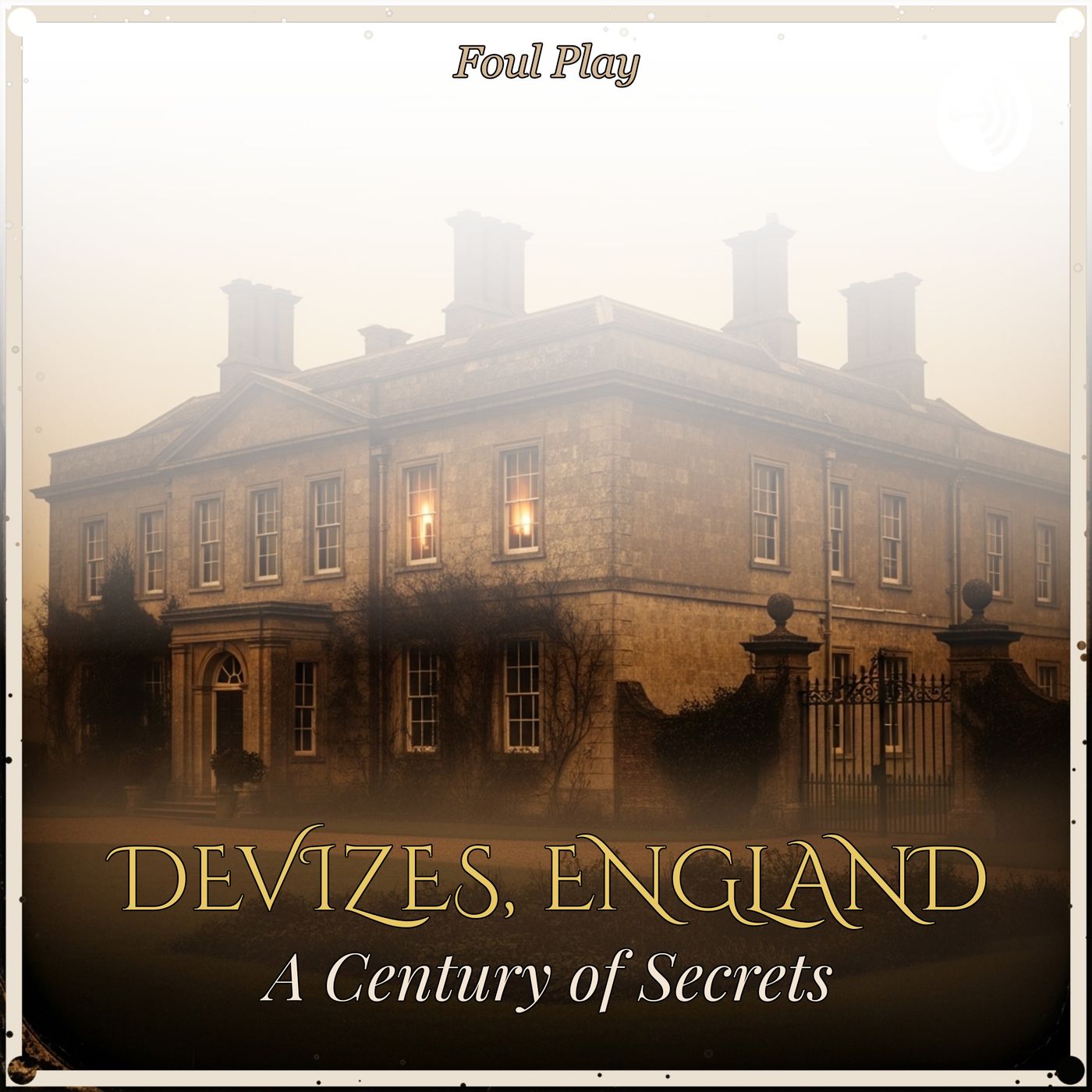
Devizes: Constance Kent's Confession and Second Life
This is the fourth and final episode of our series examining the 1860 Road Hill House murder, the case that gave birth to modern detective fiction. Previous episodes covered the murder of three-year-old Francis Saville Kent, Detective Inspector Jonathan Whicher's groundbreaking investigation, and the five years of cold case torment that preceded Constance Kent's confession.The gallery was packed to suffocation. July 21, 1865. Five years they'd waited for this moment. Five years since Francis Saville Kent was found with his throat cut in the family privy. Five years since Inspector Whicher accused Constance Kent of murdering her baby brother—and was destroyed for saying so. When the clerk asked how she pleaded, Constance spoke one word: "Guilty." No mitigation. No excuse. No insanity defense that might have saved her from prison.When Constance Kent stood in the prisoner's dock at Devizes Assizes on July 21, 1865, she refused the insanity defense her counsel had carefully prepared. Instead, she pleaded guilty to murdering her three-year-old half-brother Francis—a single word that silenced the packed courtroom and condemned her to death.But Queen Victoria's government commuted her sentence. At sixteen when she committed the murder, Constance had carried the secret for five years before confessing voluntarily. She served twenty years in Victorian prisons—first at Millbank, then Fulham Refuge—transforming from a troubled teenager into a model prisoner who educated herself and learned nursing skills.In 1886, a woman named Ruth Emilie Kaye boarded the ship Carisbrooke Castle bound for Sydney. Constance Kent ceased to exist. For fifty-eight years, she built a new life in Australia, rising to Matron at several institutions, nursing the sick and elderly, living in quiet anonymity until her death at one hundred years old in 1944. No one in Australia knew they were burying England's most notorious Victorian murderess.Key Case DetailsTrial and Sentencing (July 1865):
Francis Saville Kent was three years and ten months old when he died. He was not a plot device or a mystery to be solved. He was a child with dark hair and bright eyes who ate his porridge at a small table by the window, who played in the June sunshine of a Wiltshire garden, whose small voice fell silent on a night that would echo through a century and a half of English history. He was not the mystery. He was the cost.Historical Context & SourcesThis series draws extensively from Kate Summerscale's The Suspicions of Mr Whicher (2008), the definitive modern account based on extensive primary research. Original trial transcripts from the National Archives and contemporary newspaper coverage from The Times and Morning Post (1860-1865) provided additional verification. Bernard Taylor's Cruelly Murdered (1979) contributed alternative perspectives on William Saville-Kent's...
- Thirty-minute trial at Devizes Assizes
- Justice Willes presiding, John Duke Coleridge defending
- Guilty plea rejected insanity defense
- Death sentence commuted to life imprisonment
- Twenty years served at Millbank and Fulham prisons
- Model prisoner with no disciplinary incidents
- Self-educated in nursing skills
- Release conditional on leaving England
- Emigrated as Ruth Emilie Kaye aboard Carisbrooke Castle
- Nursing career spanning four decades
- Matron at Parramatta Industrial School for Girls
- Matron at Pierce Memorial Nurses' Home for twenty-one years
- Died April 10, 1944, at age 100, identity unknown
- Wilkie Collins's The Moonstone (1868) directly inspired by the case
- Sergeant Cuff character modeled on Inspector Whicher
- Foundation for Sherlock Holmes and entire detective fiction genre
- Inspector Whicher died June 29, 1881—exactly twenty-one years after the murder night
Francis Saville Kent was three years and ten months old when he died. He was not a plot device or a mystery to be solved. He was a child with dark hair and bright eyes who ate his porridge at a small table by the window, who played in the June sunshine of a Wiltshire garden, whose small voice fell silent on a night that would echo through a century and a half of English history. He was not the mystery. He was the cost.Historical Context & SourcesThis series draws extensively from Kate Summerscale's The Suspicions of Mr Whicher (2008), the definitive modern account based on extensive primary research. Original trial transcripts from the National Archives and contemporary newspaper coverage from The Times and Morning Post (1860-1865) provided additional verification. Bernard Taylor's Cruelly Murdered (1979) contributed alternative perspectives on William Saville-Kent's...
You May Also Like
Solved Murders - True Crime Stories
RedditKing

The Lets Read Podcast
Audioboom Studios
Hidden Killers With Tony Brueski | True Crime News & Commentary
True Crime Today

Hidden Killers Live! Daily True Crime News & Breakdowns
Hidden Killers Podcast

Situational Awareness Tactics
Circle Of Insight Productions

True Crime Podcast 2025 - Police Interrogations, 911 Calls and True Police Stories Podcast
True Crime Podcast 2026

Legally Brunette
iHeartPodcasts

The Devil Within
EVIO Creative

CRIMES • Histoires Vraies
Minuit

Crime Alert Hourly Update
Crime Online
Solved Murders - True Crime Stories
RedditKing
The Lets Read Podcast
Audioboom Studios
Hidden Killers With Tony Brueski | True Crime News & Commentary
True Crime Today
Hidden Killers Live! Daily True Crime News & Breakdowns
Hidden Killers Podcast
Situational Awareness Tactics
Circle Of Insight Productions
True Crime Podcast 2025 - Police Interrogations, 911 Calls and True Police Stories Podcast
True Crime Podcast 2026
Legally Brunette
iHeartPodcasts
The Devil Within
EVIO Creative
CRIMES • Histoires Vraies
Minuit
Crime Alert Hourly Update
Crime Online
Community discussion