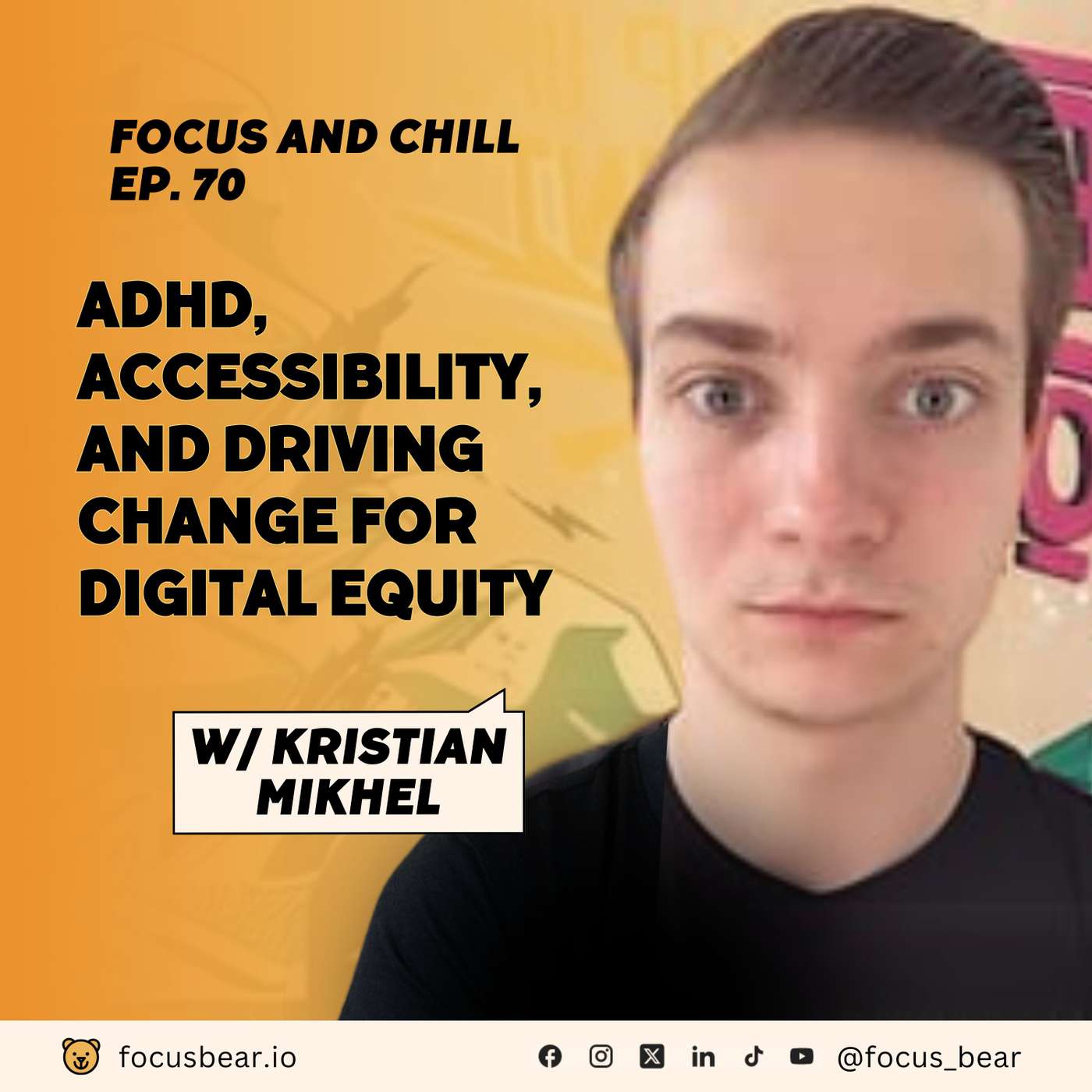
Welcome to episode #70 We’re thrilled to be joined by Kristian Mikhel today. Kristian is a co-founder of Paper and Pain, a creative collective for good, a PhD candidate at the University of Tasmania, and an accessibility designer. He's been sharing his experience living and working with ADHD, advocating for equal digital rights and inclusive experiences, and helping products that benefit humans and communities. Welcome to the show Kristian! Questions JN: Can you tell us about your experience with neurodiversity? When did you realize that you weren’t neurotypical? Diagnosed in 2023, but has struggled with concentration, focused work, and motivation since junior school. Initially, he wasn’t aware of the condition. His level of acceptance was a lot lower when he was growing up It was thought to be a kids-only condition. What challenges did you face? Trying to calm myself down, feeling agitated and nervous constantly for no good reason, leaving tasks incomplete, and getting bored. Family wouldn’t understand Sitting in one place for an hour was really difficult Would want to split a task up. Initially, he thought his inability to complete tasks was depression. A feeling of rolling in the fog before diagnosis. Defense mechanism Against feeling of Not being “motivated enough.” What changes have come post-diagnosis? Just knowing that you’ve got ADHD and having a diagnosis that explains that it’s not you, it’s your disability, helps a lot It’s like putting on glasses and now your vision is better. When you know what your dealing with, it’s sometimes as good as half the solution. Feeling well supported. What challenges do you still face now? The feeling of guilt for not being productive enough, constantly trying to find new things to keep me excited, access to medication (hello, Australian healthcare) The rushing mentioned below can be tough to manage. It’s like driving really fast and then braking hard over and over again. What neuro-exceptional strengths are you leaning into now? I don’t think I would call them “strengths”, but I’ve learned to complete things very fast to avoid getting bored, so sometimes, I would finish a massive project in a few hours and have the rest of the time to myself (well, I end up filling it with other projects, so that’s barely a win). Self-awareness of attention span Need to get a task done in 20 minutes otherwise, he’s going to get bored. The analogy of a match being lit needs to get stuff done before the match burns out. JC: What "work" projects are you concentrating on? PhD Focus on improving communication about air quality building a design agency Help out non-profits and well-being orgs with design writing articles Publish where? host a podcast (Paper and Pain) write a newsletter (The Accessibility Apprentice) Questions: How do you balance PhD with the other commitments? Understanding that there is life beyond work and commitments Logistically: Still trying to work it out Trying not to stick too rigidly to a routine. Loosely A few hours of fun in the morning Coffee Make breakfast Watch TV While in a cheerful mood Solving the biggest problems Literature reviews Later on Focus timers Where did the name Paper & Pain come from? Why air quality comms - particular interest in that problem? JN: How about the rest of the time? What do you enjoy doing in your off time? Is there such a thing as an off-time? Wants to prioritise these things that make life beautiful Working out Getting out of the house Reading Usually has 5-6 books simultaneous 1-2 are research pieces. Light fiction: 100-year Swedish man who jumped out the window Classics Hemmingway, Tolstoy Fukow? Foucault? (spelling?) Hobbies Trying new things - ask him about the most exciting thing he has tried. I recently moved to Tassie, a lot of nature and walking I read a lot (and sometimes, I even finish the books I pick up), watch good movies, cook I’m an incredibly social creature if I don’t get to spend time with other people, my condition gets worse very fast JC: Productivity tips What do you do to optimize productivity during your working hours? Paradoxical strategy: try not to focus on productivity because otherwise, it ends up being a checkbox mentality Instead, focus on areas of interest (e.g. enjoys literature review) Ignore tasks that don’t add value - ruthlessly remove The best I could come up with, I minimize distractions by spending some time setting up my workstation, muting all notifications, and setting timers Workouts and a good diet help, but maybe don’t work out during work hours? What is some unhelpful productivity advice that doesn’t work for you? I don’t like making plans in advance, especially when they’re too detailed: breaking big tasks into subtasks causes you to lose track of the work. Too much meta work. You end up chasing the to-do list instead of enjoying it Using AI to optimize calendar/to-do list: removes Counting hours: results matter more than time spent I can’t meditate (too boring), although dee