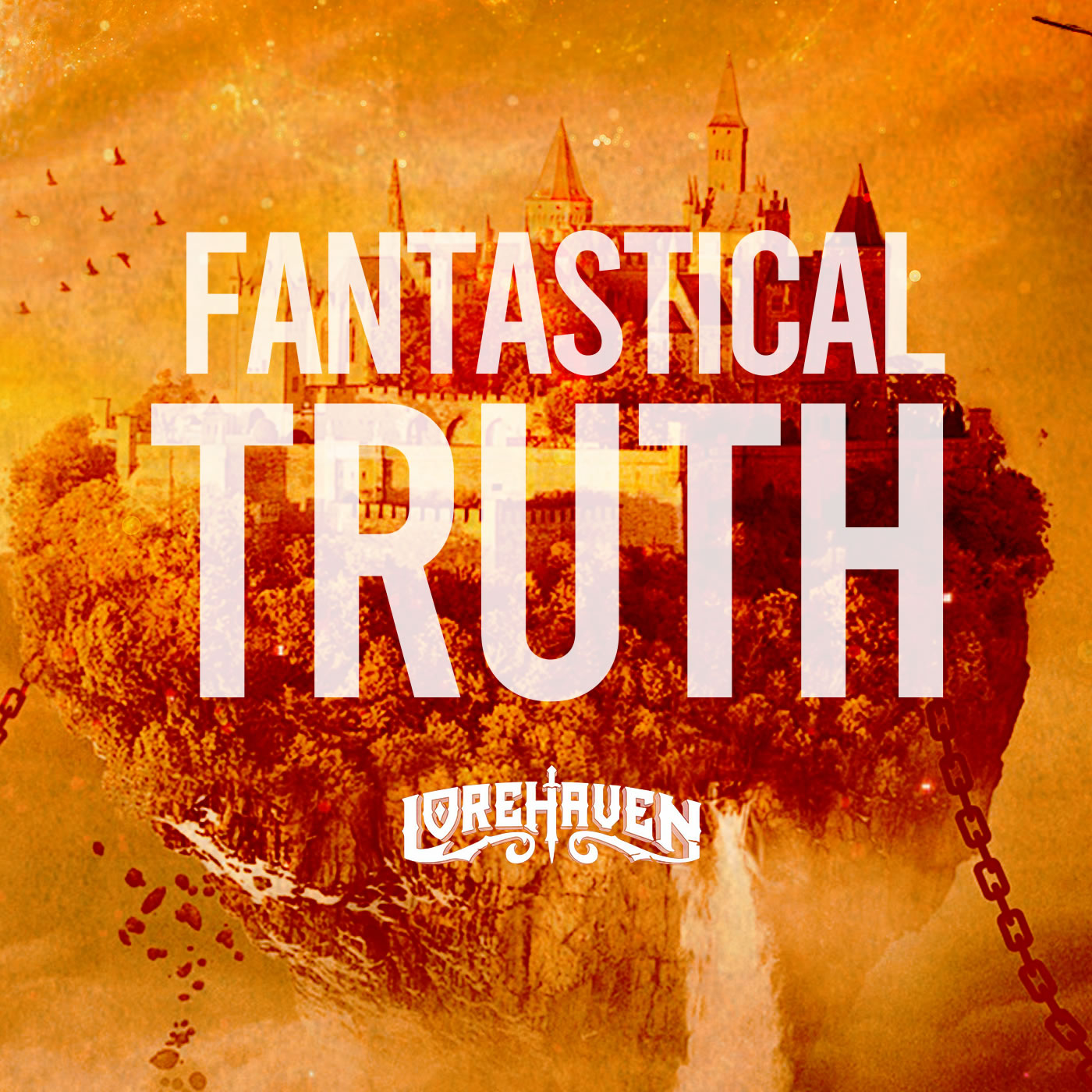
337. Are Passionate Fans Really Waging a Scary Culture War?
In the last month, we have seen fans who share their strong feelings about, say, horror fiction, movie trailers, or big studio companies. In response these fans often hear scoffing from high-school bullies who hate “nerds.” But there’s a new and not-very-clever tactic in play. It’s the accusation that passionate fans are just turning into monsters who may be worse than Satan—fighters in a scary culture war. Why do some critics say this? What do they mean? And how is this a great big old manipulative lie that can easily be defeated with good sense?
Episode sponsors
- Enclave Publishing: Karabos by Lyndsey Lewellen
- The Seekers Series by J. A. Webb
- King Justice: The Legend Begins by Evelyn M. Exley
Mission update
- New at Lorehaven: review of Starfall Quest by Emily Golus
- New book quest on Monday, Nov. 2: Maxine Justice: Public Offender
- Subscribe free to get updates and join the Lorehaven Guild
1. Critics and cowards vs. just ‘culture war’
- That term “culture war” came from a 1991 book, Culture Wars: The Struggle to Define America by sociologist James Davison Hunter.
- Yes, this often relates to politics, but first to pre-political ideas.
- Here and later, the phrase means clashes over deep moral beliefs.
- “Culture war” isn’t actually a real war. It’s about people arguing.
- So when critics fault this “war,” they effectively reject debate.
- They may have a desire for people to “be nice” or “just get along.”
- Without healthy debate, people will find worse methods of conflict.
- And for Christians, simple cultural engagement is often slandered.
- Many conflicts are necessary, from real wars to “culture wars.”
- In the Bible and today, it’s okay to fight for noble causes and life.
- Some critics of “war” are weary and need special consideration.
- But others are cowards who just want to skip all debates and win.
2. Mistaken ‘culture warriors’ vs. Halloween
- War critics (or cowards) often point to examples of bad warriors.
- They imply or state outright a comparison between them and fans.
- Example: What about Christians who acted bad about, say, trick-or-treating? Your defense of a story looks just like them, I decided.
- Assume this point is right about zealous anti-Halloween believers.
- In fact, some Christians have fallen into unbiblical “Satanic panic.”
- But this tactic assumes, without proof, an allegorical connection.
- In any conflict, physical or verbal, motive and methods do matter.
- That’s why adults try to see who hit first and what is self-defense.
- Many randos try to assume moral authority to judge your motives.
- And yet many Christians rightly have concerns about Halloween.
- They have rights to ignore trick-or-treating, or else engage this.
- Either way, we must only engage based on the best intel we have.
3. Fans are right to defend stories they love.
- Apply all this to two recent issues: horror tales and a Netflix movie.
- For horror, Christians debate whether to read/watch. Who’s sinful?
- Answer: Neither side, really. At least they’re all debating the topic!
- In fact, the actual monster would be scoffers who sneer at either.
- They refuse to participate in debate. They want to skip it and win.
- Similarly, consider “true Narnians” versus Netflix-curious fans.
- In this debate over a new movie, which of them is committing sin?
- Answer: Neither one. It’s okay to defend what you naturally like.
- The actual sinners? Those who weaponize political tricks vs. fans.
- Example: activists who ruined BioWare just to “own the chuds.”
- They do not love stories or debate. They want to win by default.
- So they rarely talk of “sin,” only imply shame. This is manipulation.
Fans have rights to engage or not
- Every fan may hold strong beliefs and insist on following them.
- Every fan is also a consumer with rights to like/dislike products.
- Fans may accept or decline new stories based on their marketing.
- Fans hold all rights to refuse stories based on dislike of creators.
- Fans hold all rights to like or dislike based on any personal reason.
- Fans hold all rights to insist on adaptation faithfulness.
- Fans hold all rights to demand new versions respect the creator.
- Fans hold rights to answer fools according to their folly.
- Fans are responsible to do any hard debating with courtesy.
- Fans are responsible to tell the truth about story creators.
Com station
Top question for listeners
- Has anyone tried to shame you just for liking or disliking a story?
Luke observed about the Devil (episode 336):
I wonder if the Bible has relatively little to say about Satan’s “backstory” because pure evil is by its nature just so boring. The devil doubtless thinks his narcissistic rebellion and slander very important, but God in His wisdom as an author left all of that out.
Next on Fantastical Truth
Boom. Boom. BOOOOOOOOOM!
(slight gurgling rumbles in the far distance …)
“HHHHRRRRRRRROOOOAAAAIIIIEEEEEEEEEEE!!!”
You May Also Like

Beauty Bytes with Dr. Kay: Secrets of a Plastic Surgeon™
Kay Durairaj, MD, FACS @beautybydrkay
Choice Classic Radio Detectives | Old Time Radio
Choice Classic Radio
Bourbon Pursuit
Bourbon Pursuit

Grow My Salon Business Podcast
Antony Whitaker

True Detective Stories from the Archives of the Pinkertons
Cleveland Moffett

Daily Short Stories - Mystery & Suspense
Sol Good Network

Daily Short Stories - Ghost and Horror Stories
Sol Good Network

Old Time Radio Westerns
Andrew Rhynes
The Slowdown: Poetry & Reflection Daily
Eliana Benavides

Biscuits & Jam
Southern Living
Beauty Bytes with Dr. Kay: Secrets of a Plastic Surgeon™
Kay Durairaj, MD, FACS @beautybydrkay
Choice Classic Radio Detectives | Old Time Radio
Choice Classic Radio
Bourbon Pursuit
Bourbon Pursuit
Grow My Salon Business Podcast
Antony Whitaker
True Detective Stories from the Archives of the Pinkertons
Cleveland Moffett
Daily Short Stories - Mystery & Suspense
Sol Good Network
Daily Short Stories - Ghost and Horror Stories
Sol Good Network
Old Time Radio Westerns
Andrew Rhynes
The Slowdown: Poetry & Reflection Daily
Eliana Benavides
Biscuits & Jam
Southern Living
Community discussion