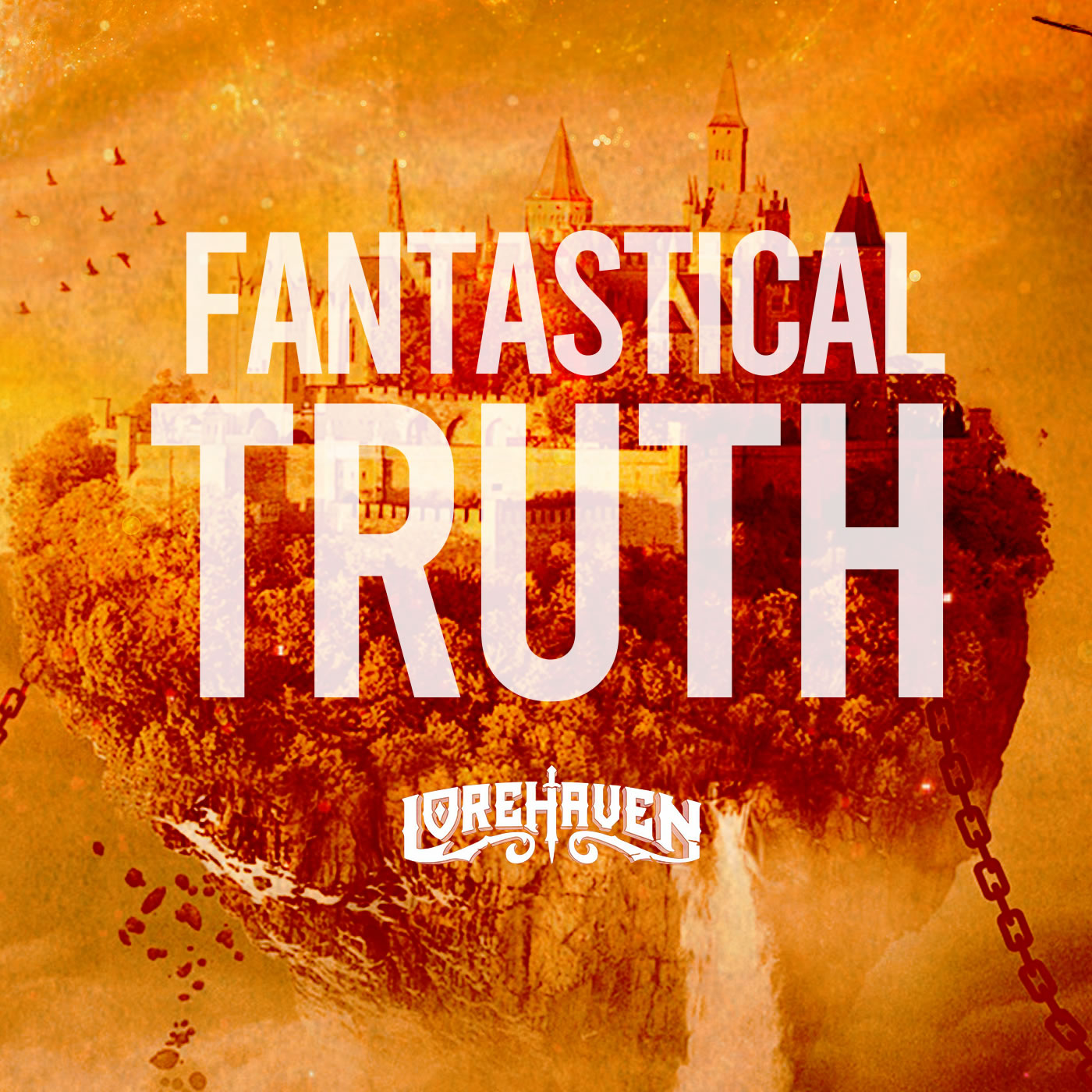
26. How Do We Defeat the Top Seven Myths about The Chronicles of Narnia? Part 2
Does the wardrobe equal the Bible, the White Witch equal Satan, and Peter equal—well, Peter? Some people read C. S. Lewis’s Chronicles of Narnia series as if only its “allegories” matter. Should you? That’s one of our four myths we explore in this episode to conclude our Narnia’s Top Seven Myths series. 4. Queen Susan “fell away” and will never return to Narnia again. This myth arises near The Last Battle ‘s end, when Aslan is making all things new. Much virtual and real ink has been spilled asking what happened to Susan? Some feminists and many atheists really hate this part. Phillip Pullman says ( source ): This seems to me on the part of Lewis to reveal very weird unconscious feelings about sexuality. … It’s a filthy thing to do. Susan is shut out from salvation because she is doing what every other child who has ever been born has done – she is beginning to sense the developing changes in her body and its effect on the opposite sex. Emily Wilson in the New Republic says: poor Susan cannot get into heaven because she starts wearing lipstick … “I don’t know, therefore aliens,” seems to become, “I don’t know, therefore, sex.” From reading the text, we actually see it’s not really about makeup or sex. How absurd. Lewis is all about the original goodness of God’s created gifts. It’s not about “growing up.” It’s about the vanity we claim is “growing up.” Only if you assume one is “grown up” at this age would you reject Lewis here. Lewis himself answered the question. In 1960 a reader named Pauline Bannister asked Lewis about Susan. He replied: Dear Pauline Bannister I could not write that story [about Susan’s future?] myself. Not that I have no hope of Susan’s ever getting to Aslan’s country, but because I have a feeling that the story of her journey would be longer and more like a grown-up novel than I wanted to write. But I may be mistaken. Why not try it yourself? —from The Collected Letters of C. S. Lewis, Volume 3: Narnia, Cambridge, and Joy , pages 1,135–1,136 Lewis literally asks his reader to consider fanfiction. “Why not try it yourself?” Of course, he suggests this long before fanfiction became a huge “industry.” But it’s very clear Lewis believes Susan will someday return to true Narnia. 3. Emeth in The Last Battle reveals that C. S. Lewis was a universalist. This one gets complex. Again, we could have a whole episode here. It deals with Emeth, a Calormene (not a Narnian) in The Last Battle . Near Narnia’s end, Emeth enters a stable and a kind of in-between afterlife. Emeth served a false god all his life, but then Aslan welcomed him and his services. Some Christians say, “This means C. S. Lewis was a universalist.” This is refuted by comparing this with Lewis’s nonfiction ( examples here ). Lewis defended the doctrine of Hell in Mere Christianity and elsewhere. He acknowledged it’s tough, but said in The Problem of Pain it’s still biblical. There’s no doctrine which I would more willingly remove from Christianity than the doctrine of hell, if it lay in my power. But it has the full support of Scripture and especially of our Lord’s own words; it has always been held by Christendom and it has the support of reason. Where there is a “contradiction,” Lewis’s nonfiction interprets his fiction. At least one other book explores Heaven vs. Hell: The Great Divorce . In this book, people leave “hell” and tour heaven, revealing their evil. Lewis says he doesn’t make afterlife speculations. It’s about today’s choices. What’s going on in The Last Battle anyway? Emeth may fall into a category in some Christian traditions: a “noble pagan.” There’s an idea that good non-Christian people have a chance somehow. In 2008 during a forum discussion, Phillip Pugh summarized Lewis like this: One has to remember when reading Lewis that he is at heart a Medievalist even if his theology is basically Anglican. When reading Medieval works like Dante’s Divine Comedy (which had a profound effect on Lewis) we find that the “Noble pagans” like Socrates, Plato, and Virgil, are placed in a sort of limbo where they are not suffering and yet there is no light. I think Lewis has something of this in mind, taking some cues from George MacDonald to embellish it (though not taking it to MacDonald’s universalist extreme). He is saying that Emeth had Tash and Aslan confused because of his cultural background. I disagree, but it’s not as bad as many would think. That’s not an idea Scripture teaches. But it’s not the same as universalism. Lewis liked to speculate, and he did speculate about “inclusivism.” That is, what if God gave you some kind of chance to repent after death? We can’t make thi
You May Also Like
Not A Podcast ASOIAF Re-Read Podcast
NotACast

Fresh Air
Fresh Air
Nothing To Wear
Mamamia Podcasts

All Of It
WNYC

Mahlakung
Thobela FM
Beauty Bytes with Dr. Kay: Secrets of a Plastic Surgeon™
Kay Durairaj, MD, FACS @beautybydrkay

Von rechts gelesen
Jungeuropa Verlag | Philip Stein
Choice Classic Radio Detectives | Old Time Radio
Choice Classic Radio
Bourbon Pursuit
Bourbon Pursuit

Grow My Salon Business Podcast
Antony Whitaker
Not A Podcast ASOIAF Re-Read Podcast
NotACast
Fresh Air
Fresh Air
Nothing To Wear
Mamamia Podcasts
All Of It
WNYC
Mahlakung
Thobela FM
Beauty Bytes with Dr. Kay: Secrets of a Plastic Surgeon™
Kay Durairaj, MD, FACS @beautybydrkay
Von rechts gelesen
Jungeuropa Verlag | Philip Stein
Choice Classic Radio Detectives | Old Time Radio
Choice Classic Radio
Bourbon Pursuit
Bourbon Pursuit
Grow My Salon Business Podcast
Antony Whitaker
Community discussion