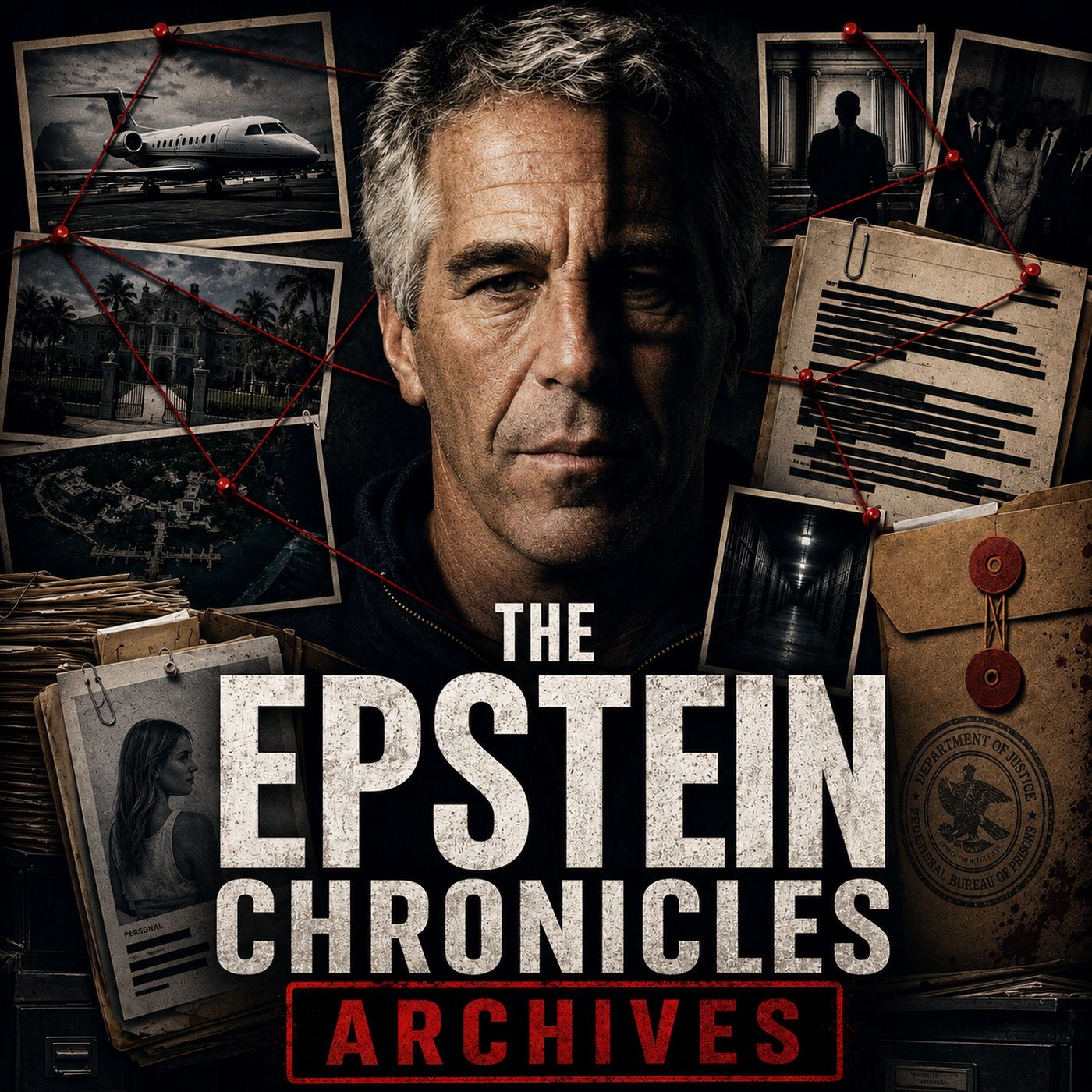
The Epstein Death Question Revisited With Dr. Michael Freeman’s New Findings
Dr. Michael Freeman, a professor of forensic medicine and editor-in-chief of the Journal of Forensic and Legal Medicine, concluded after reviewing Jeffrey Epstein’s full autopsy materials that the injuries documented on Epstein’s body were far more consistent with homicide than suicide. Freeman was given access to the medical examiner’s file and unreleased autopsy photographs by Epstein’s brother, Mark, and conducted a biomechanical analysis of the ligature injuries. He focused on the pattern of bruising and cuts across Epstein’s neck, face and shoulder, as well as the angle of the ligature furrow, arguing that the combination suggested movement and struggle rather than a straightforward hanging. Freeman said the injuries were so atypical for suicide that, if Epstein had actually killed himself in the manner officially described, it would represent an extraordinarily unusual hanging.
Freeman also identified major problems with the original forensic investigation, including the absence of photographs showing Epstein’s body as it was found in the cell and the failure to preserve and properly examine the ligature itself. Those omissions made it impossible to fully reconstruct the mechanics of the hanging after the fact. Freeman’s analysis was not based simply on the well-known fractures in Epstein’s neck, but on the total injury pattern and the amount, direction and location of force that would have been required to produce it. His position was that the physical evidence pointed toward another person applying force to Epstein’s neck during a struggle, rather than Epstein creating the injuries through partial suspension from his bunk. Freeman was preparing to publicly present the biomechanical findings and release the underlying autopsy material so that the homicide-versus-suicide question could be evaluated on the forensic evidence itself.
to contact me:
[email protected]
source:
'Jeffrey Epstein's death was more likely a struggle, not suicide - this is the evidence' | News US | Metro News
You May Also Like

Voices from the Field
NCCIH-CCNSA
Worship & Wonder Daily Devotional
Westminster Presbyterian Church
Scrolls & Secrets
Scrolls & Secrets

AZense Guideline Updates
Azense Medical Education

Renascença - Pergunte ao Pe. Paulo Franco
Renascença

Darrers podcast - Ràdio Cubelles
Ràdio Cubelles

Defected Records
Defected Records

Darrers podcast - Ràdio Ciutat de Badalona
Ràdio Ciutat de Badalona

CHURCH on SermonAudio
Various Speakers

FLASH Recordings
FLASH Recordings
Voices from the Field
NCCIH-CCNSA
Worship & Wonder Daily Devotional
Westminster Presbyterian Church
Scrolls & Secrets
Scrolls & Secrets
AZense Guideline Updates
Azense Medical Education
Renascença - Pergunte ao Pe. Paulo Franco
Renascença
Darrers podcast - Ràdio Cubelles
Ràdio Cubelles
Defected Records
Defected Records
Darrers podcast - Ràdio Ciutat de Badalona
Ràdio Ciutat de Badalona
CHURCH on SermonAudio
Various Speakers
FLASH Recordings
FLASH Recordings
Community discussion