“What is Neurorrhaphy and Key Repair Techniques used in Surgery?”
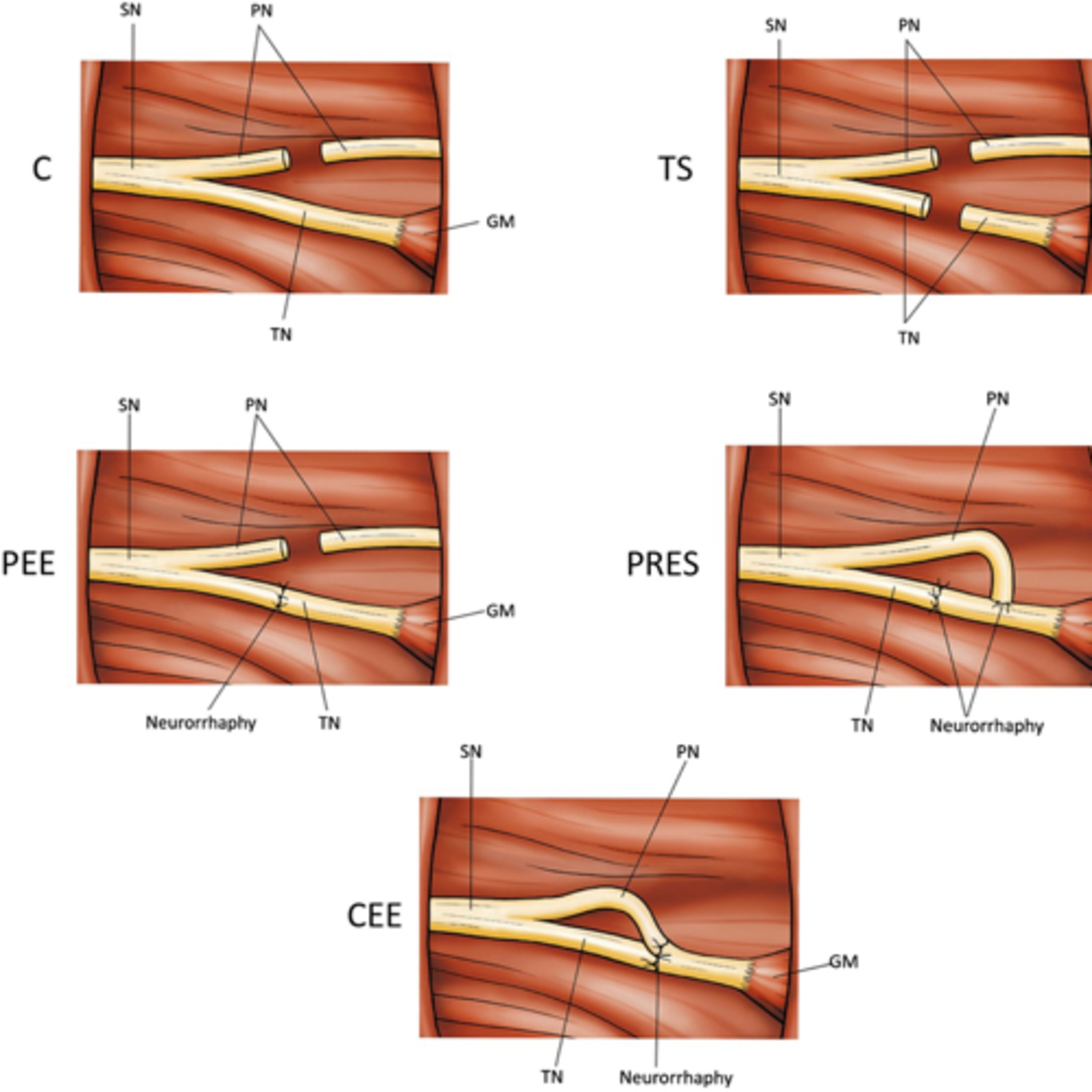
9.18.23 Quick Read #58 - #nerves #nerverepair #oralsurgery #oralsurgeon #dental #dentistry #doctorgallagher #surgery #surgeon #residency #nerve Neurorrhaphy is a delicate surgical procedure that involves the precise reconnection of damaged or severed nerves. Primary end-to-end neurorrhaphy (PEE), nerve primary repair associated with end-to-side nerve transfer (PRES), and nerve repair by convergent end-to-end (CEE) neurorrhaphy are surgical techniques used in nerve repair and reconstruction, particularly in cases of nerve injuries: 1. Primary End-to-End Neurorrhaphy (PEE): • PEE is a standard technique in nerve repair where the two severed ends of a damaged nerve are directly sutured or stitched together. • It is typically used when the nerve gap is short, and the nerve ends are healthy and amenable to direct reconnection. • The goal of PEE is to restore continuity to the nerve, allowing for regeneration and functional recovery. 2. Nerve Primary Repair Associated with End-to-Side Nerve Transfer (PRES): • PRES involves a combination of two techniques: primary nerve repair and end-to-side nerve transfer. • In this approach, the damaged nerve is primarily repaired by suturing its severed ends together (similar to PEE). • Additionally, an end-to-side nerve transfer is performed by attaching a healthy, adjacent nerve to the side of the damaged nerve. • The purpose of the end-to-side transfer is to potentially enhance nerve regeneration by providing a source of axons (nerve fibers) to the damaged nerve. 3. Nerve Repair by Convergent End-to-End (CEE) Neurorrhaphy Between the Proximal Stumps: • CEE neurorrhaphy is a specialized technique used when there is a gap between the proximal (closer to the center of the body) stumps of two nerves. • Unlike traditional end-to-end neurorrhaphy, where the two cut nerve ends are sutured directly, CEE involves creating a V-shaped or Y-shaped suture pattern to bring the proximal stumps together. • This technique is used when direct end-to-end repair is not possible due to tension or a sizeable gap between the nerve stumps. References: • Nepomuceno, A. C., de Faria, J. C., Politani, E. L., Silva, E. G., Salomone, R., Longo, M. V., Lima, W., Salles, A. G., & Gemperli, R. (2019). Convergent end-to-end neurorrhaphy: An alternative technique for dual innervation of the gastrocnemius muscle in rats. Microsurgery, 39(5), 459-465. https://lnkd.in/edMazTEv • Mackinnon, S. E., & Dellon, A. L. (1988). Surgery of the peripheral nerve. Thieme Medical Publishers. • Terzis, J. K., & Tzafetta, K. (2009). “The ‘babysitter’ procedure: minihypoglossal to facial nerve transfer and cross-facial nerve grafting.” Plastic and Reconstructive Surgery, 123(3), 865-876. • Spinner, R. J., & Bishop, A. T. (2000). “The Proximal Convergent Nerve Injury: A Unique and Misleading Variant of Nerve Injury.” Journal of Hand Surgery, 25(5), 799-809. • ChatGPT. 2023.
You May Also Like

Das Kalenderblatt
Bayerischer Rundfunk

Dare to Dream with Debbi Dachinger
DARE TO DREAM: Debbi Dachinger

SHIR HADASH
Shir Hadash

Supreme Being
Bryan Casella

FluentFiction - Estonian
FluentFiction.org

Fluent Fiction - Norwegian
FluentFiction.org

Fluent Fiction - Portuguese (Portugal) 🇵🇹
FluentFiction.org

Fluent Fiction - Portuguese (Brazil) 🇧🇷
FluentFiction.org

FluentFiction - Romanian
FluentFiction.org

FluentFiction - Bulgarian
FluentFiction.org
Das Kalenderblatt
Bayerischer Rundfunk
Dare to Dream with Debbi Dachinger
DARE TO DREAM: Debbi Dachinger
SHIR HADASH
Shir Hadash
Supreme Being
Bryan Casella
FluentFiction - Estonian
FluentFiction.org
Fluent Fiction - Norwegian
FluentFiction.org
Fluent Fiction - Portuguese (Portugal) 🇵🇹
FluentFiction.org
Fluent Fiction - Portuguese (Brazil) 🇧🇷
FluentFiction.org
FluentFiction - Romanian
FluentFiction.org
FluentFiction - Bulgarian
FluentFiction.org
Community discussion