“What Differentiates ‘Locking’ vs. ‘Non-Locking’ Bone Screws For Fracture Repairs?”
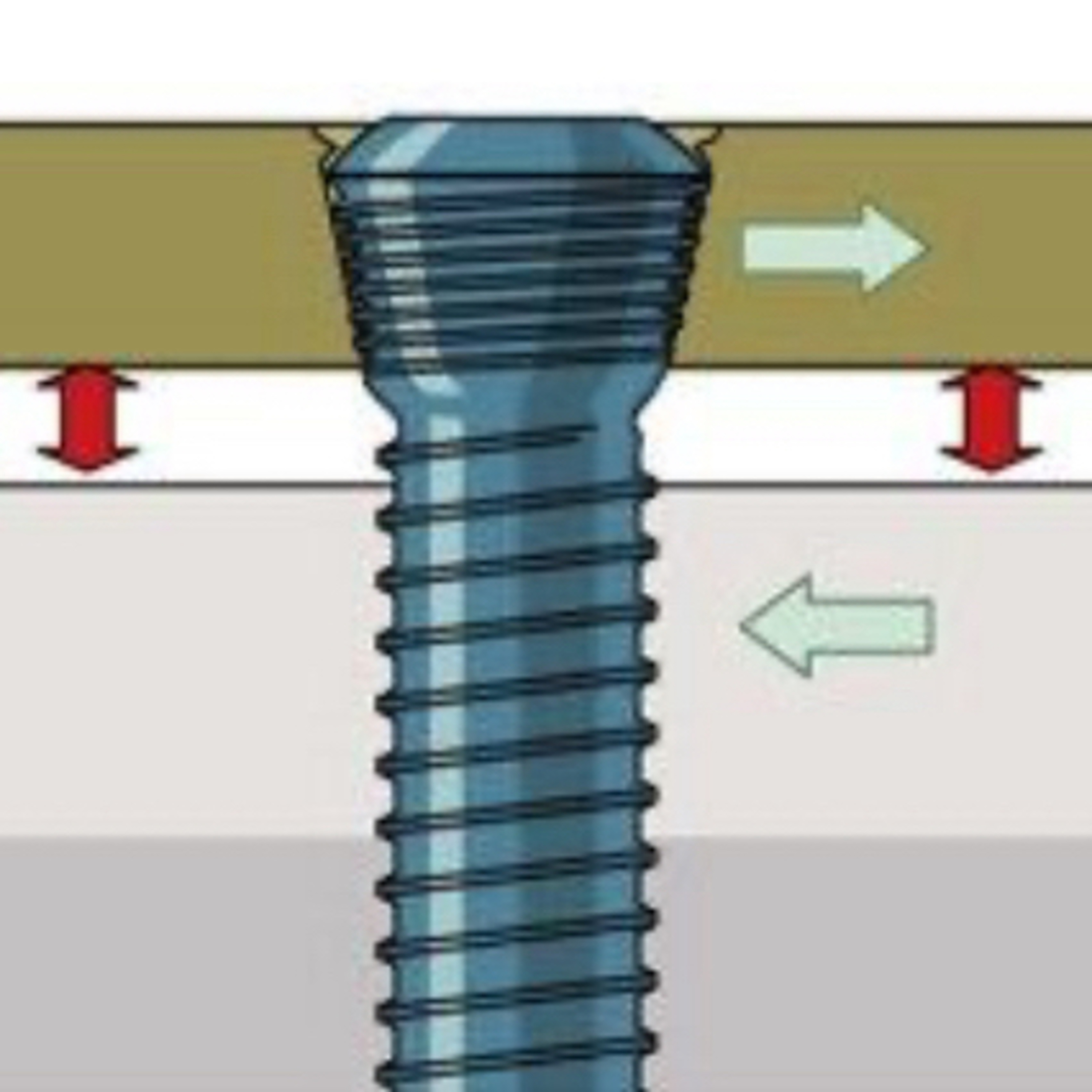
6.10.24 Quick Review #146 - #surgery #surgeon #doctorgallagher #oralsurgery #oralsurgeon #omfs #dentist #dentistry #dental Locking Bone Screws: 1. Mechanism: • Locking screws engage both the bone and the plate, creating a fixed-angle construct. The screw threads lock into the plate holes. 2. Stability: • Provide more stable fixation, especially in osteoporotic bone or comminuted fractures where bone quality may be compromised. • Reduces the risk of the screws loosening from the bone over time. 3. Biomechanics: • Create a more rigid fixation system that distributes stress more evenly between the bone and the plate. • Less dependence on the bone’s quality, as the screw-plate interface provides the majority of the stability. 4. Application: • Particularly beneficial in cases where bone fragments are small or in poor quality bone where traditional screw purchase might be unreliable. • Often preferred in complex or multi-fragmentary fractures. Non-Locking Bone Screws: 1. Mechanism: • Non-locking screws compress the plate against the bone. The stability is primarily dependent on the friction between the plate and the bone surface. 2. Stability: • Stability is more dependent on the quality of the bone. If the bone is weak or osteoporotic, the risk of screw loosening increases. • Suitable for simple fractures with good bone quality. 3. Biomechanics: • Allow for some micro-movement between the plate and bone, which can be beneficial in certain types of fracture healing (e.g., indirect healing with callus formation). • More reliant on the bone-plate interface for stability. 4. Application: • Often used in situations where the bone quality is good, and the fracture is not highly comminuted. • Generally less expensive and easier to handle in straightforward fractures. Clinical Considerations: • Patient Factors: -In elderly patients or those with compromised bone quality, locking screws may provide more reliable fixation. -In younger patients with good bone quality, non-locking screws may be sufficient. • Fracture Type: -Comminuted or complex fractures may benefit from the additional stability provided by locking screws. -Simple, non-complex fractures can often be managed effectively with non-locking screws. References: 1. Szpyryt, P., & Forward, D. (2009). The use and abuse of locking plates. Orthopaedics and Trauma, 23(4), 281-290. https://lnkd.in/eMPv7ZYM 2. Alpert, B., & Gutwald, R. (2012). Comparison of Locking Plates and Non-Locking Plates for the Internal Fixation of Mandibular Fractures. Journal of Oral and Maxillofacial Surgery, 70(3), 654-661. doi:10.1016/j.joms.2011.09.037 3. Champy, M., Lodde, J. P., Schmitt, R., Jaeger, J. H., & Muster, D. (1978). Mandibular Osteosynthesis by Miniaturized Plates via a Buccal Approach. Journal of Maxillofacial Surgery, 6(1), 14-21. doi:10.1016/S0301-0503(78)80019-8 4. ChatGPT. 2024. #podcast #podcasts #dentalpodcast #dentalpodcasts #doctorgallagherpodcast #doctorgallagherspodcast #doctor #dentistry
You May Also Like

Motivational Speeches
Motivationly

Les dents et dodo
BFMTV

edWebcasts
edWeb
Kabbalah Media | mp3 #kab_ger
Bnei Baruch Kabbalah Education and Research Institute, Бней Барух – Ассоциация "Каббала Ла-Ам"
Kabbalah: Daily Lessons | mp3 #kab_por
Bnei Baruch Kabbalah Education and Research Institute, Бней Барух – Ассоциация "Каббала Ла-Ам"
Cabalá: Lecciones Diarias | mp4 #kab_spa
Bnei Baruch Kabbalah Education and Research Institute, Бней Барух – Ассоциация "Каббала Ла-Ам"
Kabbalah Media | mp4 #kab_eng
Bnei Baruch Kabbalah Education and Research Institute, Бней Барух – Ассоциация "Каббала Ла-Ам"
Kabbalah Media | mp3 #kab_eng
Bnei Baruch Kabbalah Education and Research Institute, Бней Барух – Ассоциация "Каббала Ла-Ам"

Thrasherway Podcast
HLT

thethrasherway's podcast
Henry Thrasher
Community discussion