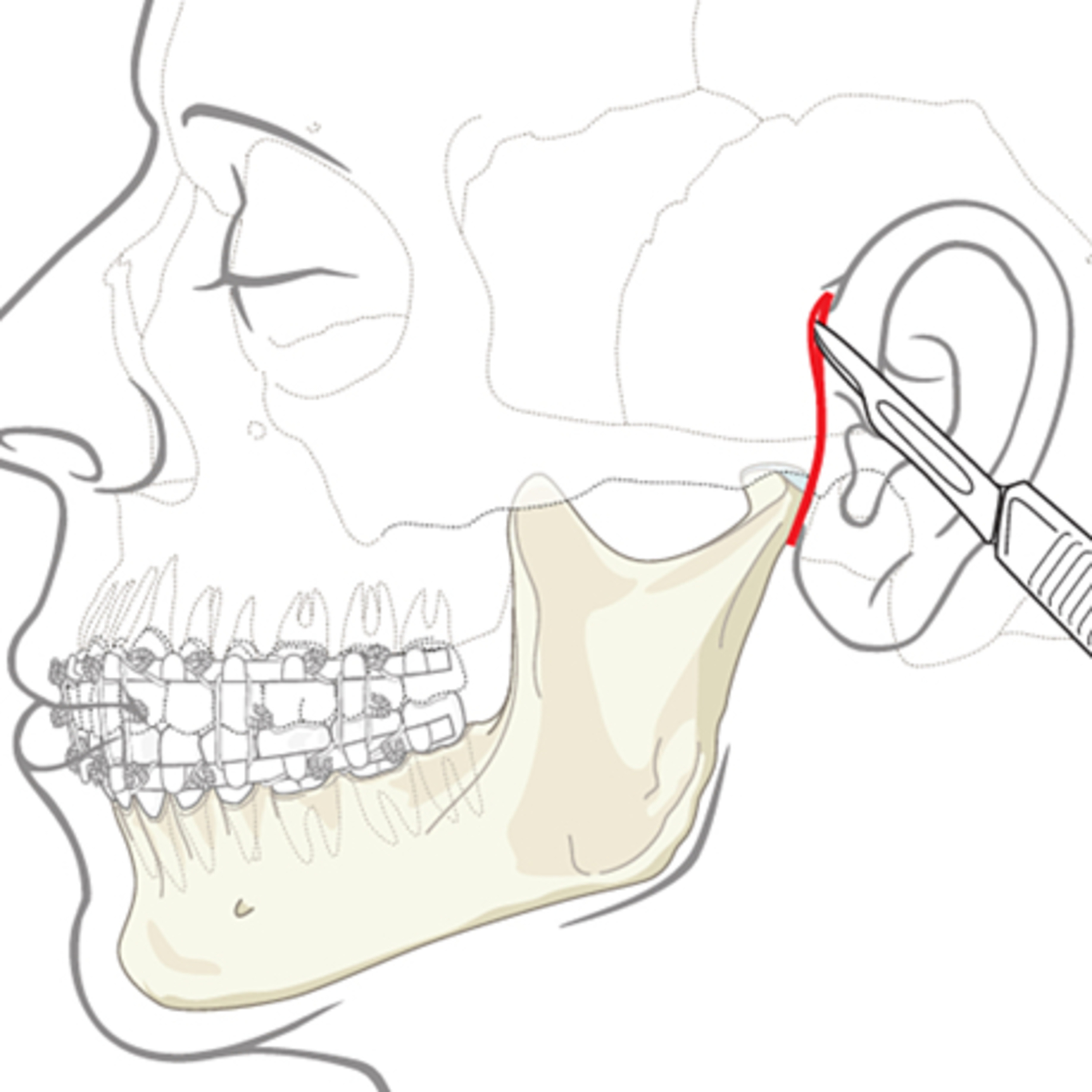
“What are the Preauricular Incision Indications, Design, Pros vs. Cons?”
Quick Review #81 - #surgery #preauricular #plasticsurgery #doctorgallagher #oralsurgery #oralsurgeon #dentist #dentistry #dental #surgeon #doctor The preauricular incision is a surgical technique primarily utilized in oral and maxillofacial surgery, especially for accessing the temporomandibular joint (TMJ) and surrounding structures. The specific indications and details of this approach are as follows: Indications: 1. Upper Condylar Process and TMJ Compartments: The preauricular approach is ideally used for managing problems in these areas. It’s commonly employed in TMJ ankylosis cases. 2. High Condylar Fractures: This incision is also utilized in the treatment of high condylar fractures of the mandible. 3. Limited Exposure: It’s important to note that the exposure offered by the preauricular approach is limited to a portion of the condylar neck region. Surgical Design: • The incision is typically made in a preauricular skin crease, extending from the level of the helix above the tragus to the lobule. This placement is chosen for both functional and aesthetic reasons. • The dissection involves navigating through neurovascular structures, including branches of the facial nerve and the superficial temporal artery and vein. • The approach also involves dissecting down to the temporalis fascia and further to expose the capsule of the TMJ. Pros: • Aesthetic Considerations: One of the main advantages of a preauricular approach is the minimal visibility of scars. • Access to the Superior Part of the TMJ: It provides good access to the superior portion of the TMJ and the anteromedially displaced mandibular condyle. Cons: • Limited Access to Lower Portion: The preauricular approach does not provide access to the lower portion of the condylar process. • Difficulty in Rigid Fixation: Rigid fixation of mandibular condyle fractures can be challenging with this approach. • Risk of Facial Nerve Damage: There’s a significant risk of damaging the facial nerve, which is a major concern in this surgical technique. Additional Considerations: • Careful planning and execution are essential to minimize risks, especially regarding nerve damage. • The technique requires a thorough understanding of the anatomy and careful handling of the neurovascular structures. References: 1. AO Foundation. (n.d.). Preauricular approach. AO Surgery Reference. https://lnkd.in/eeRnQve4. 2. Davies, R. O. H., Cascarini, L., Coombes, D., & Warburton, G. (2020). Two New Surgical Techniques to Refine Surgery Around the Ear: “The Inviscision” and the External Auditory Meatus Suture. Journal of Oral and Maxillofacial Surgery. https://lnkd.in/ettnH4cA. 3. ChatGPT. 2023.
You May Also Like

Hamza Selfimprovement
Adonis Gang

Playlist Culture G : les podcasts pour apprendre chaque jour
Acast France

Lana Blakely
Lana Blakely

Whole Again: A Fresh Approach to Mindfulness and Resilience Through Kintsugi Wisdom
Michael OBrien | Mindfulness & Resilience Coach

Hoy Hablamos: Podcast diario para aprender español - Learn Spanish Daily Podcast
Hoy Hablamos

The Happiness Habit: Building a Joyful and Fulfilling Life
Liquid Studios

Bloco Podcast
Hugo Quinteiro

The Sevan Podcast
Sevan Matossian

Mission To The Moon
Mission To The Moon Media

BHN: Peaceful Empowerment Works
WGSN-DB Going Solo Network
Hamza Selfimprovement
Adonis Gang
Playlist Culture G : les podcasts pour apprendre chaque jour
Acast France
Lana Blakely
Lana Blakely
Whole Again: A Fresh Approach to Mindfulness and Resilience Through Kintsugi Wisdom
Michael OBrien | Mindfulness & Resilience Coach
Hoy Hablamos: Podcast diario para aprender español - Learn Spanish Daily Podcast
Hoy Hablamos
The Happiness Habit: Building a Joyful and Fulfilling Life
Liquid Studios
Bloco Podcast
Hugo Quinteiro
The Sevan Podcast
Sevan Matossian
Mission To The Moon
Mission To The Moon Media
BHN: Peaceful Empowerment Works
WGSN-DB Going Solo Network
Community discussion