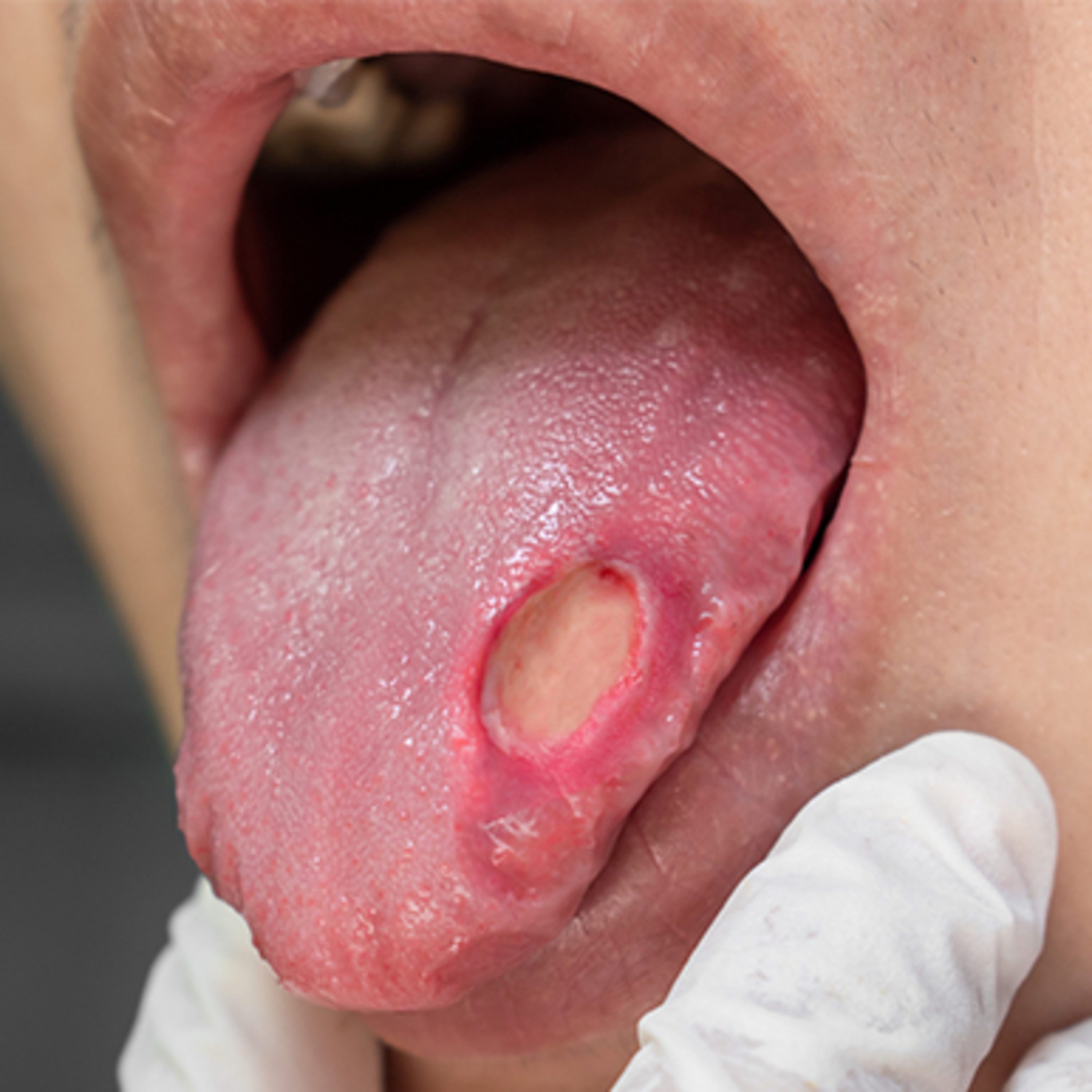
“What are the Most Common Sites & Manifestations of Oral Squamous Cell Carcinoma?”
2.28.24 Quick Review #115 - #cancer #oralcancer #pathology #oralpathology #doctorgallagher #oralsurgery #oralsurgeon #dentist #dentistry #dental Oral squamous cell carcinoma (OSCC) can occur in various locations within the oral cavity, each with its own range of clinical presentations and symptoms. The 5 most common sites include: 1. Tongue (particularly the lateral borders and ventral surface): - Age Range: More common in individuals over 40, but can occur at younger ages, especially in high-risk populations. - Clinical Presentations and Symptoms: Non-healing ulcers or masses, pain or discomfort, difficulty in moving the tongue, changes in speech, and in advanced cases, referred pain to the ear. 2. Floor of the Mouth: - Age Range: Typically observed in individuals over 40. - Clinical Presentations and Symptoms: Non-healing ulcers, masses or swellings, pain or discomfort, difficulty in swallowing (dysphagia), and changes in the fit of dentures. 3. Lower Lip (particularly in individuals with significant sun exposure): - Age Range: More common in older adults, but the age of onset can vary based on lifestyle factors such as sun exposure. - Clinical Presentations and Symptoms: Crusted, scaly lesions with or without ulceration, non-healing sores, color changes, and in some cases, numbness or tingling if nerve involvement occurs. 4. Oropharynx (including tonsils and base of the tongue): - Age Range: Commonly seen in individuals over 40, but with the rise of HPV-associated oropharyngeal cancers, younger populations are also at risk. - Clinical Presentations and Symptoms: Sore throat that does not resolve, difficulty swallowing, unexplained weight loss, and in some cases, a lump in the neck due to metastatic lymph nodes. 5. Gingiva and Alveolar Ridge: - Age Range: More frequently diagnosed in older adults. - Clinical Presentations and Symptoms: Non-healing ulcers or masses on the gums, loose teeth, bleeding, pain, and in advanced cases, bone involvement leading to facial deformities. References: 1. ADA NSW Centre for Professional Development. (2023). Oral Cancer Education Day 2023: Oral Squamous Cell Carcinoma. Retrieved from https://www.adansw.com.au/CPD/Courses/Online/Oral-Cavity-Cancer-(Oral-Squamous-Cell-Carcinoma).aspx?eventid=OC082 2. Neville, B. W., Damm, D. D., Allen, C. M., & Chi, A. C. (2015). Oral and Maxillofacial Pathology (4th ed.). Saunders. 3. Peter, T. K., Withanage, M. H. H., Comnick, C. L., Pendleton, C., Dabdoub, S., Ganesan, S., Drake, D., Banas, J., Xie, X. J., & Zeng, E. (2022). Systematic review and meta-analysis of oral squamous cell carcinoma associated oral microbiome. Frontiers in Microbiology, 13. https://doi.org/10.3389/fmicb.2022.968304 4. ChatGPT. 2024.
You May Also Like

Portal to Ascension Radio
Neil Gaur - Portal to Ascension

The Happiness Habit: Building a Joyful and Fulfilling Life
Liquid Studios
Hardiness with Dr Paul Taylor
Paul Taylor

Shimon Davis
Shimon Davis
Kabbalah Media | mp3 #kab_fre
Bnei Baruch Kabbalah Education and Research Institute, Бней Барух – Ассоциация "Каббала Ла-Ам"
Kabbalah Media | mp3 #kab_por
Bnei Baruch Kabbalah Education and Research Institute, Бней Барух – Ассоциация "Каббала Ла-Ам"
Kabbalah Media | mp3 #kab_ita
Bnei Baruch Kabbalah Education and Research Institute, Бней Барух – Ассоциация "Каббала Ла-Ам"
Kabbalah Media | mp4 #kab_ger
Bnei Baruch Kabbalah Education and Research Institute, Бней Барух – Ассоциация "Каббала Ла-Ам"

Inside Islam
Inside Islam Podcast

STOPTIME: Live in the Moment.
Lisa Hopkins, Wide Open Stages
Community discussion