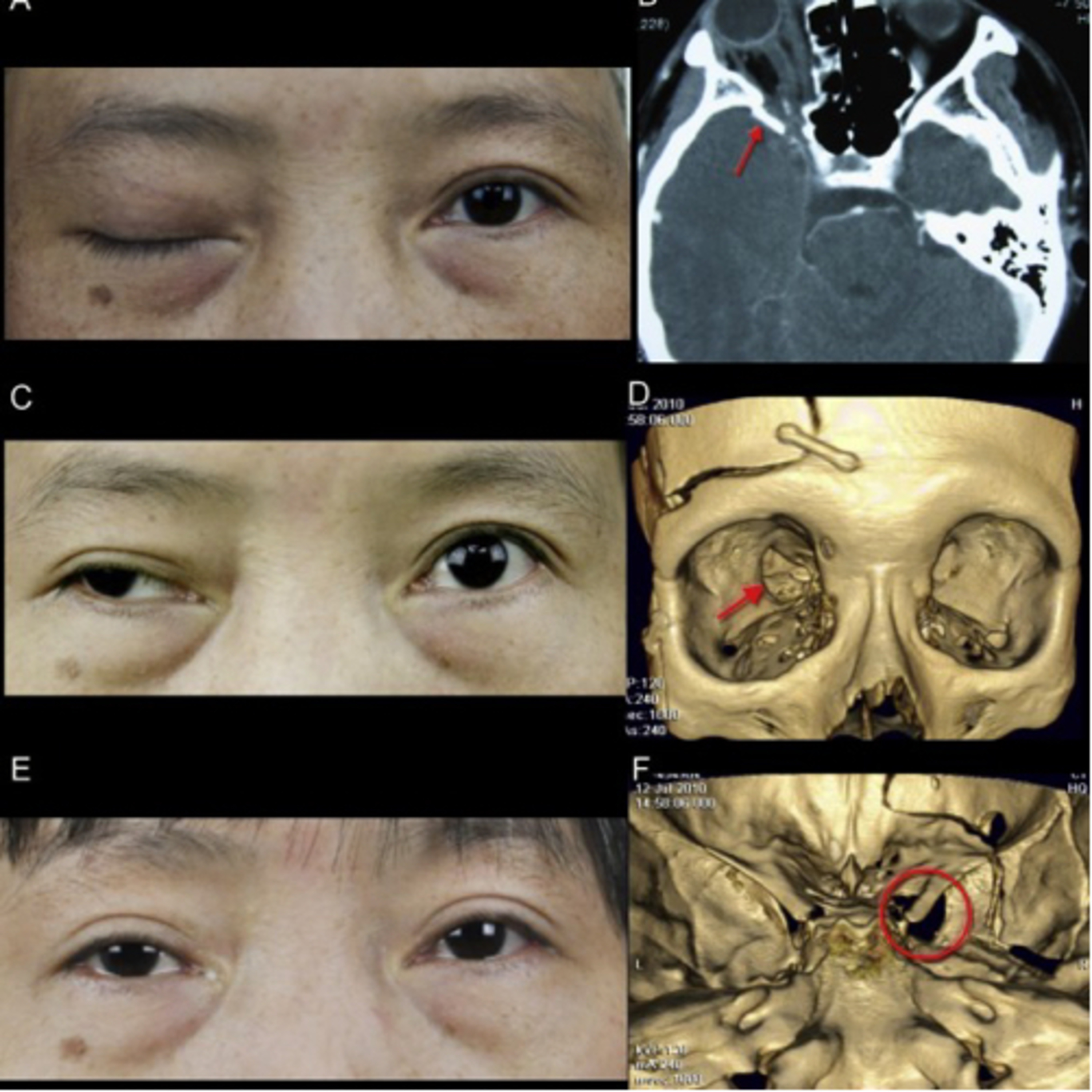
“What Are Key Differences Between Superior Orbital Fissure Syndrome and Orbital Apex Syndrome?”
4.29.24 - #podcast #podcasts #dentalpodcast #dentalpodcasts #doctorgallagherpodcast #doctorgallagherspodcast Quick Review #129 - #surgery #surgeon #doctorgallagher #oralsurgery #oralsurgeon #omfs #dentist #dentistry #dental Superior orbital fissure syndrome and orbital apex syndrome are closely related, however are distinct conditions based on the anatomical regions affected and the clinical manifestations: 1 - Superior Orbital Fissure Syndrome: this condition involves dysfunction of the structures passing through the superior orbital fissure, which includes cranial nerves III (oculomotor), IV (trochlear), VI (abducens), and the ophthalmic branch of cranial nerve V (trigeminal). • The key clinical features are ophthalmoplegia (paralysis of eye movements), ptosis (drooping of the eyelid), and often a dilated and non-reactive pupil, reflecting the involvement of the autonomic fibers in the oculomotor nerve. 2 - Orbital Apex Syndrome: • This condition includes all the features of superior orbital fissure syndrome, with the additional involvement of the optic nerve (cranial nerve II) because the syndrome affects the orbital apex where the optic nerve also passes. • This leads to vision loss or defects, which is a critical symptom not typically seen in superior orbital fissure syndrome. The presence of visual loss or significant visual field defects, along with symptoms of cranial nerve dysfunction similar to those seen in superior orbital fissure syndrome, would suggest orbital apex syndrome. Question of the Day Review (Question posted yesterday, 4/28/24): • In the scenario provided, if there had been an explicit mention of visual loss along with the ophthalmoplegia, ptosis, and fixed dilated pupil, orbital apex syndrome would be a more likely diagnosis. However, without mention of visual loss, superior orbital fissure syndrome remains the more probable diagnosis given the described symptoms. References: 1. Jin, H., Gong, S., Han, K., Wang, J., Lv, L., Dong, Y., Zhang, D., & Hou, L. (2018). Clinical management of traumatic superior orbital fissure and orbital apex syndromes. Clinical Neurology and Neurosurgery, 165, 50-54. https://lnkd.in/e9mJmZAw 2. Yeh, S., & Foroozan, R. (2004). Orbital apex syndrome. Current Opinion in Ophthalmology, 15(6), 490-498. doi: 10.1097/01.icu.0000144389.15482.3d 3. Martin, T. J. (2007). Disorders of the orbit. In K. J. Lee (Ed.), Essential Otolaryngology: Head and Neck Surgery (9th ed., pp. 653-670). New York: McGraw-Hill. 4. Miller, N. R. (2008). Walsh and Hoyt’s clinical neuro-ophthalmology: The essentials (2nd ed.). Baltimore: Lippincott Williams & Wilkins. 5. ChatGPT. 2024.
You May Also Like
How I Work
Amantha Imber

SHIR HADASH
Shir Hadash
Life Hacks DIY & More - Transform Your Everyday With Simple Tricks and DIY Magic!
Byte & Pieces

Motivational Speeches
Motivationly

The Sevan Podcast
Sevan Matossian
Cabalá Media | mp4 #kab_spa
Bnei Baruch Kabbalah Education and Research Institute, Бней Барух – Ассоциация "Каббала Ла-Ам"
Studying Kabbalah #kab_eng
Bnei Baruch Kabbalah Education and Research Institute, Бней Барух – Ассоциация "Каббала Ла-Ам"

Shimon Davis
Shimon Davis

Les dents et dodo
BFMTV

edWebcasts
edWeb
How I Work
Amantha Imber
SHIR HADASH
Shir Hadash
Life Hacks DIY & More - Transform Your Everyday With Simple Tricks and DIY Magic!
Byte & Pieces
Motivational Speeches
Motivationly
The Sevan Podcast
Sevan Matossian
Cabalá Media | mp4 #kab_spa
Bnei Baruch Kabbalah Education and Research Institute, Бней Барух – Ассоциация "Каббала Ла-Ам"
Studying Kabbalah #kab_eng
Bnei Baruch Kabbalah Education and Research Institute, Бней Барух – Ассоциация "Каббала Ла-Ам"
Shimon Davis
Shimon Davis
Les dents et dodo
BFMTV
edWebcasts
edWeb
Community discussion