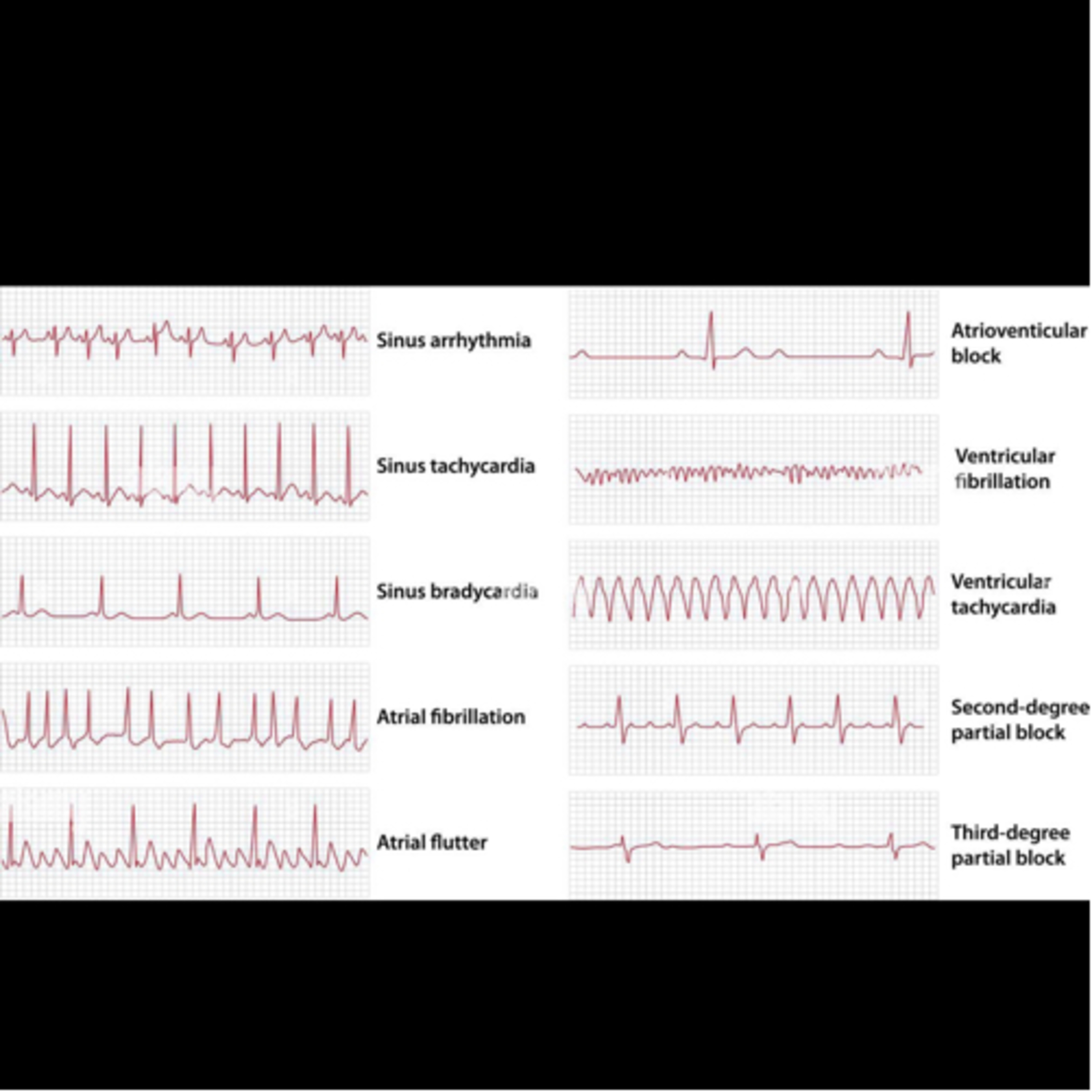
“What Are Common EKG Abnormalities To Look For?”
6.14.24 Quick Review #150 - #surgery #surgeon #doctorgallagher #oralsurgery #oralsurgeon #omfs #dentist #dentistry #dental #anesthesia #ekg 1. Bradycardia (slow heart rate): • Description: A heart rate of less than 60 beats per minute. • Causes: Can be caused by sedation drugs, vagal stimulation, hypoxia, or underlying cardiac conditions. • Treatment: • Mild cases: Often resolve without treatment, monitor closely. • Severe cases: Administer atropine (0.5 mg IV, repeat every 3-5 minutes up to a total of 3 mg) if symptomatic or the heart rate is extremely low. • Persistent bradycardia: May require transcutaneous pacing or emergency medical services (EMS) activation. 2. Tachycardia (fast heart rate): • Description: A heart rate of more than 100 beats per minute. • Causes: Pain, anxiety, hypovolemia, hypoxia, or reaction to medications. • Treatment: • Identify and treat the underlying cause: Provide oxygen, manage pain or anxiety. • If persistent and symptomatic: Beta-blockers (e.g., metoprolol) may be administered if appropriate and no contraindications exist. • Severe cases: Consider calling EMS if there is hemodynamic instability. 3. Premature Ventricular Contractions (PVCs): • Description: Early, wide, and bizarre-looking QRS complexes. • Causes: Hypoxia, electrolyte imbalances, drug effects. • Treatment: • Occasional PVCs: Often benign and require no treatment other than correcting the underlying cause. • Frequent PVCs or runs: Ensure adequate oxygenation, correct electrolytes. If symptomatic, consider antiarrhythmic medications like amiodarone. • If unstable: Call EMS. 4. Atrial Fibrillation (AFib): • Description: Irregularly irregular rhythm with no discernible P waves. • Causes: Can be triggered by stress, hypoxia, electrolyte imbalance, or underlying heart disease. • Treatment: • New onset or symptomatic: Administer rate control medications (e.g., beta-blockers, diltiazem). • If unstable: Immediate cardioversion may be required. Activate EMS. 5. Ventricular Tachycardia (VT): • Description: Regular, wide-complex tachycardia. • Causes: Myocardial ischemia, electrolyte imbalances, drug effects. • Treatment: • Stable VT: Administer antiarrhythmics (e.g., amiodarone). • Unstable VT with a pulse: Immediate synchronized cardioversion. • Pulseless VT: Begin CPR and defibrillation, follow ACLS (Advanced Cardiovascular Life Support) protocols, and call EMS. References: 1. Pohrebnyak, O. (n.d.). Schemes set of common electrocardiogram (ECG) abnormalities, including partial blocks and flutter [Illustration]. Alamy. 2. American Heart Association. (2020). Advanced Cardiovascular Life Support (ACLS) Provider Manual. American Heart Association. 3. Miller, R. D., & Cohen, N. H. (2020). Miller’s Anesthesia (9th ed.). Elsevier. 4. ChatGPT. 2024. - #podcast #podcasts #dentalpodcast #dentalpodcasts #doctorgallagherpodcast #doctorgallagherspodcast #oralsurgeon #dentist #doctorgallagher #doctor #dentistry #oralsurgery #dental #viral #dentalschool #dentalstudent #omfs #surgeon #doctorlife #dentistlife #residency
You May Also Like

FluentFiction - Irish
FluentFiction.org

FluentFiction - Romanian
FluentFiction.org

Fluent Fiction - Portuguese (Brazil) 🇧🇷
FluentFiction.org

FluentFiction - Welsh
FluentFiction.org

Fluent Fiction - Russian
FluentFiction.org

Fluent Fiction - French
FluentFiction.org

Fluent Fiction - Hindi
FluentFiction.org

Fluent Fiction - Arabic
FluentFiction.org

Fluent Fiction - Portuguese (Portugal) 🇵🇹
FluentFiction.org
Kabbalah Media | mp3 #kab_fre
Bnei Baruch Kabbalah Education and Research Institute, Бней Барух – Ассоциация "Каббала Ла-Ам"
FluentFiction - Irish
FluentFiction.org
FluentFiction - Romanian
FluentFiction.org
Fluent Fiction - Portuguese (Brazil) 🇧🇷
FluentFiction.org
FluentFiction - Welsh
FluentFiction.org
Fluent Fiction - Russian
FluentFiction.org
Fluent Fiction - French
FluentFiction.org
Fluent Fiction - Hindi
FluentFiction.org
Fluent Fiction - Arabic
FluentFiction.org
Fluent Fiction - Portuguese (Portugal) 🇵🇹
FluentFiction.org
Kabbalah Media | mp3 #kab_fre
Bnei Baruch Kabbalah Education and Research Institute, Бней Барух – Ассоциация "Каббала Ла-Ам"
Community discussion