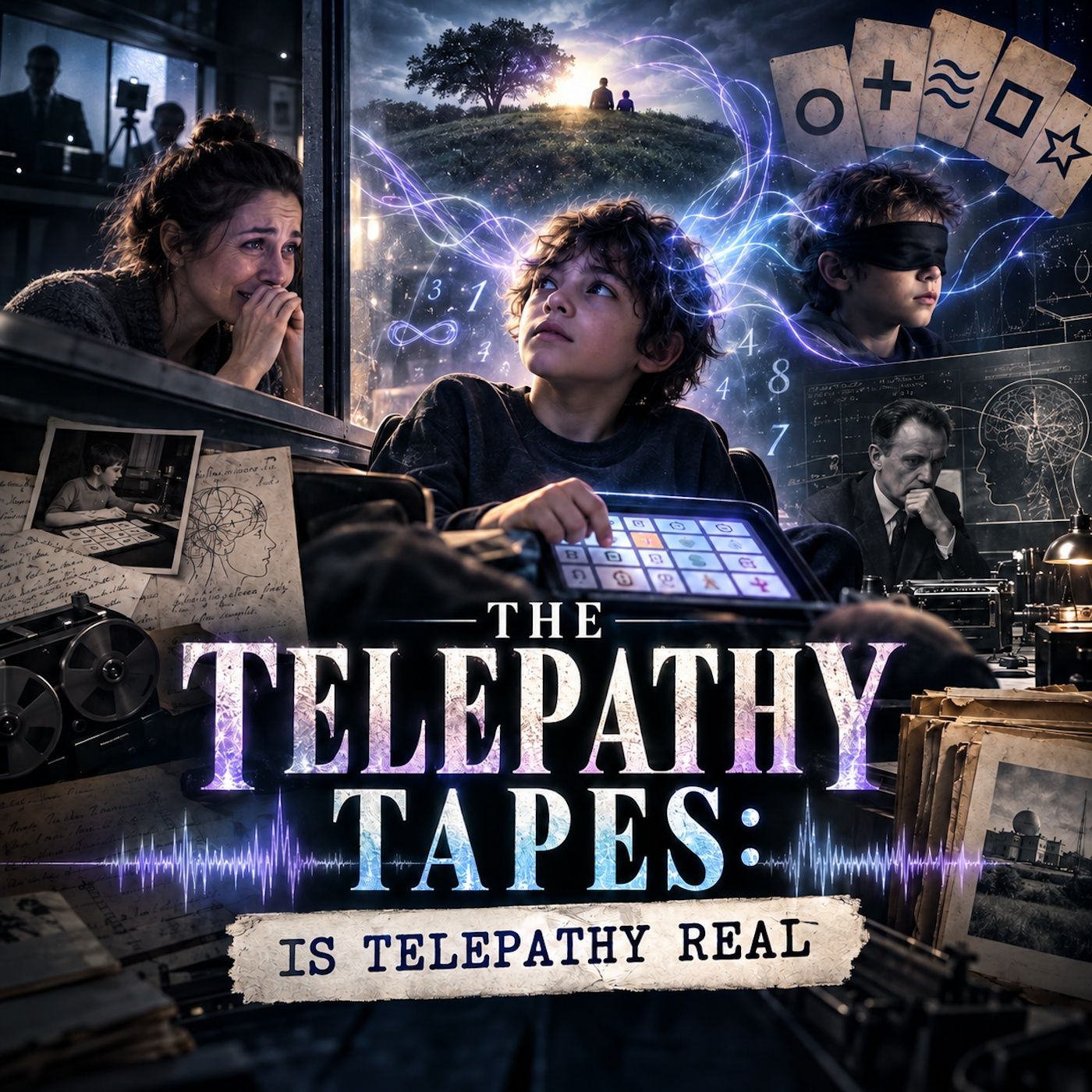
The Telepathy Tapes: Is Telepathy Real?
In September 2024 a documentary filmmaker named Ky Dickens released the first episode of a podcast called The Telepathy Tapes. By the first week of January 2025 it had passed Joe Rogan on Spotify's U.S. chart. Its claim is that children and young adults who can't speak, most of them diagnosed with autism, are reading the minds of their parents and teachers and meeting each other in a place they call the hill.
In this episode of Disturbing History, Brian explains why he pressed play. Several guests on Sasquatch Odyssey have told him they experienced what they call mind speak with a Sasquatch. He also talks about Daniel Lee Barnett, a young Bigfoot researcher from Somerset, England, who is autistic and spent most of his childhood nonverbal.
Daniel began speaking again after his grandfather introduced him to Bigfoot and he and his Nan, Jill, started getting out into the forest near their home. Brian met Daniel at 13 through researcher Amy Bue, has visited the family in England several times, and counts them as his own family. After hearing the series, he asked Daniel whether he'd ever had a telepathic connection with anyone. Daniel said he hadn't.
From there the episode covers 140 years of attempts to prove telepathy, from the Cambridge scholar who coined the word in 1882 to Mark Twain's crossed letters, Upton Sinclair's drawings, J. B. Rhine's card decks at Duke, and a U.S. government program that cost around 20 million dollars before it was shut down in 1995.Then Brian goes family by family.
Mia, a 12-year-old from Monterrey, Mexico, typed 3-digit numbers her mother had seen while she sat blindfolded behind a partition in a rented house in Glendale.
Akhil, a college student in New Jersey, typed the answer to an 8-digit multiplication problem off a calculator he couldn't see, with nobody touching him.
Houston, in Georgia, spoke to his mother for the first time at 17, spelled his first sentence at 21, and then told her he'd been hearing her thoughts his whole life.
His friend John Paul, 16 years old and 6 foot 8, lay under a stack of pillows to visit the hill and wanted to marry a girl named Lily.
Amelia, a 10-year-old near Milwaukee, typed her aide's computer password and told her mother that her best friend was a girl the school could never find.John Paul never saw the series released. He died on September 24, 2023, at 17, after a seizure in the hot tub at his home.
Brian tells what his mother Libby has said about that day, and what the families say happened next. Houston spelled that John Paul was free before his mother says she'd told him anything. A boy named Zaharia, who knew John Paul almost entirely from the hill, typed a message for Libby before his own mother had seen the news. And after the death was posted online, other parents wrote to say their kids were spelling that John Paul had told them he was leaving and had said goodbye.
Brian also puts the hard question on the table, the one a critic asked afterward: if his friends knew, why didn't anyone tell his mother?
The episode also covers Dr. Diane Hennacy Powell, the Johns Hopkins trained neuropsychiatrist whose research started the series, the teachers who say they kept quiet for 30 years, and the critics.
Brian lays out the history of facilitated communication, the picture tests of the early 1990s, a horse in Berlin called Clever Hans, the position of the American Speech-Language-Hearing Association, and Powell's own complaints about how the show presented her results.
He says where the skeptical explanation works for him, where it runs short, and why he still came away believing.
Email Brian
Get...
In this episode of Disturbing History, Brian explains why he pressed play. Several guests on Sasquatch Odyssey have told him they experienced what they call mind speak with a Sasquatch. He also talks about Daniel Lee Barnett, a young Bigfoot researcher from Somerset, England, who is autistic and spent most of his childhood nonverbal.
Daniel began speaking again after his grandfather introduced him to Bigfoot and he and his Nan, Jill, started getting out into the forest near their home. Brian met Daniel at 13 through researcher Amy Bue, has visited the family in England several times, and counts them as his own family. After hearing the series, he asked Daniel whether he'd ever had a telepathic connection with anyone. Daniel said he hadn't.
From there the episode covers 140 years of attempts to prove telepathy, from the Cambridge scholar who coined the word in 1882 to Mark Twain's crossed letters, Upton Sinclair's drawings, J. B. Rhine's card decks at Duke, and a U.S. government program that cost around 20 million dollars before it was shut down in 1995.Then Brian goes family by family.
Mia, a 12-year-old from Monterrey, Mexico, typed 3-digit numbers her mother had seen while she sat blindfolded behind a partition in a rented house in Glendale.
Akhil, a college student in New Jersey, typed the answer to an 8-digit multiplication problem off a calculator he couldn't see, with nobody touching him.
Houston, in Georgia, spoke to his mother for the first time at 17, spelled his first sentence at 21, and then told her he'd been hearing her thoughts his whole life.
His friend John Paul, 16 years old and 6 foot 8, lay under a stack of pillows to visit the hill and wanted to marry a girl named Lily.
Amelia, a 10-year-old near Milwaukee, typed her aide's computer password and told her mother that her best friend was a girl the school could never find.John Paul never saw the series released. He died on September 24, 2023, at 17, after a seizure in the hot tub at his home.
Brian tells what his mother Libby has said about that day, and what the families say happened next. Houston spelled that John Paul was free before his mother says she'd told him anything. A boy named Zaharia, who knew John Paul almost entirely from the hill, typed a message for Libby before his own mother had seen the news. And after the death was posted online, other parents wrote to say their kids were spelling that John Paul had told them he was leaving and had said goodbye.
Brian also puts the hard question on the table, the one a critic asked afterward: if his friends knew, why didn't anyone tell his mother?
The episode also covers Dr. Diane Hennacy Powell, the Johns Hopkins trained neuropsychiatrist whose research started the series, the teachers who say they kept quiet for 30 years, and the critics.
Brian lays out the history of facilitated communication, the picture tests of the early 1990s, a horse in Berlin called Clever Hans, the position of the American Speech-Language-Hearing Association, and Powell's own complaints about how the show presented her results.
He says where the skeptical explanation works for him, where it runs short, and why he still came away believing.
Email Brian
Get...
You May Also Like

Sleepy History
Slumber Studios

ВИВАТ, ИСТОРИЯ!
MOTORADIO.ONLINE

BELLUMARTIS PODCAST
Bellumartis Historia Militar

فواصل ثقافية
Fawasel Thaqafeya

Bloomin' Legends with Johnny Vaughan & Gavin Woods
Global
Catholic Saints
Augustine Institute
The Secret Teachings
Ryan Gable
Interesting Things with JC
JC
The Stupid History Minute
Keb Pound

The Art Bell Archive
Arthur William Bell III
Sleepy History
Slumber Studios
ВИВАТ, ИСТОРИЯ!
MOTORADIO.ONLINE
BELLUMARTIS PODCAST
Bellumartis Historia Militar
فواصل ثقافية
Fawasel Thaqafeya
Bloomin' Legends with Johnny Vaughan & Gavin Woods
Global
Catholic Saints
Augustine Institute
The Secret Teachings
Ryan Gable
Interesting Things with JC
JC
The Stupid History Minute
Keb Pound
The Art Bell Archive
Arthur William Bell III
Community discussion