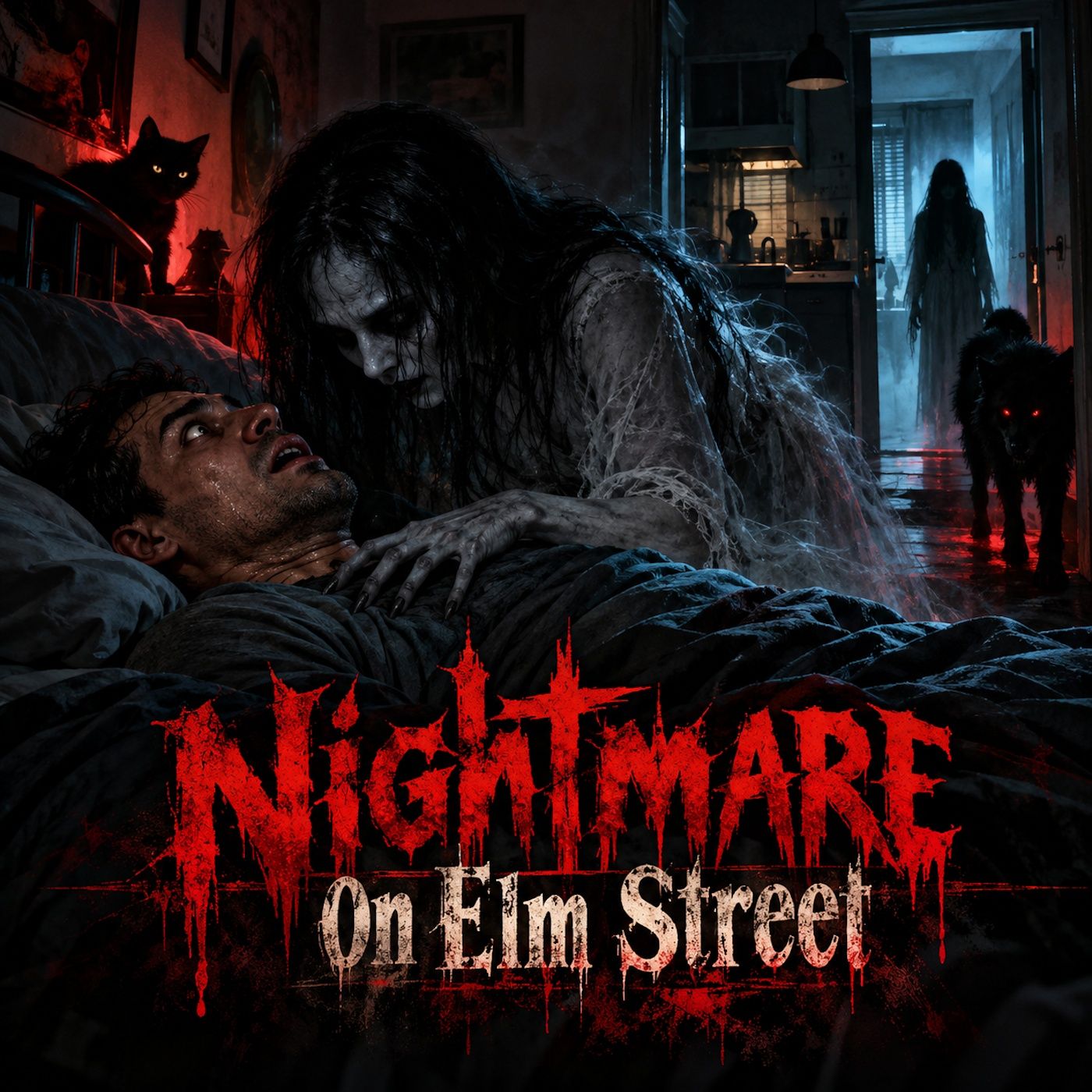
Nightmare On Elm Street
What if the terrifying premise behind A Nightmare on Elm Street wasn't entirely fiction? What if people really were going to sleep, experiencing horrifying nightmares, and dying before they could wake up?In the fall of 1980, a Hmong refugee named Vang Xiong endured three terrifying nights in a Chicago apartment. First came a dream of a cat sitting on his chest, suffocating him.
The following night, a massive black dog pinned him to his bed. On the third night, a pale, female spirit emerged from his kitchen, climbed onto his chest, and held him helpless for nearly fifteen minutes. For Xiong, these weren't simply bad dreams. Since 1977, seemingly healthy Hmong men across America had been dying mysteriously in their sleep. They went to bed alive and never woke up.
Autopsies revealed no obvious cause. Doctors were baffled, families were terrified, and an entire refugee community feared that something was following them into their dreams.Welcome to Part Two of Disturbing History's special series exploring the terrifying true stories behind Hollywood's most iconic horror movies.
This time, we're uncovering the real-life nightmare that inspired Wes Craven's 1984 horror masterpiece, A Nightmare on Elm Street. For decades, Craven openly acknowledged that his inspiration came from newspaper reports about Southeast Asian refugees suffering deadly nightmares. Freddy Krueger, his razor-fingered supernatural killer, was fictional. But the mysterious deaths that inspired him were very real. The Centers for Disease Control ultimately documented 117 cases of what became known as Sudden Unexpected Nocturnal Death Syndrome, or SUNDS. At its peak in 1981, the death rate among Hmong men reached an alarming 92 per 100,000.
Brian traces this deadly mystery across continents and generations, beginning with medical reports from the Philippines in 1917 describing bangungot, a mysterious phenomenon associated with sudden death during sleep. From Filipino laborers in Hawaii to isolated villages in Thailand and construction workers in Singapore, the same terrifying pattern emerged: healthy young men dying suddenly in the night. But the mystery becomes even darker when Brian explores the CIA's secret war in Laos, the desperate escape of Hmong families across the Mekong River, and the refugee camps where thousands waited for a chance at survival.
After resettlement in America, many found themselves isolated from their communities, stripped of familiar religious protections, and haunted by beliefs surrounding the dab tsog, a terrifying spirit said to sit on a sleeping person's chest and steal their breath.
Was this an ancient supernatural belief colliding with modern medicine? A deadly genetic condition? Or could the extraordinary trauma of war, displacement, and cultural isolation have played a role? The investigation eventually leads to a startling medical discovery.
Doctors began identifying fatal disturbances in the heart's electrical system, and researchers later connected many unexplained nighttime deaths to Brugada syndrome, an inherited condition capable of triggering deadly heart rhythms during sleep. Yet the scientific explanation leaves disturbing questions unanswered. Why did deaths among Hmong refugees peak so dramatically in 1981?
Why were men especially vulnerable during their first two years in America? Why did the epidemic eventually fade? And why could a medical condition that exists across populations produce such an extraordinary concentration of deaths within one traumatized refugee community?
Drawing on historical medical investigations, CDC findings, Southeast Asian folklore, and the work of medical anthropologist Shelley Adler, Brian examines the uneasy intersection of science, cultural belief, psychological trauma, and death.
This is the true history behind A Nightmare on Elm Street. A story of war, ancient spirits,...
You May Also Like

BELLUMARTIS PODCAST
Bellumartis Historia Militar

The Team House
dee takos

The Art Bell Archive
Arthur William Bell III

History Dispatches
Matt and McKinley Breen

History Daily
History Daily

On This Day in Working Class History
Working Class History

Дилетант
Дилетант

Choses à Savoir HISTOIRE
Choses à Savoir

Histoires du soir : podcast pour enfants / les plus belles histoires pour enfants
Engle

吳淡如人生不能沒故事
吳淡如
BELLUMARTIS PODCAST
Bellumartis Historia Militar
The Team House
dee takos
The Art Bell Archive
Arthur William Bell III
History Dispatches
Matt and McKinley Breen
History Daily
History Daily
On This Day in Working Class History
Working Class History
Дилетант
Дилетант
Choses à Savoir HISTOIRE
Choses à Savoir
Histoires du soir : podcast pour enfants / les plus belles histoires pour enfants
Engle
吳淡如人生不能沒故事
吳淡如
Community discussion