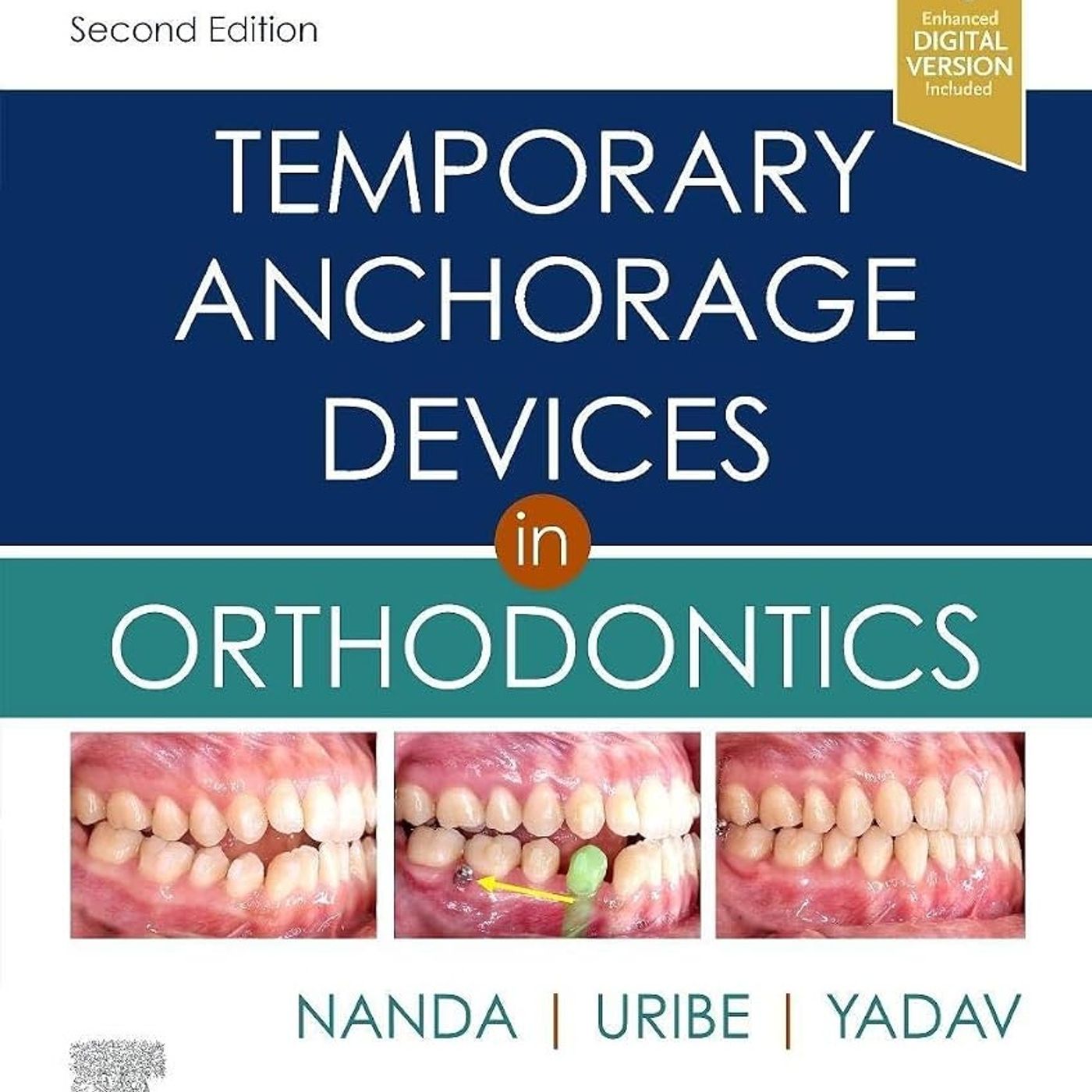
0:00 Imagine you're trying to parallel park a car. 0:03 Okay. 0:04 But every time you turn the steering wheel to back into the space, the car parked behind you moves instead. Right. 0:10 Yeah. That sounds incredibly frustrating. 0:13 Exactly. And for decades, I mean, that was basically the fundamental nightmare of clinical orthodontics. We relied entirely on Newton's third law. 0:21 Equal and opposite reactions. Right. 0:24 Every time you applied a force to push a tooth into its proper place... There was this equal and opposite reaction, just, you know, pushing your anchor teeth out of place. We were fighting the very foundation we were standing on. 0:36 Yeah, you're essentially trying to move a boulder by pushing off another boulder. 0:40 Exactly. Or the alternative was handing a patient a bulky headgear and just kind of crossing our fingers they'd actually wear it for 12 hours a day. 0:49 Which, as any clinician knows, is a massive gamble. I mean, it was a system entirely constrained by physics and, frankly, patient compliance. Yeah. But the landscape of dental biomechanics has undergone just a total paradigm shift. We've moved away from 1:03 hoping anchor teeth stay put. 1:04 Thank goodness. 1:05 Right. And we've stopped relying on patient-compliant devices. We have officially entered the era of absolute skeletal anchorage. 1:13 And that brings us to today's topic. Welcome to The Deep Dive. We are extracting the core, high-yield insights from what is truly a foundational textbook in the field. It really is. We're looking at the second edition of Temporary 1:26 Anchorage Devices in Orthodontics by Drs. Ravindra Nanda, Flavio Uribe, and Sumit Yadav. 1:32 A fantastic resource for anyone in the field. 1:35 Absolutely. And our mission today is to map out exactly how temporary anchorage devices, or TADs, which are basically just these tiny precision-placed titanium screws and plates, have completely rewritten the rules of what's clinically possible. 1:50 Yeah, we're going to take you from the foundational physics of how a tooth actually moves through bone, you know, all the way to managing severe multidisciplinary clinical scenarios. 1:59 The really complex stuff. 2:01 Exactly. And we'll explore how we're now achieving results that historically would have absolutely required orthognathic jaw surgery. 2:07 Which is huge. So to really grasp how a microscopic titanium screw can replace invasive jaw surgery, I think we have to look closely at the biomechanics of tooth movement first. 2:19 We do, yeah. You can't just skip the basics. Right. 2:22 It all boils down to the point of force application relative to a tooth's center of resistance. Because if we don't control that, things go wrong very quickly. 2:31 They really do. So the center of resistance is the crucial balancing point of any tooth or even a group of teeth. 2:39 Okay. 2:39 And it's typically located somewhere down in the root encased in the alveolar bone. 2:44 Got it. 2:44 But the issue is our brackets and wires are attached to the crown of the tooth. 2:48 Right, up top. 2:49 Exactly, far away from that center of resistance. So any force we apply naturally creates a moment. 2:56 A moment? 2:57 Yeah, a rotational force. And this dictates how the tooth tips through the bone. It's categorized into three distinct types of movement. Simple tipping, controlled tipping, and uncontrolled tipping. 3:08 Okay, let's visualize this for the listener. Imagine you're trying to move a tall, heavy floor lamp across a carpeted room. 3:15 I love this analogy. Right. 3:17 So if you just push it right at the top, which is like applying force just to the crown of a tooth, the lamp just falls over. 3:24 Right. 3:25 The top goes one way, and the heavy base kicks out in the opposite direction. That's simple tipping, right? 3:30 Exactly. The tooth is just rotating around its center of resistance. 3:34 Okay, so then what about controlled tipping? 3:37 Well, if you apply that same force to the top of the lamp, but you, say, place a heavy weight down at the base to create some drag, you can dictate how it leans as you push it. 3:46 Oh, I see. 3:47 That is controlled tipping. In orthodontics, we basically apply a counter moment at the bracket to move the center of rotation down to the apex of the root. 3:57 So the crown moves a lot, but the root tip kind of stays put? 4:01 Exactly. The root tip essentially stays in its original position while the crown moves significantly through the bone. 4:07 Gotcha. But uncontrolled tipping is what we are usually trying to avoid, right? 4:12 Oh, absolutely. 4:14 That's when you push the lamp, the Top moves forward, but the base violently kicks backward. 4:19 Right. The crown moves in the direction you want, but the root apex moves heavily in the opposite direction. 4:24 Which is bad news. 4:26 Very bad. You're potentially hitting the cortical plate of the bone, which causes all sorts of issues. 4:31 Ouch. And this is exactly why TADs are such a mechanical revolution, isn't it? 4:36 It really is. Because we can place a mini implant virtually anywhere in the alveolar bone or up in the palate, we completely change where our line of action originates. 4:46 We aren't just tied to the adjacent teeth anymore. 4:48 No, we're no longer limited to applying force from a tooth that might move. We can anchor a spring or an elastomer to a titanium screw anchored deep in the bone. 4:58 And just pull from there. 4:59 Right, and direct that vector precisely through the tooth's center of resistance. This achieves purely translational movement. 5:07 Which is what exactly? 5:09 True bodily movement of the entire tooth, root and all, without losing a single millimeter of anchorage in the rest of the mouth. 5:15 OK, let's unpack this for a second, though, because if we're drilling these titanium screws into the bone between the roots of teeth or, you know, up into the palate. Yeah. 5:25 Aren't we essentially working blind? Like relying on a traditional 2D panoramic radiograph to place a 3D screw between convergent roots feels incredibly risky. 5:36 It does sound sketchy when you put it like that. 5:38 It's like trying to mount a heavy television on drywall, guessing where the wooden studs are and just hoping you don't drill into a water pipe. 5:45 That is a very fair point. And honestly, that was a significant hurdle in the early days of skeletal anchorage. 5:50 I can imagine. 5:51 People were hesitant. However, the integration of 3D imaging over the last decade has virtually eliminated that guesswork. 5:58 You're talking about CBCT. 6:00 Yes. Cone Beam Computed Tomography. It has become an absolutely indispensable tool. It provides a three-dimensional map of the patient's exact anatomy. 6:09 So you see everything. Everything. 6:10 Everything. It allows us to evaluate the bone density and locate the precise safe zones between roots, nerves, and sinus cavities. 6:18 Okay, so the CBCT is basically the ultimate high-tech stud finder. 6:23 That's a perfect way to look at it. 6:25 You know exactly the width, depth, and angulation of the bone before you ever pick up a driver. Exactly. But it goes beyond just avoiding accidents, doesn't it? Because what's fascinating here is that the synthesis of this 3D data 6:38 with digital design... is fundamentally changing the entire clinical workflow. 6:43 Oh, it's a total game changer, especially when we look at the palate. 6:46 Let's talk about the palate. 6:48 So the palate is arguably the most advantageous site for absolute anchorage. 6:52 Why is that? 6:53 Because the bone is incredibly thick there, and there are no tooth roots to avoid in the mid-palatal region. 6:58 Oh, right. A massive safe zone. 7:00 Exactly. And by merging a patient's CBCT scan with a digital intraoral scan of their teeth, we can utilize protocols like the MAPA appliance. 7:09 The mini implants assisted palatal appliance. 7:12 You got it. 7:13 And this workflow is amazing because it turns what used to be a messy multi-week ordeal into a single predictable visit. 7:19 It really does. I mean, previously, you'd place the tads, wait for healing, take a gooey alginate impression. 7:26 The worst. 7:27 The absolute worst. Then you send it to a lab, wait weeks, and just hope the appliance actually fit over the screws when it came back. 7:34 Lots of trial and error. 7:35 But now. 7:36 But now. 7:37 The clinician designs a surgical insertion guide and the custom appliance simultaneously on a computer. 7:42 Wow. 7:42 Yeah. You 3D print the guide, which dictates the exact depth and angulation of the mini-implants. based on the safe zones identified in the CBCT. 7:51 So it's perfectly planned. 7:52 Perfectly. The patient sits in the chair, the guide snaps over their teeth, the implants are driven in flawlessly, and the digitally manufactured appliance is delivered and activated in that exact same appointment. 8:04 That level of precision is astounding. 8:06 Just one visit. 8:08 One visit. And this digital palatal approach is heavily utilized right now with systems like the Benny Slider, right? 8:14 Yes, particularly in adult orthodontics. We are seeing a massive overlap here with clear aligner therapy. 8:21 Which is super popular right now. 8:22 Everyone wants clear aligners. They're highly aesthetic, but mechanically, they struggle with significant bodily movement over long distances. 8:30 Specifically, molar distalization, right? 8:32 Exactly. 8:33 Like pushing the heavy posterior teeth backward to create space. 8:37 Exactly. Aligners tend to cause that simple tipping we discussed earlier rather than moving the whole root. 8:42 Because they just push on the crown. Right. 8:45 But if you pair the clear aligners with a palatal TAD and a Beneslider appliance, you completely solve that mechanical flaw. 8:52 That's brilliant. It is. 8:54 The palatal TAD provides a rigid, unyielding skeletal backbone to bodily push the molars back. 9:00 While the aligners do the detail work. 9:02 Exactly. The clear aligners handle the fine detailing and rotational control of the front teeth. You get the aesthetic appeal of aligners with the brute mechanical force of skeletal anchorage. 9:12 Best of both worlds. 9:14 But Relying entirely on the palate has to have its limitations, right? 9:18 It does, unfortunately. 9:20 Sometimes a patient's palatal anatomy is too shallow. 9:23 Okay. 9:24 Or the clinical vector required to move the teeth is just inefficient from the roof of the mouth. That forces us to look to the outer edges of the jaw. 9:32 You mean the buccal bone on the cheek side? 9:34 Yes, and even higher up to the zygomatic buttress. 9:37 Okay, let's talk about zygomatic and skeletal plates because... This is where we cross the line from standard orthodontics into mechanics that legitimately replace orthognathic surgery. 9:49 We really do. We're talking about severe bimaxillary crowding here. 9:53 So for our listener trying to picture this, imagine a patient where both the upper and lower jaws are entirely out of space. The teeth are severely rotated, totally blocked out. 10:03 It's a very difficult clinical scenario. Historically, if that patient's facial profile did not allow for extracting premolars, meaning pulling teeth would basically cave their lips in and ruin their facial aesthetics, there was really only one option. 10:16 Surgery. 10:17 Right, surgically breaking the jaws and moving them backward to create space. 10:22 Which is intense. 10:23 Very intense. But now we use bioefficient skeletal anchorage. Zygomatic miniplates are surgically anchored high up in the dense bone of the cheekbone. 10:33 Way up there. 10:34 Yeah, well above the roots of the teeth. 10:36 And from that high, incredibly stable anchor point, you can apply force to the entire maxillary arch at once. 10:42 Exactly. You are literally distalizing, pushing back, all the upper teeth simultaneously into the bone to resolve the crowding. 10:50 And leaving the patient's jaw completely intact. No breaking bones. 10:54 None at all. It is a profound alternative to surgical intervention. 10:58 That's incredible. 10:59 But we also utilize standard buckle tads, just single mini implants placed directly into the alveolar bone on the cheek side of the teeth. 11:06 Right. 11:07 These are incredibly advantageous for distalizing the arch in non-extraction cases. 11:11 And They don't require the complex 3D digital laboratory work that the palatal appliances demand. 11:17 Okay, wait. Here's where it gets really interesting, but also a bit confusing. I need to challenge this a bit. 11:22 Bring it on. 11:23 If buckle tads are so much easier to place, and they completely bypass the need for digital scanning, CAD design, and 3D printing surgical guides, why wouldn't a clinician just use buckle tads for every single patient? Why bother with a pallet at all? 11:37 That's a great question. If we connect this to the bigger picture, it really comes down to a strict tradeoff between the vector of force and anatomical risk. 11:45 Okay, risk. 11:46 Yeah. The palate, as we established, is a massive safe zone. 11:50 Buckle placement, however, requires meticulous navigation. 11:54 Because it's crowded over there. 11:55 Extremely. You are placing a screw into the thin buckle plate directly between the roots of adjacent molars. Oh, wow. 12:02 You're navigating around vital blood vessels, nerves, and you run a significant risk of sinus perforation if the implant goes too deep. 12:09 So you are working in much, much tighter margins of air on the buckle side. 12:13 Precisely. You have to be incredibly careful. However, if navigated correctly using CBCT, the buckle placement provides a highly efficient direct horizontal angle for distalizing the whole arch. 12:24 Because it's parallel to the occlusal plane. 12:26 Exactly. Palatal tads often require indirect angled biomechanics to achieve that same backward vector because the force is originating from the roof. 12:35 Of the mouth. Rather than right next to the teeth. 12:37 Right. 12:38 That makes perfect sense. The direct line of action is better, but the real estate is way riskier. Exactly. Trade-offs. And speaking of tricky real estate, when we talk about complex mechanics on the outside of the arch, we have to 12:51 look at C-tube mini plates. The book highlights these for managing severe midline deviations and asymmetric camouflage. 12:58 Yes, C-tubes are brilliant for this. 13:01 Coincident midline is vital for dental aesthetics. For the listener. 13:05 That's when the vertical line between your upper two front teeth perfectly aligns with the line between your lower two front teeth. Right. 13:12 And both align with the center of the patient's face. 13:15 Got it. 13:16 When a patient has an underlying skeletal asymmetry, like where one side of their jaw has grown longer than the other, achieving that midline symmetry without surgery is incredibly difficult. 13:26 And that's what orthognostic camouflage is, right? Masking the underlying bone issue by shifting the teeth? 13:32 Exactly. You're tilting and shifting the teeth to make the bite fit together and look straight. But traditionally, if you apply force to pull all the teeth to the left. 13:40 The anchor teeth get pulled to the right. 13:42 Exactly. Newton's third law again. You end up with a mess. 13:46 But C-tube mini plates simplify this. 13:48 Immensely. They feature a customizable bendable neck. 13:52 A bendable neck? Yeah. 13:53 You surgically anchor the base plate into the cortical bone, but you can actually bend the neck to emerge through the gum tissue, exactly where you need the force applied. 14:02 That is so clever. 14:03 Isn't it? You can apply heavy asymmetric forces to shift the entire dentition to one side, bringing the midline perfectly into alignment. 14:11 And the anchor point, the bone itself, absorbs all the reciprocal force. 14:15 Exactly. The other teeth remain completely undisturbed. 14:18 Wow. So understanding these distinct anchor points, the massive safe zone of the palate, the high-dense bone of the zygoma, and the direct vectors of the buckle plates— It allows us to tackle what I consider the absolute most frustrating clinical scenarios in dentistry. 14:34 They definitely can be frustrating. 14:36 Let's look at the anterior open bite. 14:38 Ah, the open bite. 14:39 So an anterior open bite is a severe vertical discrepancy. 14:43 Right. 14:43 When the patient bites all the way down, their posterior molars touch, but their anterior incisors do not overlap at all. 14:50 There is just a distinct vertical gap in the front of their mouth. Exactly. 14:54 Exactly. 14:55 They physically cannot bite into a piece of pizza or a sandwich. 14:59 Before TADS, trying to correct an open bite non-surgically usually meant relying on those patient-compliant devices again, right? High-pull headgears, bite plates, chin cups? 15:10 Yes, and the problem was that these devices mostly caused dental alveolar changes in the front of the mouth. 15:16 Meaning what? 15:17 Specifically, the extrusion of the incisors. We were essentially pulling the front teeth down out of the bone to close the gap. 15:24 Okay. And biologically, that is highly unstable and prone to relapse. 15:29 Highly prone to relapse. And aesthetically, pulling the upper incisors down creates an excessively gummy smile. 15:35 Which nobody wants. No. 15:38 The true anatomical cause of the open bite is usually that the posterior molars have erupted too far, basically wedging the jaw open. 15:46 Okay. 15:46 What TADS did was allow for predictable true molar intrusion. 15:51 Hold on. Let me stop you there. Intruding a molar. 15:55 You are talking about taking a massive, multi-rooted back tooth and actively pushing it deeper into the jawbone. 16:02 Yes, I am. 16:03 Where does the root go? Are we risking crushing the periodontal ligament or violating the sinus floor? 16:09 It is a totally valid concern, and it's why understanding the biology is as important as the physics here. We aren't just mechanically driving a peg into a piece of wood. 16:18 Right. It's living tissue. Exactly. 16:20 When a continuous, light, intrusive force is applied via a TAD to a molar... it triggers a biological response. Osteoclasts, the bone-resorbing cells, break down the bone at the apex of the roots, while osteoblasts form new bone near the crown. 16:34 So it's actively remodeling. 16:36 Yes. The tooth slowly remodels its way upward into the alveolar housing. As long as the forces are biologically sound, the roots safely adapt. 16:44 And the mechanical payoff for that biological process is massive, right? 16:48 Huge. Because of the hinge axis of the jaw, For every one millimeter you intrude the posterior molars into the bone, the mandible auto-rotates upward and forward. 16:58 Oh, wow. 16:59 Yeah, and that closes the anterior open bite by almost three millimeters in the front. 17:03 That's a three-to-one ratio. 17:04 You are fixing the problem at its skeletal source, rather than just masking it by pulling the front teeth down. 17:09 Exactly. 17:10 We also use TADs for indirect anchorage in these vertical cases, actually. 17:13 How does that work? 17:14 Well, if you have a non-compliant patient... You can place interradicular mini implant screws between the roots and rigidly tie them to the first molars with a thick sectional wire. 17:24 So the TAD is tied directly to the tooth. Right. 17:26 The TAD isn't actively moving the molar. It is acting as a rigid locking mechanism. It prevents the molar from erupting any further while you use standard mechanics to align the rest of the teeth. 17:37 The vertical control is just unprecedented. 17:40 It's totally revolutionized the specialty. 17:43 Now, Let's apply this spatial control to an entirely different multidisciplinary challenge. 17:48 Okay. 17:48 The congenitally missing lateral incisor. This is when a patient is just genetically missing the tooth right next to their upper central front tooth. 17:56 Yes, this is a classic multidisciplinary puzzle. The ideal treatment is often to open up the gap and have a restorative dentist or prosthodontist place an endoosseous dental implant with a porcelain crown. 18:08 Right. But the timing of that handoff is incredibly tricky, isn't it? 18:12 Very tricky. You cannot place a permanent dental implant into the bone of a growing teenager. 18:18 Because the jaw will continue to grow around it. 18:20 Exactly, leaving the implant submerged and looking terrible. But if you just use braces to hold the gap open for three or four years while you wait for the patient to stop growing. 18:29 The bone shrinks. 18:30 Yes, the alveolar bone in that empty space begins to resorb and shrink. 18:35 And when the bone shrinks, the oral surgeon has no foundation to place the permanent implant, forcing them to do complex bone grafting. 18:41 Right, which is expensive and invasive. 18:44 Or if the orthodontic mechanics allow the adjacent teeth to tip into the space even slightly, the restorative dentist is forced to make aesthetically compromising misshapen crowns just to make it fit. 18:57 So what does this all mean? How do we solve it? 18:59 The solution detailed here is the use of ridge mini implants. 19:02 Yes. Think of the missing tooth space like a stone archway being built. You need a structural keystone. 19:09 Exactly. 19:10 The ridge mini implant. acts as a temporary miniature keystone. 19:15 It is placed directly into the alveolar ridge where the missing lateral incisor should be. 19:20 You use this TAD for orthodontic anchorage to physically push the adjacent teeth apart, dialing in the exact millimeter of space required. 19:28 But critically, the physical presence of the titanium screw in the bone preserves the alveolar bone volume. 19:34 It's amazing. It prevents the bone from shrinking while the teenager finishes growing. 19:38 It maintains the real estate. 19:40 Yes. 19:40 And the text also notes that if the missing tooth caused the patient's entire midline to shift to one side, you can place a unilateral infrazygomatic TAD. 19:49 Right. You anchor a screw high in the cheekbone on one side, and you bodily drag the entire dental arch over to perfectly center the midline before the permanent implant ever touches the patient's mouth. 20:01 It represents the ultimate synergy of disciplines. 20:04 It really does. This raises an important point about treatment sequencing. 20:08 The orthodontist uses skeletal anchorage to deliver a biologically preserved, spatially flawless canvas to the prosthodontist. 20:15 Which makes everyone's job easier. And the patient gets a better result. Absolutely. Well, we have journeyed through some incredibly dense biomechanical territory today. 20:25 We covered a lot of ground. 20:26 We really did. We started with the foundational difference between simple and controlled tipping, moving away from the limits of patient compliance. 20:34 And we explored how synthesizing CBCT imaging with 3D printing created the MAPA protocol, turning palatal anchorage into a highly predictable, one-visit digital workflow. 20:44 Then we saw how zygomatic plates and buckle tads offer distinct horizontal vectors for massive arch distalization, navigating around roots and sinuses to effectively replace orthognathic jaw surgery in severe bimaxillary crowding cases. 21:01 And we broke down the biology of molar intrusion. explaining how pushing a molar into the bone allows the mandible to auto-rotate and close an interior open bite, avoiding the gummy smile caused by old-school headgears. 21:14 Finally, we mapped out the multidisciplinary handoff, using Ridge Mini implants as structural keystones to preserve bone and exact spacing for missing lateral incisors. 21:25 A very thorough review. 21:26 And as promised, we have a targeted review exercise to lock this biomechanical knowledge in for you, the listener. Take it away. 21:34 All right. Here is your review scenario. Think back to a patient presenting with an anterior open bite, that vertical gap between the front teeth. Mentally map out the difference in the mechanical outcome and the aesthetic result between using 21:47 a traditional high-pull headgear versus interradicular mini implants. Which teeth are moving and in what vertical direction? 21:54 I'll give you a massive hint. Think about the difference between pulling down and pushing up. 22:00 Good hint. 22:02 If you use the traditional headgear mechanics, you are largely causing the extrusion, the pulling down of the anterior incisors, risking a gummy smile. Right. 22:12 But if you use the TADS, you are achieving true intrusion, the pushing up of the posterior molars, allowing the jaw to naturally hinge closed. 22:21 Precisely. 22:22 Now, I want to leave you with a final provocative thought regarding the future of skeletal anchorage. 22:27 Oh, let's hear it. 22:28 Throughout this deep dive, we've focused on how 3D printing and clear aligners are currently synergizing with TADs to create digitally planned vectors of force. But the titanium screw itself is currently just a passive piece of metal. 22:40 Right. It just sits there, acting as a dumb anchor. Exactly. 22:45 Imagine the implications for the next decade if these temporary anchorage devices begin incorporating microsensors. 22:51 Wait, like smart TADs? Exactly. 22:53 Exactly. Imagine a near future where the TAD itself communicates with a smartphone application in the clinician's pocket. 23:00 Oh, wow. 23:01 It could actively monitor the density of the surrounding bone, track the exact rate of osseointegration, and measure the real-time three-dimensional force vectors being applied by the springs or liners. 23:12 That would completely eliminate the era of estimating applied forces. 23:16 Right. 23:17 The anchor wouldn't just be holding the teeth back. It would be actively diagnosing the biological response of the jawbone in real time. 23:24 It's an incredible glimpse into where the biomechanics are heading. 23:27 It really is. Thank you for joining us on this deep dive. Keep questioning the physics. Keep challenging the clinical boundaries. 23:35 And keep exploring the science behind the smile.









Community discussion