0:00 Imagine for a second that you are an architect and you've been hired to build this highly durable, beautiful structure that absolutely has to last for decades. Okay. 0:10 Sounds like a great gig so far. Right. 0:13 But there is a massive catch. Your building site is a literal swamp that is constantly flooded with digestive acids. 0:21 Oh, wow. Yeah. That sounds like a total nightmare for any structural engineer. 0:25 It gets worse. It is subjected to localized crushing earthquakes like thousands of times a day. And just to make it incredibly frustrating, the temperature swings wildly from freezing cold to near boiling on a daily basis. 0:39 I mean, honestly, you wouldn't expect anything not steel, not concrete to survive in an environment like that for a week, let alone an entire lifetime. 0:47 Exactly. But that exact nightmare scenario is what we are looking at today. Because that architectural site, it's the human mouth. 0:55 And the engineers trying to build there are your dentists. 0:58 Spot on. Welcome to this deep dive. Today, we are exploring the highly complex, totally hidden world of dental biomaterials. 1:06 It's such a fascinating topic, really. 1:08 It is. And we are going to be guided by some foundational insights from this incredible textbook called Science of Dental Materials with Clinical Applications, 3rd Edition. Right. 1:18 The one authored by Dr. V. Shamabat, B.T. Nandish, and Jaya Prakash K. out of Yenipoya University in India. 1:25 That's the one. It is just a monumental look at this field. 1:29 It really is. What they've done is build this comprehensive bridge between pure basic sciences, you know, things like chemistry, physics, and metallurgy, and the actual clinical realities of dentistry. 1:40 So our mission today is to break down the rigorous science behind what actually goes into your mouth during a dental visit. 1:46 Because knowledge is most valuable when it's applied, right? 1:49 Exactly. This is the perfect primer for dental students, young professionals, and honestly, anyone who is just insanely curious about the engineering happening right inside their own head. 2:00 Yeah, every time a dentist treats a patient, they are essentially solving this incredibly complex biological and engineering puzzle. 2:07 Okay, let's unpack this. Because before we can really understand the materials themselves, you have to understand the battlefield they are entering. 2:14 The hostile oral environment? 2:16 Right, the reality of the human mouth. I tend to think of it as this extreme industrial testing facility. 2:23 That's a really good way to put it. 2:25 You've got the crushing physical pressure from chewing, which is immense. Oh, absolutely. 2:30 Then you have these constant acid baths from the bacteria in our microbiome, plus the acidic foods we eat. 2:37 And on top of that, those wild temperature swings you mentioned earlier. 2:40 Right. Think about drinking a cup of hot coffee and then immediately taking a bite of ice cream. 2:45 It's brutal on materials. 2:48 So if the environment is this extreme, how do dentists even begin to select materials that won't just you know, immediately fail under the pressure. 2:56 Well, what's fascinating here is that dental material science is a composite applied subject. You can't just know the biology and you definitely can't just know the physics. 3:05 You need both. Exactly. 3:07 You have to understand the exact physical properties of the natural tooth first and then build from there. 3:12 So breaking down the tooth anatomy. 3:14 Right. You have the outer enamel, the underlying dentin, and the living pulp inside. Enamel is heavily mineralized, making it incredibly hard. 3:22 But because it's so hard, it's also brittle, right? 3:25 Yeah, it's almost like glass. 3:27 Wow. 3:28 Denton, on the other hand, contains way more organic material, like collagen, which gives it flexibility. 3:34 So it acts as a shock absorber for the brittle enamel above it. Exactly. 3:38 It's a perfect biological system. 3:41 Which explains why dentists practice what's called conservative dentistry. They want to intervene at different stages of tooth decay to preserve as much of that natural structure as possible. 3:51 Because recreating that exact hard but flexible dynamic is just incredibly difficult. And when they do have to replace a part of the tooth, they have to match those specific properties perfectly. 4:01 Let's talk about those temperature swings with the coffee and ice cream. 4:04 Yeah, that involves a property called thermal expansion. Everything expands when it gets hot and shrinks when it gets cold. 4:10 But if a dental filling expands more than the surrounding natural tooth when you drink that hot coffee, it puts outward pressure on the brittle enamel. 4:19 Wait, could that actually crack the tooth? 4:20 It absolutely could. 4:22 And what if it shrinks too much when you eat the ice cream? 4:24 Then it pulls away from the tooth structure. It creates this tiny microscopic gap at the margin. We call that micro leakage. 4:31 And saliva gets in there? 4:33 Saliva, which is loaded with bacteria, just seeps right into that microscopic gap. And suddenly you have a brand new cavity forming underneath your filling. 4:41 So they have to engineer the material to expand and contract at the exact same rate as natural human bone and enamel. Yes. That is a staggeringly high bar. And it's not just temperature, right? It's physical force. Right. 4:54 They have to test for something called yield strength. That's the maximum amount of stress a material can take before it permanently deforms. 5:01 Okay. Yield strength. 5:03 And then there is a concept called creep. 5:05 Creep. Yeah. 5:06 Creep is the gradual permanent deformation of a material under a constant load over a very long period. 5:13 I'm trying to picture that. Is it like putting a heavy box on a cheap wooden shelf? and over a few years, the shelf just permanently sags in the middle. 5:23 That is a perfect analogy. The shelf didn't break immediately, but under constant load over time, it flowed and deformed. 5:30 Okay, so how does creep apply in dentistry? 5:35 It's a major factor in the clinical success or failure of traditional silver amalgam fillings. 5:40 The metal ones? 5:42 Right. Amalgam is a metal alloy, and under the constant repetitive pressure of chewing over years and years, the metal literally creeps. 5:50 It moves. 5:51 It mushrooms out over the edges of the cavity. And those thin, mushroomed edges eventually break off. 5:57 Leaving a ditch around the filling. Exactly. 6:00 A ditch where decay can start all over again. 6:03 You'd think that because the mouth is such a destructive environment and the engineering tolerances are so tiny, we'd have been rigorously testing this stuff in high-tech labs for a century. 6:13 You would think so, yeah. 6:14 But historically, that wasn't the case at all, especially in places like India, where early researchers didn't always have the equipment to measure things like thermal expansion or creep. 6:25 The historical struggle in dental education and research is actually quite revealing. 6:29 Yeah, the lead author of our source text, Dr. Shama Bhatt, who actually helped write this third edition at the age of 87, by the way. 6:36 Which is just incredible. 6:38 It really is. Anyway, he reveals a very different historical reality in the book's preface. Right. 6:43 For a long time, many universities around the world, but specifically highlighted in India by the authors, simply lacked the basic laboratory equipment required to actually test these materials. 6:54 No equipment at all. 6:56 Or very limited. Furthermore, there was a severe shortage of qualified teaching staff who held specialized MDS qualifications specifically in dental materials. 7:06 It's like trying to build a rocket ship, but you only train your engineers in basic plumbing. 7:11 That's entirely accurate. The text notes that because of this shortage, the subject of dental materials was often taught piecemeal by different clinical specialists. 7:20 So like the endodontist would teach a little bit about root canal materials. Exactly. 7:26 And the prosthodontist would teach a little bit about denture plastics. 7:29 And it led to these oversimplified curriculums that totally sacrificed scientific depth just to make it easy for students to pass exams. 7:37 And if we connect this to the bigger picture, this educational fragmentation had severe consequences. real-world consequences. 7:44 How so? 7:45 Without a dedicated foundational understanding of basic material science, the clinicians working in patients' mouths couldn't effectively communicate their clinical problems to the researchers in the lab. 7:57 Oh, I see. So if a filling failed, the dentist couldn't explain why it failed chemically or physically. Right. 8:04 And because of that communication breakdown, research and development in dental materials historically stagnated in certain regions. 8:12 I can see how that's a huge problem for the evolution of the field. But I want to push back on the day-to-day application a bit. 8:19 Sure. 8:20 What does this all mean for the actual dentist or the laboratory technician fabricating these appliances today? 8:26 Well, it changes everything about how they work. 8:28 Why do they need to read a textbook that goes deep into atomic bonding and crystal structures? Can't they just buy a tube of material that says strong on the label? 8:38 Because without understanding the atomic bonding and crystal lattices of a material, you cannot adopt the correct manipulative techniques. 8:45 Ah, so it affects how you actually handle it. 8:48 Precisely. A technician can't just know that a material is, quote, strong. 8:52 They need to know its exact ultimate tensile strength and its modulus of elasticity. 8:57 To ensure it will survive that hostile oral environment. 9:00 Right. This book was explicitly written to correct that historical imbalance by providing precise, rigorous data. 9:08 Like the exact specifications from the American Dental Association. 9:11 Yes, the ADA specifications and the exact numerical values for all these material properties. 9:17 We need the rigorous science and the exact numbers to survive the acid swamp. That makes total sense. 9:22 It's the only way. 9:24 Here's where it gets really interesting, though. Let's look at the actual arsenal of materials these dentists and technicians are using to rebuild teeth. 9:31 The toolkit, so to speak. 9:33 Exactly. These are broadly categorized into restorative materials, which are either direct, like fillings packed right into the tooth, or indirect, like crowns made in a lab. 9:43 And then you have auxiliary materials. 9:46 Right, like the gypsum and waxes used to make the molds. 9:49 And finally, preventive materials. 9:51 Let's start with the metals, which have really been a cornerstone of dentistry for over a century. 9:56 Because they're so tough. 9:57 Yeah. Metals rely heavily on metallic bonding at the atomic level. 10:01 This specific type of bonding gives metals their ductility and malleability. 10:06 Meaning you can shape them easily. Exactly. 10:08 It allows them to be drawn into thin wires for orthodontics or hammered into thin sheets for crowns without breaking. 10:15 But there is a major unavoidable challenge with using metals in the human mouth. Right. Corrosion. Yes. 10:21 Because of the moisture and the changing pH levels from the food we eat. Right. There are several different types of corrosion that these materials must withstand. There's crevice corrosion, which happens in microscopic gaps where oxygen is depleted, causing 10:34 the metal to break down. Okay. There's general wet or electrochemical corrosion from the saliva. But the most fascinating one is galvanic corrosion. 10:43 Galvanic corrosion. Wait. I remember reading about this. This occurs when two different types of metal alloys, say a gold crown and a silver amalgam filling are both present in the mouth at the same time, right? 10:54 That's exactly it. 10:55 And the saliva acts as an electrolyte. Doesn't it literally turn your mouth into a battery? 11:00 Essentially, yes. You have two dissimilar metals acting as an anode and a cathode, and the salty, mineral-rich saliva completes the circuit. 11:08 That is wild. 11:10 It generates a small, literal electric current. If those two metals touch, or if a metal fork touches one of them, it discharges that current right into the tooth's nerve. 11:19 Oh, galvanic shock. That sharp, metallic pain. 11:23 Yes. And beyond the pain, that continuous electrical current accelerates the degradation and corrosion of whichever metal is less noble. 11:31 So the metal literally dissolves into the saliva over time? 11:34 It does. 11:35 To prevent this, dentists have to understand the science of selecting highly specific noble alloys like gold or passivating base metals like titanium or stainless steel. 11:44 Passivating? 11:45 Yeah, meaning they form a protective oxide layer to resist these electrical and chemical forces. 11:51 Okay, so metals are incredibly tough and ductile, but let's be honest, they don't exactly look like natural teeth. No, they don't. Nobody wants a mouthful of stainless steel if they can help it. That brings us to ceramics and porcelain. 12:04 The aesthetic option. Right. 12:06 Dentists use what are called feldspathic porcelains to mimic the exact optical properties of natural teeth. They have to match the hue, the chroma, and the value. 12:16 Basically, the exact color, the color's intensity, and the lightness of the patient's existing teeth. 12:22 But I have a major question here. Porcelain is essentially what my dinner plates are made of, right? 12:28 Generally speaking, yes. 12:29 If I bite down on a hard piece of ice... 12:32 Why doesn't a porcelain crown just shatter into a million pieces? 12:36 That is where the deep science of the dental laboratory comes in, because dental porcelain is absolutely not your average dinner plate. 12:43 Okay, so what are they doing differently? 12:45 Well, to prevent that shattering, laboratory technicians actually have to structurally alter the porcelain at the microscopic level through processes known as toughening. 12:54 Toughening? How do you toughen glass? 12:57 It's amazing engineering. One incredible method is called ion exchange toughening. 13:02 Break that down for me. Okay. 13:04 Imagine trying to pack 50 tennis balls into a wooden crate that is only designed to hold 40. You really have to cram them in. 13:10 Okay. I'm picturing it. 13:12 They are constantly pushing outward against each other and against the walls of the crate so tightly that the entire structure becomes rigid and incredibly highly tensioned. 13:21 So it's locked in place by its own internal pressure. Exactly. Exactly. 13:25 In ion exchange toughening, they take the porcelain and chemically swap out smaller ions in the glass surface for larger ions. 13:32 Ah, the 50 tennis balls. 13:34 Right. Because the larger ions take up more space, it creates a layer of intense compressive stress on the surface of the tooth. That outward pressure literally squeezes any microscopic cracks shut so they can't spread. 13:46 That is brilliant. 13:47 Another method is dispersion toughening, where they disperse incredibly tough crystalline particles like alumina or lucite throughout the glass matrix. 13:56 So if a crack does start to form from chewing, it hits one of these tough crystals and just stops. 14:01 Yes, it arrests the crack. 14:03 It's like putting microscopic speed bumps all throughout the crown. 14:06 Exactly. They are structurally engineering the porcelain at the microscopic level to stop cracks in their tracks. And often they will bond these advanced ceramics to an underlying metal framework for even more strength. 14:18 Which is called porcelain fused to metal or PFM. 14:21 You got it. 14:22 But Bonding glass to metal has to be a nightmare, right? 14:25 Because of that thermal expansion issue we talked about earlier? 14:28 It is a massive engineering challenge. The ceramic must be chemically formulated in the lab to have a thermal expansion coefficient that perfectly matches the underlying metal alloy. 14:37 Because if they don't expand and contract together at the exact same rate when they cool down in the lab furnace? 14:43 The porcelain will just shear right off the metal. 14:46 It is literal high-level metallurgy and ceramics manufacturing, custom-fitted to a single human tooth. 14:53 It really is an art and a science. 14:55 But once the lab makes this beautiful, indestructible crown, the dentist has to actually attach it to the tooth, which brings us to the cements. 15:03 Yes, and this field has seen a massive evolution. 15:06 A critical evolution. Because historically, dentists relied on materials like zinc phosphate cement, right? 15:13 Right. It was reasonably strong, but it only provided mechanical retention. 15:18 So it didn't actually glue the crown to the tooth. 15:20 It was just friction holding it in? 15:23 Historically, yes. The zinc phosphate cement basically just filled the microscopic gaps between the tooth and the crown, locking it into place through friction and mechanical interlocking. 15:32 But it didn't chemically bond to the tooth structure itself. No, it didn't. 15:36 But then we get to materials like polycarboxylate and glass ionomer cements, or GIC. 15:41 And this was a total revolution in dentistry. Huge. 15:44 GIC and polycarboxylate cements actually bond chemically to the calcium in the tooth structure. 15:49 So the molecules of the cement cross-link with the molecules of the tooth. 15:53 Yes. This means a much tighter, more durable seal that prevents that micro-leakage we discussed. But bonding to a tooth is incredibly difficult, especially when you have to bond to the dentin, the inner layer of the tooth. 16:05 Right, because unlike the hard, dry enamel on the outside, dentin is living tissue. It's wet, it's porous, and it's fluid running through it. 16:13 It is wet, and when a dentist uses a drill to remove the decay, the friction of the burr leaves behind a microscopic layer of debris. We call it the smear layer. 16:21 The smear layer. I picture that like sawdust left on the floor after you cut a piece of wood. 16:26 That's a great way to visualize it. 16:28 If you try to apply glue or paint directly over a thick layer of sawdust, it's just going to peel right off. You have to clear it away first. 16:36 Exactly. The smear layer plugs up all the microscopic pores in the dentin, The early generations of dental bonding agents tried to bond to that smear layer, and the bonds were weak. 16:46 So the restorations would just fall out. 16:48 Right. But later generations introduced the total etch technique. 16:52 What's that? 16:53 Dentists use a specific acid to dissolve and remove the smear layer entirely, sweeping away the sawdust. This opens up the microscopic dentinal tubules, which look kind of like tiny bundles of spaghetti. 17:04 Okay, I see. 17:05 Then a liquid resin is applied, which flows deep inside those open tubules. When the dentist cures it with a blue light, the resin hardens, creating hundreds of thousands of microscopic plastic fingers locked deep into the tooth. 17:19 It's just staggering to think about the level of microscopic engineering happening in a standard dental chair on a Tuesday afternoon. 17:26 It really is underappreciated. 17:28 But surviving the physical forces, the chewing, the thermal shock, the wetness, the microscopic bonding... that is really only half the battle. 17:37 The other half is biological. Right. 17:39 Because at the end of the day, these materials also have to exist in perfect biological harmony with the human body. 17:45 This brings us to a major non-negotiable focus of material science, biocompatibility. 17:51 It is not enough for material to be strong and aesthetic. 17:54 No, it cannot be toxic, it cannot be irritating to the living pulp, and it cannot be allergenic. 18:00 The text mentions that the development of any new dental material requires rigorous... Multi-stage evaluation processes, right? 18:07 Yes, including extensive preclinical usage tests to ensure it doesn't cause adverse cellular effects. 18:14 The sources even touch on the historical context of mercury toxicity regarding those older amalgam fillings. 18:20 Right. And while amalgams are largely safe when properly mixed and cured, it highlights exactly why modern dentistry has to understand the biochemistry to manage and mitigate any biological risks. 18:30 But when I think of biocompatibility, the absolute ultimate frontier has to be dental implants. 18:37 Oh, absolutely. 18:38 I liken this to organ transplants. Usually, if you put a foreign object into the human body, like a splinter or a piece of metal, the immune system goes on the attack. 18:47 It does. It sends white blood cells. It creates inflammation. 18:52 It walls the object off. Or it tries to push it out entirely. 18:56 So I'm struggling to picture this. Are we saying that the human jawbone actually accepts and fuses with a manufactured metal screw? 19:06 This raises an important question about how we define a truly successful dental material today. It's no longer just about tolerating the body. 19:14 It's about active biological integration. 19:17 Yes. We use commercially pure titanium or specific titanium alloys for implants precisely because of a unique chemical trick they play on the immune system. 19:26 How does it trick the body? Does the bone just grow around the threads of the screw for friction? Or is there an actual biological connection happening? 19:35 It is an actual biological connection, a process called osseointegration. 19:40 Osseointegration. Right. 19:42 At the atomic level, the moment titanium is exposed to oxygen, it instantly forms a very stable microscopic oxide layer on top. 19:50 its surface. 19:51 Okay, the oxide layer. 19:52 When this is placed in the jaw, the human immune system doesn't recognize that oxide layer as a foreign invader. 19:58 So it doesn't attack it? Nope. 20:00 Instead of attacking it, the body's bone-forming cells, the osteoblasts, actually migrate to the surface of the implant, attach themselves to that oxide layer, and begin depositing new, living bone directly onto the metal. 20:14 Wow. It's basically tricking the body into thinking the metal is just another piece of natural bone structure. 20:20 Precisely. And scientists have taken it even further with something called biointegration. 20:26 How is that different? 20:27 This is an even closer, stronger bond achieved by coating the titanium implants with bioactive materials like hydroxyapatite. 20:35 Hydroxyapatite. That's the exact same mineral that makes up human bone and teeth, right? 20:39 Exactly. When the body sees that coating, it doesn't just grow bone next to it. It chemically fuses the living bone with the artificial coating. 20:48 Incredible. 20:49 It allows a direct biochemical fusion between the living patient and the artificial implant. 20:53 The body literally incorporates the metal into its own biomechanism. 20:58 It represents the absolute pinnacle of material science intersecting with human biology. 21:04 It truly does. 21:06 Okay. Let's take a breath and look back at the incredible ground we have covered today. 21:12 We covered a lot. 21:13 We really did. We started in the unbelievably hostile environment of the human mouth, a place of constant acid, crushing physical pressure, and extreme thermal swings. Right. We explored the passionate push by educators like Dr. Shama Bhatt to elevate 21:29 the scientific rigor of how dental materials are taught, moving the industry away from guesswork and toward precise data tensile strengths, and ADA specifications. 21:39 A very necessary evolution. 21:41 Then we looked at the fascinating use of metals and the electric battery effect of galvanic corrosion. We unpacked the incredible microscopic engineering used to toughen ceramics, the chemical bonding of cements into the dentin, and finally the absolute marvel 21:56 of bone-integrating titanium implants. 21:59 It really is an expansive journey, from basic chemistry and physical metallurgy all the way up to advanced clinical applications that change patients' lives. 22:08 Now, to help you lock in some of this knowledge, let's try a quick thought exercise. 22:13 Love a good review question. 22:14 So the next time you're enjoying a hot coffee and you follow it up with a cold glass of water, take a second to appreciate the engineering in your mouth. 22:22 Think about the physical forces at play. 22:25 Exactly. Can you name two of the hostile factors in the oral environment that your dental fillings must withstand? And secondly... 22:33 What is one specific physical property, like creep or thermal expansion, that helps measure a material's resistance to that harsh environment? 22:42 It is a great mental exercise for any dental student, professional, or anyone who just appreciates science to keep at the front of their mind. 22:49 Definitely. 22:50 And to leave you with a final forward-looking thought that builds on everything we've explored today. 22:56 Yeah, let's hear it. 22:57 Well, if dental science has already evolved from simple metal fillings to titanium implants that biochemically fuse perfectly with human bone, and to ceramics that flawlessly mimic the optical properties of natural enamel, how long will it be until we engineer 23:13 truly smart biomaterials? 23:15 Smart biomaterials. 23:17 Yeah. Imagine a dental filling that doesn't just passively sit there, but actively detects an acid attack and releases localized minerals to heal the surrounding tooth. 23:26 That would be amazing. 23:27 Or imagine a porcelain crown embedded with nanosensors that That alert your smartphone the exact moment a new microscopic cavity begins to form at the margin. 23:35 That is a wild thought. 23:36 Yeah. 23:37 We've gone from just trying to survive the acid swamp to actually taming it and making it work for us. 23:43 The future of this field is going to be unbelievable. 23:46 Thank you for joining us on this deep dive into the hidden architecture of your smile. We encourage you to keep exploring the science, hiding in plain sight.
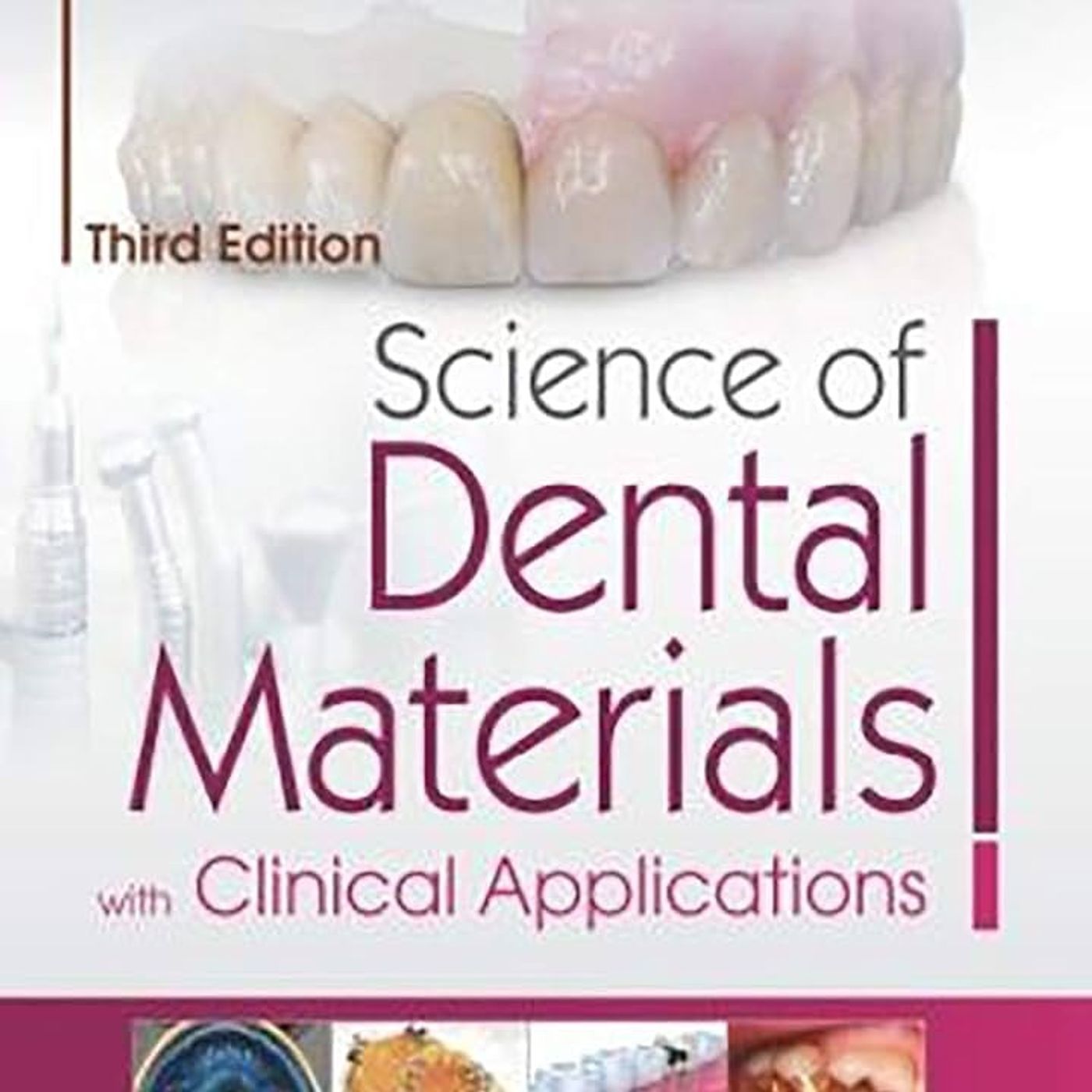









Community discussion