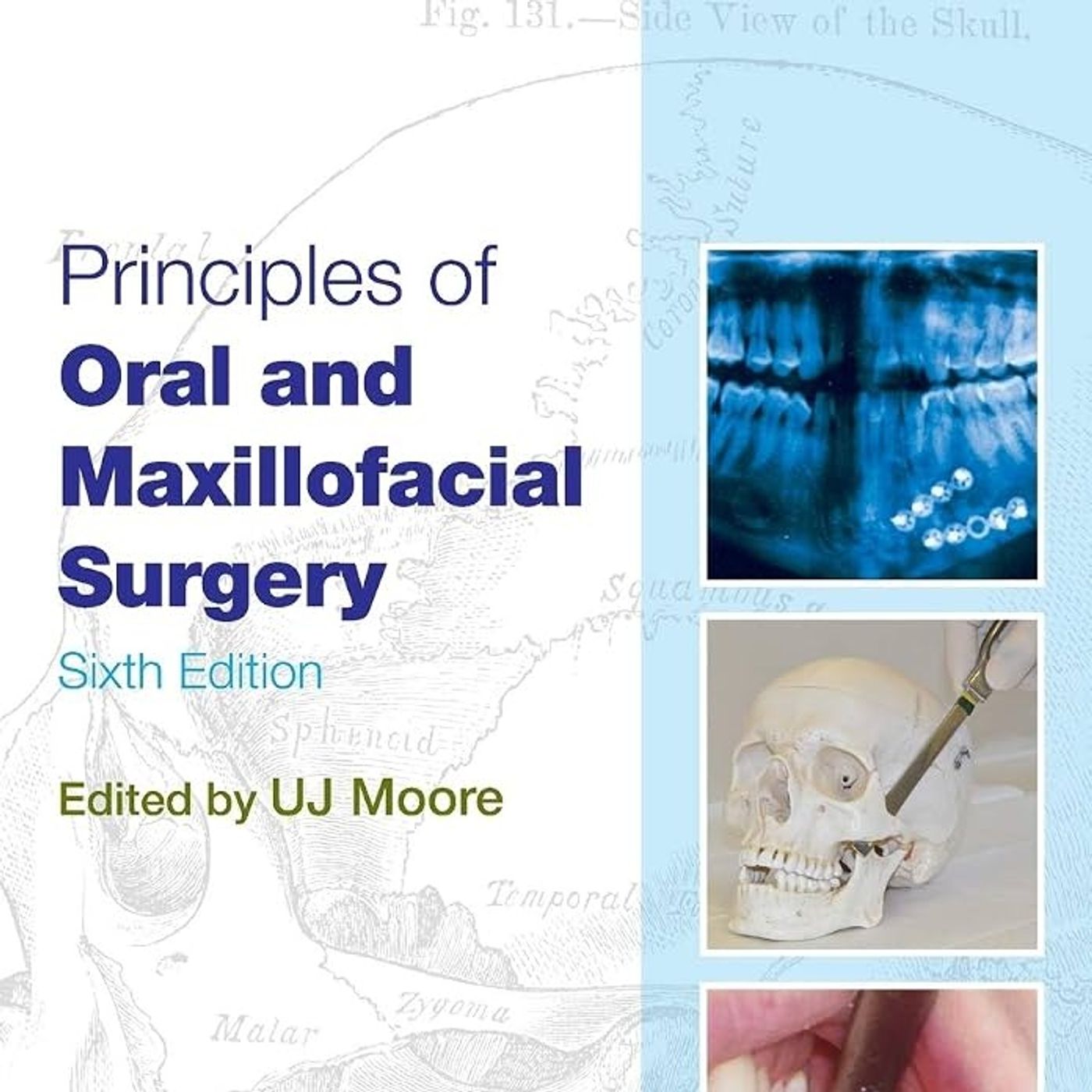
0:00 You know, you look at a dental x-ray and it seems so simple at first glance. There's a tooth, right? 0:06 It looks like this isolated little white iceberg just kind of floating in a sea of gray. You think, just grab it and pull it out. 0:14 Right, yeah. It looks like a completely straightforward mechanical problem. 0:17 You just, you know, pull the iceberg out of the water. 0:20 But, I mean, beneath the surface, that tooth isn't an isolated iceberg at all. It is intricately wired into this complex, high-stakes grid of Vital nerves, major blood vessels, dynamic bone. 0:33 It's tied into the respiratory system, the cardiovascular system. I mean, the patient's very identity, really. 0:39 Oh, absolutely. Taking that tooth out isn't just pulling. It's navigating a biological minefield. Exactly. Every single millimeter matters in this space. Because the implications of a wrong move, they echo through the entire body. 0:55 Yeah, they really do. So welcome to this deep dive. Today, we're cracking open what is basically the ultimate surgical playbook, the sixth edition of Principles of Oral and Maxillofacial Surgery, to figure out how surgeons actually navigate this environment. 1:09 It's a massive text, but so incredibly detailed. 1:12 It really is. And whether you're a dental student prepping for the clinic, a young professional refining your surgical skills, or just a self-learner who's fascinated by the mechanics of the human body, you are in the exact right place. 1:24 We are going to unpack the core principles, the physical techniques, and the biological realities of the field. 1:30 And we are thrilled to have you here. 1:32 Yeah, we're treating you as a third peer in the room with us today. Okay, let's unpack this. Where does a surgical intervention actually begin? Because, you know, it's not the moment the local anesthetic is administered. 1:43 No, not at all. 1:44 No. 1:44 Long before a scalpel is ever lifted, the intervention begins with a conversation. Right. The first step is always the systemic assessment. You know, you are not treating a tooth. 1:55 You're treating the entire physiological system that happens to be attached to that tooth. 1:59 Yeah, that makes sense. Like when recording the chief complainant or the C.O., The standard is to write it down exactly in the patient's own words. 2:06 Exactly in their words. 2:07 Which is funny because my initial instinct would be to translate their complaint into clinical terminology right away for the chart. 2:14 But capturing their exact phrasing preserves something critical, right? 2:18 It does. Their own words dictate the true hierarchy of their concerns. So if you immediately translate a patient saying, you know, my face hurts when I chew into suspected temporomandibular joint dysfunction, you completely strip away the nuance of their daily struggle. 2:35 You lose the human element of it. 2:36 Exactly. You might miss a vital clue about their social history or an underlying anxiety they have. From that raw baseline, you build out the medical and social history, which ultimately culminates in determining their physical status using the ASA classification. 2:52 Right, the ASA. I like to think of the ASA classification as almost like a pilot's pre-flight checklist, but for the human body. 2:59 That's a great way to put it. Right? 3:01 Because before you even think about taxiing to the runway, you run this non-negotiable safety check. Like ASA1 is a normal, healthy patient. ASA2 is mild systemic disease, and so on. 3:13 You don't take off if the cardiovascular engine is sputtering. 3:17 You really can't. And what's fascinating here is how underlying medical conditions physically alter how the body manages the stress of surgery. 3:25 Okay, how so? 3:26 Well, take a patient who is on long-term adrenal corticosteroids. 3:31 Under normal circumstances, physical trauma, like an extraction, triggers the hypothalamus-pituitary-adrenal axis to release cortisol. 3:39 Right, the body's natural stress response. 3:41 Exactly. That cortisol helps the body manage the systemic shock and maintain blood pressure during the procedure. But in a patient taking synthetic steroids, that natural feedback loop is entirely suppressed. 3:54 Wait, so they just don't have that response at all? 3:57 Right. They cannot mount an endogenous stress response. 4:00 Wow. So the simple physiological stress of a routine extraction could literally send them into an acute adrenal crisis right there in the chair. 4:08 Yes. That makes the medical history a literal blueprint for survival rather than, you know, just annoying paperwork. 4:15 That is wild. 4:17 And that blueprint also requires mapping the neurological terrain before you start anything. You have to establish a physical baseline of the cranial nerves. 4:25 Which ones specifically? 4:26 Specifically testing the 5th, 7th, and 12th nerves. especially if the patient has suffered any maxillofacial trauma. 4:33 Okay, so that's the trigeminal, facial, and hypoglossal nerves. 4:38 Correct. 4:38 So if a patient comes in with a fractured mandible, you need to know immediately if they can feel their lower lip or, you know, move their tongue symmetrically. 4:46 Exactly. If there is already a deficit, you know the trauma itself has impinged those pathways. That neurological baseline entirely dictates your surgical approach, and honestly, it protects you medico-legally. 4:58 Yeah, I bet. And I guess securing written informed consent is the final step of patient management before the surgery begins, right? 5:05 It is. 5:06 The patient has to understand the risks of those neurological pathways being temporarily or permanently altered. Furthermore, postoperative management actually starts preoperatively. 5:16 Oh, like planning ahead for their diet. 5:19 Yeah, you are calculating their post-op fluid intake, aiming for about 2,500 milliliters daily to maintain water balance. And if they suffer severe facial trauma and literally cannot swallow, you are planning for nasogastric tubes starting at 5 milliliters an hour. 5:34 Right. So you have everything mapped out. So once that physiological runway is cleared, we transition into the operating environment. 5:42 And according to the text, this space is governed by three absolute core principles, right? Painless surgery, minimal damage, and adequate access. Yes. 5:51 And those three are biologically inseparable. You cannot achieve minimal damage without adequate access because, well, you will be operating blind. 5:59 Right. You're just guessing. 6:00 Exactly. And you cannot maintain adequate access if the procedure isn't painless because the patient's involuntary movements will compromise the surgical field. 6:09 That makes total sense. And achieving that access usually requires elevating a mucoperiostal flap, right? 6:15 Usually, yes. 6:16 Well, here is where I have to push back a little on the concept of minimal damage. Oh. 6:21 How so? 6:22 Because to elevate that flap, you are making a large incision through the mucosa and the periosteum and physically peeling the tissue completely away from the bone. I mean, a massive sweeping incision seems like the exact opposite of minimal damage. 6:36 I know. It sounds entirely counterintuitive, doesn't it? 6:38 It really does. 6:40 But think about the mechanics of visibility. A broad flap pulls the soft tissue entirely out of the drill's path and clearly exposes all those vital structures. 6:49 Oh, I see. 6:50 Right. When you can actually see the mental nerve or the sinus floor, you don't blindly tear into them. Moreover, the biology of healing actually demands a large flap. 7:00 Why is that? 7:01 Well, when you suture that tissue back together, the wound edges must be supported by healthy intact bone underneath. 7:07 Okay, so if you design a tiny flap. 7:09 Right, if you design a tiny flap and drill away the bone directly beneath the incision line, the soft tissue will just collapse into the bony void. 7:17 Ah, leading to wound breakdown and infection. 7:19 Exactly. A clean, widely supported incision heals much faster than a small, jagged tear over a bony defect. 7:26 That is fascinating. And the geometry of that flap is crucial for blood supply too, right? You have to design it with a broad base. Always. Because if you cut a flap with a narrow base and wide edges, the vascular supply from the base won't reach the periphery. 7:39 Yes, the edges of your flap will simply slough off and necrose, which is a disaster. Yikes. 7:44 So once you have elevated that flap and exposed the surgical site, you frequently have to remove bone. And historically, this was done with chisels and gouges, relying on physical percussion, which sounds brutal. 7:58 It was certainly more traumatic. Today, we have largely transitioned to high-speed, water-cooled tungsten carbide burrs and increasingly piezoelectric instruments. 8:07 Yeah, piezoelectric saws are fascinating to me. They use ultrasonic cavitation to cut. 8:12 They do, and they're incredible. 8:14 It's like a specialized tool that cuts through the drywall but automatically stops when it hits the electrical wire underneath. 8:21 The ultrasonic vibrations cut through mineralized tissue like bone, but they simply bounce off soft elastic tissues like nerves or blood vessels. 8:28 That's a perfect analogy. It gives the operator absolute control and drastically minimizes surgical trauma to those critical neurovascular bundles. Right. 8:38 And while the surgeon is cutting bone, the assistant is managing the retraction. the assistance retractor must be anchored firmly against the bone. 8:47 Not the soft tissue. No. 8:48 If they just blindly pull on the soft tissue, they either obscure the visual field or, worse, risk pulling a nerve directly into the path of the saw. Oh, wow. Yeah. 8:57 So it requires this highly orchestrated, calculated use of physical force. 9:01 Absolutely. 9:02 Which kind of brings us to the mechanics of the most common surgical procedure, right? Tooth extraction. 9:07 Yes, the bread and butter of the field. 9:10 Posture and physics are everything here. Like if you are extracting a tooth in the right mandible, you stand behind the patient. But for everything else, you stand in front. 9:18 Right. 9:19 Use your non-dominant hand to stabilize the jaw, essentially keeping the axis of the tooth perfectly aligned with your own center line. 9:26 That posture is what gives you the required mechanical advantage. 9:29 Because you are not really pulling a tooth. You are dilating the bony socket that holds it. 9:34 Dilating the socket, right. Yes. 9:36 You apply forceps to grasp the root as far down as possible. Then you apply a very controlled apical force, pushing up into the socket, combined with a buccal force, pushing outward. Got it. 9:48 And by pushing apically into the socket, you expand the crestal bone, but more importantly, you shift the fulcrum point. 9:54 Exactly. 9:54 You move the center of rotation further apically down the root, because if the center of rotation is too high, the apical tip of the root will just snap off in the bone the second you apply lateral force. 10:04 Spot on. And when forceps cannot achieve that dilation, you transition to dental elevators. The physics shift entirely from grasping to leveraging. 10:14 Yeah, and here's where it gets really interesting. Because an elevator is essentially a highly precise surgical crowbar, right? 10:21 That is exactly what it is. 10:22 You wedge the blade into the periodontal ligament space between the tooth and the bone, rotate the handle, and basically lever the tooth out along its path of least resistance. 10:32 Yes, but there is a massive non-negotiable rule here. 10:37 What's that? 10:37 You can never, ever use a neighboring healthy tooth as the fulcrum for your elevator. 10:43 Oh, because if you rest your crowbar on the adjacent tooth. 10:47 The force will accidentally extract the healthy tooth right along with the bad one. 10:50 Oh man, that would be terrible. 10:52 It happens if you aren't careful. If we connect this to the bigger picture, the entire surgical approach relies on a deep, deep understanding of tooth morphology and root curvature. 11:02 Right, because every tooth is different. 11:03 Exactly. And when dealing with uninterrupted third molars or impacted wisdom teeth, that mechanical challenge is amplified tenfold by the surrounding anatomy. 11:13 Speaking of third molars, I noticed an absolute rigid ban on lingual retraction during those surgeries. My initial thought was that you'd want to pull the tissue away from the tongue for maximum visibility in the back of the mouth, 11:24 but clearly the lingual aspect is a massive danger zone. 11:28 What are we trying to protect over there? 11:29 The lingual nerve. 11:32 Ah. 11:32 It runs right along the medial surface of the mandible, just under the soft tissue. It supplies sensation and taste to the anterior two-thirds of the tongue. 11:41 Okay, so if you mess with that. 11:43 If you place a retractor on the lingual side and it slips, or even if it just compresses the tissue against the bone too hard, you can crush that nerve. 11:51 The patient wakes up with a permanently numb tongue. 11:54 Oh, wow. A permanently numb tongue just from a slipped retractor? 11:57 That is terrifying. 11:59 It is a catastrophic outcome. To avoid it, all bone removal and access must happen on the buccal side, the cheek side. 12:07 Okay, that makes sense. So you use a rose head bur to remove the buccal bone. And rather than trying to, you know, drag this huge multi-rooted tooth through a tiny bony window, you use the drill to surgically section the tooth. 12:19 Exactly. 12:20 You split the crown from the roots and elevate each small fragment out individually. Yes. 12:25 But even with textbook flap design and perfect elevator mechanics, biological structures fail. You know, roots snap. Anatomy anomalies happen. Right. 12:34 Things just go wrong. 12:36 They do. And the true test of a surgeon isn't just executing the plan, but navigating the crisis when the plan goes awry and complications arise. 12:44 Let's talk about those complications, because the most glaring yet entirely avoidable one is extracting the wrong tooth. 12:52 Yes, a complete medico-legal nightmare. 12:55 And it only happens when a team skips their immediate preoperative checks. Like, you must verbally confirm the patient, the chart, and the exact tooth immediately before the forceps are applied. 13:04 It seems basic, but it is vital. Mechanical failures also occur, like fractured local anesthetic needles. Really? 13:11 The needles just break? 13:13 Yes. The structural weak point of any needle is the hub, the plastic base where it attaches to the syringe. 13:18 Which is why you never insert a needle all the way up to the hub, right? 13:21 Exactly. If the patient jumps and the needle snaps at the hub while it's fully inserted, that broken metal fragment vanishes completely into the facial musculature. 13:30 Oh my gosh. 13:31 You suddenly have a major surgical emergency trying to fish a tiny needle out of the pterygomandibular space. But if you leave a few millimeters visible. 13:39 You can just easily retrieve it with hemostats. 13:41 Exactly. Now, displaced roots are another severe complication we see. 13:46 Like when you push your root into the wrong place? Right. 13:49 When applying that apical pressure we discussed earlier, especially in the upper jaw, the maxilla, a fractured root tip can be pushed directly up into the maxillary sinus cavity. 13:58 Wow. 13:58 Wow. 13:59 And that creates an oroantral fistula, right? 14:02 Yes, it does. 14:03 A literal opening connecting the oral cavity to the sinus. 14:06 So every time the patient drinks water, it could flush into their sinus and out their nose. 14:10 It's incredibly distressing for the patient. 14:11 I can imagine. So sealing that requires a specific surgical intervention, typically elevating a large buckle advancement flap, scoring the periosteum to stretch the tissue, and suturing it securely over the bony defect to close the hole. 14:25 You've got it perfectly. But complications are not purely mechanical, you know. Acute infections are incredibly dangerous. 14:31 Right, like a dental abscess. 14:33 Yes. A dental abscess usually follows the path of least resistance from a necrotic tooth root, eroding through the cortical bone and spreading into the facial-facial spaces. 14:43 So when pus accumulates deep in the neck or the cheek, you have to drain it. But how do you safely navigate a surgical blade through a swollen, highly vascular area that is packed with vital cranial nerves? I mean, plunging a scalpel into an inflamed facial space seems like an 14:58 invitation to cause catastrophic bleeding or paralysis. 15:01 It absolutely is, which is why we don't plunge a scalpel into it. Oh, okay. This is where the sheer brilliance of Hilton's method of blunt dissection is utilized. 15:09 How does that work? 15:10 You make a very small superficial incision, just through the skin or mucosa. Then you take a pair of closed, blunt forceps, like sinus forceps, and push them into the wound. 15:20 Just push them in while they're closed? 15:23 Yes. And once the tips are inside the tissue, you slowly and firmly open the handles, spreading the blades apart. 15:29 Oh, I see. So by opening the blunt forceps, you are physically separating the tissue planes. 15:34 Exactly. 15:35 It pushes the nerves and blood vessels safely to the side without severing them. 15:38 Yes. Then you pull the forceps out while they are still open to maintain the newly created pathway. You repeat this blunt spreading until you reach the abscess cavity and the pus drains out. 15:49 That is an incredibly elegant way to navigate through a dark anatomical minefield. 15:54 It really is. It saves lives. 15:57 So, Assuming the infection is managed, the pathology is removed, and the non-restorable teeth are extracted, the surgical mindset shifts entirely at this point. 16:06 It does. We move from subtraction, removing disease, to restoration, focusing on implants and bone preservation. 16:13 And that shift starts the exact second you begin extracting a tooth, right? The goal is atraumatic extraction. You use instruments like periotomes. 16:21 Yes, periotomes are excellent. 16:23 There are these microblades that slide directly down the periodontal ligament space to carefully sever Sharpie's fibers, the connective tissue holding the tooth to the bone. 16:32 The intention of the periotome is to release the tooth without applying those heavy lateral forces that would expand the socket or fracture the delicate buccal bone plate. 16:42 Right. So what does this all mean? Like, is atraumatic extraction just a marketing buzzword? Because by definition, physically separating a body part from the host is a traumatic event. 16:53 Well, it is physiologically traumatic, of course, but the terminology reflects a strict prioritization of the alveolar bone. 17:00 Prioritizing the bone over the tooth. 17:02 Exactly. Historically, the goal was simply the rapid removal of the tooth. Today, preserving the alveolar ridge is paramount because that bone is non-renewable. 17:12 Right. Once it's gone, it's gone. 17:13 Yes. Once a tooth is lost, the surrounding bone begins to quickly resorb and shrink. If you shatter that bone during a clumsy extraction, you destroy the anatomical foundation required for modern implantology. 17:27 Because without adequate bone volume, you cannot achieve osseointegration. 17:31 You absolutely cannot. 17:33 And osseointegration isn't just a mechanical press fit. It is a biological phenomenon. 17:38 Yes, it's cellular. Right. 17:39 It is the direct structural and functional connection between living remains remodeling bone cells and the load-bearing titanium surface of an endoosial implant at the microscopic level. The bone cells physically grow onto and fuse with the microscopic topography of the titanium. 17:54 It's amazing biology. And most modern systems utilized to harness this biology are two-piece systems. 18:00 Okay, two pieces. 18:01 You have the endoosius implant body, that's the threaded titanium fixture surgically embedded into the bone, and the transmucosal abutment. 18:10 The abutment is screwed into the implant body emerging through the soft tissue to serve as the foundation for the artificial crown. 18:18 Oh, okay. So treatment planning for these systems relies on reverse engineering. 18:23 Completely. 18:24 Because you cannot simply find the thickest segment of available bone and sink an implant into it. If the trajectory of that titanium root is angled incorrectly, the restorative dentist cannot build a functional aesthetic tooth on top of it. 18:38 Exactly. The surgery must be prosthetically driven. You digitally map exactly where the final tooth needs to sit in the arch. 18:45 And you work backward to calculate the exact surgical angle and depth of the implant body. 18:50 Because a perfectly osteointegrated implant is a clinical failure if it cannot actually support a usable prosthesis. 18:58 Precisely. And speaking of complex architectural planning, that leads us into the final frontier of our deep dive today. 19:04 Right, the big stuff. 19:06 The scope of oral and maxillofacial surgery extends far beyond the dental-alveolar complex. It encompasses the reconstruction of the entire facial skeleton in the face of trauma, cancer, and deformity. 19:19 Yeah, let's talk about trauma. When managing severe trauma, like a shattered maxilla or a fractured mandible, the surgeon needs to visualize the architecture in three dimensions. 19:30 Yes, which used to be much harder. 19:32 Right, before CT scans became ubiquitous. Surgeons relied heavily on specific radiographic angles, like the submento vertex view. 19:41 The jug handle view, yes. 19:42 Right. You take the x-ray from underneath the chin, pointing straight up to the top of the skull. This specific angle projects the zygomatic arches, the cheekbones, outward, isolating them like arches on a bridge so the surgeon can see 19:54 exactly where the bone is buckled or snapped. 19:57 Once the anatomy is mapped, those fractured segments are exposed and physically reduced back into their proper anatomical alignment before being rigidly fixated with titanium mini plates and screws. 20:09 That's incredible. But managing oral cancer, however, requires an entirely different approach to the anatomy, doesn't it? 20:16 It does. It requires a much more aggressive approach. 20:20 Because squamous cell carcinoma is the most common oral malignancy, and the surgical team has to calculate the threat of local invasion, where the tumor aggressively erodes into adjacent muscle and bone, versus the threat of metastasis, where the malignant 20:33 cells detach and travel through the lymphatic vessels to colonize the lymph nodes in the neck. 20:38 Yes. And eradicating those tumors often requires extraordinary surgical access. 20:44 You cannot adequately resect a massive tumor at the base of the tongue through the natural opening of the mouth. 20:49 No, of course not. And to get that access, surgeons perform procedures like a mandibulotomy, which is often referred to as a mandibular swing. 20:57 Yes, the swing. 20:58 Which is wild to me. They make an incision through the lower lip, down the chin, and literally saw the mandible in half down the midline. 21:06 Right through the bone. 21:07 They pull the two halves of the jaw apart, swinging them open like a book to gain direct, wide-open access to the pharynx and the base of the tongue. And then once the tumor is excised, they just wire and plate the jaw back together. 21:18 It sounds extreme, but it is necessary. And when you remove large segments of diseased jawbone and soft tissue, you have to replace it. 21:25 Right. 21:26 This is achieved through microvascular free flaps. A surgeon will harvest healthy tissue, such as a segment of bone from the fibula in the leg, along with its overlying skin and blood supply. 21:36 And the mechanics of a free flap are mind-blowing. They move that living bone from the leg to the face, but it will die if it doesn't get a new blood supply immediately, right? 21:45 Immediate revascularization is critical. 21:47 So under a high-powered microscope using sutures thinner than a human hair, the surgeon manually stitches the tiny 2-millimeter artery and vein of the transplanted leg bone directly into the carotid artery and jugular vein branches in the patient's neck. 22:02 They replumb the tissue to keep it alive in its new location. 22:05 It represents the absolute pinnacle of reconstructive surgery. 22:09 It really is. 22:10 Similarly transformative is orthognathic surgery, which addresses severe facial deformities and malocclusions that cause chronic temporomandibular joint disorders, or TMD. 22:22 Right. So when a patient's upper and lower jaws grow at vastly different rates, their teeth cannot meet and their facial profile is severely altered. Yes. So to fix this, surgeons perform orthognathic procedures like the sagittal split osteotomy. 22:36 Yes. The mechanical challenge of the sagittal split is moving the lower jaw without severing the inferior alveolar nerve, which runs straight through the hollow center of the mandible. 22:47 That seems impossible. 22:49 It's very difficult. To do it, the surgeon uses a saw to score the hard outer cortical bone of the mandible in a very specific geometric pattern. Then, using osteotomes, They pry the jawbone apart. 23:03 So because of the specific cuts, the jaw cleanly splits lengthwise down the middle along the natural fault lines of the softer, spongy, cancellous bone. It's like splitting a piece of wood perfectly along the grain. 23:14 That's exactly how it works. Wow. 23:17 And so the jaw separates into two sliding plates with the vital nerve safely encased in one half. They slide the jaw forward or backward to correct the bite and plate it into its new position. 23:26 It is brilliant engineering. But this raises an important question. 23:30 A philosophical question that lies at the core of the specialty. 23:33 Which is? When a surgeon is resecting a massive tumor or splitting a jaw to correct a deformity, how do they balance the aggressive eradication of pathology with the preservation of the patient's human identity? Oh, man. 23:47 Yeah. Because the face isn't just anatomy, right? It is how we present ourselves to the world. 23:52 Exactly. 23:53 A surgical intervention in this space is not simply about keeping the patient alive. It is about preserving the mechanics of fundamental human functions, the ability to speak intelligibly, to chew food, to swallow safely, and honestly, to look in 24:07 the mirror and recognize the person staring back at you. 24:11 It truly emphasizes that the oral cavity is genuinely the gateway to the body, and the maxillofacial region is the anchor of our identity. 24:20 Beautifully said. We have covered incredible ground today, from the physiological importance of the preoperative systemic assessment to the physical principles of extracting a tooth without shattering the socket, all 24:32 the way to the microscopic vascular plumbing required to rebuild a shattered face. 24:36 That's a lot of material. It is. 24:39 But before we wrap up, let's lock in this knowledge with a quick mental exercise for you listening. Okay. 24:46 Visualize a patient sitting in your chair. presenting with a deeply impacted lower right third molar. 24:52 Yes, mentally walk through the physical mechanics. What is your physical stance at the chair to maximize your mechanical advantage? 24:59 When you design your mucoperiosteal flap, how do you mathematically ensure a broad base for blood supply while strictly avoiding any lingual retraction to protect that delicate lingual nerve? 25:10 And think about the physics. 25:11 Right. 25:12 When you apply your elevator to dilate the socket, how do you shift the center of rotation apically? without ever using the neighboring tooth as a fulcrum. Think about how the hidden anatomy dictates every single micro-movement you make. 25:25 If you can clearly visualize the biomechanics of that sequence, you have truly grasped the fundamental principles of the discipline. 25:32 Thank you so much for joining us on this deep dive. 25:35 Keep questioning the anatomy, keep visualizing the underlying pathways, and keep exploring the mechanics of the field. Because as we've explored today... that little white iceberg on the x-ray, it is never just an iceberg. There is always a complex, 25:49 deeply interconnected world hiding just beneath the surface.









Community discussion