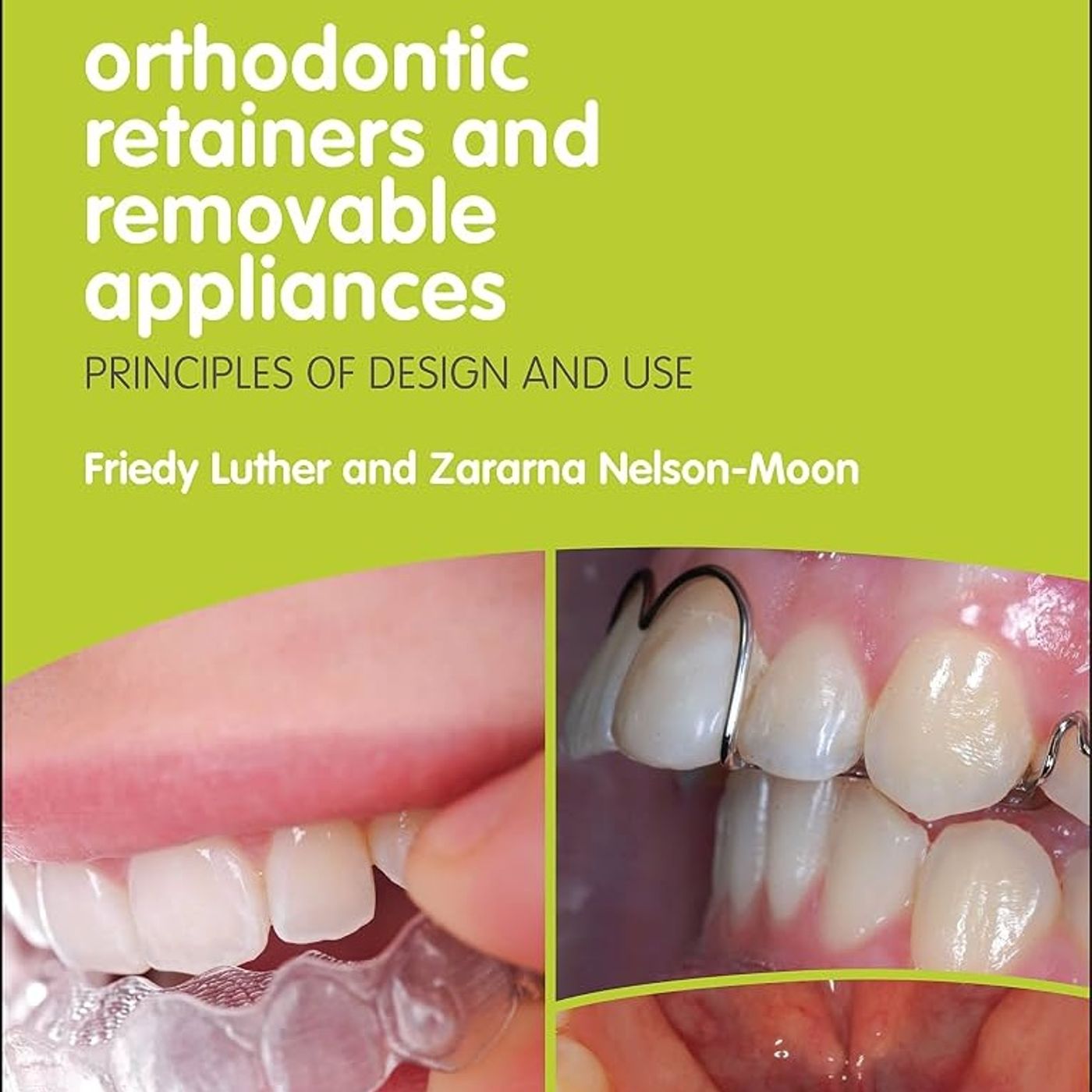
0:00 You know, usually when we talk about a medical diagnosis, there's this expectation of precision. It feels almost like engineering, right? 0:09 Right, yeah. Like fixing a machine. 0:11 Exactly. Like if you break your arm, the x-ray shows that jagged white line, and the doctor just points and says, you know, there it is, broken. 0:19 It's very clean. 0:21 Right. 0:21 Very binary. 0:22 Right. You set the bone, you cast it, and the solution is straightforward. But then you look at a crooked smile, or like an incisor that's trapped behind another tooth. 0:32 And it's so tempting to think, oh, just push the teeth straight. 0:35 Yes. But suddenly, that whole illusion of simplicity just completely vanishes. 0:41 Because we're not doing carpentry in the mouth, you know? 0:45 No, absolutely not. We are looking at a biological landscape that is incredibly dynamic. I mean, it's constantly remodeling. 0:53 And honestly, it's pretty unforgiving if you don't respect the underlying tissue, right? 0:58 Oh, it's the absolute definition of a complex biological puzzle. 1:02 You're attempting to forcefully relocate an organ. 1:06 Wait, a tooth is an organ? 1:08 Yes, technically it is. And you are trying to move this organ through solid, living bone while it is still actively functioning. 1:16 That is wild to think about. 1:18 That is exactly why today we're diving straight into the biological war zone of the human mouth. 1:24 It really is a war zone sometimes. 1:25 It is. 1:26 And we're using a truly essential text as our guide for this deep dive. It's called Orthodontic Retainers and Removable Appliances, Principles of Design and Use by Freedy Luther and Zarna Nelson-Moon. 1:37 It's a fantastic resource. Really bridges the gap. Yeah. 1:40 And just a heads up to the dental students, young pros, and self-learners joining us today. We are skipping the basic diagnosis today. Right. 1:47 We're assuming you already know your overjets, your overbites, your skeletal classifications. Exactly. 1:53 Instead, our mission is to comprehensively detail the core principles of interceptive treatment, appliance design, and long-term retention. 2:01 Taking it from theory to actual practice. 2:04 Basically, bridging the gap between looking at a malocclusion and physically designing the tool to fix it. So, okay, let's unpack this. Before a clinician can even think about bending wires or taking molds. 2:16 Or drawing up an appliance design. Right. 2:18 They have to ensure the biological environment is actually capable of surviving the process. 2:23 Yes. And the authors establish a golden rule right from the start. It is a non-negotiable prerequisite for any orthodontic treatment. 2:31 Which is? 2:32 You must have excellent dental health and meticulous oral hygiene. Period. 2:38 Okay, but why so strict? 2:40 Because we're talking about moving teeth through the alveolar bone. 2:43 If you attempt to initiate that movement in the presence of gingival inflammation... Like bleeding gums. Exactly. Bleeding gums or active periodontal disease, you are no longer just shifting a tooth. 2:54 You are triggering rapid, devastating destruction of the supporting bone structure. Wow. 2:59 The text makes it explicitly clear. I mean, treatment must never begin until there is zero bleeding from the gingival margins or periodontal pockets. Zero. 3:09 Wait, but... Isn't inflammation just the body's natural immune response? 3:13 Normally, yes. 3:15 Right. So usually when tissue is inflamed, the body is sending more blood flow and immune cells to an area to protect and heal it. So why does a natural immune response suddenly cause the jawbone to just dissolve the second you add an orthodontic wire? 3:28 That's a great question. It comes down to cellular signaling. 3:32 When you apply a continuous orthodontic force to a tooth, you're intentionally creating a pressure zone in the periodontal ligament. 3:39 Okay. 3:39 And this relies on a highly delicate localized cellular balance. 3:44 On the side where the tooth is being pushed, you have these specialized cells called osteoclasts. 3:49 And they break down the bone. 3:50 Exactly. They break down the bone to make room. And on the opposite side where the ligament is being stretched, osteoblasts build new bone behind the tooth to stabilize it. 3:59 Okay. So that's the normal healthy process, push and pull. 4:03 Right. But when periodontal inflammation is already present, say due to plaque or poor hygiene, that inflammatory cascade floods the area with cytokines. 4:14 Cytokines, okay. 4:15 And these chemical signals massively supercharge the osteoclasts. They send the bone destruction into total overdrive. 4:21 Oh, wow. 4:22 And simultaneously, they suppress the osteoblasts. So the bone breaks down rapidly and nothing is rebuilt behind it. 4:29 It's like trying to steer a ship while the hull is actively rusting away. 4:34 That's a good way to put it. 4:35 Or actually, it's like trying to move a fence post by dragging it through the dirt. You know, like if the dirt is dry and densely packed, the post stays upright as you slowly pull it and the dirt just fills in behind it. 4:47 Right. The healthy bone remodeling. 4:49 But if the ground is a muddy, inflamed swamp, the second you apply pressure to that post, it just falls over. 4:56 The hole collapses and you've lost the foundation entirely. 4:59 That is a highly accurate way to visualize it. And if the alveolar bone drops, it does not grow back. 5:05 It's just gone forever. 5:06 Gone forever. And this strict biological limitation perfectly explains why interceptive treatment, specifically using upper removable appliances or URAs. 5:18 The plastic plates. 5:19 Yes, the removable plates. Why they are primarily focused on the developing childhood dentition. 5:24 Okay, that makes sense. 5:26 We target the mixed dentition phase rather than adult because we are dealing with a developing system where the bone is naturally more adaptable. 5:34 And our clinical decisions can strongly influence those long-term growth outcomes. 5:38 Exactly. 5:39 So assuming the foundation is solid, like zero bleeding, perfect hygiene, how are we actually moving that post? 5:46 Well, you have to choose your tool. 5:48 Right. And when most people think of orthodontics, they picture fixed metal brackets bonded to every single tooth. 5:53 The classic train tracks. 5:54 Yeah. 5:55 So. 5:56 Why would a clinician actively choose to rely on a removable plastic plate, a URA, instead of those highly capable fixed brackets? 6:03 Because the choice of tool is dictated by the specific type of tooth movement required. And this is where we really have to understand the mechanics. 6:12 Okay, break that down for us. 6:13 URAs are designed to do one primary thing, simple tipping. 6:18 Tipping, just like leaning the tooth over. 6:21 Right. Because a URA typically applies force to a single point on the crown of the tooth, usually via a wire spring. So the tooth tips around its center of resistance, which is located down in the root. 6:32 So the top moves one way and the bottom moves the other. 6:35 Exactly. The crown moves one way and the root subtly tilts the opposite way. Fixed appliances, however, are bonded directly to the entire facial surface of the tooth. 6:44 So they have way more grip. 6:46 Huge amount of grip. Because they grip the crown rigidly, They can achieve what we call bodily movement. They can move the crown and the root uniformly through the bone in the exact same direction. 6:57 Oh, I see. 6:58 They manage complex rotations, intrusion, extrusion, root torque. A removable plastic plate simply cannot physically grasp the tooth well enough to control the root like that. 7:09 But wait, if fixed appliances possess so much more biomechanical control, why do URAs even have a place in modern orthodontics? 7:17 Because the mixed dentition phase presents a unique anatomical chaos. 7:22 Chaos. Like just teeth everywhere. 7:24 Pretty much. I mean, a child might have adult teeth erupting right next to baby teeth. Deciduous teeth that are actively exfoliating and becoming loose. 7:32 Oh, right. You physically cannot bond a fixed metal bracket to a tooth that is going to fall out next Tuesday. 7:37 Exactly. Which gives the URA a massive clinical advantage. 7:42 Right, because you can just take it out. 7:44 And you can modify it. The acrylic base plate of a URA can be precisely trimmed. You can grind away the plastic to create a pathway for a newly erupting adult tooth. 7:53 Oh, that's clever. 7:54 While simultaneously designing the plate to completely avoid putting pressure on a loose baby tooth. 8:00 You know, you might be used to seeing a full arch of metal, but in this phase, precision targeting is everything. 8:05 It really is. 8:06 And the textbook actually emphasizes how critical it is to communicate exactly which tooth is which. Like, we aren't just saying the front tooth, right? 8:13 No. 8:13 No. 8:14 You have to use strict alphanumeric notation. Right. 8:17 So an adult upper right lateral incisor is noted as UR2. 8:22 But if you are working around an upper right deciduous central incisor, a baby tooth, that is noted as URA. Yes. 8:31 It changes the entire appliance design, depending on whether you are targeting a 2 or an A. 8:37 So let's look at a specific active component. The text details for this precise targeting. The Z spring. Ah. 8:44 The Z-spring. It's a classic, highly effective wire component. It's literally embedded into the acrylic of URA. 8:51 And what's it used for? 8:53 It's typically used for correcting a single incisor crossbite. 8:57 Okay, so that's like an upper front tooth that has erupted too far back, and it's trapped behind the lower front teeth when the patient bites down. 9:03 Exactly. The Z-spring sits against the palatal surface of that specific trapped upper incisor. It applies a continuous forward force, tipping the crown out over the lower teeth to correct the crossbite. 9:17 But hang on. If you press a strong wire spring against a tooth, Newton's third law dictates that the tooth is pushing back against the spring with an equal and opposite force, right? 9:27 Yes. Every action has an equal and opposite reaction. 9:31 So if you aren't careful, instead of pushing the front tooth forward, wouldn't the spring just push the entire plastic plate backward out of the mouth? How does the clinician prevent that? 9:41 That is the crucial concept of anchorage. Anchorage is simply the resistance to unwanted tooth movement. Okay. In modern fixed orthodontics, clinicians might use temporary anchorage devices, TADs. 9:55 Oh, I've seen those. They look kind of scary. 9:58 They are essentially mini-scripts. drilled directly into the jawbone. They provide an immovable, rigid anchor point to pull against. 10:06 But URAs don't have that luxury. 10:08 No, they don't. They rely entirely on their own structural design to dissipate those reactive forces. 10:14 So they use the anatomy of the mouth itself as the anchor. 10:17 Precisely. A well-designed URA uses multiple wire clasps to tightly grip several posterior teeth, like the molars and premolars. It groups them together into a single anchor unit. 10:30 Ah, strength in numbers. 10:32 And furthermore, the broad acrylic base plate sits flush against the vault of the hard palate. 10:38 Got it. So by distributing that reactive force across multiple large teeth and the dense bone of the palate, the appliance resists moving backward. Exactly. 10:47 Exactly. Which forces the single incisor to yield to the Z-spring and tip forward. 10:53 Okay, so let's follow this through. The anchorage holds, the Z-spring does its job, the crossbite is corrected, and the teeth look visually straight. The URA comes out, and the active treatment is done. 11:04 Yes, but. 11:06 And here's where it gets really interesting, because moving the teeth is actually the easy part, isn't it? 11:11 It really is. 11:12 Because the moment that appliance comes out, a new, potentially lifelong biological battle begins. 11:18 The fight against the body's natural memory. Yeah. 11:21 Unpack that for us. 11:22 Well, this transition into retention is often the most poorly understood phase by patients, and it's heavily emphasized in the text. 11:29 The biology of relapse is extraordinarily powerful. 11:33 Right. 11:34 When you derotate an untwisted tooth, you are stretching and distorting the surrounding gingival tissues, specifically the supracrestal gingival fibers. 11:43 Which are what exactly? 11:44 They're bands of connective tissue that attach the tooth to the gums. 11:48 I always picture these fibers as microscopic, incredibly stubborn rubber bands. 11:53 Like if you take a tooth that's naturally twisted 45 degrees and you force it into a perfect aesthetic line, those rubber bands don't just relax. 12:01 No, they don't relax at all. 12:03 They're pulled tight, wrapping around the root under immense tension. 12:06 And because they are embedded in soft tissue rather than bone, they don't remodel quickly. 12:12 What's fascinating here is just how long that residual tension persists. 12:17 The text highlights that these elastic fibers are incredibly slow to readapt to the new tooth position. 12:23 Like how slow? 12:25 This tension can remain for many, many months. And in some cases, the tissue architecture never fully reorganizes. 12:33 So we're just fighting an unwinnable war against the body's natural anatomy? 12:36 It can feel like that. The moment you remove the mechanical retention, those microscopic rubber bands instantly begin pulling the tooth right back toward its original rotated position. Wow. This biological reality has completely shifted the modern clinical consensus. Retention 12:53 is no longer viewed as a six-month afterthought. It is increasingly viewed as a lifelong commitment. 12:59 Lifelong. That's a huge deal. So let's look at the retainer comparison matrix provided in the text through that specific lens of fighting those rubber band fibers. 13:08 Okay. 13:08 The clinician has three main weapons, and each has a biological tradeoff. First, there's the traditional Hawley retainer. That's essentially a wire bow across the front teeth attached to an acrylic palate, right? 13:20 Yes. And the holly's biggest biological advantage is that it allows for the natural settling of the dentition. Settling. 13:28 Right. 13:29 Because the acrylic sits only on the palate and doesn't cover the biting surfaces, the upper and lower teeth are free to naturally erupt and interlock into a very tight, comfortable, and stable intercuspal position over those first few months of retention. 13:43 Oh, that makes total sense. 13:44 It also boasts excellent wear and tear resistance. But the significant clinical downside is purely aesthetic. Teenagers and young professionals often resist wearing a highly visible metal wire across their front teeth. 13:56 Yeah, nobody wants a metal wire for the rest of their life. So if compliance drops because the patient refuses to wear it, the obvious solution seems to be making the retainer invisible. 14:06 Which leads us to the second option. 14:08 Right, the Essex or vacuum-formed retainers. The clear plastic trays. 14:12 Exactly. 14:13 But wait. By solving the aesthetic problem to increase compliance, don't we create a biological problem? Like if all the biting surfaces of the teeth are wrapped in a layer of plastic, how do the upper and lower jaws ever naturally settle and interlock? 14:26 The short answer is they don't. 14:28 Really? 14:29 That is the critical flaw of the Essex retainer noted in the matrix. The physical thickness of the plastic physically props the bite open slightly. It completely prevents that natural, stable settling of the occlusion. 14:41 Oh, wow. 14:43 Furthermore, while they are highly aesthetic, they suffer from poor wear and tear resistance. Patients who brux or grind their teeth heavily at night will quickly chew right through the occlusal surfaces of the plastic. 14:54 Rendering the retainer useless. 14:56 Completely useless. 14:58 Which drives clinicians toward the third option. If removable retainers rely entirely on unpredictable patient compliance, you just eliminate the compliance variable entirely by gluing a wire directly to the back of the teeth. The bonded retainer. Right. 15:12 And bonded retainers are clinically excellent for holding closed spaces that desperately want to reopen, like a corrected midline diastema or a gap between the front teeth. 15:21 Makes sense. 15:22 They are also vital for periodontally involved teeth that have lost bone support and need permanent splinting to remain stable. 15:29 But the text explicitly warns about their hidden danger. 15:33 Which is? 15:34 They suffer from alarmingly high failure rates, reported anywhere from 15 to 40 percent. Wait, 15 to 40 percent? 15:42 Why is the failure rate so high if it's permanently glued? 15:45 It seems like it should be the most robust option. 15:47 It comes down to microscopic biomechanics. Every time you chew, your teeth flex microscopically within the periodontal ligament. Okay, yeah. 15:55 A rigid metal wire glued across multiple moving teeth is constantly subjected to continuous shear forces. Over time, that relentless microscopic flexing fatigues the composite glue. The bond eventually fails. 16:08 And the real danger is that the failure is practically invisible to the patient. Like, if the glue detaches from just one single incisor, the patient still feels the wire firmly attached to all the adjacent teeth. 16:20 Exactly. They think everything is perfectly fine. 16:22 But that one unbonded tooth is now completely free to surrender to the pull of those supercrustal fibers. It just slowly rotates out of alignment while the retainer is still technically in their mouth. 16:34 It happens all the time. And because retention is a lifelong necessity... The specialist orthodontist who placed the wire won't be the one monitoring it 10 years later. 16:44 Right. The patient eventually returns to their regular dentist, the general dental practitioner, or GDP. 16:49 Yes. This transition of care is a major theme in the book. The GDP becomes the long-term guardian of that orthodontic result. 16:57 They inherit the biological consequences. 17:00 They do. And a significant portion of the text is actually dedicated to troubleshooting what happens when things go wrong under the GDP's watch in the real world. 17:09 Because the real world is messy. Wires snap, patients lose their removable plates on vacation. But the text also highlights how the GDP can use these tools creatively, right? There is a fascinating clinical application detailed where a standard Holly 17:22 retainer is modified into a transitional prosthetic. Yes. 17:26 The textbook provides a specific example of modifying a holly retainer with a pontic, which is an acrylic false tooth. 17:33 Okay, paint a picture for us. 17:35 Imagine a young patient who is congenitally missing a lateral incisor. 17:40 The orthodontist has successfully opened up the perfect amount of space for a future implant. However, the patient is only 16. 17:47 Okay, so their jawbone is still actively growing. 17:50 Exactly. If you place a permanent titanium implant now, as the jaw grows downward and forward, the implant will remain frozen in place. Eventually, it'll look like it is submerged higher up in the gum line compared to the surrounding natural teeth. 18:03 Right, that would look terrible later on. So the GDP takes over. They take the holly retainer used to hold the newly opened space, and they embed a highly aesthetic acrylic tooth directly into the wire framework. 18:15 It does two jobs simultaneously. 18:17 The acrylic base maintains the necessary physical space, preventing the adjacent teeth from collapsing inward. 18:23 Yes, and while it does that, The false tooth provides an immediate, socially crucial aesthetic solution for the teenager. 18:30 Right, until their skeletal growth finishes in their early 20s. 18:33 It is an elegant, practical solution. 18:35 It is. But the GDP also has to manage the darker side of retention. Total compliance failure. Oh boy. What is the protocol when a patient simply stops wearing their removable retainer and the teeth visibly begin to crowd again? 18:50 Well, the clinician eventually has to have the difficult conversation about terminating treatment. But to do that fairly, they have to carefully differentiate between the relapse we discussed earlier. 19:00 Those rubber band fibers pulling the tooth pack? Right. 19:03 They have to differentiate between that and a completely different force, maturational changes. Yes. 19:09 If we connect this to the bigger picture, maturational changes are an inevitable part of human physiology. Even in individuals who possess naturally perfect straight teeth and who have never had orthodontic treatment in their lives. The dentition is not static. 19:26 Really? 19:26 Throughout a person's life, teeth have a natural physiological tendency to slowly move, drift forward, and crowd together. It is a known biological phenomenon of aging. 19:37 So the GDP basically has to explain to the non-compliant patient that stopping retainer wear doesn't just mean the teeth might revert to their original crooked state. They will likely continue to shift and crowd even further just as part of the natural aging process. 19:51 Exactly. It's a tough conversation. And the clinician must also monitor the hidden dangers of the retainers themselves. The textbook is uncompromising on this point. Which point? Removable retainers, just like partial dentures, act as massive plaque traps. Oh, gross. 20:08 But yeah, that makes sense. 20:10 They physically shield the teeth from the natural cleansing action of saliva and the tongue. This massively increases the local oral bacterial load. 20:18 So if the patient's hygiene routines drop while wearing an Essex retainer every single night, that trapped stagnant bacteria will rapidly metabolize sugars into acid. 20:27 Rapidly. 20:28 And the GDP will suddenly be faced with severe decalcification, active caries, and advanced periodontal disease. 20:34 You might successfully preserve the perfect alignment of the teeth. 20:38 but lose the teeth themselves to rampant decay. 20:41 That is a terrifying trade-off. It requires constant vigilance. Now, while we have heavily focused on URAs for simple tipping and the mixed dentition and the GDP's role in managing long-term retention, the text certainly does not ignore the advanced 20:54 tools required for complex presentation. 20:57 Definitely not. 20:58 Right, because what happens when the problem isn't just a tipped incisor? What if you are looking at a severe skeletal discrepancy? For instance, a massive class 2 malocclusion where the upper jaw and teeth are positioned significantly forward of the lower jaw. 21:11 Right, like a severe overbite situation. 21:13 Yeah, a removable plastic plate with a Z-spring isn't going to fix a skeletal mismatch. 21:18 No, it won't. For these severe discrepancies, the text outlines the use of functional appliances for the postgraduate specialist trainee. 21:25 Functional appliances. 21:26 Yes, these are robust, often bulky appliances. designed to physically force the patient to posture their lower jaw forward to bite together. 21:35 We often hear that functional appliances harness the natural forces of the facial muscles, but how does that actually translate to remodeling a jawbone? 21:44 By forcing the mandible into a sustained, forward-postured position, the appliance places continuous stretch and tension on the masticatory muscles. 21:53 The chewing muscles. 21:54 Right, and also on the soft tissues surrounding the temporal mandibular joint, or TMJ. This sustained muscular tension transmits mechanical strain to the condyle, which is the ball joint of the lower jaw. 22:06 Okay, I'm tracking with you. 22:08 In a growing patient, this specific biological strain actively stimulates cellular remodeling at the condyle and the glenoid fossa. You are literally modifying the trajectory of the patient's skeletal growth. 22:20 That is incredible. 22:21 The text notes measurable clinical benefits from this, too. Successful functional appliance treatment often results in a highly beneficial increase in the lower anterior face height. 22:31 Oh, wow. 22:32 And a visible reduction in the depth of the labial mental fold. 22:35 That's that deep horizontal crease between the lower lip and the chin, right? 22:39 Exactly. 22:40 So you are fundamentally changing the architecture of the lower face, not just moving the teeth within the bone. 22:46 Precisely. 22:47 The text also transitions to another advanced tool, one that has absolutely exploded in popularity, particularly for adults. Vacuum-formed active appliances, or VFAAs, basically clear aligners. 22:59 Yes, very popular right now. 23:01 Now, we discussed Essex retainers earlier, which look visually identical to these. How does a VFAA differ biologically from an Essex tray? 23:09 Well, an Essex tray is entirely passive. Its sole biological purpose is to hold teeth exactly where they are. A VFAA is active. 23:19 Meaning? 23:20 It is manufactured with subtle built-in discrepancies designed to deliberately apply force and move teeth into a new position. And the textbook notes they are highly effective for specific limited movements. 23:31 Yeah, there's a great example detailed in the text. Case one, it describes an adult patient who presented with a massive 3.5 millimeter maxillary midline diastema. 23:41 A huge gap between their two upper front teeth. 23:43 Highly visible. And furthermore, they had relative microdontia, meaning their teeth were proportionally slightly too small for their jaw. which just exacerbated the spacing. 23:54 Right. And for a case like that, where the biological goal is simply dragging crowns together to close a space, a sequential series of VFAAs can be remarkably effective. 24:05 And offer the aesthetic invisibility that adult patients demand. 24:08 Yes. But the authors emphasize a critical limitation. VFAAs are generally not ideal for complex cases that require extractions. 24:17 Why do they fail with extractions? Like, If you pull a premolar to make room, why can't the plastic tray just slide the adjacent canine back into the empty space? 24:26 It comes right back to the difference between tipping and bodily movement that we talked about earlier. A plastic tray struggles immensely to grip the crown rigidly enough to pull the entire root perfectly parallel through the dense alveolar bone. 24:40 Because it's just plastic slipping over the top. 24:43 Exactly. When it attempts to close a large extraction space, The force applied to the crown often just causes the tooth to tip over into the gap rather than moving bodily. 24:52 So you end up with the crowns touching at the top. 24:55 But the roots remain divergent under the bone, which is highly unstable and prone to immediate relapse. 25:01 So what does this all mean? Whether you are a GDP creatively modifying a holly retainer to hold space for a missing incisor, or a specialist utilizing a functional appliance to remodel the TMJ, the tool you choose must perfectly match the biological reality of the malocclusion. 25:18 You cannot ask a flexible plastic tray to reliably perform the complex root torque of a fixed metal bracket. 25:25 And you certainly cannot ask a simple wire spring to move a root entirely through solid bone. 25:30 You must respect the biology first and apply the mechanics second. 25:35 Knowledge is only valuable when you deeply understand the biological why Behind the mechanical what? 25:41 Which brings us to the end of our deep dive. 25:43 And as promised, to honor the educational focus of this text, we are going to leave you with a clinical scenario directly from the book to test how well you process these biological principles. 25:53 This is a good one. 25:54 Imagine you are sitting in your clinic and an eight-year-old patient sits in your chair. Let's refer to this as case 14. The child is medically fit and well, but they complain that you cannot see their top front tooth. 26:06 Okay. 26:07 You look inside. and you observe a clear incisor crossbite. 26:11 The upper tooth is trapped behind the lower. Crucially, you also observe a displacement of the jaw on closure. The child physically shifts their lower jaw to the side as they bite down just to avoid the trapped tooth. 26:23 It is a textbook presentation requiring interceptive action. 26:26 So based on the biomechanics and the biological limitations we explored today, what is the absolute first biological check you must perform before you even begin to think about taking an impression or designing a URA with a Z-spring for this child. 26:41 Take a second to recall the foundational rule established at the very beginning of the text. 26:45 Got it. The answer is, before any force is applied, you must aggressively probe and check for zero gingival bleeding, zero periodontal inflammation, and perfect oral hygiene. 26:58 Because if you apply the tipping force of a Z-spring in an inflamed, cytokine-rich environment. 27:04 You will trigger the osteoclasts and destroy the alveolar bone. 27:07 the biological foundation must be perfectly secure before the mechanics can begin. 27:11 Absolutely. And as we close this analysis, I think this raises an important question regarding those maturational changes we discussed. 27:20 Yeah, that's a fascinating area. 27:22 We know that the mouth is a dynamic living system that is constantly remodeling itself and that teeth naturally crowd and drift forward over a lifetime, even without prior orthodontic intervention. 27:33 Right. So are we, as a profession, fighting a fundamentally futile biological war by attempting to freeze this living, moving system into a static picture of aesthetic perfection with lifelong bonded wires and plastic trays? 27:47 It's a provocative thought. 27:48 It really makes you wonder how the field will evolve. 27:50 Like how might future orthodontic materials or even genetic therapies actually work symbiotically with the supercrustal fibers and bone remodeling pathways rather than just acting as a rigid mechanical barricade against them? 28:03 The science is always advancing. It is. 28:05 Keep questioning the established mechanics. Keep learning the biology behind them. 28:09 To all the students, GDPs, and professionals listening, we highly encourage you to consult the original textbook for the full visual case studies, the intricate appliance diagrams, and the radiographs. 28:20 You really need to see them to fully grasp the concepts. Absolutely. 28:23 Because remember, you can't build a stable house on a swampy foundation, and you cannot force human biology to obey a mechanical blueprint it never agreed to. Until next time.








Community discussion