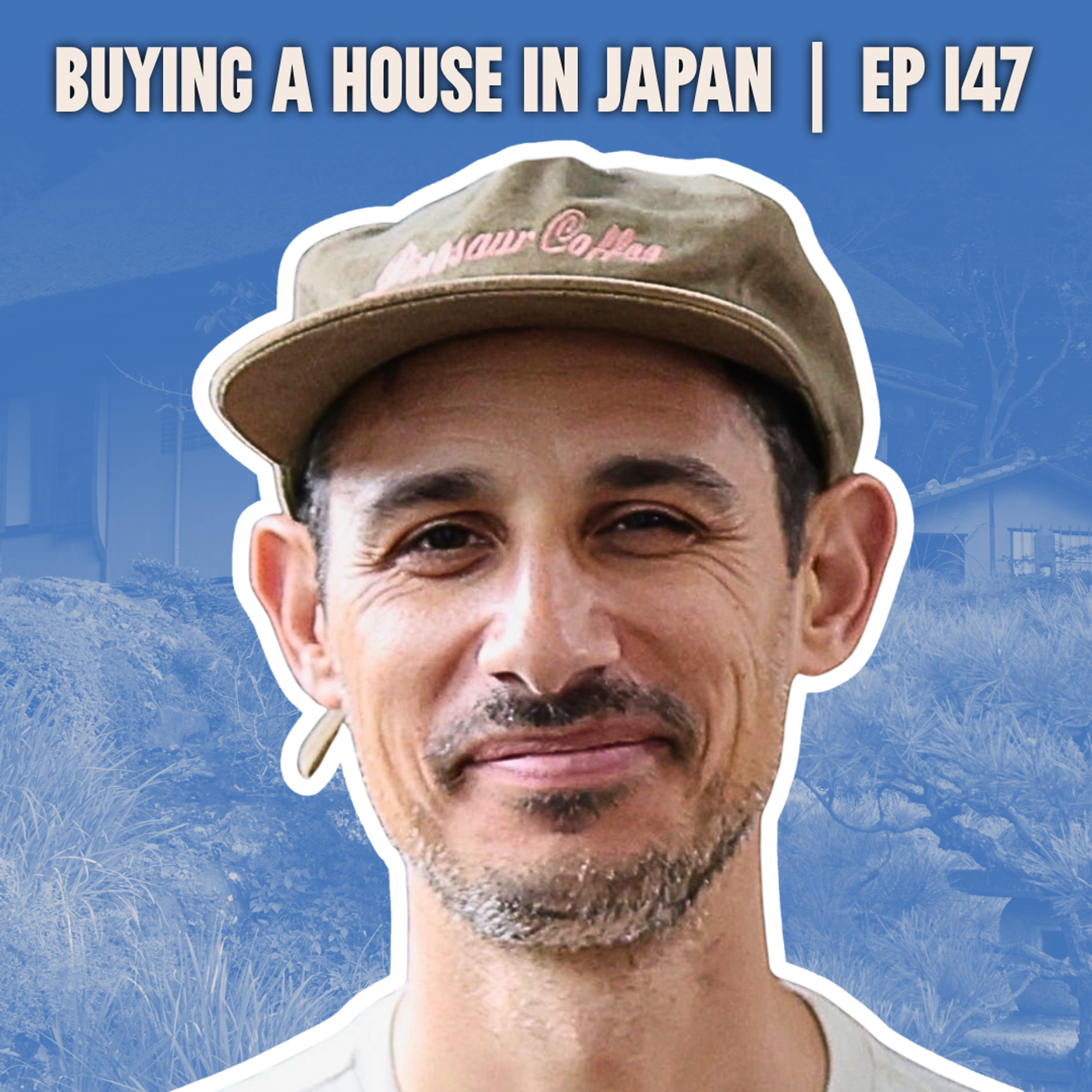
Works in America. Lives in Japan. | Ep. 147
Moving to Japan is a massive life pivot, but the real challenges often start long after the initial honeymoon phase fades. In this episode, we sit down with Richard Sandlin, who shares his raw experience moving from the Bay Area to Sendai with his family. We break down the realities of long-term life in Japan-from navigating the complex "three-year gotchas" like fluctuating taxes and car ownership to why hiring professional help is often the smartest investment you can make.
Key Takeaways
- The "Three-Year Gotchas": Life changes after a few years. Costs, taxes, and bureaucratic requirements evolve in ways many expats aren’t prepared for.
- Why You Need Professional Help: Whether it’s taxes, visa paperwork, or interpreting complex Japanese regulations, stop trying to do it all yourself. Hiring experts isn’t a luxury; it’s a necessity to keep your sanity and stay compliant.
- Finding Your "Why": Japan isn't just about the aesthetic. Whether it's the safety for your kids, better education, or a lifestyle shift, stay connected to your core reason for moving to get through the tough bureaucratic days.
- Don't Ship Everything: Japan has a world-class secondhand market. Save the shipping costs and buy what you need locally (or use recycling shops like BookOff).
What We Covered
- Sendai vs. Tokyo: Why choosing where you live is the first major "Yes" that dictates your entire experience.
- The Reality of Remote Work: How living in a foreign country while working for an American company creates a unique "bubble."
- Navigating Bureaucracy: The truth about ward offices, driver's license tests (the infamous "crank"!), and the stress of physical mail deadlines.
- Education: Breaking the myth that you need to be in Tokyo to find great, bilingual international schooling for your children.
Resources & Links
- mokomoko – Search over half a million listings for your dream home in Japan.
- Follow Richard: Connect with Richard Sandlin on Instagram for more insights on travel, points, and living in Japan.
Subscribe & Support
Enjoyed this episode? Please leave us a five-star review-it helps others find the show and takes less than five seconds! If you’re ready to start your journey of buying a home in Japan, head over to mokomoko.com to get started.
speaker-0: We were looking at becoming a single income family. And for years it was, is my boss gonna say okay? Is my boss gonna say okay? What happens? And one day we woke up and we said, We decide if we move to Japan, not our employers. I got to a point in my own, you know, existential journey as who I want to be in the kind of family man and the kind of family I want to live or raise. Do we wanna do it here or do we wanna do it in Japan? And the answer became Japan. And if that became the expense of my 20 year career, I will figure that out. That was like one of those complete adolescent, insane moments where we decided we're moving to Japan, it doesn't matter what our bosses say.
speaker-1: Welcome back, everybody, to another exciting episode of the Buying a House in Japan podcast. I'm Joey, joined by Take and special guest today, Richard Sandland. Richard is a friend of the podcast. ⁓ and he's here today to talk about one moving to Japan, ⁓ what it's like setting up your life here in Japan, and then the three-year gotchas. So life changes after a couple years in Japan and sometimes in ways that you don't expect. And we're here to get into that. And we're also going to touch on ⁓ all the benefits ⁓ with ⁓ air miles, credit card points and how to optimize your travel to and from Japan. Welcome to the podcast, Richard.
speaker-0: Thank you. Pumped to be here. Nice to be with you guys.
speaker-1: So you're in Sendai right now. How did you end up in Sendai?
speaker-0: Yes, so I moved to Sendai about two and a half years ago with my wife, daughter, and dog. This is my wife's hometown. We've been traveling back and forth to Sendai, Japan, and all throughout Japan for the better part of 20 years. This is my second stint living in Japan, the first time the A Kaiwal route living in Tokyo as an English teacher. and if any of you listening have a spouse who is from Japan, living in their hometown has a lot of pros and cons. I think in our case, living in Sendai with, you know, a family, a young family is a wonderful place to be. We're pretty happy to be here.
speaker-1: Qu what the cons quickly?
speaker-0: ⁓ So Tokyo is the center, right? And we have so many friends coming to and from, you know, California or New York or wherever to Japan. They hit you up. They're like, I'm going to be in Tokyo for 10 days. Great. I am a four-hour train commute. ⁓ Your best friends will come visit you. Once you move to wherever you live, whether it's you know Hokkaido or Nigata or Osaka or whatever, your best friends are gonna come visit you. But your coworkers, the people who you kind of like to hang with, they're not rolling through. ⁓ but Sendai's got big city vibes. I mean, there's a lot of big things to do in Sendai International Airport, Shinkansen spot, you know, sports teams, all that stuff, but it's not tough.
speaker-1: Tokyo. Yeah, I recently had some ⁓ family in ⁓ I think they were in Osaka. I was here in Tokyo and then I had flown to Okinawa and they're like, ⁓ you should come down kind of thing. I'm like, I'm not Osaka's like, I gotta get on a plane. Like it's it's like it's yeah. People think, ⁓ I'm in Japan. This guy knows in Japan. Let's hang out. But ⁓ yeah, like, you know, it's it's a large country as well.
speaker-0: It's one thing that you don't you think of it as a small country, right? Where I'm from the US, Take, I know you're from the US, Joey, you're from Canada. These are large countries, right? It's like, cool, I'm in Chicago. Let me go get to California real quick. Yes, you know, Japan isn't that big, but once you start having, you know, your third, fourth, fifth, tenth trip to Japan, and you're not just doing the big three Tokyo, Osaka, Kyoto, you realize just how many different Japans there are. And there's so much to see. And living In a place like Sendai, both is a gift and a curse. One, it's cause you get to see all around, but the other is, God, I'd really love to go to Kyushu. But man, it's really far.
speaker-1: That's what I think is like a I guess shameless plug for real estate in Japan. I feel like that's what's so cool about ⁓ I guess like the real estate market in Japan is like all those different Japans. Like it's almost like a video game where you have like the the snow world and then you've got like the ⁓ mountain world and then like the tropical island world. Like and I feel like there's so many different cool styles of houses and different places and different climates you can live in in Japan. Yeah. ⁓ backing up, what so what brought you to Japan initially? Two stints into Japan. Yeah. Like ⁓ how d how how did your life get started down the Japan track?
speaker-0: Yeah, I mean, lots of people end up teaching English in Japan. ⁓ I was in my early twenties, graduated around the 2008 financial crisis, and there just was not a lot of jobs available. ⁓ my original lifelong plan was to become a historian and a professor. And ⁓ I moved to Russia straight from college to try to achieve that.
speaker-1: Russian history?
speaker-0: That's right. ⁓ quickly realized that this was not the path for me. And I'm glad I realized that before enrolling in a PhD program. Came back, no idea what I was going to do. My best friend was like, it's been my lifelong dream to move to Japan. I'm like, I have no plans. I'm gonna move with you. So we start making our plans in San Francisco, where I was living at the time, and we're applying. Up and down, you know, all Japan trying to get English teacher jobs. Not jet, but going the private A Kaiwa route. ⁓ I get a j offer. He doesn't. So I moved to Japan and he doesn't. So I'm now living in Japan, living my best friend's dream. He's never been to Japan still 20 plus years ago. And I joke with him. It's actually kind of the best thing that ever happened to me because it, you know, completely changed my life. ⁓ you know. Met a girl, moved back to the Bay Area, built a life there. ⁓ as someone with a Japanese spouse, the idea of one day we are going to live in Japan never
goes away. And so in my early 20s, I had spent a year living in Japan. And I think when you're in your early 20s, fresh out of college, you know, the world is your oyster. And moving abroad, I think, is the best thing you can do. but Going to a place like Japan, it kind of is going to put you into like one of three lanes. And the lane that it put me in was I have to get back to Japan. I don't know why. I can't explain why I love this place. I speak the language somewhat well. My wife's Japanese. I have a bunch of Japanese friends. But I don't check these like clear boxes. I'm not an anime guy. I'm not into martial arts.
speaker-1: The animated
speaker-0: I mean there's there's there's other ones for sure. But the you you've met this type, right? There's like I didn't grow up on Japanese culture where there are tons of people who who do. And even to this day, I can't really tell you why I love this place, but I do. And so my wife and I, once we had a kid, everything changed, which is how are we going to get back to to Japan? Going back to the pandemic and we started working from home, now all of a sudden We could work anywhere. And it started to feel real, which is okay, how how can we move back to Japan? And so we made the decision to move to Sendai after kind of doing a whirlwind tour of all these different parts of Japan to try to see where's the best place to raise, you know, our daughter. And I think once you have a child, everything changes, right? Because you need to think about schooling, you need to think about quality of life, access to all kinds of things.
speaker-1: Is your daughter like elementary school age at this time or like what what age is your daughter when you're thinking about this move?
speaker-0: Yeah, so we moved in twenty four and we had been talking about it since twenty twenty. Seriously. So it took about four years to ramp up. But then once it hit, everything goes fast. You know, so not only do you make the decision, but then you have to start applying for visas. And once you get those visas, there's like a window in which you have to enter the country or else your visa gets null and void. So all of a sudden you go from four years of planning to ⁓ whoa, I gotta be in Japan in the next 90 days, or else this visa isn't gonna turn on and it's all for naught. So it's a lot of like slow, slow slow, slow, slow slow, and then boom, gotta move really fast. And for us, that involved, you know, selling our car, selling our house, basically saying, you know, we are restarting our life in Japan.
speaker-1: Everything must go kinda sale.
speaker-0: Yeah, yeah. And it's so funny because like we purged everything we owned. We got down to like 13 boxes or excuse me, like ⁓ 30 boxes, 13 suitcases, which we shipped via United, 30 that we shipped via a large industrial carrier. ⁓ and now all of a sudden we have a house full of junk again. It's like we just purged everything and now we have so crazy. It's crazy how this stuff accumulates.
speaker-1: We still have so much yeah.
speaker-2: So Richard, did you meet so you met your wife now when you were s teaching abroad in Japan, right? And then you guys decided to come back to the States and then you guys had a kid in the States and then moved back to Sunday? Is that the right a little
speaker-0: More nuanced. We met when I was in San Francisco planning to move to Japan. She had just moved from Japan to America to restart her life, you know. Yeah. And ⁓ we were friends. She then moves back to Japan. I decide it's time for me to go back to America. She then decides on her own it's time to go back to America, right? Just like, but it all worked out. Now we have, you know.
speaker-1: Despite the logistical ⁓ yeah, problems. So were you in Sendai the first no, you weren't in Sendai the first time around in Japan?
speaker-0: I was in Tokyo, but I I've been coming back and forth to Japan, both for work and for fun for the past, you know, 20 years. So Sendai feels kind of like a third home. Tokyo definitely feels like a second home. I grew up in LA. I spent most of my life in the Bay Area. But I would say that Tokyo feels more like home than say Los Angeles does at this point. Sendai, I'm still kind of adapting. And I think part of that is, you know, I work for an American company. I'm a coffee trader. I'm really fortunate that I get to work remotely. ⁓ But the joke is when you work remotely, which is one thing I want to talk about with you guys and your audience, and you work for an American company, Japan doesn't exist until you go outside. Right. I live in America until the moment I step out foot and outside. And ⁓ there's, you know, pros and cons to that. One is you can kind of live your own life in a bubble. Fortunately, I speak Japanese. My wife's and daughter speak Japanese. But it's not
as if my Japanese is improving here in the way that it would if I were working inside of a Japanese company, right? Or working in a Japanese university or something like that, where you're going out and about all the time. So the dynamic that we constantly have is Tokyo versus Sendai. And that's one thing that, you know, you guys always harpoon with your guests, is you have to decide where you want to live, whether it's, you know, Nigata or Osaka or Fukuoka or wherever the hot spot is. Once you decide where you live, that's the first big yes that then dictates all the other little yeses. And for now, we're in Sendai. Love Sendai. It's a great place to raise a family. ⁓ but still part of me is like, was Tokyo Yokohama the right move? And I don't know if I'll ever know.
speaker-2: Where's Sendai for the audience? Like, where is Sendai in relation to Tokyo on the map?
speaker-0: Yeah. So Sendai is like a top 10 Japan city, which you know, I guess isn't saying much. It has it's battling for with Goka for the 10th most busy airport. I don't know if that's like a stat to to like really be proud of, like the 10th biggest airport.
speaker-1: Cooka Airport's pretty good. It's like right in the city. It's kinda like LaGuardia, if anybody's ever flown in LaGuardia. It's like the LaGuardia versus ⁓ JFK. Okay.
speaker-0: ⁓ Sunday is not that. Sunday airports, I mean it's fine. It's like rice. Rice patties right around the ocean. And ⁓ so it's about an hour and a half bullet train from Tokyo Station. So it's too far to to drive really comfortably, too close to fly. Since the pandemic, there's not a lot of flights. But it's a town of a million people. You know, it's one of Japan's bigger cities. It's famous for on Sen, Gyutan, Zunamochi. ⁓ unfortunately very famous for a devastating quake that happened March 11, 2011, on to here in Fukushima, the Tohoku Great Earthquake. ⁓ but it's a city that's rebuilt and it's a city with a ton of pride. ⁓ I haven't traveled throughout Japan to the extent that I've liked, but Sendai very much is very different than Tokyo or Osaka goes on.
speaker-1: Did you say tuna mochi? Tsunamochi?
speaker-0: ⁓ Zunda. Dzunda mochi. Zunda. It's like a you know every Japan, every part of Japan has its regional sweet, it's regional food. Dzunda mochi, it's like a edamame sweetened mochi. Very cool. That's good.
speaker-1: You and your wife decided, okay, we're moving to Japan. I'm guessing w did was it a spousal visa you applied for?
speaker-0: That's right. It's a so we applied for the spouse visa, which we also did an American green card for her 15 years ago, which required like this much documents, so many meetings, so much cost, so much expense. The Japanese ⁓ spouse visa had this much, and it was delivered to me in seven business days. So you all talk about like ⁓ twenty twenty twenty three, twenty twenty four.
speaker-1: Okay. Okay. Recent. ⁓
speaker-0: You all are talking about like the business manager visa quo woes and all that stuff. Marry a Japanese person, fall in love, all it just it's gonna be so much easier. You'll get yourself that Zaiukado, and Zayukado opens all doors. You got that Zaiyukado, boom.
speaker-1: I think the other big unlock with the spousal visa, you know, if it works out in your life, I don't know. I mean, maybe some people plan towards that, but I like the other big unlock is you can sort of do what you're doing, which is work for remote comp like work remote in Japan, work for an American company versus like, you know, if you're trying to get an employee visa, it's gotta be a business in Japan that can sponsor you. You know, maybe there's these sort of ⁓ employer of record kind of like roundabout ways of doing it, but like the spousal visa allows you to. Do all these different things, which is like work for a remote company ⁓ like base in America, get paid in US dollars, freelance if you want to, which I think is like a huge unlock that you won't get on an employee visa where you're forced to have one employer and one employer only.
speaker-0: So we were a two-income household. My wife had ⁓ a great career in the United States as well. and you know, so we had dual income, strong barrier income. And the thinking was we're gonna move to Japan, and maybe she decides to slow down a little bit and focus on a slower pace of life, a more more focus on raising our daughter and ⁓ defining who she is and and things like that. And So now we were looking at becoming a single income family. And for years it was, is my boss going to say okay? Is my boss going to say okay? What happens? And one day we woke up and we said, we decide if we move to Japan, not our employers. And that was so freeing in that moment, which is, you know, I have a 20-year career in one hand that I'm so proud of. And I got to a point in my own, you know, existential journey as who I want to be in the kind of family man and the kind of family I want to live or raise. Do we want to do it here or do we want to do it in the US, in Japan? And the answer
became Japan. And if that became the expense of my 20 year career, I will figure that out. That was like one of those complete adolescent, insane moments where we decided we're moving to Japan. It doesn't matter what our bosses say. In hindsight, I have no idea what I would have done. If he said, Cool, it's been a good run. You're welcome back anytime. Enjoy Japan, because now
speaker-1: ⁓ he did say yes. I thought the story was gonna go the opposite direction.
speaker-0: ⁓ wow. No, so you know, I I work remote, which is great, but also having this will also is important because at every step of the way, when you're living and working in Japan remotely or for an employer here, you're constantly having to show proof of employment, proof of savings, all these different things. And so one of the things, you know, we talked about in our pregame calls is talking about like the second and third year, how much that changes from the first year, right? The cost of healthcare, the cost of local taxes, the cost of your national tax. Renting an apartment. You know, you guys talk about buying property, which obviously makes things a whole lot easier than renting. We haven't bought yet. But when renting, we have to show all these documents and proof of income and, you know, provide this massive amount of money up front just to get the key. Right. And so having yeah, it's tough. And so having an employer support you, even if it's remote, has been, you
know. It's worked for us so far. ⁓ we're currently applying for permanent residency too. Let's see how that goes.
speaker-1: Fingers crossed for you. Sorry, just back to the renting apartment really quick. Yeah. So you like I know that, you know, I rented an apartment recently too. I know they're asking, you know, proof of income, that kind of stuff. They were okay with ink like a pay statement from a foreign company. That's interesting. I would have thought they ⁓ they would treat you as if you were a freelancer to some extent.
speaker-0: Yeah. So in my case, I've been with the same employer for 10 plus years. And I don't remember how many pay stubs they required. It was maybe six or ten or I mean, it was a lot. And so, you know, my wife would would put them in Japanese to so this way it's crystal clear. ⁓ and with the week yen situation, which is a current, it's a gift and a curse. And we can talk about the benefits of the week yen, but we can also talk about the the shortcomings of the week yen too. ⁓ equilibrium, I hope we can find it. ⁓ but because of the weak yen, you know, I made a good Bay Area salary, but now I look like this very wealthy person, ⁓ which is not the case, right? But because the yen is so weak at a one to one five, you know, if you're making a hundred bucks, now all of a sudden you're making one fifty. You're making a hundred grand, now of a sudden you're making one fifty. So ⁓ that worked in our favor this time, which was great. And because that salary was, you know. What it looked
like in yen, it ended up opening a lot of doors. But I also think it was because of that long employer history. I think on the flip side, if you are a freelance person, you don't have a Japanese spouse, and you find yourself getting here, I think renting a place is probably, I mean, ethical challenge. I have friends who I mean, they were pulling their hair out. They were saying, Can I pay you a year up front just to rent this place? People who were risking, like, maybe I can't live here or bouncing from Airbnb. And if you don't have an address, you can't go to the ward office. Like these are things that you guys know and probably a lot of listeners of the podcast know. But having stability is so important when you move here because everyone wants to know, okay, you're here, but how can you support yourself? Having those documents really helps.
speaker-2: Epic challenge is, I think, a really good way to describe it. And I I think Joey can talk about that more. But Richard, I actually want to go back. You you you there's a lot to unpack there when you guys made that decision to move to Japan. You know, live I myself live in the Bay Area and know it's like a it's a pressure cooker, you know? It's like you're grinding, you have a good salary, you feel like this is what I'm supposed to do with life. And a lot of people kind of like sleepwalk through this for years and years and not don't ever make that kind of like eff it. We're gonna, we're gonna, we're gonna go to Japan no matter what. And I'm I'm curious, like. You mentioned your your wife at the time wanted that slower life, which I totally understand. Was it like more of a burnout perspective or more of just like a adventure perspective? Can you kind of walk me through a little bit of that thought you guys had during that time?
speaker-0: Yeah, I would imagine a lot of people listening to this have a deep love for Japan, whether they have Japanese heritage, or if they connect with the culture, or if they're married into it, or or what have you.
speaker-2: Not anime. No.
speaker-1: One of the three tracks.
speaker-0: Man, I'm gonna I'm gonna get I'm gonna get blowback for that one. but there's a part of you that's wants to go back and it never goes away, right? It's just you I left when I was in my early 20s. I'm like, okay, that adventure is done, and it wasn't done. And so for us, it was this idea, especially when the pandemic hit, which was a reset for a lot of people. What is the life we want to live? And If I die tomorrow, will I regret not living in Japan again? And the answer was yes for all of us, which was we need to try this. We need to try living in Japan. And for listeners back home, you know, you don't even get settled until you're like five years in. I'm two and a half years in and I don't feel settled at all. So it's not a one year trial. You know, of course it starts that way, but really, I mean, you're talking about building a life. And for us it was very much that this is the life we want to live, whether it's a hustle culture in Japan or hustle culture in the Bay
Area, we want to keep living in Japan.
speaker-1: What what specifically, like you said, like, you know, if I died tomorrow, would I regret not living in Japan? Like what what about that life in Japan? If you could go like one level deeper, is there any specifics that come to mind when you're picturing that life in Japan?
speaker-0: Yeah, I mean, I've been trying to answer this question for 20 years. Like, why do I why do I want to live in this place? You know? Like I don't know y your guys' story, but I'm guessing part of this business is an opportunity to connect deeper to this place, you know, and this podcast and meeting the people who who who make this place home. I think it's more just not wanting to live with regret. The way that I've chosen to live my life is always leaping two feet forward. So, you know, when it came to choosing a college, I did not want to.
speaker-1: It's like yeah.
speaker-0: go to college in Los Angeles. I chose anywhere but LA, which you know, people from all over the world flock to LA and I wanted anywhere but that let put me in the Bay Area. Soon as I graduated college, one way ticket to Russia. One way ticket to America.
speaker-2: So funny, Richard. There's that such good story of it. Okay, sorry, go ahead.
speaker-0: If you met 22-year-old me, you'd be like, all right, that checks out. Third 40-year-old me, maybe not, but 22-year-old me, if we could bring them in, ⁓ that would that would that would check out. ⁓
speaker-1: I guess like sorry, d put pushing a little more on the question, like why not the Bahamas, right? Like if you wanted to to not like why Japan?
speaker-0: Yeah. So I'm a big believer in multicultural society making us better. I have this this look that people often try to place me. They want to call me a this or call me a that. And it, you know, you're this heritage or that you're that heritage. And it's been really freeing in a way because I can kind of be whatever I want. In my work, I travel a lot around the world and it gives me the opportunity to fit in even where maybe I shouldn't be fitting in because I look a certain way. ⁓ my heritage, you know, I'm a mutt, but I kind of look, depending on where we are in the world, I look like a this kind of person, that kind of person, which has really helped me personally and professionally. Because you can't really put me in a box. ⁓ my daughter has two clear identities: US and Japanese, Californian and Japanese. And it was important to us to give her the opportunity to connect with both. And so I guess Aunt. you know, kind of thinking out loud, maybe this question for me is more
just trying to give my daughter the best opportunity. We can't allow her to explore her entire self when she's an adult, being completely comfortable in California or in Japan. And part of that is language. I think more than language, it's the culture. Understanding how to live and work and breathe and learn and exist and thrive in Japan is not just being JLPT one. Right. It's about understanding the culture and the nuance. And I've had the opportunity to travel here for work a lot. So I feel I feel somewhat comfortable here, but I'm definitely not Japanese and I don't pretend to be Japanese. And that's never gonna be my goal. I will always be at a foreigner and that's okay. But I think now that I've thought about it out loud, I think it's really just giving our daughter the best opportunity she can to be her complete self.
speaker-2: That's great, Richard. I th I think we we encounter a lot of parents actually c asking about schools. And Joey's an example of this of we did a podcast with Joey's parents and talking about that adventure and giving your your child that international colorful background and experience. But like I think something we emphasize and then you could probably agree is like child safety here is so good. Like the preschools where they were all the cute hats. And I feel like that whole thing was like such a good I'd rather like such a safe thing versus like you send your kid off in the US, you're like, ⁓ I hope there's not a school shooting or something like that. There's there's a lot of that safety concern around children, I think that goes away with Japan. How do you think about that?
speaker-0: Yeah, I mean you definitely walk lighter. ⁓ you know. And that's something that safety shouldn't be something that you take for granted, but yeah, we do. We ⁓ we walk our dog at night every single night and we never have to worry about Things in the night where where we used to live, that was a real concern. You know, walk after dark. So yeah, that that that is a good point. Safety's huge.
speaker-1: I also think Japanese schools are just education is better. I don't know. When I compared like the one year of high school I did in Canada compared to the high school I did in Japan, like it was night and day. Like no, no one in Canada, or like at least where I kind of grew up, or like maybe my friend group was a group of kids, I mean they're all great people, but like they weren't trying very hard in school versus like going to ⁓ Japan. Like everyone was trying hard. Everyone was trying hard to get good grades. So just like being around a peer group that is ⁓ you know, higher ⁓ achieving or like attempting to ⁓ you know, achieve higher grades was just a good experience, at least for me. And I think like probably most kids in that situation would adapt to what their peers are doing and and, you know, get better grades than if they had stayed in Canada.
speaker-0: One thing that really surprised us in our journey to decide Sendai is, you know, we did all this research on bilingual schools, Montessories, ⁓ international baccalaureate, all these different kinds of educational systems. And without doing any research, one would think the only bilingual schools are in Tokyo. And yeah, there are a ton, but there are bilingual schools up and down this country. And that was really freeing because we wanted to give our daughter a multicultural. experience and be closer to, you know, ⁓ her her my wife's family side. And we can see them in Sendai. But also we can still give her a bi-cultural, you know, experience at a great school in Sendai at a lower cost than say Tokyo. And so for listeners who, you know, want to buy a home in Japan who have children, you don't need to be in Tokyo to raise them bilingual. There are opportunities everywhere. And, you know, one of the opportunities that, you know, Mokomoko has with its website is it shows where
you can buy Up and down the country. If you also were to look at where you could find bilingual schools, if you're try if your family kind of looks and sounds like ours, you don't need to be in the big cities, which means your life upgrade can continue. And I think, you know, the question between why Sendai versus Tokyo, like our life is pretty great in this city. It's not that Tokyo wouldn't be great, it'd probably be a little bit more fast-paced, but you know, it's like money goes a little bit further in a place like this. So yeah.
speaker-1: Yeah.
speaker-0: There's great education in every corner of this country. I don't know if you could say the same in the United States. I mean, I'm from California. I'm sure there's great schools everywhere, but I would imagine they kind of cluster in the more dense population areas. I I don't know, but ⁓ that was a really cool learning opportunity for when researching international schools in Japan, you can go just about anywhere and still give them a bilingual ⁓ high quality education.
speaker-2: Awesome Richard. I want to kind of talk a little bit about the move now. So, you know, you've you've talked a little bit about the hey, you wanting to move that that's the second time here. You know, like rewind it back to twenty twenty four. You're thinking like, Okay, we're moving to Japan, we're moving to Sendai. You know, what ⁓ you know, what was that process for you? What would you do differently? ⁓ for for listeners who are thinking about making that move to Japan.
speaker-0: There's probably three. The first is we should have moved sooner. Right? It's kinda like we should have moved sooner. It's it's like anyone who has a kid. You know, you before you have a kid, you're like, I want to get ready. I wanna make sure we have enough money or good enough house or whatever ready. No. You will never be ready. Ever. Ever. You will never be at this moment like I'm ready to have a
speaker-2: Right now.
speaker-1: Okay. ⁓ Take Junior coming soon.
speaker-2: Yeah, here we go. Yep.
speaker-0: I woke up on my 35th birthday and I looked at my wife. I'm like, I'm ready to be a dad now. And she's like, Great, there's a three-year-old in the other room. And that's it, that's not what I meant. I meant like now I feel emotionally ready that I am what a father looks and sounds like. Where for the first three years I felt like I was just like playing it on TV. But it, you know. So it's that same idea. You will never be ready to move here. You should just move here. So that's the first. The second is.
speaker-2: Yeah.
speaker-0: ⁓ my God, trim your stuff. Whatever you think you have, you or whatever you think you need. This is one of the richest countries in the world with one of the best secondhand markets anywhere, right? Second Street or Book Off, these amazing secondhand Goodwill style places where things are kept really, really well. You can buy basically whatever you want. We brought way too much stuff. And once you move into a Japanese home, all of a sudden. Things that felt small in America feel really big in Japan. Right? Like we had this, you know, we owned a home in the Bay Area. And when you own a home, you buy like nice stuff, I guess. So we had this really nice clock. I don't know, couple hundred dollar clock, some designer clock that you have to have when you own a house. So we got to move this clock, obviously. It costs whatever it costs. So we bring the clock and we're so excited about this clock. We get our huge you know, like half shipping container stuff. We pull out this clock.
This clock looks ridiculous. It's way too deep on these little Japanese walls, right? And it's a perfect metaphor, which is, you know, you c you don't need the stuff to live. You should just move. And if, if, if, if you do decide to ship your stuff, there's so many gotchas, like one ten verse t verse one hundred electronics, or ⁓ things like ⁓ Bicycles? So if you
speaker-1: Prong appliances.
speaker-0: Or couches that won't fit like up and down your stairs? Like there's all these issues. So I wish we would have gotten less stuff.
speaker-1: That's a fantastic point, I think. Actually, book off is is excellent here in Japan. Yeah. Recycle shops.
speaker-0: Yeah. And also, you know, we we went through this incredible exercise of purging and and downsizing our home in America. And we didn't have a big house. We had like a humble home in Oakland. ⁓ but you just fill it with stuff and now, you know, ironically, this house is filled with stuff again. It's just funny how that works.
speaker-2: Richard, I'm curious. What was like what was there one thing that came in clutch though that you're like, okay, I'm glad I brought that from the States and I couldn't get that here in Japan?
speaker-0: Yeah, ⁓ buying a can opener?
speaker-2: Really? Opener?
speaker-0: Can opener. ⁓ Next time you go to the grocery store, it's all pop top. There's no can opener. We don't eat like we don't like eat a lot of canned food, but so I love making tacos. And so we like bring black beans, you know, from the US and they're all no can opener.
speaker-2: Yeah, you make that.
speaker-1: You gotta get the hammer from the garage.
speaker-0: Man, we had like some some horror stores where cutting our fingers trying to open this, and we just we gave up. I went to like eight stores. Maybe Amazon had it. I don't know. But in the moment, it was like, let me just go to these eight places to try to open the the find the can open. Epic fail. ⁓ but I think if you're gonna make this huge move, you should also reevaluate your relationship to things because the cost of importing is huge. ⁓ now with the trade policy the way it is, you don't know how things will be taxed or tariffed when you import them. Those things are changing all the time in the current state of affairs. And so anytime you're moving a physical good, even if you're importing it, you really need to, you know, you you need to pay attention. And I know since you know, a lot of the changes have happened more and more ⁓ shipping companies are less interested in moving smaller moves for households. And that's where, you know, moving, you know, via airplane can
get really helpful. So one of the things that we did is because we have airline status, is we were able to check in like sixteen bags for free and we learn them all a hundred pounds each. You know, again, it's this stuff, right? But it was like, what are you gonna live on for the first month or two months? You need all your kitchen gear, all that stuff, you know.
speaker-1: Did you do a baggage claim in Narita with sixteen bags?
speaker-2: Or you get kid.
speaker-0: Well, a kid and a dog. We imported our dog. And a dog Okay. Yeah. The dog was the most challenging part of the whole move, importing the dog. ⁓ but you go to, you know, to the to little Kuroneko stand and you know, they ship ⁓ up and you know, it costs what it costs. But I'm really I thought that was so smart. Like hand carrying things that you need. Cause once you arrive in Japan and you have a child who needs to go to school in a week or two. You know, you're gonna have so much endless shopping, but you also have to give them some semblance of routine where you're cooking, where you're cleaning, where you're, you know, the beds are made and dinner is served and you're walking the dog and all that stuff. You still have to live a life, even when everything feels frazzled and upside down. Having all those carry-ons actually came in a pretty clutch. So maybe that's the advice. Hand carrier stuff. Get airline status, hand carrier stuff for free.
speaker-2: I think you touched on something there, like f especially for a kid, like having that semblance of routine. Like when me and Joey bought our Akias, we like went barreled in with like nothing and we ate out for we s we just go out and eat. We l like bought things as we slowly needed. It was like pure chaos. So I I I think there's something there that is ⁓
speaker-1: Can you can you refine it? Cause I'm getting mixed messages. You're saying don't bring a lot of stuff because the recycle shop's just so good. But then you're also saying bring a bunch of stuff because to have it from the get-go. Sounds like the large stuff, sell it, leave it. Smaller, like day-to-day items that you don't realize are, you know, you won't have access to right away. Bring those.
speaker-0: Yeah, like do like a camping style, camping lifestyle. Car camping. You should car camp to the airport. That's the move. But that's another one. Like we brought our tent. We were big campers in the Bay Area. ⁓ thinking we were gonna camp all the time in Japan. I don't know if you two are outdoorsy. I I get the feeling you are. I think you both surf. But like camping is kind of it's either really brutal in Japan because the weather is so tough, or you're just glamping. It's really hard to like California camp in Japan because it's too wet, too hot, too cold, too rainy, too whatever. So at least for us, we end up glamping. It's like we we the tent is just right over there. We barely use it. Well, we're like glamping kind of people. We used to, you know, camp all the time. in in the bear, but that's another thing, which is like your lifestyle that exists where you are might not continue here. So all those accoutrement
speaker-1: I'm a glamper.
speaker-2: ⁓ you know remember that like in in the park next to a house in Tamo, there's like a a camping practice site. Yeah. For someone like for families to go practice opening their gear and like make sure it works. And like in America were like, What the heck? That's just a campsite. Like, what are you guys doing? Camping practice.
speaker-1: But you're sc but you're close to your house just in case you gotta go you forgot something or whatever.
speaker-0: So if you you know, Japanese people, I think one kind of broad stroke is when they get into their hobbies, they really go deep. Right? And when you go to some of these campsites, I mean it looks like a branded sponsored high end camp gear.
speaker-2: Totally. Had a gun with like yeah, exactly. Arterics everywhere, like
speaker-0: And we all of our Japanese friends make fun of us because like we don't want to go anywhere if it's less than two days for camping or three days camping. I don't want to fly anywhere if it's less than a week, you know, and you know, Japanese styles go, go, go. Right. And so you see these people, they spend like six hours setting up their gear, camp one night and break it down for six hours the next day. And they put it away perfectly, you know, make sure everything's dry and immaculate. And ⁓ that's such a window into the culture because it's like Part of the preparation is part of the fun. And so maybe that's the analogy. If you're moving to Japan, don't get stressed about the move. Have fun with the move because it is this all-encompassing thing that will completely take over your life. And then once you, once you make the move, you now have to start building your life again. And maybe that's a good transition to talk about what it's like to live here. Because it's
there's such a huge difference between two weeks at the park high at Tokyo or skiing in Niseko or you know being at UFJ or you know, if you were in the military in Okinawa or you work for a large tech company in Tokyo or whatever, versus okay, I've decided to move to Japan on my own. ⁓ shit, I actually got what I wanted. Now what do I do? And probably the first thing you do is you go to the ward office. All the time.
speaker-2: Richard, actually before you so you wouldn't move there, what was your Japanese language like that second time or the most recent time you moved? Did you did you feel pretty good or like did you were you studying between? What what did that what was your level when you when you re entered Japan the second time?
speaker-0: Yeah, I mean, I think my Japanese continues to get better and better and better, but it should be better. ⁓ I think anyone who is trying to learn a new language, you realize just how little you know the better you get at it. ⁓ and so my Japanese continues to improve. ⁓ but I think it would be a whole lot better if I were living and working, you know, in Japanese culture as opposed to working remotely for an American. So all of my Japanese is needs to be self-guided or just engaging with friends and family, which is very different than, you know, a more studious approach where you're prepping for JLPT1 and maybe you, you know, ⁓ study Japanese in college, ⁓ which has those have pros and cons too. but my Japanese ability, I would say, feels strong, but I have this, you know, I have a I'm married to a Japanese woman who can handle a lot of this thing, a lot of the the more technical aspects. And That's important when dealing with the War Office, the tax office, et cetera, et
cetera. I think for other people who are listening to this who maybe are of Japanese heritage and lived in America and want to move back and buy an Akiya or what have you, you know, if you haven't lived and worked in Japan in 10, 15, 20 years, like things have changed a lot. And I don't want to speak too much to my wife's experience, but she was learning these things alongside us. She had never bought a car because her adult life really started in the Bay Area. In in a lot of ways, right? She had never really rented a family home. She had never enrolled a child in school. She had never set up for children's health care. So it's all these things that she had to relearn that even having native Japanese, it's still you have to understand where it is. So I've been really fortunate that I don't have to struggle with those things. I think if you are going through this move by yourself and you have the visa and you have the Akiya, ⁓ you should pay for someone, not ask a friend. pay someone
to support you, to handle your visas, to interpret. There's just too much work. It it and if you get anything wrong, you're out of work.
speaker-1: Totally agree. There's a lot of like what I realized, there's lot of things where it's like you're gonna get this mail, physical mail, snail mail in your mailbox at your whatever address you put down somewhere. And then you have like three days to do something with that mail. It's like you're gonna get physical mail, and then there's a time limit to do something once you get that mail. And it's like that's like the most stressful thing. It's like, and none of this can be done online. Like, why is there a time limit? Like what you know, ⁓ it can be very stressful. And as you mentioned, There's consequences if you mess this stuff up. Like especially if you're considering ⁓ like permanent residency.
speaker-0: That's right. So one thing, you know, kind of shifting to taxes a little bit, not to go too deep here. ⁓ I'm not a tax professional, I'm not giving tax advice. But I'll give you one very interesting tidbit. ⁓ you know, in America we always paid a CPA to do our taxes. And I felt in Japan we should do the same, where a lot of people feel like, ⁓ you could probably figure out yourself. We paid this guy all this money. It was extremely expensive, and I don't really think it was all that helpful, but we had to do it. We needed someone who could help. And it came time to pay our taxes. We had no idea how to pay the taxes. This isn't a Japanese language issue. It's like, how do we actually pay this thing? And so he's sending us this link, he's sending us this link. We finally get in and it's not working. And so he's like, okay, try the half width kana versus the full width kana. It's like, okay.
speaker-2: Okay, there we go. Unboxing the can of worms here.
speaker-0: Right. Okay, so you do that. It's like, okay, now enter your card. ⁓ they're not gonna accept an American credit card. So you try the Japanese credit card. I they didn't accept that either. Try a different American credit card, try trip, you know, it's all these things. And we had that person who we had paid all this money to to help us in that most important 10 minute moment because we could rely on his professional advice that our taxes got paid on time. And if we didn't get them paid on time. Now all of a sudden, like you said, Joey, there are consequences for PR, which is what we're going through now. So having hired help and expertise is so important, whether that's a lawyer for your visas, whether it's, you know, paying a little bit more for, you know, a brand new car versus a new used car because, you know, you you feel more trust, or instead of relying on your buddies from college to interpret for you at the ward office, pay someone to stand there with you. One
thing that I realize more and more as I'm going through this is in Japan you get answered the question you ask. Where I feel like in the United States, even if someone doesn't ask the right question, the ⁓ the person asked might try to understand your goal and be like, okay, how can I help you get this document? What are you trying to do here? Right? Where in Japan, it's like, well, you asked for this document. Here's the document. Whether or not I needed that document, you need an expert to help guide you through that. And so
speaker-1: Definitely.
speaker-0: It doesn't help to get frustrated and then say, well, start asking why questions. Why questions get you nowhere in life, in my opinion, whether in Japan or America. Don't ask why. Figure out a solution. And having an expert guide you, I think would have been really helpful, ⁓ or guide us in the beginning.
speaker-2: You hit the nail on the head, I think, Richard. Like you could all like obviously with our podcast and our business here, we can help people buy in Japan remotely. We we bring that professional in who can speak, you know, English and Japanese to navigate the purchase process. But like you could totally do this by yourself or with a friend, but it's it this is just so hard. Like I think, Richard, your your wife is Japanese and and there's probably still moments where she's just like shocked, like, what the heck? This does not make sense. And it's just like To your point, it's not even the language thing sometimes. It's just a cultural, like, this is how it's done, this is how we have to do it. And like that that why question just definitely goes nowhere a lot of times. So I think the tip that I would recommend most listeners really follow is just like, sure you can do a lot of these things yourselves or with your Japanese friend, but like hiring the professional really just
makes it better, I think, in the long run.
speaker-0: You guys talk on your network with, you know, all the ⁓ Japanese ho housing professionals who've come on the pod. Like I listened to the one that you just dropped the other day with Hyo Sang. And you know, I haven't bought a home, but we decorated a home. You know, we went to IKEA and all this stuff. And our friends from America also moved to Japan and they went a different route where they went to a r a nicer boutique and just kind of said, Hey, get us, create us a package. And they hung the the drapes and they put up the carpets and they you know installed the fridge and they made sure everything was like pretty much turnkey and they paid a pretty penny for that. Instead, my wife and I thought we can just do it ourselves. We pulled our hair out for months, going to Ikea and Mitori and you know Ks Denki and all these different stores, and then you get the trash. ⁓ my God, the trash, right?
speaker-2: The Dom Bodu God damn it.
speaker-0: ⁓ my gosh. It's endless.
speaker-1: Ton of trash. The cardboard it it's an yeah, the cardboard's the hardest part. I still can't get the the juji, the tie c like I really garble that.
speaker-0: I used to joke that America is the land of the free. Like when you go to, you know, a fast food chain and you ask for ketchup, they'll give you like eight packets of ketchup and not even trip. In Japan, you ask for ketchup and I'll I want like three ketchups. So I ask for three and they look at me like I'm from the moon. They're like, You want three ketchup? So they they give you one ketchup, you're like, You good? No, keep it coming. Two, three. Same with when we we ⁓
speaker-1: You're gonna put us out of business.
speaker-0: We had to get rid of the trash. So we hired a moving company and I didn't know this, but part of it was taking the cardboard and the associated trash with it. And it was so helpful because they came through and they took 40 boxes worth of cardboard. Again, hiring for help. so I like, you know, snuck some mujirushi boxes in there, some Amazon boxes in there, thinking he wouldn't see it. No. He went through each box, he's like, We can't take this Muji box. We can take the Yamamoto box, whatever the and and you know, you gotta follow the rules. And in that moment, because I've been coming here a lot, it wasn't a why question. You could have easily gotten freshman, it's all the same. It's you just keep it moving. So maybe the biggest advice, and I think this runs tandem with the theme of what your business in this podcast is all about, is don't just ask for help, but hire help. Because this challenge is really hard. And yes, you maybe could do it, but you also have to live your
life. And I think a huge part of that first move is setting up your life. It's setting up the utilities, it's setting up the water, it's setting up the cell phone and the internet. And then you have to go get your driver's license converted over, which is a crazy story and getting harder and harder all the time. And then you have to apply for that next visa. And then you have to figure out. school. So having experts who can help you is invaluable.
speaker-2: Yep. And a quick plug, actually, we just started like our post purchasing program. So Richard, maybe not in your kit situation, but if we help people buy, we're happy to set them up with tax representation to pay to the utilities, the bill pay, you know, the whole bank like we because they don't have banks, because they don't have XYZ, our company is actually gonna be their representative director and stuff like that. But ⁓ yeah, Richard can't agree enough on on what the points you made.
speaker-1: Back just very quickly to the when you describe, like you ask for this document, they'll give you the document without fully understanding your goals, and maybe they're they're actually not really being that helpful in terms of helping you achieve your goals. Like this is this is a problem that I've personally struggled with a lot. I've described it as like I sometimes I can't do attitude. Like you'll ask for something and you'll get told no, but there's just it just feels like like it's not the no that's the problem. It's just this like kind of unwillingness to. Like I'm asking for help in some way and I'm getting told no. And it's a look, maybe like an unwillingness to kind of like understand my total goal and work with me to figure out a way that it can't like okay, we can figure this out together. There's like a a lack of that I find in Japan, like a way to for whoever you're trying to get help from for them to understand your final destination goal here and like them
guide you on a correct path that works within the Japanese confines. And ⁓ that's something that I again, as I mentioned, I personally struggle with. Is this one of those three year Gachas. Would you consider this one of the like moving to Japan and after kind of three years, like, okay, you see this pattern and it's frustrating in my life. Is is that down this path of three year gotchas?
speaker-0: Yeah, you know, this is something we talked a lot about pre-game and something that I think about, you know, the the sheen hasn't worn off in year three, right? But life is getting more and more real, right? Your two-week trip to Tokyo is different than year three stint raising a child in Japan. And as you continue down this path of adulthood. And you're paying more and more tax and more and more healthcare bills and needing to redo your driver's license and get more and more documents. These, these bureaucratic things start to, you know, stack. And it's not that, you know, bureaucracy is perfect in the US. I think it's just, you know, we've bought a house in America, we've sold a house, I've had multiple jobs, you know, we've enrolled in healthcare. None of these things are fun to do in the US. Going to DMV isn't fun in the US, but internally you understand what you're you're ready for. And I think that gotcha in Japan, this kind of perpetual thing is you still don't
really know what you're getting in for. So another example is we bought a car. We bought a brand new car. And we're coming up on year three. And when we bought the car in year one, it was here's this brand new car, enjoy it, love it. The first gotcha is we thought we could go to any car dealership and walk off with a brand new RAV4 or whatever you. The reality in Japan is cars brand new are custom ordered. So it's very common to go into a Japan into a car dealership, say, I want this kind of car. Great. What specs do you want? Boom. They'll make it for you and deliver it six months. But we had no car. So we didn't realize that. That was like the first gotcha. The second gotcha is I've never lived in a place with ⁓ snow. And like you need you need snow tires. Did you know there are tires for snow?
speaker-2: Yeah.
speaker-1: And you you change
speaker-0: I had no idea. And here's the fun one. Do you guys know the word for rim in Japanese?
speaker-1: Fender. No, I don't know. My mechanics are always saying fender for like a ton of different things. I'm like, I don't know if that's
speaker-2: ⁓ I do not know. I do not know.
speaker-0: So let's right, Joey. So let's just define for the audience what a rim is. A rim is on the inside of the rubber part of a car. Right. If you've seen Fast and Furious, Pimp My Ride, that is a rim. Every car has it, whether there's a hubcap on top or if it's the thing keeping the rubber tire intact. Now, gentlemen, if I say the word wheel to you. Do you think tire plus rim or do you just think rim?
speaker-2: Tire plus rim.
speaker-1: We know from working on cars, sometimes this is like a tech a technical jargon that it can just mean that inner metal part.
speaker-0: Right. It you are corrupt, Joey. So the second year gotcha was I'm I'm thinking, okay, I've never had snow tires before. Great, what do I do? ⁓ I'll just buy a second set of tires. And so I'm calling all these places, and they're like, they have you have to replace the Huiro. And I'm telling them, yeah, exactly. I know. And it's like one of those jokes, you know, the like who's on first? Yeah, but who's on second, that kind of joke. And so we're just pulling our hair out, being like, What do I do? So then, you know, we realize you need to buy the second tire set. And if you look around Japan, you'll see everyone has those stacks of tires on like their balcony. It's because there's no tires or summer tires or whatever. So the third year gotcha for the car is you need to do what's called a shuck-in, which is I guess making sure that it's still road safe. I haven't gone through it yet. So it's all these, you know, these things that you would have never had to do in the US that
now you're learning. not only in your second language, but also in a second culture. So it looks and feels the same, but in in practice it's very different. And instead of getting mad at that moment, you just have to laugh and be like, I guess that's a hoidu.
speaker-1: Taxes change too after your second year. That's right.
speaker-0: Right. That's right. So when you again not a tax professional, but when you walk into Japan As a here on a spouse resident, you walk in showing zero income. And so for our family of three, our cost of healthcare was about 3,000 yen per month at year zero, the first year in. And that was such a huge savings where we were paying thousands of dollars a year in America. Now all of a sudden we're coming to Japan and we're spending what less than $400 for a year? For a family of three. We're going to doctors, everything is great. Year two, you pay taxes against year one. Now all of a sudden they know you have a little bit of money. It goes up just a little bit. I don't remember what the significant jump was. Year three comes around, and now all of a sudden you're spending, you know, the full board. And so now our 3,000 yen tax per month is now, you know, about 750 US dollars per month. On years one through you know, compared to year one through three. Still $750 for a family of
three is quite reasonable. But one of the things that any reasonable person has to do before you move to Japan is like, well, how is this going to ⁓ affect my bottom line? Can I still live and work in Japan? And no one has the answers to these things. Like I haven't done this, but a part of me, I want to create like a one-pager. Here's what to expect in year one versus year two, versus year three. And the cost difference because year one, you feel like the richest person in the world because you're paying very little in tax. And there's expat tax opportunities in the US that can really help offset. And Japan and US have a certain tax ⁓ relationship where one tax offsets the other. Again, could not tax advice consult your tax advisor. So the healthcare all of a sudden jumps. But that wasn't something we budget for four years ago when we Just thinking about this. But then all of a sudden your taxes jump. And the way that your taxes are paid when you're in our situation is that you need
to pay the taxes yourself as opposed to them getting pulled out. So if you are working, living and working for a Japanese company, they're going to do a lot of the heavy lifting for you where they're pulling out taxes, all these things. And if you're a contractor, a freelancer, you're probably used to this. I've always been an employee at a company. And so, you know, we're not paying any taxes in Japan. And the why question, why is it like this, starts to come up? Year one, we pay very little. Year two, we're hit with this guerrilla-style bill and told there might be an estimated tax due in July and November. The government will let you know. Then all of a sudden, you're hit with the prefectural tax, which is paid in four installments. And again, it's like, where was this shared? Where was this written down? So all of a sudden, you're just getting hit with this, you know, these very scary-looking documents in A barrage of kanji that looked very official with red font. It's like, ⁓ my
God, I just want to pay my taxes. And you're trying to do everything right, but you don't understand what's happening. And so having a tax advisor guide us through that was great. But even that, it was us having to press the right buttons to try to get the right feedback and answers that we were looking for. And so looking at year one versus year three taxes are like two totally different experiences. ⁓ and in our case, you know. It's ⁓ if you're not planning for this, it can it can be a huge financial hit.
speaker-1: Do you think there's also like like taxes change, shaken needs to get renewed? Like there's these structural sort of things about your life in Japan that change or if you first encounter it a few years in to your time in Japan. ⁓ is there also like a honeymoon period emotionally? Do you feel?
speaker-0: Yeah, that that's such a good point where it's like we've we've achieved this goal and you get to the top of the mountain and you realize that there's a second and a third and a fourth mountain to climb. And we're seeing our friends get who are also in this journey with us independently. Some sometimes we get really frustrated with these new mountains, this new boss that we have to capture. But for us, I keep going back to why am I here? I am here because I can walk my daughter to school every single morning. At a bilingual program where she's safe and thriving. And my wife and I get to reconnect with her culture and a culture I love. And so, yes, I'm frustrated by the bureaucratic thing in the moment, but why am I here? I'm here to live a better, more connected life to Japan. And so, ⁓ yes, that honeymoon ⁓ phase can quickly turn to bitterness. And I've seen it happen. And I definitely have bad days, like the day I failed my driver's license test. Was
speaker-1: I think that's coming for me too, actually. I'm pretty sure I'll fail. Or get denied the license transfer or whatever.
speaker-0: We should talk offline. I will help you because it is not easy. ⁓ like the crank is crazy. The crank is crazy. If no one
speaker-1: No that's the crank clutch.
speaker-0: Cranku is the three turns. So you take a left hand turn into the crank. ⁓ my god, I'm getting a nightmare. You go left and then you go right and then you go right and then you go left and then you turn out of it and you go left.
speaker-1: This is a maneuver.
speaker-0: Yeah.
speaker-1: It's very real.
speaker-0: scary. And if you live in a place where you need a driver's license, you cannot be on an international driver's license past a year. That can be grounds for having any future driver's license removed and will definitely be against any future ⁓ you know, spouse renewals or PR. Like you need to keep your driver's situation clean. Parking tickets, speeding tickets, helmet infraction on bikes, you have to be super clean for when you're ready to get your PR. And so I will help you. navigate the crank. It is a real word and it is a real problem. ⁓ anyone who's listening to this who've like gone through this, when I say crank, you're just like, ⁓ God. ⁓
speaker-2: Cringe.
speaker-0: So taking a step back, like you need to think like why you are here, because these bureaucratic things will destroy you. And maybe that is the third year gotcha, right? It's not the taxes, it's not, it's not the license renewal, it's not why I can't get better at kanji. It's realizing why you are here and is for a lifestyle upgrade. And if you love to ski and you move to Nigata and you get to ski every day, but you also have to deal with this. you know, difficult bureaucratic thing. Remember, you're here to ski. Or if you're here to get better at Japanese or live a a more connected, fulfilled artistic life, or be more outdoors, or whatever it is that brought you here, this is this is this is why.
speaker-2: Richard, that was such insightful advice, I think, for our listeners, many of which again, who are trying to buy a home, trying to move to Japan. I think you've brought a a different perspective. You know, we've we talked to a lot of people who just are about to buy or just move here, but that year three is is really important to consider when moving here. And I know Joey's going through a lot of that himself now that he's in Japan. But I mean, ⁓ Richard, we really ⁓ really appreciate you jumping on the podcast with us today, kind of dropping this knowledge. We definitely want to have you back on, but You know, where can people find more about you, Richard? I heard there's maybe a podcaster starting or you what what's going on? How can people contact you if they want to?
speaker-0: Yeah, so we we kind of touched on this a little bit, but one I'm super deeply passionate about points and miles and travel and maximizing rewards. ⁓ one thing I'm considering is launching a podcast specifically about this. ⁓ no details on it just yet, but for now, if you want to learn more about my journey or if I can help you in your journey and navigating, you know, moving to Japan, living in Japan, traveling to and from Japan. Points and miles, anything like that. ⁓ you can find me on Instagram, Richard Sandlin. DM me anytime. I think Sendai is a great place to move. If you remembered anything from today's discussion, it's that there are a million Japans, not just Tokyo and Osaka. ⁓ go far and wide and experience all this thing, the wonderful places this place has to offer.
speaker-2: Heck yeah, Richard. Well, thank you so much for being on the pod. We definitely gotta have you back on for the points. And ⁓ yeah, we really appreciate all the knowledge you've dropped today.
speaker-1: Thanks for listening to this week's episode of Buying a House in Japan.
speaker-2: If you found this show helpful or at least entertaining, give us a 5-star rating. Takes about 5 seconds and really goes a long way.
speaker-1: If you or someone you know is looking for a Japanese home, check out Mokomoko.com, our English-friendly site where you can browse over half a million listings.
speaker-2: When you're ready to buy, we're here to help. Moco Moco Buyers Club is the easiest way to purchase a property in Japan, fully remote in English, with keys in hand in about 90 days. Head to M-O-K-O-M-O-K-O.com to find your dream home today.
speaker-1: If you've got questions or feedback, drop us a line, email podcast at mocomoco.com. You can also find us on Instagram and TikTok, where we post properties, tips on the home buying process, and updates on our own purchases and renovations.
speaker-2: Thanks again and we'll see you next week.
You May Also Like

Masters in Business
Bloomberg

Planet Money
NPR

The Personal Wealth Coach
Jacob A. McClure, CIMA®, of The Personal Wealth Coach, an Independent Fiduciary Investment Advisory Firm | Fee-Only

C'est votre argent
BFM Business

Nopadol’s Story
nopadolstory

The Blockspace Podcast
Blockspace

Wealthion - Be Financially Resilient
Wealthion

The Chris Voss Show
Chris Voss

Property Management Growth with DoorGrow
DoorGrow | #1 Property Management Growth Experts with Jason & Sarah Hull

Family Office Podcast: Billionaire & Centimillionaire Interviews & Investor Club Insights
Richard C. Wilson, CEO of Family Office Club
Masters in Business
Bloomberg
Planet Money
NPR
The Personal Wealth Coach
Jacob A. McClure, CIMA®, of The Personal Wealth Coach, an Independent Fiduciary Investment Advisory Firm | Fee-Only
C'est votre argent
BFM Business
Nopadol’s Story
nopadolstory
The Blockspace Podcast
Blockspace
Wealthion - Be Financially Resilient
Wealthion
The Chris Voss Show
Chris Voss
Property Management Growth with DoorGrow
DoorGrow | #1 Property Management Growth Experts with Jason & Sarah Hull
Family Office Podcast: Billionaire & Centimillionaire Interviews & Investor Club Insights
Richard C. Wilson, CEO of Family Office Club
Community discussion