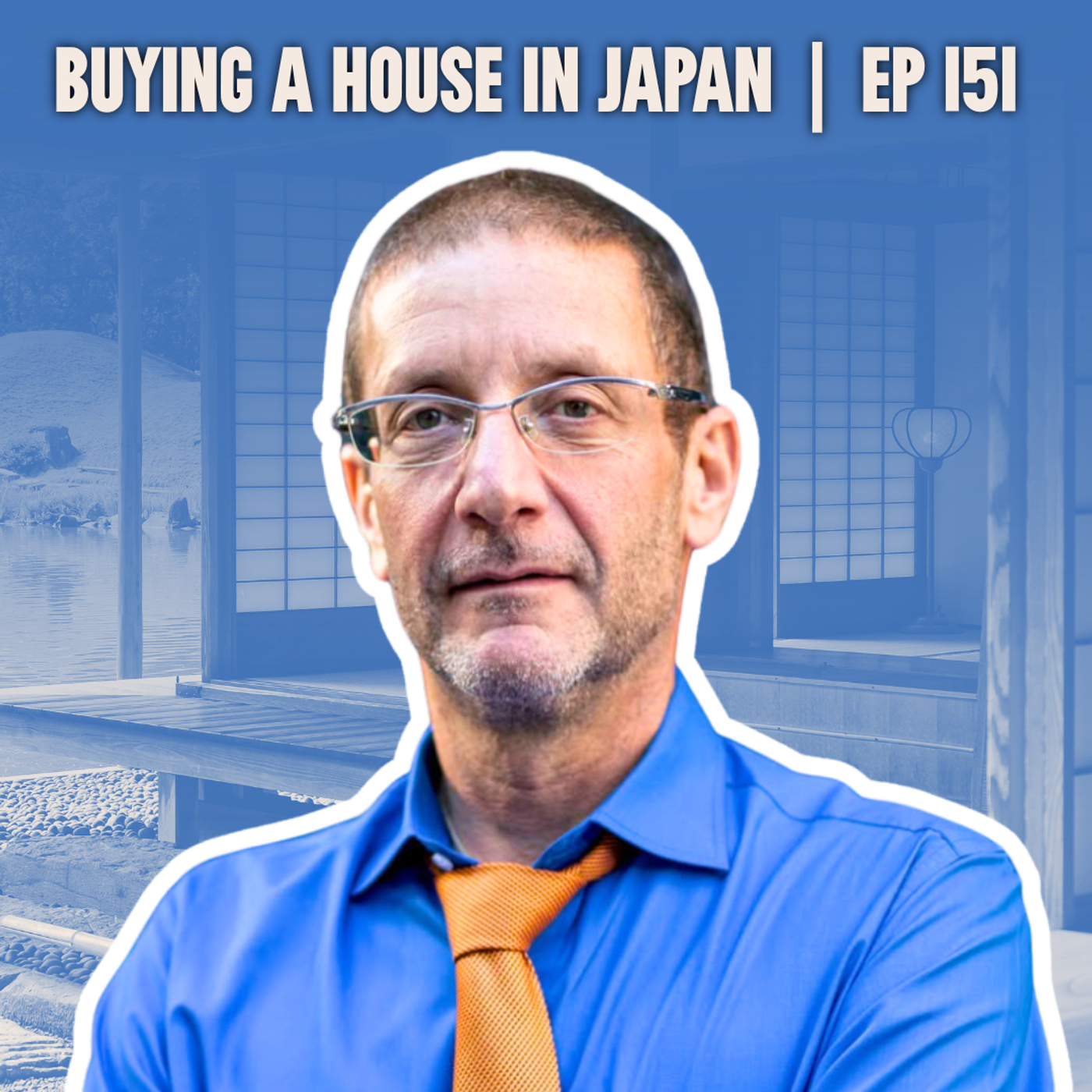
Why Foreigners Are Rethinking Japan Investments and Permanent Residency | Ep. 151
In this collaboration episode, the team sits down with Ziv Nakajima Magen, co-founder and COO of Nippon Tradings International (NTI). With 15 years in Japanese real estate, Ziv shares his perspective on shifting market dynamics, anti-foreigner sentiment, changes to visa regulations, and what it takes to navigate Japanese property today. The hosts also discuss their major rebrand from Akiya Mart to Mokomoko, explaining why they outgrew the original name and expanded their scope to cover condos, houses, and beyond.
Key Takeaways
- Market Trends: A post-COVID wave of holiday home buying has elevated prices across rural areas, but political sentiment and shifting visa policies are creating new hurdles for foreign buyers.
- Immigration & Visas: Tighter rules around the Business Manager Visa and Permanent Residency requirements are pushing some long-term international residents to rethink their strategies.
- Rebranding to MokoMoko: Why Akiya Mart transitioned to Mokomoko to eliminate pronunciation hurdles, remove negative connotations around "akiya," and represent a full-spectrum real estate search platform.
- Investing Beyond Akiyas: The sweet spot in Japanese real estate often sits just above empty country homes, including multi-unit buildings and move-in-ready properties.
Main Conversation Points
- 15 Years in Japanese Real Estate: Ziv recounts the evolution of international demand since starting NTI after the 2008 financial crisis.
- Policy and Sentiment Shifts: Discussion on recent government sentiment, language test requirements, pension checks, and the risk of blanket regulations hurting rural communities.
- The Tourism Impact: How tourism fatigue in cities like Kyoto influences local attitudes toward non-resident buyers.
- Property Inspection Tips: Guidance on assessing older concrete and wooden multi-unit buildings before committing to a purchase.
- What's Next: Ziv's upcoming projects, including an AI property deal analysis tool and a new e-commerce venture.
Resources Mentioned
- Nippon Tradings International (NTI)
- Mokomoko (Formerly Akiya Mart)
- Dr. Jonathan Tam on YouTube (Asia-Pacific Economics)
Enjoyed this episode? Please subscribe to the podcast, leave a five-star review, and share it with a friend looking into Japanese real estate. If you want to explore over half a million properties across Japan, visit mokomoko.com or drop an email to [email protected]!
speaker-0: What happens when a my wife passes away before me? If that if I mean she's Japanese, she's probably not gonna pass away before me. They're a lot healthier than I am. But if she passes away accidentally, God forbid, before me, or you know, if we get divorced one day and I decide that I want to sell the business and retire, there is no retirement path for me in Japan. That's it. They're closing the doors, right? So that leads me. To plan ahead for retirement that will not be here. I will be moving assets elsewhere. I will be redirecting investments elsewhere. I'll be making sure that I've got a cushy retirement that I thought was going to be in Japan elsewhere. So anyway I look at it, Japan loses financially, economically, which is exactly what they were trying to avoid, I thought.
speaker-1: Welcome back. Joint podcast episode today. Everybody won't do the traditional ⁓ introduction that we do. Shared shared podcast with none other than Ziv Nagajimam again from NTI Neapon Tradings International. Ziv is a OG in the space. We've learned so much from Ziv. ⁓ if anybody has any in-depth real estate in Japan questions, he is the go-to person in the space. Welcome, Ziv. ⁓ not sure if This is your podcast, this is our podcast. I think it's a collaboration today. So
speaker-0: I think it'll be it'll be everywhere. Yeah. Yeah. Yeah. It's I mean I I feel like ⁓ I feel like ⁓ like when we started out, you guys were like, Yeah, the market and Div is the OG these days, you're everywhere. I'm feeling like I'm feeling a bit ⁓ a bit ⁓ humbled now being on your podcast.
speaker-2: Many flashbacks. ⁓ last time I saw you I I g I feel like I have a distinct memory of you guys doing karaoke together, a Bob Marley song in eight stars, Barn Foucault. It was so much fun. Joey was awful.
speaker-0: That was that. Some actually I did not expect that.
speaker-1: We've the eight stars bar drink tickets still. Keep it in my wallet, Ziv. Memory of that.
speaker-0: Valid. He's ⁓ he's selling the bar, by the way. ⁓ let's let's give him some ⁓ some free publicity. He's selling the bar, he wants to move on to restauranteering. Is that a word? Interesting. So ⁓ if you know anybody who wants a fully functioning, very highly reviewed bar, Gaiji bar in Fukuoka City, ⁓ hit me up, I'll put you in touch. Eight stars American bar.
speaker-1: That's very cool. It's a very fun bar. It was it's it's been packed every time I've been I feel like I've been there maybe five times in my life, packed every single time. A lot of fun. ⁓ good international crowd that comes through too. It's like it's a international crowd, ⁓ like cocktail bar, ⁓ you know, ⁓ in in Fukuoka. A lot of fun. And Bob Marley.
speaker-0: Karaoke, which is always a good thing, right?
speaker-2: ⁓ right. You you sing what other Japanese song. What what is that song, Joey? What is it called again?
speaker-1: It's like ⁓ I don't remember the name of it, but it's the you could eat you could equate.
speaker-0: There somewhere, I'll need to ⁓ I'll need to try and dig that one up. Yeah.
speaker-2: ⁓ Ziv for our audience members who have never heard of you, which is very unlikely, you mind just giving a quick introduction of yourself?
speaker-0: Yeah, sure. So ⁓ my name is Ivna Kajima Magin. I'm co-founder and CO of Nippon Tradings International, NTI for short. ⁓ we've been at it for about 15 years now, and we've kind of positioned ourselves from the get-go, and I think we've done a good job at that as being the the catch-all experts on anything to do with Japanese real estate. So when we started out, it was mostly investment properties. Then a lot of people with Akia boom started asking for Akiya. Commercial properties, land for development, ⁓ hospitality. So we're not real tours, we're not brokers, we don't have any interest ⁓ in any particular property over another that we want to sell or make you buy. Our job is ⁓ there's several layers of it now that's probably changed a bit since we first spoke, but we can either do everything on your behalf, we'll talk to all the agents available who have something that might suit your criteria, we'll make sure everything happens where you just have to sign the bottom line
and end up with a title lead. Or we'll hook you up with a vetted foreigner friendly buyer side agent, kind of similar to what you guys do. and we will be ⁓ joining joining the purchase as consultants. So we'll be guiding due diligence, we'll be telling the agent what question because you've worked with Japanese professionals, you probably know. ⁓ they're they're super professional, they're by the book, but they're not strategic. They're not gonna tell you what questions to ask or raise red flags on your behalf. So we just make sure That you're ticking all the boxes as you work with agents that we've worked with in the past and can definitely quali ⁓ vet for. And then post-settlement, we also handle portfolio management. If and when you want to sell, then we will also be selling the property for you. ⁓ and if it's something that we can't handle, then we I think over the years we've built a nice enough network that we can definitely refer you to the right people.
speaker-2: Right on. For the audience members here, Ziv helped us buy our first Akia back in twenty twenty three. Wow, it's been like four years, Ziv. That's crazy. ⁓
speaker-0: It was like such a long time ago. Definitely feels longer than that though, doesn't it? You you guys have skyrocketed since then.
speaker-2: Yeah. I mean it's it's interesting. I guess wanna open up with the first question. Like, what's changed over the past four years? Is it the the indust just the whole boom and it like what have you seen since and actually how long have you been doing ⁓ have in the space of Japanese real estate?
speaker-1: Fifteen.
speaker-0: Years. 15 years, yes. Yeah. Right after the ⁓ 2008 financial crisis, 2011 is when we started. ⁓ at that time, most of our clientele were Australian and Singaporean because everybody in North America and Europe had so many foreclosure deals in their backyard they didn't need to go anywhere else. ⁓ over the years, as the market improved all over the world, and we've been getting clients for all over the place. I think the only
speaker-2: Fifteen years? Okay.
speaker-0: Continent, we don't have them yet is Antarctica, but there's got to be somebody like a penguin there or somebody that wants to buy real estate. What we've seen is I'd say since you purchased so I I'd probably segment that into the first couple of years and then the last couple of years. So when we say the last four years, this is like right after COVID, right? So the trends we've been seeing then is ⁓ A rush of like revenge buying and revenge ⁓ holiday homes. Like I've been waiting so long with this pandemic. I gotta get my place now. There was a huge wave of that. ⁓ prices have been going up. I mean, they've been going up steadily over those 15 years, I guess, since Abisan is when prices, you know, when that ⁓ the bottom end of that ⁓ bubble burst started ⁓ trending upwards again. So prices have been steadily going up. The Akiaboom. ⁓ meant that prices finally started going up in the rural areas as well, which was definitely not the case and in a long for a long, long time
before then. ⁓ but then about a year ago or almost a year ago now, when ⁓ the new government and the new immigration policies started piling in one after the other and the sentiment in Japan became very foreigner unfriendly. ⁓ I'm trying not to say racist, but very anti-foreigner. that's put a pause on things. So we haven't seen that trickle down to prices ⁓ or transaction volume overall, but I guess we'll see what the end of the year stats will bring. ⁓ but it's definitely put a lot of foreigner buyers ⁓ on the back foot trying to figure out what exactly if the government will put in any so two aspects. Firstly, whether they'll be putting in any anti-foreigner property purchase related measures like Singapore, Australia, and a bunch of other countries that I mean, Japan's the only country in in Asia Pacific that didn't have any restrictions whatsoever to date. So from that aspect, if they do put in any extra taxes or limitations, they're really just playing catch up. So I don't hold
that particularly against them.
speaker-1: What do you think the most likely scenario is? I was I was very curious to hear your opinion on this. What do you think the most likely scenario is? Like if you were to sort of five years in the future, yeah. What do you think the real estate ⁓ restriction, like headwinds will look like for foreign buyers purchasing real estate in Japan in in five years' time, if you had to predict?
speaker-0: On that front, on the real estate front. ⁓ optimistically, if I could, you know, confidently say that I think the government will do the right things. I think there would be potentially, like if I was running the show, I would put in some very carefully selected measures on particular hotspots, right? So if you want to buy in central Tokyo, central Niseko, a couple of other locations that, you know, have been suffering from Growth that's more related to speculation than any fundamentals, then I would probably put in some cooling measures in those locations. But I think a blanket, sweeping blanket kind of policy all over the country will really stuff up the rural areas, which is most of Japan, right? Because property prices are still at rock bottom in the rural areas. Still nobody wants to live there except these foreigners who have these dreams. And ⁓ the population is in very rapid decline and everything everyone's conglomerating into the bigger cities. And we've now
reached a point where, you know, up until the last population census, which was twenty twenty, we still saw major metropolitan centers gaining in population as the smaller townships kind of emptied up and conglomerated into them. We're not even seeing that anymore. So we're seeing population trends within the cities now. It's become very granular, like people are moving within the city to this ward or that ward or that neighborhood. But even the major prefectures have stopped gaining in population. So if Japan, and that that kind of ties into the immigration conversation too, right? If Japan continues with blanket sweeping statements on foreigners being able to move to the country, do business here, buy properties here, I Personally, obviously biased because I'm a foreigner, but I personally feel they will be shooting themselves in the foot. But if I don't have confidence in politicians thinking beyond their nearest term in office, and then they could potentially be putting in some
blanket statement policies. I I don't know. I I don't really know what to say. But I think the immigration debate is something that plays out over the long term. And I think a politician that's thinking ahead to you know, potentially two or three turns, not beyond that, probably doesn't care that much about how that'll play out after they've gone. But with real estate transactions, you see the effects pretty quickly. Like within the next one or two financial years, if you stuff up the property market, you will definitely feel it. And that will obviously reflect on your polling on your on your voting results as well. So I'm hoping they'll be a bit more careful in that regard.
speaker-1: hope so too. Like I do feel like a lot, like just to echo your sentiments, Ziv, I feel like a lot of the problem that people discuss when they talk about the the problems of of the real estate market in Japan is so like city centric, right? It's a it's a Tokyo problem and it's like, you know, Osaka Kyoto. But rural areas are not suffering from you know, these rapid price increases that, you know, when people talk about like luxury condos, yeah. Yeah, luxury condos in Tokyo rose, you know, fifty percent or I don't know the the statistic. But yeah, I hope that they don't exactly create a blanket statement or blanket policy on something that is like a very specific problem to large city centers and have that affect rural areas as well.
speaker-0: That is my hope. But politicians have done dumb things in the past and will continue to do that. So th let's hope we're right.
speaker-2: I'm curious like ⁓ so one you you hit on this on the immigration side a little bit and we don't need go too deep here, but it's interesting how quickly they flipped the business manager visa. I'm curious like how long were they cooking that up behind the scenes before they decided to change the capital?
speaker-0: chatter about it for about three four months leading up to that. That happened in October last year. ⁓ But you know the thing is it yeah but but we don't know that the chat because you know how Japanese press is gagged and dictated by the administration, right? Like it's not that there's it's not like that there's very few journalists in Japan and when they are out there they often get slapped with gags
speaker-1: Believe it.
speaker-0: gag orders and stuff like that. So I'm not sure if those three, four months were when they actually allowed them to speak about it or if that's when they actually found out about it. I really don't know. But I think that came in just before the elections, right? So I guess I guess I mean Takai Chi san is now the person in power and it's you know it's tempting because I don't like her. It's tempting me to think that she was the instigator, but she wasn't actually the prime minister when that came in. So the sentiment has been shifting for a while. And sadly, ⁓ again, it's like a it's like a self-fulfilling prophecy or or or I don't know what you call it, but population gets older means people are more and more there are more and more conservative voters out there, not to say again racist. And if they have been expressing this sentiment all over the place and eventually they manage to elect a prime minister that echoes that or leverage that to get elected, then will that get
better? I mean things will have to be things will have to be really hurting the economy for people to recognize that's been a mistake. And I've actually just just listened to ⁓ Dr. Jonathan, I forget his name, a really got good Asia Asia researcher from ⁓ Oxford, I think, who says that ⁓ the younger generation in Japan is the most anti foreigner these days. So whatever's been
speaker-1: Headline.
speaker-0: True the education system. Yeah, it's it's been a while that it's been trickling, I think.
speaker-1: I always thought that or maybe not always thought, but I think like aga not and and not to get into the the the racism aspect of this, but if you look at the stats, I think like the the majority of foreign nationals in Japan and the majority of ⁓ people purchasing these luxury condos in Tokyo and et cetera are China and like Southeast Asian ⁓ origin. And I wonder I don't know if it's an appropriate policy to start maybe restricting buyers or immigrants from certain countries. But I do think that because it seems to be a lot of Chinese buyers buying these luxury condos in Tokyo, what if they just added some sort of like short term capital gains tax? Like if it is people trying to flip or just get in there for like buy the property and then sell it within two years or something like that, why don't they just add some sort of capital gains tax on to specifically target that exact investor?
speaker-0: That's been in place for over a decade all over the country. If you sell within five years, it's double capital gains tax.
speaker-1: Okay, so I guess that's not even having an effect then. Or maybe they're long term holding these for the long term. I don't know what the the mindset is of these investors buying the the luxury condos.
speaker-2: No, it's interesting that they're finally collecting at least that data. So before they were not collecting that, you know, nationality
speaker-0: They were they were though. They they changed they changed the ⁓ the ⁓ the department that you have to report to and they started enforcing it, but you were obliged to report to the Bank of Japan on any non resident purchase for ages. It's just that nobody cared, even the agents and the the lawyers, the judicial scriveners, a lot of them didn't even know about it because there was no enforcement whatsoever. But we've been doing it from day one.
speaker-1: thought there must have been some collection mechanism because on the one hand they're saying, Okay, we're gonna start collecting the nationality of these buyers, but on the same hand they're like, Okay, you know, seventy percent of people buying condos in Tokyo are from these countries. So like they they knew somehow. Yeah.
speaker-0: The the the law was in place, just nobody was enforcing it. Maybe they want a clear a clear but I mean the fact that that's the first thing that they focused on and they haven't announced anything else gives me hope that maybe it's ⁓ a bit more or talk than actual action. I mean again, it helps them it helps them maybe boost up support for the administration without actually doing anything about it, just talking about maybe we will do something on it about it, beware kind of thing. But ⁓ I'm hoping they won't, but I don't know.
speaker-1: Like, is it anger against foreigners purchasing property in Japan, or is it anger against like investors? Like the same sort of thing we see in like New York and or you know, other main cities around the world, where it's like the investor class is purchasing properties and driving up home prices for people that actually want to live there. Do you think it's like a a ⁓ anger against foreigners, or is it an anger against investors?
speaker-0: I don't think that's the case in Japan because you move twenty minutes out of Tokyo, you can already buy pretty affordable properties, right? It's not it's not the kind of dynamics that we're seeing in other countries. I think and to be honest, it's ⁓ just a perfect storm and a horrible combination of again, voters becoming elder more and more elderly, and the huge spike in tourism and the pardon my French, the bloody idiots who are coming in here and doing all kinds of stupid things. ⁓ Nobody differentiates, right? Like it's been like in Kyoto, for example, it's been like that for since I got here. Like I feel the cold shoulders so bad when I go to Kyoto, I don't even get the chance to say, I actually live here. I know the rules. I'm not gonna be it's just it's fatigue, right? It's tourist fatigue and they're lumping it in with, you know, all foreigners must be tourists.
speaker-2: So if you reminded me actually of that like revenge travel, I I I totally forgot about that. There was like such a surge right in that tw yeah, right after the COVID was locked down into the like that huge surge of foreigners and tourists coming into Japan really did fatigue, I think, the locals. And it makes sense. Like if you're local in Kyoto and you're like, I drive the I drove up to ⁓ Kiyomiza deadline. It just like crazy. Like, and it was like, ⁓ my God, this is not like nobody's having a good time here. Got it.
speaker-0: I hate going to Kyoto to be honest. I mean, I love going there for work. I'll I'll do my thing in the back, you know, the back alleys and stuff, but tourists tourist spots I would so steer clear of it.
speaker-2: horrible. Yeah. So I think like I don't know. I think something with that that that revenge travel sparking this kind of tourism fatigue is really just blanketing a lot of Japan and and and maybe that's also translating to some of this anti foreigner sentiment on just buying properties and and PRs and stuff like that. But
speaker-0: Yeah, and and to be fair, it's not like there were any actual measures or any education to tourists or education to locals to may help them understand the difference between residents and tourists. I mean, the politicians will jump on any bandwagon and with a ooh ooh, we don't like foreigners? Okay, let's get elected on that. And that that's just like, you know, adding fuel to the fire. So it is what it is. But ⁓ I mean Human history overall, if we look from a macro level, the pendulum swings. I'm hoping that we'll see that changing in other parts of the world too, not just Japan. The whole world's going through a bit of a nationalism splurge at the moment, aren't they?
speaker-2: Absolutely. And I think for Japan though it's just like so severe in that some of the we Joey and I, since we've met you last, we've spent a lot of time in Shikoku. And it's just like we drive through these towns and we're like, ⁓ my gosh, five years from now, what is this place gonna look like? And I I I worry from a city depopulation perspective too, like it's just what what's gonna happen?
speaker-1: That one town in Kochi, it was like there was one thing open one, like I don't know what the town was like twenty years ago, but like at night we were trying to walk through trying to find somewhere to eat, and it was just like one Izaka open and everything else was pitch black, lights off in every single building, you know, street after street, kind of abandoned.
speaker-0: Yeah, it's pretty sad. You feel it ⁓ acutely if you need to go to the doctor or a clinic or a hospital or or find a late night convenience store for any kind of emergency, or if you wait for the bus, like they're slowly dwindling down to like once every two hours, three times a day, twice a day, once a day. Okay, we're canceling the circus, right? It's just it's sad. But now it's again, now it's reflecting even in the bigger cities. So Somebody will have to do something about it sooner or later. But ⁓ yeah, I guess most again, politicians, right? Like, yeah, next shift, not my not on my shift, because you know, I want to get elected again. Well, what have you been experiencing? I mean, you guys have been well, we'll we'll talk about your your the rebranding in a minute, but you've been doing this for a while now, and I'm assuming you're increasing in your volume of work because you started from scratch four years ago, but are you feeling any down dip?
speaker-2: It go we we we try to look at seasonality and it's like a combination of like for us as business owners is like marketing. Is it marketing? If we're pushing like a lot of content is driving people, is it the we definitely saw it around ⁓ where was ⁓ yeah, but like some the Takaichi being elected. I think that that spurt there was a l a a a dip, but I think it it's odd for us. We we have no Trump. Trump getting elected.
speaker-1: Getting elected.
speaker-0: Electric means business coming here, right? I've had so many US clients who are like, I gotta get out
speaker-1: I I do think me and Taki d we don't really have our finger on the pulse of seasonality yet. I think we're sometimes, you know, something either a month will be good or a month will be bad and we're like trying to like retrospectively understand what we're seeing. So I don't I don't know if we fully understand the seasonality of the business yet and what if what drives it.
speaker-0: We're seeing definitely more engagement. So I know the marketing works and I know the interest is there globally. We're definitely seeing more engagement with our content. But the amount of it that actually translates to purchases, it's exactly like you said, it went severely down after after the election. Then it started crawling upwards, but it's nowhere near where it was this time last year.
speaker-1: Do you think that so I've a I like I personally don't believe that foreign buyers know that much about Japanese politics? And I could be wrong here, but like the election, like okay, ⁓ Takaichi's election or like more sort of like restrictions on visas, et cetera. Like I feel like I'm thinking of the vacation home buyer or like someone buying an investment property in Japan. Like, do these things even affect them? Are they aware of these things? Like, is that really gonna sway their purchasing decision? ⁓ Curious to hear your thoughts.
speaker-0: For vacation homes, no. I think if you're dealing mostly with vacation homes, you're probably a little bit more immune to that trend that we've been feeling. ⁓ but because vacation homes is just a small portion of what we ⁓ I mean, s it's a big portion, but it's just one of many channels that we service people on. So investors are definitely cautious because they've seen other countries, you know, w when anti-foreigner governments come in, they suddenly And we need to educate them if you know if they're not familiar with Japan and they're just investors looking at numbers, then hey, this is a first world country. No one's gonna be like confiscating your properties from you. That's never gonna happen here. ⁓ but they are cautious about what might potentially happen ⁓ if the government goes down that route. People who want to move here are definitely very well aware of the visa issues. So people who are First thing that happened right after the business manager visa was like
everybody with the Airbnb in the countryside dream just, you know, dried off but peeled away and dried off, right? It's just not a thing anymore. We are getting a lot more serious investors now. So people who are, you know, setting up asset management companies or opening a branch of an asset management company that they have overseas and purchasing something. I mean, if somebody was gonna buy a multi unit investment building, ⁓ multifamily what they call in the USA multifamily, then they would know that they would have been investing at least 30 million, probably more like 50, 60 million at a minimum anyway. ⁓ that just for listeners who are not aware, we're talking yens. So that's like 300,000 US dollars. We're not talking about like 30 million US, but ⁓ they knew that they were gonna invest in, you know, somewhere from three to four hundred thousand US anyway. So for them that things haven't changed as much. They're just a little bit more cautious to see what the day will bring. ⁓
similarly, people who are buying land for development, right? So people who are buying land to sit on and hopefully land bank can gain in value if it's a particularly popular area, or people who are planning ⁓ to construct something in the near or or medium future, they're also a bit more cautious because maybe that land that I've purchased will suddenly change the zoning and not allow me to build anything because things are getting stricter, not just on the foreigner front, but on on Everything overall. So we're not feeling it deep in the holiday home shoppers, but definitely on the other channels, yeah.
speaker-1: Yeah, that makes sense. I feel like we've mostly have been working with ho vacation home, you know, ⁓ Aussie skiers mm looking for vacation home type. ⁓
speaker-0: Yeah. ⁓ though those people are still still there. Yeah, in force.
speaker-1: Yeah, so that that's why I was kind of like, Mm, I'm not sure I believe the hypothesis of the politics, but yeah, makes sense for all those other types of clients.
speaker-2: I think from the global perspective, at least the Western like price housing prices are just just keep going up, up and to the right, where it just like for me in California, I'm just like there's the the hope of me owning it just gets smaller and smaller and like me every trip to Japan and I s I see the the vacation home dream a little bit and and it i it it's a little bit of that pressure from from the western countries, I think, too, that are also bringing some folks to look at Japan. But o opposite also, yeah. Yeah.
speaker-1: One more ⁓ sorry, topic on economics of Japan. And I don't know if any of us are an expert, maybe Ziv, maybe you know better than we do, but let's say b okay, so the yen the the the weak yen is definitely like s on top of minds for politicians here. They tried some sort of joint action with the United States to to solve that. I feel like It didn't work. What the hell was that? It didn't work. So I think their la their only last option I I heard some rumors that they might try to do something in the bond market, but I think they're trying to avoid raising interest rates. And I feel like they're gonna back themselves into a corner where that's like the only thing they can do. If they raise interest rates
speaker-0: Immigration raises GDP, guys.
speaker-1: Yeah, well sorry, yeah. There there are definitely other options, but maybe it's it's it's they're not considering that I wonder what will happen to the housing market if they raise interest rates. I believe most Japanese are on variable rate mortgages, ⁓ and you know, probably a lot of Oji Chans, Obachans that maybe cannot afford an interest rate hike. Like what
speaker-0: Except that. Yeah. have been they have been creeping upwards which you know to people in the west sounds ridiculous what you went from like 0.5 percent to 1.1 percent but with ⁓ when your money buys less and less every year because cost of living keeps going up that's a major difference right it's a big it's a big big difference but again it's it's like I don't know man it's like band-aids on cancer it's like hey Half of the workforce, namely women, are being completely misutilized. You're not helping them contribute to the economy in any way whatsoever, because of tradition. And the other half, which is foreigners, cannot get into the country and work here because again, ⁓ my God, scary foreigners. The people that they're pushing out, to be honest, ⁓ perfectly frank, like cards on the table. I myself have been rejected for permanent residency twice already. First time fair enough because you know we applied on the 10 year mark and then we were still, you know, as people
do, we were minimizing taxes as much as we can. So we bought the house under the company name, the office under the company name, we claimed as many expenses. So I guess my income wasn't sufficient to to what the standards were at the time. Second time they rejected me, which was just like last year, was like ⁓ two and a half years ago, you were late on a pension payment. And then when you moved house, you when you moved house, you didn't inform the immigration department directly that you moved house, you only informed the ward office. So maybe, and and it's all very vague, like it's a black box that even immigration lawyers can't penetrate. But maybe if you apply in July this year, when you'll have three years of non-delayed pension payments, it might work. We don't know. We don't process it here in Fukuoka, it goes to wherever. And now they're talking about like when you apply you need to show that you'll be paying pension for thirty years. I'm fifty two, man. I'm not gonna be
paying
speaker-2: I saw that on LinkedIn. Yeah. That's crazy.
speaker-0: I'm like, okay. But but the thing is that the people they're actually pushing out of permanency, like me and some friends that I've been talking to, are exactly the people that they want here, right? Like, and we have options, man. I Australia is a good place to live. I ran the business for a good few years from Australia before we moved here. And you know, I got friends who were like, ⁓ you know. We went from thinking about should we apply for a mortgage and buy a house to maybe we're better back off in Taiwan where we came from before we came here. And these are professional working people paying a lot of taxes like ourselves. So hey, yeah, do what you gotta do, man.
speaker-1: I see that ⁓ sort of line of reasoning in people going through people's heads right now too. Like Japan is saying, Okay, well we need to kind of raise our immigration setup to be the you know, on par with other countries, but then they're not on par in with Singapore in terms of income. Never were Japan. Yeah yeah, never were. So they're trying to like raise the the costs and the the the burden as if they were as attractive as Singapore is in hiring
speaker-0: You you set up a business here. You know how difficult it is to even get anyone to help you open a bank account in I mean the Pond Bridge entire premise is because the infrastructure was stuffed up way before these immigration laws were were made. Like it was hard enough and the payoff was low enough before all of this came into effect. Like wake up call, you're not Singapore. The infrastructure is not here, the English support is not here. The earning capacity for professionals is not here. The people who move to Japan move to Japan because they love Japan, not because it's a career move or it's a you know fantastic place to live on a comfort level, right? So yeah, I I don't know. I again not over my pay grade. I'm no politician, but we'll see, we'll see what happens in a few financial years.
speaker-2: I'm shocked by the N2 requirement for PR. That is really hard.
speaker-1: The N two is very so difficult. Maybe it's a rumor still, but
speaker-2: Or
speaker-0: It's not a rumor. It's a very it's a this is enough. They are definitely they wanna pass this law, whether it'll go through or not is a question, but usually they do go through.
speaker-2: Do we just try to sign up for the J L P T, talk us through that pro
speaker-1: I also got the textbook for the JLPT N2. It's hard. I thought I was like not bad. Like I lived here for six years a long time ago. I thought my Japanese was okay, but it's quite difficult. And not only is it difficult, ⁓ the quite they try to trick you with the questions. So like it's multiple choice, but four all four of it's not like you can eliminate two of the answers right away because they're obviously wrong. No, no, all four are very close to the right answer. So I do believe it's yeah, I do I do believe it's like a tricky test. It's not like an easy multiple choice. ⁓
speaker-0: Snap.
speaker-1: But yeah, and then just the ⁓ yeah, so I went through the sign-up process the other day. So now so it's it's interesting. So they're making it a requirement for I think a few visas, PR, et cetera. And I went to sign up the other day on the website. Like I was there at midnight when applications were supposed to be open and the site was crashing. It was crashing, like, you know, it was like trying to get concert tickets. So I stayed up for two hours, you know, midnight to two AM, refreshing, refreshing. ⁓
speaker-0: Why why do you think wh why do you think this is happening? Because people are suddenly scrambling to get the N T N two certificate for any potential visa applications?
speaker-1: I think so. That's what I think. Yeah. ⁓
speaker-0: Fraction that's just a fraction of the requirements though. There's so many other things that are hard to come by now.
speaker-1: I was skeptical. I was like, how many people are like in this similar position as me where they think, okay, I need this into and so I was applying in the bucket for current residents of Japan. So was like, how many current residents of Japan like are s seeing the writing on the wall and are like, Okay, I need to get into this test slot because I only do it twice a year, et cetera. So I was also under the assumption it wouldn't be that bad, but it I I'm still seeing people who are like so then I set my alarm for ⁓ four fifty AM, thinking, okay, a lot of people will set for five AM. I'll do four.
speaker-0: Like getting concert tickets. Gee.
speaker-1: Yeah. And so I was able to get in, but I'm still seeing people talking on forms on Reddit. ⁓ like the it's still crashing for them. So I'm not sure what's up. I they did also a scheduled maintenance. So the night before it opened, ⁓ from 10 PM till midnight, the midnight when the application is open, they're doing a scheduled maintenance. I'm not sure why they scheduled maintenance like right before their site they're expecting their site to get a lot of traffic, but like I don't understand why this site is crashing so much. I I agree with you. I don't think there's too many people trying to use the site at the same time. How is this site messing up so bad? Is this in I don't wanna believe it was intentional, but may I d I I don't know. Maybe it's just another way of introducing friction.
speaker-0: You're being very kind to Japanese ⁓ websites. I think that's a whole different episode of a different podcast, maybe to do be doing on Japanese ⁓ website design. But ⁓ I think the like the real thing for me is okay, so I'm married, and even if one day I would get divorced, then I've got businesses here that can sponsor a work visa for me. Obviously, it would be easy. The business exists, it's profitable, easy enough to prove that they need me here. But then what happens when A my wife passes away before me. If that if I mean she's Japanese, she's probably not gonna pass away before me. They're a lot healthier than I am. But if she passes away accidentally, God forbid, before me, or if I decide, you know, if we get divorced one day and I decide that I want to sell the business and retire, there is no retirement path for me in Japan. That's it, they're closing the doors, right? So that leads me to Plan ahead for retirement that will not be here, right? So I will be moving
assets elsewhere. I will be redirecting investments elsewhere. I'll be making sure that I've got a cushy retirement that I thought was going to be in Japan elsewhere. So any aspect I look at it, if I take myself as an example, and I think a lot of people are in a similar situation, any way I look at it, Japan loses financially, economically, which is exactly what they were trying to avoid, I thought.
speaker-1: I do agree with you there. I I don't see these policies as overly helpful. Again, I think I think it like it goes back to the misguided note. Like I think it's like it. I I agree. I I do. I think it's like a, you know, it's a populist policy. But I do think it's like s again, not to speak for the Japanese population, but I think that there's a little bit of they they they ⁓ on the one side
speaker-0: helpful with the kijkjes aan.
speaker-1: They think that all tourists are currently living here and there's too many residents of Japan and we need to do something to restrict the residents of Japan. And then at the same time, ⁓ I I think that they want to increase tourism for, you know, 'cause it it it it means more cash coming to the economy. So I think it's like that sort of
speaker-0: Yes, the ⁓ I mean they need they need the labor, agricultural, medical, elderly care and needs the labor, but I think they think and they're probably right in that respect, 'cause they've been doing it for decades, that they will just keep on putting in like t temporary working schemes, set up another seven eleven training facility overseas, whatever the case may be, to bring people here and make sure that they cannot stay long term. Rinse, repeat, bring in a new cycle of workers.
speaker-1: Dubai strategy.
speaker-0: That that'll Yeah, yeah. And they've been doing it. They've been doing it with Brazilians in the past, Nepalese these days. ⁓ they'll just keep on doing it wherever there's cheap labor force to be had, then they'll they'll kick off an initiative doing that. ⁓ how long will that last? I don't know. Don't know.
speaker-2: see one of the a documentary on like the those training facilities. I think that's so interesting. Like a lot of these like Bangladesh folks like go to the specific training facility, learn the Japanese you need for Kwombini kind of type work. And I there's there was some documentary on it, but I think that's really interesting how they have those kind of like I don't know what they look like, but I've heard about it a couple of times.
speaker-0: Jonathan Tam, I just looked on YouTube ⁓ while you were speaking. Dr. Jonathan Tam has a really good ⁓ YouTube channel that covers ⁓ Asia Pacific economics with plenty of episodes on Japan that are really eye opening. I highly recommend anyone subscribe to that one. ⁓ it explains a lot of stuff that I Jonathan Tam. I explains a lot of stuff that I didn't even think about like, ⁓ wow, this is why this is happening. So Highly, highly recommended. But but c can we we only have like I don't know fifteen minutes left or something. Can we talk about the rebranding? Let's let's do it. Akia Mart, Akia Mart no more.
speaker-1: True. Aki more no more. Was there ever a point in your business history where you were just focused on Akya or like cause it definitely for us, and that's where the name co in initially came from, we were focused on Akya like just initially. So okay, so I guess you were always ⁓ broader real estate. And that was a direction
speaker-0: Investment. We were investment if anything. We had we we didn't have to rebrand because at the time we were the only ones doing this kind of thing nation nationwide. I mean there's there were pockets of you know agents doing stuff in particular cities, but we were the only company that covered nationwide at the time. So we were fielding all of the Akira requests because there was nobody else. So for us it it wasn't even a pivot. It was just like, Yeah, sure, we'll do that too. Yeah.
speaker-1: Yeah. For us that like, I mean, I think like a lot of people who first start hearing about real estate in Japan, it's like the the ultra cheap prices that like first catches your eye and and piques your interest. You're like, you know, a house for five thousand dollars. That's I feel like that's yeah, free, yeah, free house, Japan's giving away free houses. Like that's definitely the entry point for most people. And and and we were no different from that. And so we're excited about that space and that's where the name came from. ⁓ quickly, I think that the Japan real estate scene, as soon as you go a little like The the real benefit is when you go ⁓ just a little bit above the Acya tier ⁓ price range. And that's when you can get actually a a good house that's not gonna require like an incredible amount of work ⁓ in a better location. And I th I think that's really the sweet spot there. You know, the ⁓ around maybe the eight million yen price point. I think that's where I I
find ⁓ the most value in the real estate market. Or I guess that's like that that's a little bit my upper bound in terms of how much cash I have as well. So Think ⁓ that's what that's the sweet spot for me. And so we wanted to brand to reflect that we're no longer just Akiya. More importantly, no one can pronounce pronounce the word Akiya, though. I feel like I don't know if you come across a Civ, but people say IKEA, Akaya, you know, any Akita, any number of permutations of those.
speaker-0: Yeah, well I mean that that's the case for any any any kind of Japanese word. I mean you should you should try to listen to people say fukuoka for the first time, like the amount of the amount of mispronunciations that we get. ⁓ but akia is a global term now, isn't it?
speaker-2: Yeah. It's ⁓ it I think it's a global term at this point. And like we've we actually tried to buy the domain name a long time ago, Akiya.com. And it's just like I think we threw out like a twenty thousand dollar bid and was just like didn't Yeah. But Ziv actually ⁓ you gave us this advice a a couple of times and I I appreciate it. Like we started out with the Akias, Joey was just kind of scraping those and then quickly we started scraping the entire database pretty much of Japanese real estate. And you had told us a couple of times, like, hey guys, you gotta change your
speaker-1: Never even got a response.
speaker-2: your your your messaging a little bit, change your name. So, you know, appreciate you calling that out. Z we were we had in the back of our minds, but just took so long to figure out something that we
speaker-0: He doesn't have everything, right? Like you're the first, and I think still the best platform that actually scrapes everything, whatever's available on the market, yeah. And investment properties, houses, condos, buildings. So when people like when I first started recommending your services to people, they're like, ⁓ Akia Mart? I thought they only do Akia. It's like, yeah, no, no, no, no, no. They do everything, just go on there.
speaker-1: That was another reason that that misconception. In fact, someone just ⁓ wrote to us the other day saying, Hey, now that I see you guys brought condos onto the the website, I want to talk about XYZ. Yeah, we've had condos for for years kind of thing. ⁓ I do okay. On an again on the Akia term. So I feel like in different conversations I've had around Japan with people, ⁓ if I speak to a Japanese, you know, maybe usually a l a little bit older than me, like ⁓ I don't know. I'm somewhere with somebody and they ask what I do for work and I I kind of explain the business and I say Akiya Mart as the name. I feel like it's a little bit of a like I don't see a lot of positive reaction when I use the word Akiya when I'm speaking to like a Japanese person. I feel like it's a net negative term in a lot of Japanese people's minds. Do you have you noticed that or do you disagree or do you have any thoughts on how a Japanese person reacts to the word Akiya and like someone building a
business around that?
speaker-0: It really depends on the person. So when you speak to a Japanese property investor, unless they're specifically in the Akiya space, ⁓ then yes, that's a negative term because ooh, that's headaches, right? I'm buying into something that's gonna be a pain in the ass. But if you talk to ⁓ your average Japanese person who's a bit more creative, artistic, thinking about rural living. has a good experience of, you know, experiencing life in their hometown or somewhere that they lived. And the Noakia is a positive it's like a way to get into the market cheaply. And if you're the DIY type and there's more and more of these, it's still not as much of a trend as it is in Western countries to like buy in DIY and flip or whatever. But there's definitely a trend of people who want to move to the countryside and, you know, not necessarily live off the land, but leave a bit more of a peaceful life. For those people, Akiya is a popular thing, right? And for the old people, yeah. For the
old people, Akiya is like ghost house.
speaker-1: Yeah, it's like talking about abandoned houses in in the neighborhood and you're like, I s I I love that there's so many abandoned homes where you live and like I feel like that's the negativity ⁓ there. So I I think it's maybe it's
speaker-2: That's it.
speaker-0: Yeah. So okay, so the new so the new brand is?
speaker-2: Moco Moco. So moco moco.com. Yep. So ⁓ O K O ⁓ O K O dot com. ⁓ Joey and I lost on the
speaker-0: Spell when you're typing in than Akia too.
speaker-2: Exactly. Yeah. And w you know, kind of to Joey's point, we wanted to build a a brand an ⁓ you unbranded term, you know, as you can see in the Akia space, there are just so many Akia dash or Akia X dot com, Akiablank.com that we yeah, it it kind of goes, you know, we got a lot of feedback too that you're like, you guys are making the wrong decision going away from Akia. It's definitely the harder route, but we want that challenge actually of trying to make our company it off an unbranded term a little bit. So if you search Mocomoko. There's not too much stuff. So we're taking like we say one step back for two steps forward. ⁓ and you know, Moco Moco doesn't have any direct correlation with real estate, but it we just found that it was ⁓ easy pronounceable. We like Japanese automatopoeas and I think whatever word we make, we're gonna try to make it work and we will make it work, we hope.
speaker-0: Okay. And on the on the scraping front, ⁓ I remember when you started doing condos for one reason or another, there were not that many of them that showed up in the website, but that's changed now, right? It's a filtered it's a filter thing and people can actually see whatever's on the market, right?
speaker-1: Yeah. So for like a technical reason that like I I don't know, it's probably too boring to talk about. There was like the the database was having issues when I showed condos and houses at the same time as the default. Just know there was like this this obscure database issue that was preventing that. And I finally fixed that issue. And so now as the default on the map, we show both houses and condos at the same time. And if you want to exclude condos, now you have to go and like explicitly go and turn it off. Before it was the default. only houses were showing and you had to turn condos on. And now I just changed the default, but there's like a an obscure technical reason why that wasn't ⁓
speaker-0: Do we already have a filter? Do we already have a filter for ⁓ land only and for multi unit buildings only?
speaker-1: No, would love would love to bring in Lant and ⁓ multi unit buildings. Currently we we don't have those actually.
speaker-0: Okay. So if I wanna see multi unit building, should I be looking for houses or condos or both?
speaker-1: If you want to see multi-unit buildings, I don't think we have any of those properties. There might be something that is like potentially like a real estate agent uploading something to sumo or whatever, like mislabeled something and we pulled it in, but we're not currently ⁓ sourcing those listings. Like if you go to sumo, usually there's like, you know, you can do like Icodate or like condos or or buildings or offices, right? Right now we're just taking The used secondhand homes and the used secondhand condos. Those are ex explicitly only two things we're screening. Yeah. So we do want to increase that catalog. I think like brand new condos would be cool to bring and like brand new homes, I think, would be cool to bring on as well. ⁓ buildings, that's interesting. I haven't and definitely land. I know Take has wanted land for a long time. ⁓ buildings is is interesting, actually. I we haven't thought about that too much, but I I believe like you are see those clients a lot
more than.
speaker-0: Aware of that. Okay.
speaker-1: We do ziv, so potentially that is something that we start bringing out to the
speaker-0: Again, with the new with the new business manager visa regulations, the only people who could potentially leverage a property investment into a visa are people who are buying entire buildings or a very large portfolio of condos or houses. But that's very I mean, if somebody has that kind of budget, they prefer to buy a building. So that would definitely well, and we also we were talking a little bit back, and I think that'll probably be ⁓ ready to to deploy soon, but we've been working ⁓ Another business partner and I have been working on a ⁓ AI deal analysis system that will you'll be able to throw a listing into. You can already do that, but we're to now trying to expand it to vacant properties as well, which is what people are normally looking for. So you'll be able to throw in a listing and immediately get a a ⁓ very thorough analysis of how it how it tracks as an investment property. And most of the most of what we see when we're playtesting it with with ⁓ live users
is their. putting in buildings. This is what they want to see.
speaker-2: I was I was actually really impressive ⁓ that that like ⁓ that model you get you had done a demo for us a couple months ago. So we really look forward to hopefully integrating at some point or even using ourselves. I think Joey and I have personally talked about buying buildings at some point. You know, it's crazy to think actually. We wouldn't would never have thought this, but like we're slowly working our way up that maybe ⁓ reinforced concrete
speaker-0: Listeners, you should probably point out that they started about three hundred thousand US. Like it's the price of half a house in California or wherever you live in, right?
speaker-1: I was just about to ask, what's the minimum to get into buying building? Three hundred three hundred thousand US? Okay.
speaker-0: A good quality building in a decent location that's not gonna be, you know, coming apart at the scene, I'd say starts around three I mean, as the yen goes lower it'll probably get lower, but at the moment it's three hundred thousand. Yeah.
speaker-1: Would that like a four four units in in a building of that size or four?
speaker-0: Four four to eight, depending on location and age. There are still some very decent cities where you can buy in a larger building for that amount of money. ⁓ built if it's a wooden or steel framed wood, then we would advise to to make it twenty years and younger on purchase because it's still a wooden structure, not concrete.
speaker-1: And I did just want to ask on that, just because I have ⁓ I'm not part of this world. If I did buy like let's just say a concrete building maybe built in the eighties, for example, how do I know if it's structurally sound? Or how do I know like like is it getting dangerous for people to live in here? Because that this is a much bigger structure than a house. Okay, so you get so there are inspectors specifically for these buildings, I'm assuming. Okay. Good to know.
speaker-0: ⁓ yeah, they're much more expensive inspections, obviously. ⁓ and I would personally not go for anything that's older than 30 years on purchase because if you think about your resale path, if and when you want to offload that, you you'll be selling it to an investor. Nobody's gonna buy it and live in all the units themselves, right? I mean, maybe some party producers or whatever, but normally your buyer would be ⁓ an investor, and they know that the maintenance goes up significantly once they hit about 40 years of age. So Unless you're buying it with the intention to completely repurpose and reinovate it, ⁓ which is gonna be very expensive, and you're planning to ride it till it drops value wise, ⁓ I would go for something that you could resell before it hits forty on concrete. And if it's wood, ⁓ buy as close as you can to twenty years and younger and consider reselling as it approaches thirty years.
speaker-2: So with a couple of minutes left, I and at the beginning of the podcast you'd hinted, What's what's next for you? Sounds like there's a another company on the horizon or in the works right now?
speaker-0: More like an addition to right. It's not like it's not like I'm I'm hopping between companies. They're still all very active. ⁓ yeah. So with NTI now almost complete. I mean, I still do the consulting aspect of the company, but the ⁓ ongoing management is in Chicago, ⁓ Chicago and her team's hands. There's like 10 of us now. The Pondbridge ⁓ is also doing quite well, requires less and less of my day-to-day involvement. I'm with it. Another business partner. ⁓ there's there's the AI deal analysis system that I'm doing with Bob, which is kind of tied into real estate as well. We'll see how that goes. And with another business partner, I've launched, ⁓ not promoting yet, but launched an e-commerce website. So we're ⁓ Japanese e-commerce websites will be traveling the world picking products that we like that we think might do well in Japan. ⁓ setting up distribution channels and and promoting them on our website. So that's out there really?
speaker-2: No, opp opposite. I wanna just I specifically wanna find good incense and export it from Japan 'cause I I like Japanese incense.
speaker-0: I like Japanese incidents too. Yeah. So I mean the website is up and running, but I'm gonna I'm not gonna promote it on the podcast yet because we're still waiting for the shipping bags to come in from China. We've only just finalized the Shopify payment channels. There's a whole new learning curve there for me. But ⁓ yeah, I'm kind of excited about it.
speaker-2: All right, Zip. We'll look forward to it. Once ⁓ once you do, we'll get you back on the podcast when the e commerce site is up and running. But it's good to see
speaker-0: So related to Akias and real estate, yeah.
speaker-2: It's it's it's fun, you know. I think being being building this business ourselves is just kind of we've been following our nose and I think that's where we find success and like keep keep building onto our existing product and you're doing the exact same and kind of leading the path here. So sort of like really appreciate you guiding us through these, you know, getting us started, kind of believing us through that these past couple of years. I think Moco Moco in part is here here because of you. You know, you started and helped us bot ⁓ virus spot and being through. So
speaker-0: It's great great to see what you guys have been up to. Can't can't wait to see what's next.
speaker-1: Yeah.
speaker-2: Well, thank you so much for being on our podcast or and we'll we're on your podcast. This c this is a fun collab episode. We'll have to do another one again soon.
speaker-0: Hell yeah. Thank you. All right.
speaker-1: Thank you, Ziv. Thanks for listening to this week's episode of Buying a House in Japan. If you found
speaker-2: The show helpful or at least entertaining, give us a five star rating. Takes about five seconds and really goes a long way.
speaker-1: If you or someone you know is looking for a Japanese home, check out Mokomoko.com, our English-friendly site where you can browse over half a million listings.
speaker-2: When you're ready to buy, we're here to help. Moco Moco Buyers Club is the easiest way to purchase a property in Japan, fully remote in English, with keys in hand in about 90 days. Head to M-O-K-O-M-O-K-O.com to find your dream home today.
speaker-1: If you've got questions or feedback, drop us a line, email podcast at mocomo.com. You can also find us on Instagram and TikTok, where we post properties, tips on the home buying process, and updates on our own purchases and renovations.
speaker-2: Thanks again and we'll see you next week.
You May Also Like

The Level Up Podcast w/ Paul Alex
Paul Alex Espinoza

The Startup Ideas Podcast
Greg Isenberg

Stop Struggling Now - We help Improve your Personal and Business Wealth Mindset
Eric Byrd

Discover Crypto
HIT Network

Braincast
B9

The Norris Group Real Estate Radio Show and Podcast
The Norris Group, Bruce Norris & Aaron Norris

Masters in Business
Bloomberg

Planet Money
NPR

The Personal Wealth Coach
Jacob A. McClure, CIMA®, of The Personal Wealth Coach, an Independent Fiduciary Investment Advisory Firm | Fee-Only

C'est votre argent
BFM Business
The Level Up Podcast w/ Paul Alex
Paul Alex Espinoza
The Startup Ideas Podcast
Greg Isenberg
Stop Struggling Now - We help Improve your Personal and Business Wealth Mindset
Eric Byrd
Discover Crypto
HIT Network
Braincast
B9
The Norris Group Real Estate Radio Show and Podcast
The Norris Group, Bruce Norris & Aaron Norris
Masters in Business
Bloomberg
Planet Money
NPR
The Personal Wealth Coach
Jacob A. McClure, CIMA®, of The Personal Wealth Coach, an Independent Fiduciary Investment Advisory Firm | Fee-Only
C'est votre argent
BFM Business
Community discussion