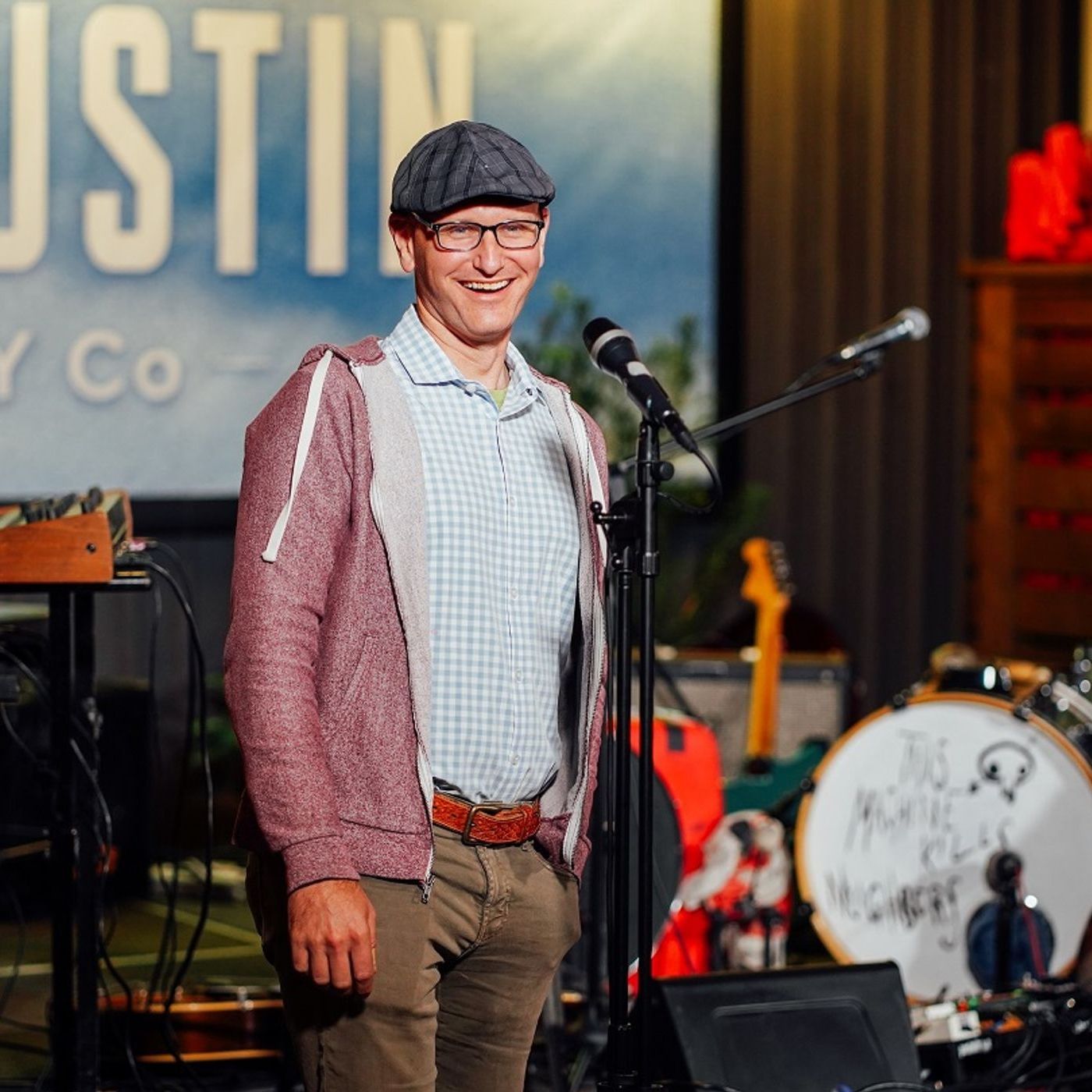
406: Still Austin: Texas Bourbon, 100% Rye & the Élevage Method with Chris Seals
Is Texas bourbon really bigger? Jake and Scott head south to find out with Chris Seals of Still Austin, one of the most unique craft distilleries in America. Still Austin makes traditional Kentucky-style bourbon and rye in the Texas heat, and the whiskey doesn't taste like it.
Chris shares the story behind the distillery. It started as a "feasibility study" meant to bond with his retired dad and turned into a grain-to-glass operation now raising about 23,000 barrels.
In this episode:
- How a father-son bonding project became Still Austin
- Why Texas grain is different: white corn, Brassetto rye, and the highest starch content in the U.S.
- The élevage maturation philosophy, borrowed from Cognac and Armagnac, and what makes Still Austin the largest whiskey producer using it
- Slow water reduction, aged water, and how they tame tannins in a hot climate
- Tasting The Artist (100% rye) vs. the Cask Strength Rye, a "watercolor vs. technicolor" comparison
- The Musician bourbon mash bill (70% white corn, 25% Brassetto rye, 5% malted barley), plus the Musician Cask Strength
- Barrel entry proof, age statements, and what "aged at least two years" really means
- Inside the new Still Austin Quarter in Austin's Saint Elmo Arts District: 10 buildings on 6.5 acres, a recreated Steamboat music venue, and a musician's home built around 5,000 vinyl albums
Whether you're a bourbon fan, a rye lover, or curious about Texas whiskey, this one will change how you think about whiskey made outside Kentucky.
Listen on your favorite podcast platform or watch the full episode on YouTube.
🔔 Subscribe for more weekly discussions, tastings, and bourbon insights from the Bourbon Lens community.
📸 Follow on Instagram: @bourbonlens
🌐 Visit: www.bourbonlens.com
Merch: https://bourbon-lens-shop.printify.me/products
Discord: https://discord.gg/pd6ys5nRSU
HASHTAGS
#StillAustin #TexasWhiskey #TexasBourbon #BourbonLens #BourbonPodcast #WhiskeyPodcast #RyeWhiskey #CaskStrength #CraftDistillery #AustinTexas
KEYWORDS
Still Austin, Still Austin Whiskey, Chris Seals, Texas bourbon, Texas whiskey, Texas rye whiskey, Still Austin Musician, Still Austin Artist rye, Still Austin cask strength, 100% rye whiskey, Brassetto rye, white corn bourbon, élevage whiskey, Nancy Fraley, slow reduction whiskey, craft distillery Texas, Austin distillery, Saint Elmo Arts District, Still Austin Quarter, grain to glass, bourbon podcast, whiskey podcast, Bourbon Lens, Jake Lewellen, Scott Bourbon Lens, cask strength bourbon, Texas distillery tour
Jake Lewellen: welcome back to another episode of the Bourbon Lens with your host Jake and Scott. In this week's episode, we head south to Texas. Everything is bigger there, but is their bourbon bigger? Find out on this week's episode of the Bourbon Lens. We are joined by Chris Seals of Still Austin. And I will have to say that your alls Bourbon does punch with Kentucky whiskey here that we have. So, Chris, thanks for for joining us here on this week's episode.
Chris: I'm very happy to be here and thank you for the very encouraging comments. That's very I'm I'm really excited that you guys like what we make.
Jake Lewellen: it is it is good and you all do, you know, throw some left hooks and right hooks at Kentucky, you know, from time to time. We'll talk about that here in a minute. that's called a tease for everybody who's listening. but Chris, you know, excited to talk to one of the most unique brands in the market because you all are doing something uniquely traditional bourbon style like you would see in Kentucky, but in Texas and the heat. in Austin gets very hot. so why did you think about placing a bourbon distillery and and w rye whiskey distillery in the hot of Texas?
Chris: Really good question. I'm not sure that that was ever really part of our thinking. was the the the heat. the you know, like the way that we started, it it mean it it kind of grew out of my relationship with my dad. he and I I mean I I love my dad. He wanted to start a bourbon distillery and about fourteen years ago he retired and asked me to help him start one. And I my background, I'm an economist, so I thought that it's a very risky, very bad idea.
Scott - BourbonLens: Hmm
Chris: I used to do feasibility studies for a living, and when he showed me his plan, I was like, this is actually the worst idea that has ever been on my desk. it's so unlikely to be successful. because we don't know anything about making bourbon. especially, you know, at like to your point, our climate is only one of the things that we didn't understand. And so I I you know at that time I was working as a consultant economist and if I had to kind of size up the problem I was trying to solve with my dad, I would have said this. Number one, my dad is bored. number two,
Scott - BourbonLens: Hahaha
Chris: my dad has entered retirement and is now in a late life crisis. And number three, my dad wants to spend time with me. And so I I told him, you know what, Dad, let's do a feasibility study on whether or not we could be successful with a bourbon distillery. And I I thought what that was going to mean was Dad and I are going to drink and we are going to visit a lot of distilleries and we're going to have a really good time and we are going to bond. And we're going to get my dad through his late life crisis. And then we will come
Scott - BourbonLens: You
Chris: to our senses and decide this is a terrible idea and then we should never do it. And that is what I signed up for now 14 years ago. And
Jake Lewellen: Yeah.
Chris: so and we did all that. We we had so much fun. We we we went and visited a lot of craft distilleries. The this is kind of before there was really even a Kentucky Bourbon Trail. it really hadn't really emerged at that point, but we visited some of the distilleries, big and small. across the United States and you know it just ended up being the best thing that ever happened to my dad and I. we used to hardly ever talk and now we talk every day. It's
Jake Lewellen: Yeah.
Chris: it's been the best thing ever. And I so
Scott - BourbonLens: outside.
Chris: I'm I'm really thankful for that. and then we had two things that kinda derailed us. one, about thirteen years ago, after about a year of goofing off and visiting whiskey distilleries and having a good time. we had something that changed the plan a little bit. State laws in Texas changed, and that made it possible for a Texas whiskey category to begin to emerge. And so that kind of, you know, Texans this may shock you, but Texans love Texas. And I mean they would drink bad whiskey if it comes from Texas. It's like they're very, very committed to their Texas anything from Texas. And so we thought, well, probably. not that we wanted to make bad whiskey, but we thought, you know, we'll probably have some success if you can have a Texas whiskey category. And then the other thing that happened was just and it and this is a true fact, after a few whiskeys, you can get some shit off your chest. If you need to say something to your dad, this product will help. And you're not gonna be
talking about your you know business plans. you're gonna be talking about your feelings. And and and so dad and I started bonding And it just felt like, you know what? Why not? let let let's give it a try. And so we we weren't really thinking about the Texas climate. And the Texas climate is very different, very different from the kind of Kentucky, Tennessee profile that that kind of comes out of that that climate or Of course, different from like Scotland or France or the I mean the regions of Japan can be quite different. and so really trying to a b big part of this project has been trying to make the best we can out of what we got here in Texas. So the the climate has been a big help and a big challenge as well. And so it has really defined a lot of what makes us differ our reactions to and working with the climate, has been a lot of what's made Still Austin so different in our in our process and in our approach.
Jake Lewellen: Yeah. Well, there's a few things in there that I just kind of got chills. As a as a dad, we're both dads. we can appreciate you know, spending time with our kids. and well we got young ones and I can also recall spending time with my dad as he's gotten into to later years in life as well. So first I just think that's that's the best thing. If if you don't learn anything about this, spend time with your parents. Like that's
Chris: Like
Jake Lewellen: Like literally that's what an amazing story. and so cool and thank you for for sharing that. because you know, w we got here somehow, right? and you know, some of us don't always have the best relationship with with parents, but some of us do. And you know, you had an opportunity, you like it said it to to mend those fences and and really build a a camaraderie. So first and foremost, we we can raise everyone can raise a dram to that one. but
Chris: Cheers.
Jake Lewellen: second thing about that is making the best. that we can with what we got. I think that was the the statement that you said there. and so, you know, you you go on this journey and you get to build time and relationship with your dad. How how did you get to the first process of putting grain you know, into the process, you know, mashing it down and you know, running to that distillate? How did, you know, this this process of spending time with your dad move into actually building out the distillery and and and that that process there?
Chris: You know, I think there's probably a couple guides that were important to us. I one one of the things we came to see as we visited places. There were some places that we visited that we would drink their whiskey and we would say, Wow, that is really interesting. And then there were places that we would drink what they make and we'd be we would say, that is delicious. That is amazing. And we couldn't really tell you why. We didn't really tell you why. but one thing that we began to notice is there was something very different about the the makers that were very genuine and th the the grain to glass approach to whiskey making really resonated with us. we we wanted we we we liked it for a lot of reasons. I think in part it really stuck with us because this was never intended to be a commercial venture. we didn't expect it to be like profitable and that's a good thing because even today it's not. still still losing money. but it it is getting closer to where it can break even
fourteen years in.
Scott - BourbonLens: Ahem.
Chris: But the the the thing that we really liked was The the places that we felt had the highest quality, their quality started with valuing what they had at home. And for us, that meant it it it and it wasn't certainly wasn't just my dad and I. It was kind of a band of believers, including Nancy Fraley, who has been an amazing guide for us and a few other folks that really helped us to shape up something that was really special. But we we really wanted all of our grain to come from Texas. And Texas has a little bit of a different grain profile in a couple of ways. Some ways we understood, some ways we came to understand understand later. we primarily grow white corn here. it's a little different than the yellow corn of the Ohio Valley. and we have a we have a Tex Mex culture here that's we have a lot of corn chips, we have a lot of corn tortillas, we have never had a corn chip shortage, never run out of.
Jake Lewellen: It's the home of Chewy's, my favorite Tex Mex restaurant.
Chris: It's very very lovely, very important restaurant.
Scott - BourbonLens: you
Chris: Yes. and it was started in the year I moved to Austin, Texas. And it's an amazing,
Jake Lewellen: even better.
Chris: it's an amazing restaurant. But
Scott - BourbonLens: Now for two it is.
Chris: white corn, it's a it's a little less corny, if you will, from the flavor profile. It's a little sweeter. And one thing we came to learn later and appreciate even more, and really still appreciate today, is that Texas tends to have not really the highest yield. like it's it's nowhere near Iowa or Nebraska in terms of like the the the yield of crops. But it tends to get rain at the right time of year, and our grain tends to have the highest starch content of any region of the United States. So it's actually technically the sweetest. And it it it's very, very delicious. we we we grow a variety of rye here called brasetto. that's kind of a sweet and spicy rye. It's not just not just straight up spice like a bruzi or some of the other varietals that are more common to the northern climates. and that sweet and spicy flavor f profile, that's something that Texans like a lot. we got a lot of barbecue here that's sweet and spicy in Tex-Mex too. And so those grain varietals kind of were
the the, I guess the seeds, if you will, of the differentiation of Still Austin. And then, you know, we make everything ourselves in-house from grain to glass. We we use a column still that's designed by Michael Delavante and is made by Forsyths in Scotland. They have been making stills for like somewhere between three and four hundred years, but they'd never sent a column still to the United States until us. so it was a kind of a that was kind of a a little bit of a wild Card venture, in my opinion, but I I it was really strongly recommended by Nancy Fraley. and she kind of laid out a little bit the path of she's worked in so many regions. She's worked everywhere from India to Tasmania to Israel to all s all regions of the United States. and she just really knows a lot about maturation of spirits. And we we we When we first met her, it was kind of when dad and I were taking time to kind of goof off at the beginning of this venture. And we took a class with her and we were blown away
by her, and we asked her if she would help us, and she wrote a bit of a plan for us to help us get started. But she did warn us that what we're wanted to do is not easy. And one of the things she said was, you know, all your grains definitely need to come from your region and if you really focus on quality, it will it will give a taste that comes from your region. and it will give a sense of the people that you come from.
Jake Lewellen: Mm.
Chris: And we always liked that. and we I think that ended up being the second major inspiration and kind of a a charge that we needed to take kind of seriously. You don't wanna take on the the role of having to represent the people you come from, without, you know, giving some real thought to it. and so people in Austin were really highly creative. we're very we're totally into authenticity and pride in who we are and those those ended up becoming some of the Most important pillars of our values that that kind of guided the brand. and and Nancy really helped in quality. the quality of the grain, the quality of the still, and the use of the elevage philosophy of maturation, which really has roots that are much older than America. the the techniques are honed over centuries in cognac and armignac. And they they give us a a set of tools that help us to really work with and bring out the best of the Texas climate.
Jake Lewellen: Mm.
Scott - BourbonLens: Elavage?
Chris: elevage, to raise, like raising your kids. Only we have currently about twenty three thousand barrels that we're raising. and trying to help each one become its very best. And so it's a it's a it's a way of thinking about maturation that is more hands on. you know, you don't you don't put your kids all in a barrel warehouse and then forget about them for ten years. You you work with them. And
Scott - BourbonLens: Yeah.
Chris: mu much more hands-on. it has a couple of different hallmarks. slow reduction, reduction with water, reduction with aged water, long marrying, master blending, excellence in overall maturation, consistency, quality control. There's a lot of elements that are tools that help us to nudge a barrel in the right direction and help it to become its very best. So it's a it's a much more hands-on process, a little bit different than what anybody I I I'm fairly certain, I don't wanna overstate things, I try to be careful on this, because I I know I'm very happy about this, but a lot of younger distilleries have now adopted this same philosophy. But I I am fairly certain, we d certainly learned it from Nancy Fraley and her work in in French brandies. but I'm fairly certain we're the largest producer that uses the Elevage philosophy in any type of whiskey making in the world.
Scott - BourbonLens: Very cool.
Jake Lewellen: Yeah, I mean it it It's really impressive. for those who haven't seen still Austin, I think one, it's very industrial where you all are, right? Like you're not in like some shady acres of Austin. Like that's not where this is. You're in right outside downtown. and you're in a industrial complex for lack of better terms, is how I'd probably say that. And, you know, you all are are making the most out of your all's area. to get people engaged into the to the bourbon whiskey community. And to that, you know, when I was there, I was asking about you know how you all store these barrels and how do you all you know walk through that process? Because you know, that slow water reduction is going to be something that's really important because I want people to understand, like if you didn't do this, which you probably have a control, what type of angel share are you all experiencing versus when you do? Yeah.
Chris: on the Angel Share, I would imagine it's probably about the same, whether you do it or not. it's really the there's a couple of things that I think are really important from a flavor perspective. And that won
Jake Lewellen: Yeah.
Chris: I don't want to go too deep into this, but just I don't want to bore anybody. But one way that you can kind of think about it is that the alcohol that's in the barrel is a very good solvent. And what it extracts out of the oak. changes based on the concentration of the alcohol. And so when the alcohol content is really high, alcohol solubles come out of the oak in high, high amounts, like the oak tannin. and that's why so many Texas whiskies, you know, they're very the the the weather makes them makes the barrels very active. There's a lot of extraction. If you enter at the kind of proof level that you typically see in Kentucky, it's gonna pull out a lot more stuff and that stuff is gonna be a lot more tannin and that's gonna make it can make the whiskey overly tannic, if you're
Jake Lewellen: Yeah, yeah.
Chris: not careful. And that can make it taste like a number two pencil. which is not a flavor that we like. And so we we try to avoid that. and one of the ways that we do that is by slowly reducing with water. So we'll add a little bit of water to the barrel and that we do it, then wait.
Jake Lewellen: Yeah.
Chris: Do it again, wait again. And slowly bring down the the proof. And w as the w water concentration in the distillate goes up goes up, you begin to get more and more water solubles out of the oak, like the esters and the wood sugars. And it's where we get kind of our, you know, both our fruit notes and confection notes like caramel or vanilla. and By doing that slowly, it each time you do it, you add another layer of flavor. And that and as you build those layers over time, it tends to make the spirit more round, more soft on the palate, and it it it creates a gentle finesse, where it kind of nudges you along as you as you enjoy it. And We can do that with water, we can do it with aged water, and aged water is kind of a noob frontier for us. we're getting old enough now to do some of it. but if you age the water, like in an ex bourbon barrel, for instance, and then slowly add a little bit of bourbon back to the water, it can evoke a oxidation in the It you're add it when you're
adding something weak to something strong, it will it will slowly dilute. that's adding water to whiskey. But if you switch the switch it and go the other way, add whiskey back to water, it will promote oxidation. And the ox because you're adding something strong to something weak. And what that will do is trigger not only the absorption of the kind of the things that cause the fruit notes and the confection notes, but also Just like a piece of fruit tastes better after it sits on your counter for a couple of days and ripens, it oxidizes. same thing happens in the barrel. and what starts off as like a milk chocolate may taste more like a dark chocolate. And something that starts off as orchard fruit may taste more like dark fruit. And then using that aged water to subsequently reduce a bourbon will double concentrate the most delicious parts.
Jake Lewellen: Hmm. Yeah, and that's what I will say about your alls. Whiskey is it it does have nuance. It's not you know, some Texas whiskey is big and bold. Great for them. That's what they want to do, go for it. Euros is approachable. it does dance on your tongue a little bit, it approaches your palate. It's not gonna just I won't say the number two pencil thing. You did that. but
Chris: Right.
Jake Lewellen: It it has a little bit of bite. in the process. I mean, I've I've sampled through a couple of these as we we've, you know, just s sat here and talked and I've always liked your rye whiskey profile. it's been something that I've been a a very big fan of and and the nuance even between like your artist, which is your, you know, flagship rye whiskey and the cash strength rye whiskey is really unique. One's more herbally and bold in the cash strength one and then the the artist to me is you know, more candied, more sugars, it's brighter. and so it's really fun to see the nuance, but it doesn't this is probably the best comp it doesn't drink like Texas whiskey. Like that's the best compliment that I can provide you. It it tastes like whiskey that's made in a non like really adverse climate like you all have. and that's impressive.
Chris: Mm. yes. The you know, the the artist, which is the the straight rye whiskey, it's probably our most delicate product, which is very unusual
Jake Lewellen: Mm.
Chris: comment for a rye whiskey. normally rye whiskeys are a little rougher around the edges. but the slow reduction really brings out a lot of the orchard fruit. it's very it's very delicate. we we I I I I I I usually drink it like as an aperitif, just like by
Jake Lewellen: Yeah.
Chris: before dinner. It's it's it's nice. It kind of wakes up your palate without being overwhelming. And it but it's not it's not weak. it
Jake Lewellen: Give me
Chris: the the flavor profile is delicious. and I think that the the the cask rye I mean it's much if if if if if the straight rye is a watercolor the cask rye is technicolor. It is it's everything all at once in your mouth. it is amazing.
Jake Lewellen: Yeah.
Scott - BourbonLens: Yeah.
Chris: But highly integrated. The age statements on the same are the same. the ages are the same. One has gone through the slow reduction and the other has never been reduced.
Jake Lewellen: There you go. Which which I think it's really interesting. the cast strength is it drinks like a bold cab Pinot, like from a fruit flavor perspective. But then you have this like candied ginger, candied lemon, like Myers lemon, like a little bit of more bitterness there. and it was just really fun just to see the contrast in the whiskey. The cast strength's bold, but I wouldn't say it's like over embolden. it's it's what cast strength whiskey's supposed to be. It's supposed to be slightly different, full of flavor. And that's the first thing I I wrote was boulder, right? It's just a boulder whiskey. but you know at a hundred and sixteen proof, you should expect a little bit of a little bit more boldness, right? We've all, you know, had had that. thank God it's not hazmat. I'm not on the hazmat train, but
Scott - BourbonLens: you
Jake Lewellen: one sixteen I'm all I'm all for that at Cast Strength.
Scott - BourbonLens: Yeah.
Chris: I am true. And I'm not I like I don't I don't think that we need to have fear of our whiskeys. We should enjoy them. but I I do think one thing that I kind of found to be really helpful for me, that Nancy once taught me was and and it's something that they really pay attention to a lot with within like the community of the musketeers of Armagnac, is there is there's a true difference between a spirit that has been reduced and one that has never been reduced.
Jake Lewellen: Mm.
Chris: And the the main way you can tell it, they they that that when we've trained in France, is that a spirit that has been reduced, which is going to be a lower proof, you'll mainly taste it from the center of your tongue, from back to front, but mainly through the center. If it has never been reduced, you will mainly taste it on your entire tongue. the the the full circular space. And that is why it feels so much more intense. So it can be very intense in flavor. It can activate all elements of your taste buds. but it it can still it it can do that without it becoming too hot and slapping your tongue.
Scott - BourbonLens: Yeah.
Chris: and that that to us is like the the thing that we try to achieve on the on the cast strength is something that really activates that you're like, wow, that is everything all at once. and it's amazing and it's delicious.
Jake Lewellen: Yeah. I mean, I can't say enough good things about the rye. I think either of them would make, you know, great neat poor. We were just literally having this conversation in our Discord with our our I won't I won't call them fans. I'm just gonna say family at this point. that's what you know our our people have become
Scott - BourbonLens: Aren't they our family?
Jake Lewellen: their family. Some of are friend of me's, but we we love w we we love
Scott - BourbonLens: for enemies.
Chris: Yeah.
Jake Lewellen: those people too. they were like, What ryes would you drink neat? And you know, now having like drinking this neat. I'm like, man, the the artist is something I would drink neat and really be happy. But if you gave me this in a cocktail, which I had at a cocktail at the distillery, I I'm gonna love it too, you know. So like it stands up both ways. and I think that's that's a lot of fun. so I I really like the the rye palette. Do you all do you Mash like do you share your mash bills out or you keep those so what what is the rye mash bill?
Chris: One hundred percent rye.
Jake Lewellen: that's I was like there that
Chris: highly unusual, I know, but we really felt like
Scott - BourbonLens: It's a little surprising too, because I
Chris: Normally
Scott - BourbonLens: would have expected some corn content after tasting it. And this is
Chris: yes. Yep.
Scott - BourbonLens: my first time tasting the rye. I've had your bourbons before, but for this rye I'm really surprised that it's 100%.
Chris: You know, part of that, Scott, speaks to the varietals that we grow, brassetto. and then I think also the technique and process and our I I I think the thing that to me distinguishes this rye from other rye's first it's singularity. it's one grain and that is it. and then two, it tends to not one one thing I d I I taste a lot of rye's, I I kinda get a little dustiness across the mid palette. I don't know what it is, but it's just kind of like a little just something that you can't put a finger on it, but it it's just I I would describe it as kind of a dusty note. and I don't get that in hours. And don't really know why we don't have it. Maybe it's because of the singularity, because we don't mix it with we don't have any corn content at all. and maybe it's the varietal And and then sometimes like there's kind of a magic that just happens when you have the passion, and like you're doing everything kind of the best way you know how and it and it comes out. But it I I we we hear a
l from a lot of rye drinkers how singular, independent it is, as a rye. It seemed like both it's kind of usually shocking that it's both so intense in flavor on one end of the spectrum and so delicate in flavor. on the other end and that those two the only difference between them is the process.
Jake Lewellen: Mm.
Scott - BourbonLens: Hmm.
Jake Lewellen: Yeah. Yeah, I mean it Yeah, I mean there's a lot of things. the other nerdy question I have on this one, because I'm like my mind's like racing with like all the things I want to ask. What's your barrel entry proof?
Chris: We we've kind of lowered it over time. when we first started we it was one eighteen, then one sixteen. Now we have some things that we put in that are at one fourteen or even one twelve. we like to the the longer that we're playing to age it, the lower the entry proof. In our region, the proof rises slowly over time. And so we also do quite a bit of reductions for that reason, just to make sure that they we don't we we don't want it to get up too high. where you have too much tannic extraction.
Scott - BourbonLens: Here's ultra nerdy question. Does the slow water reduction or the lavage technique, does that, how does that play with like age statements? Like do your whiskeys have age statements? I know you said they're about the same age, but is that on the bottle?
Chris: Yes, there is an age statement on every bottle, and it's required by law. the only thing that can be added legally to a whiskey, and they'll say two years, I believe. nothing that can legally be added to a whiskey is water. And so the the reduction with water does not affect the age statement. what does affect it is if you take it out of a barrel. So if you have a second barreling, or a finishing barrel, that sort of thing, the the age is just the first barrel, not the second one. And then our age statements are a little bit misleading. we we set them for when we started the products. So like all of our the the the cask ries and single barrel rye, straight bourbon and cask bourbon, all four of our core four say aged at least two years. today we're beyond three years with all of those products. But next year we'll hit the point where we can consistently have everything at four years, and that's when we'll update the age statement, so that it says aged at least four years. We we
find that like the four year time frame is really the best. and you can blend multiple vintages for a straight bourbon. You can't obviously you can't do that for like a bottled in bond. Everything has to come even from the same season. not not just from the same a the same year. And so the the for for us, the age statement, is I mean it's something that we we we of course like with our bottled and bonds, those are older, I think this this the our oldest bottled in bond product this year is eight years. And then we we do some things that are that are intentional blends across vintage with the Taninger cigar blend, in particular, where we we blend other various products that could be each individually labeled as a bottled in bond or at like an a lar older age statement we'll we'll layer them in to try to create the the what we feel is the best expression,
Jake Lewellen: Mm.
Chris: with the longest finish and depth of flavor.
Jake Lewellen: Yeah. No I I you know Texas does do some some different things. So like, you know, age at least two years. Don't be scared. you know, you all follow all the the the the rules, right? You know, straight rye whiskey, like so you know it's at least two years, like that's what the label's telling you. and so you've you've gone about the process the right way. So you're not duping a consumer or anything. I think that's the most important thing. You're you're being fully transparent, which is which is great. Let's talk a little bit about the bourbon, right? So we talked about the delicateness of of the rye and it's unique, it's one grain, right? So let's just start off with the mash bill conversation on the musician. Are you high corn? Are you mid corn? What's that look like?
Chris: we're seventy percent w white corn. twenty-five percent is the same brassetto rye that's in the rye, and then five percent is a wildfire malted barley. all are grown in Texas, and they're not necessarily too common outside of our region. and so I we we w with the bourbon, finesse is really our our guiding light. We we want it to have softness, roundness and finesse. And the even even the label we call it the musician. 'cause there's something the the obviously we're from the live music capital of the world, but
Scott - BourbonLens: you
Chris: we we also want to create things that take you on a little journey and that you can you know, put on put on a record that you love and and brings back good memories. and and and the bourbon fits and feels like it's seeping down into the best parts of you. And the the flavor profile that we found, and this is not engineered, it's just kind of it is what it is, it's a very natural process. as long as you don't fuck it up. it's it's very delicious.
Scott - BourbonLens: Hahaha
Chris: very natural. it if it the the bourbon tends to have a a l a lot of fruit notes, cherry. we we we have a lot of people mention a little bit of like kind of tropical note in it a little bit just like ever so slight baking spice is is is very common wedding cake notes it's a it's something that kind of has a little bit of something for everyone. eighty five percent of what we sell is the musician or the musician at cast strength. it's our most popular products by far. and if the musician our straight bourbon is acoustic, the cast strength is heavy metal. It's everything all at once. It's our most award winning product and it's freaking amazing. if you if you really it but the but the the f the the flavor profiles are related. If you like Fresh cherries, go with the musician. If you like dark cherry, go with the cast strength.
Jake Lewellen: Yeah it is.
Chris: a little cinnamon note in the musician turns into a full rack of baking spices in the cask strength. everything
Scott - BourbonLens: Hmm.
Chris: is there, it's just a lot bigger. and full full flavor, which I think is what what a lot of what Syl Austin has contributed. to the Texas portfolio.
Jake Lewellen: Scott, what are your thoughts?
Scott - BourbonLens: Yeah, so I've had the bourbon before. I've not had the cast-dreink though. Obviously we talked about the rye, but the bourbon to me, it's just a very traditional, like if you were like, this is a Kentucky bourbon, I would not think twice to say, my goodness, like, yeah, this is what bourbon should taste like. This is, it's got a little sweetness, got that cherry fruit note, a little baking spice on the back end. and I think i've said this since the first time I ever tried still austin. I was just like Are you sure that's this texas? bourbon Because it's so different. It's just it's It's what bourbon should taste like and and the fact that it's you know a little bit younger But it still has tons of barrel characteristics. It still has tons of like oak influence, but without being super tannic or or like that that weird funkiness that You sometimes get from younger whiskies very well done. So I was excited to try the castr strength. Trying them side by side I'm like
okay that's like a big boy that's a big boy bourbon when you do the castr strength. This one's a lot more delicate a little bit sweeter. It's a little bit more approachable just in terms of like I think broad appeal. The castr strength you gotta tighten your belt for that one a little bit.
Chris: Yes. Absolutely. the the cask strength
Scott - BourbonLens: Mm.
Chris: is like I said before, it is our w most award winning product, but it is it is very flavorful. it's it in in there are times for each. like you're saying. Like there's a there's a great time. I mean the the musician makes a great old fashioned. it may it's delicious just to drink by itself. it is classic. It's delicious. You know, there's nothing it's not going too far afield in any direction. It has depth, it has character, it's very delicious, it it fits your expectation and takes you on a little journey as well. But the cast strength, you're gonna be thinking about it. it's it's
Scott - BourbonLens: Right.
Chris: it's it's drawing your attention to your own palate. and the you become more present,
Jake Lewellen: Mm.
Chris: when you drink it. it it's that it's I I get it out when I'm going to enjoy it. and especially if I'm gonna have a steak, it will cut right through it.
Jake Lewellen: Mm.
Chris: it's the the the flavor really stands up. So some it just kinda depends on the occasion, for me. but we get a lot of compliments on on each and there there are some times when one the the the one that sells the most kinda can it switches from time to time. we've had times where the cast strength actually outsold the straight, and vice versa. And so it it's it maybe somewhat seasons as well.
Jake Lewellen: Mm. Yeah. Well
Scott - BourbonLens: Yeah.
Chris: guys and I really appreciate it very, very much.
Jake Lewellen: Well, thank you again for joining us and thanks everybody for listening to this episode of the Bourbon Lens. We'll catch you next time. Cheers.
Scott - BourbonLens: Cheers guys.
You May Also Like

Podcast Patapoe
0d0a

Daily Short Stories - Ghost and Horror Stories
Sol Good Network

Exchanges: A Cambridge UP Podcast
New Books Network

Daily Rosary Meditations | Catholic Prayers
Dr. Mike Scherschligt

SFFaudio
Jesse Willis

NPR's Book of the Day
NPR

This is Your Book Club Podcast
thisisyourbookclub

CyberSecurity Summary
CyberSecurity Summary

The Great Detectives of Old Time Radio| Daily Mystery Dramas
Adam Graham|Old Time Radio Detective Host

Stage Whisper
Andrew Cortes and Hope Bird
Podcast Patapoe
0d0a
Daily Short Stories - Ghost and Horror Stories
Sol Good Network
Exchanges: A Cambridge UP Podcast
New Books Network
Daily Rosary Meditations | Catholic Prayers
Dr. Mike Scherschligt
SFFaudio
Jesse Willis
NPR's Book of the Day
NPR
This is Your Book Club Podcast
thisisyourbookclub
CyberSecurity Summary
CyberSecurity Summary
The Great Detectives of Old Time Radio| Daily Mystery Dramas
Adam Graham|Old Time Radio Detective Host
Stage Whisper
Andrew Cortes and Hope Bird
Community discussion