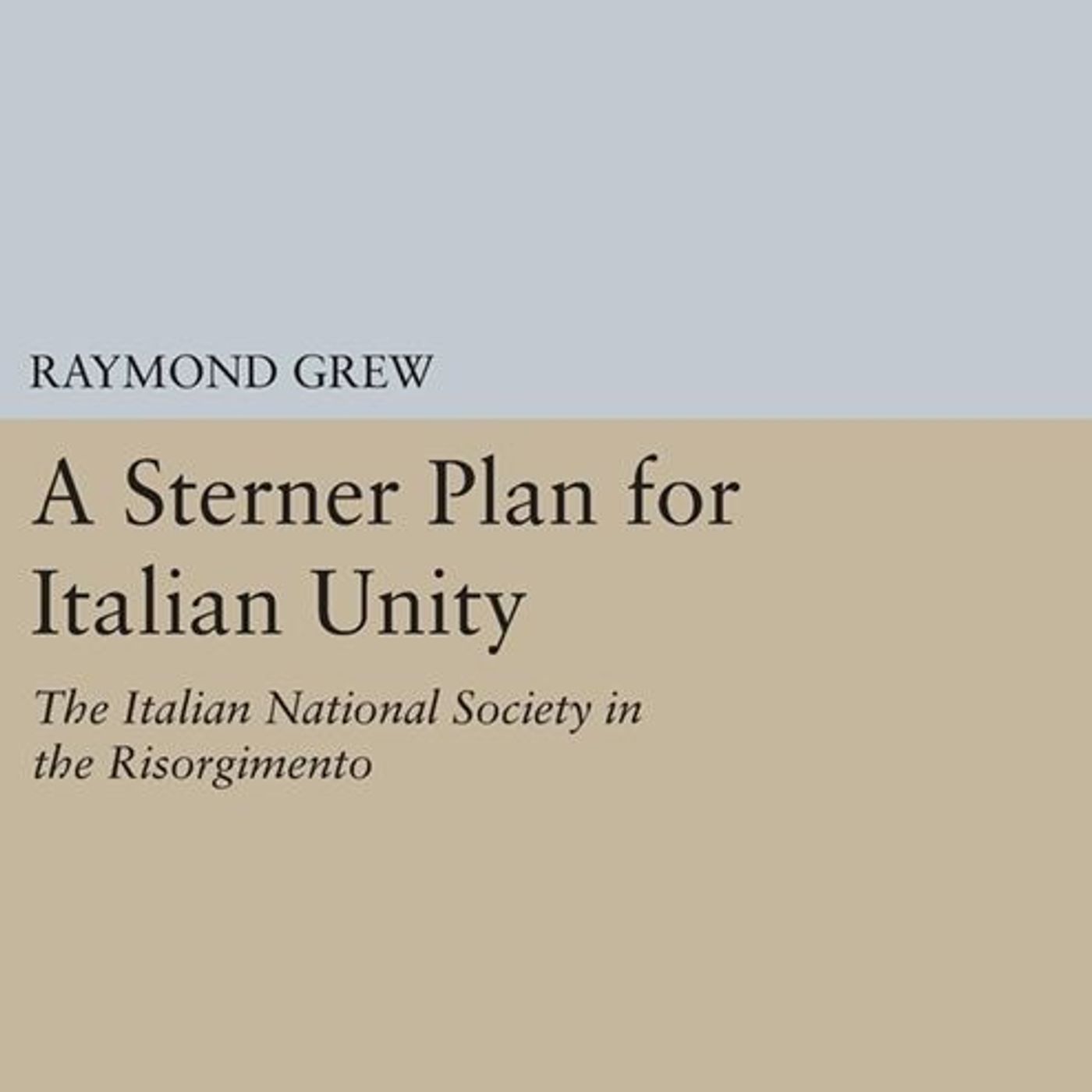
0:00 Imagine giving up the very principles you spent your entire life fighting for just to get a border drawn on a map. 0:09 Right. 0:10 It's a heavy thought. 0:11 Yeah. 0:11 Because, you know, in 1848, the dream of a united Italy was all about these romantic heroes, people bleeding on barricades, writing passionate poetry, demanding liberty. 0:23 But by 1850... Reality hits. 0:26 Exactly. The survivors of those uprisings realized that Well, poetry doesn't actually stop bullets. To build a nation out of all these fragmented kingdoms, they had to embrace a strategy so cold and calculated. I mean, so incredibly ruthless that 0:42 it required abandoning the entire soul of their original revolution. 0:47 Which is fascinating because we tend to cling to this really comforting mythology of nation building. 0:52 We do. Right. We love a good story. Right. 0:54 We want it to be cinematic. We want pure idealism to win the day. But when you look closely at the actual historical record, that beautiful romantic painting just, it dissolves. 1:07 And what you find underneath is basically a boardroom ledger. 1:10 A ledger full of really gritty, unglamorous compromises. And that transformation from those romantic dreamers to calculating political operators, that is the entire focus of our deep dive today. 1:22 Yeah, it's quite the journey. 1:23 We're tracing the full detailed story of how Italy was unified. 1:27 The Risorgimento. Through the lens of Raymond Grew's incredible historical study, A Sterner Plan for Italian Unity. 1:35 It's a fantastic book. 1:36 It really is. It completely reconstructs the inner workings of this shadowy, highly influential organization called the Italian National Society or the SNI. So our mission today? is to walk through this narrative step by step. 1:51 Unpacking all of it. 1:52 Right. The ideological shifts, the covert propaganda, and the incredibly tense political maneuverings that literally turned Italy from a geographical concept into a unified modern state. 2:05 And, you know, the title of Gru's book itself really sets our guiding theme today. It comes from a John Greenleaf Whittier poem. The line is, I bow before his sterner plan. His praise is. 2:16 In the wrath of man. 2:17 His Sterner Plan. Yeah. I love that. 2:20 Yeah. And we are going to explore the architecture of that Sterner Plan because this is the story of how Italy was forged, not by utopian dreamers, but by pragmatic political architects who just decided that the end absolutely justified whatever means were necessary. 2:35 And to really understand why they made that massive shift, we have to start at rock bottom. 2:40 1850. 2:40 Right. 2:42 The year 1850. Just two years prior, a huge wave of revolutionary fervor the springtime of the peoples, swept across Europe. 2:51 And Italy was right at the center of it. 2:53 It was incredibly dramatic. 2:54 Oh, totally. You had ordinary citizens building barricades in Milan, literally driving the Austrian imperial army out of the city with, like, whatever weapons they could scrounge up. 3:04 Pitchforks and old rifles. 3:06 Yeah. 3:07 You had a glorious, radical republic declared in Rome, led by Giuseppe Mazzini, who was this great, uncompromising visionary of Italian nationalism. And it was defended by Giuseppe Garibaldi, the ultimate guerrilla hero. Venice was even holding out as an 3:21 independent republic under a siege. 3:23 But, and this is the turning point, by 1850, those barricades have basically been reduced to splinters. 3:29 They were just crushed. 3:30 Completely. The Austrian and French armies returned with overwhelming force. 3:35 They crushed the Roman Republic. They starved out Venice. The old regimes, the dukes, the pope, the Bourbon kings, they were all firmly. 3:44 Back on their thrones. 3:45 Like nothing even happened. Right. 3:47 And the revolutionaries who weren't executed were forced into exile. 3:51 They scattered across Europe to cities like Paris and London. 3:55 And it's in those exile communities, sitting in cafes and drafty apartments, that this massive ideological fracture happens. 4:02 Because you have these groups of exhausted, traumatized exiles endlessly debating what went wrong. 4:08 Endlessly. 4:08 And Mazzini, playing the role of the uncompromising visionary, he refuses to change tactics. He believes the failure was just a lack of absolute devotion. He's demanding what the historical texts actually call the courage of suicide. 4:22 Which is intense. 4:24 Very intense. He wants more uprisings, more martyrs, more blood spilled in the streets just to awaken the Italian spirit. 4:31 But on the other hand, you also have this new crop of exiles, men like Daniele Manin, who had actually led the Venetian Republic, and Giuseppe Montanelli. Right. 4:40 These men are tired men. 4:42 Of losing. 4:43 They are tired of planning these glorious failures. They realize that sending young men to die on barricades might make for. 4:50 You know, great songs. 4:51 But it doesn't move borders. 4:53 Exactly. 4:53 It doesn't move borders. As Mazzini put it, he loved Italy as a religion, but these pragmatists were starting to view it as a philosophy. They were looking for a mechanical solution to a very real military problem. 5:07 You know, it reminds me of a startup. A startup. 5:10 Yeah. 5:10 Imagine a startup that had a brilliant, charismatic founder. He inspired everyone, convinced them all to work 100-hour weeks, gave these incredible, rousing speeches. 5:20 Okay. 5:21 I see where you're going. 5:22 But he ultimately bankrupted the company because he had zero business sense and completely ignored market realities. Now the surviving team is looking around the ashes of their company, realizing they don't need another visionary. Right. They need a ruthless, 5:36 calculating CEO with massive venture capital. To actually build the product. 5:41 That is a perfect analogy. And in this historical context, that venture capital was a professional standing army. 5:48 They needed real muscle. 5:50 Yes. 5:50 The fundamental realization that shifted the entire course of Italian history was that Italy didn't lack spirit. It lacked artillery. 5:58 These exiled leaders recognized that local grassroots uprisings would always inevitably be crushed by foreign empires like Austria unless they had the backing of an established state. 6:10 Because pitchforks don't beat cannons. 6:12 Exactly. 6:13 They needed an entity that could field real soldiers with actual supply lines and international standing. 6:19 Which leaves them with exactly one option, right? Piedmont. Piedmont. 6:23 The kingdom of Piedmont, Sardinia up in the northwest. Because out of all the Italian states, they were the only ones who actually kept their liberal constitution after the 1848 crackdown. 6:32 And more importantly. 6:34 They actually had a standing army, about 40,000 men. And they had been willing to go to war against Austria. 6:39 I mean, sure, they lost that war. But the fact that they fought it at all made them the only viable instrument for unification. 6:47 But choosing to use Piedmont as an instrument requires an agonizing compromise. 6:52 Because Piedmont is a monarchy. 6:54 Right. This is where the Faustian bargain of the Risorgimento is struck. Piedmont is ruled by King Victor Emmanuel II. 7:01 Its prime minister is Count Camillo Benso de Cavour, a brilliant, highly aristocratic statesman who is currently busy elevating Piedmont's status on the international stage. Cavour is a monarchist, and all of these exiles, they are lifelong, diehard Republicans. They have 7:20 spent their entire adult lives fighting to abolish kings. 7:25 Imagine you've spent a decade in exile. You've lost friends to firing squads for preaching democracy and the rights of the people. And now your own colleagues are telling you that the only way forward is to pledge loyalty to a king. 7:37 It's a tough pill to swallow. 7:39 You can see why this tore friendships apart. It feels like the ultimate betrayal of the revolution's soul. 7:44 It was a betrayal of their original methods, for sure. 7:47 But they reframed it as the ultimate sacrifice for the ultimate goal. Daniele Menin and Giorgio Pallavicino, another highly influential exile, they outline a radically new program. 7:58 They just strip away all the ideological purity. 8:01 Completely. They publicly declare that republics and federalism are completely off the table. 8:06 And Menin issues this famous highly conditional battle cry that basically becomes the foundation of their new movement. He essentially tells Piedmont, we will support you, but you must be willing to lose the throne of Piedmont to conquer the throne of Italy. 8:21 It's a bold statement. 8:22 Yeah. In other words, if the king is willing to use his army to unite the country, these lifelong Republicans will swallow their pride and make him king of Italy. 8:31 But if he hesitates, the deal is off. 8:34 And what's really remarkable is how contagious this pragmatic shift becomes. 8:38 Even Giuseppe Garibaldi, the ultimate man of the people who despised the aristocratic elites, he gets on board. 8:45 Really? 8:46 Yes, Garibaldi. 8:47 He looks at the situation purely through the lens of military strategy. He notes that a professional army of 40,000 men and an ambitious king are tangible, quote, elements of initiative and success. 8:58 So even he is just exhausted by feudal uprisings. 9:01 He is just as exhausted as the politicians are. And so this incredibly unlikely coalition of former revolutionaries and pragmatists formally organizes into the Italian National Society, the SNI. 9:16 OK, but deciding to back a king is the easy part. 9:19 Oh, definitely. 9:19 Actually coordinating a shadow network across all these fractured, heavily policed states without getting arrested for treason, or, you know, accidentally sparking a premature war, that requires an entirely different level of operational security. 9:33 They had to operate completely in the shadows. 9:36 Right, to manufacture what they called a unanimous will. 9:40 And this is where we see the machinery of the SNI really start to deter. Giuseppe La Farina, a brilliant organizer and a key leader of the SNI, begins meeting secretly with Prime Minister Cavour. 9:52 Secret meetings. 9:53 Oh, very secret. 9:55 Grew's book details how these meetings had to take place in the hours before dawn. 9:58 Cavour was the prime minister. minister, right? 10:01 He absolutely could not be seen fraternizing with known radicals and revolutionaries. 10:06 Wait, so Cavour is essentially funding and encouraging a shadow network of revolutionaries, while simultaneously telling the international diplomatic community that he's a moderate statesman. 10:16 It's a masterclass in plausible deniability. 10:20 During one of these pre-dawn meetings, Cavour supposedly told La Farina to go ahead and build the society across Italy. 10:26 Okay. 10:27 But he explicitly warned him, if you're caught or if I am questioned by parliament or foreign diplomats about our connection, I will deny you like Peter and I will say that I do not know you. 10:39 That is incredible. Cavour uses the SNI as his expendable grassroots shadow organization. They do all the dirty work of stirring up nationalist sentiment. Well, he keeps his hands completely clean on the international stage. 10:52 Exactly. 10:53 But what is the SNI actually telling the people? Like, what is their message in the streets? 10:58 Well, their core ideology was incredibly strict and in many ways entirely intolerant. For the SNI, unity was absolute and liberty was secondary. 11:08 Unity over liberty. Right. 11:11 Pallavicino summarized it with chilling clarity. He said, first, I want to live. Of living well, I will think later. 11:19 Meaning unification itself is the act of living. 11:23 Yes. Democracy, civil rights, regional autonomy, those are concerns for living well, and they must be postponed indefinitely. 11:31 They're essentially asking an entire nation to hit the mute button on every single internal debate. Just put all your deep disagreements about what this new country should look like on pause. 11:42 And they weren't just asking for a polite pause. They were aggressively silencing anyone who raised questions. This is where we see the birth of a very modern, very dangerous political concept. 11:54 Nationalism is a tool to bypass democratic debate. 11:57 Precisely. 11:58 The SNI became a massive engine of propaganda. They printed pamphlets and this newspaper, the Piccolo Corriere, smuggling them across heavily guarded borders into the various Italian states. 12:09 And the core message was what? 12:12 That Italy had to catch up to modern nations like England and France and that anyone debating the method of unification was weakening the nation. 12:19 It's fascinating and honestly a bit chilling to look at this purely as a mechanical strategy. And we should be clear, we have to look at this objectively just to understand the sheer efficiency of their operation. We aren't taking sides here, just reporting what the sources say. 12:34 Of course. 12:36 The SNI didn't care if you were on the Catholic right or the Republican left. If you wanted to debate, You were targeted. 12:43 Everyone was a target if they dissented. 12:45 Right. They viciously attacked the Catholic conservatives, citing the excesses of Roman theocracy. But they equally attacked their former friends on the Republican left. They dismissed Motsenians as dangerous, out-of-touch visionaries who were jeopardizing the one true path. 13:00 They weaponized the concept of unity. 13:03 Yes. If you disagreed with unification under the Piedmontese king, you weren't just a political opponent. You are branded a traitor to the Italian cause. 13:13 And by framing the debate that way, they completely monopolized the political center. They created a binary choice. You are either with the SNI and the king, or you are an enemy of Italy. 13:24 A completely binary choice. Right. 13:27 And this theoretical machine they build in the shadows was about to be tested by fire. In 1859, the long-awaited war with Austria finally breaks out. Piedmont, with the crucial help of the French army, marches against the Austrian empire. 13:40 And this is where the story shifts from smuggling pamphlets to executing hostile takeovers of entire cities. 13:47 It really does. 13:47 When the war starts, the central command of the SNI does something that, on the surface, looks completely baffling. They officially dissolve themselves. 13:55 Just poof, gone. Yeah. 13:57 They issue a declaration saying, the wedding is consummated, our task is finished. And they hand total dictatorial trust over to the king. Why would a powerful organization dissolve the minute the action actually starts? 14:10 Because it was the ultimate optical illusion. If the SNI's central command stayed active and overtly directed the uprisings across Italy, it would look like a coordinated radical revolution. 14:21 Oh, I see. 14:22 And if it looked like a radical revolution, the conservative powers of Europe might intervene to crush it. By officially dissolving, they created the illusion that what was about to happen wasn't a coup, but a spontaneous, natural, and inevitable embrace 14:35 of the king's legitimate authority by the Italian people. 14:38 Brilliant. But of course, they didn't actually just go home. 14:42 Oh, definitely not. 14:43 The Central Committee dissolved, but on the ground, in the actual cities across central Italy. The local SNI branches leaped into action. Grew's book breaks down these local revolutions, and they are fascinating because they are so mundane. Let's look 14:59 at the specific example of Modena. 15:01 Modena is the perfect case study. 15:04 As the war begins, the Austrian-backed Duke of Modena realizes his position is untenable and he retreats with his troops. 15:10 So there is suddenly this massive power vacuum. 15:13 Right. 15:13 Instantly, an SNI-led crowd marches on the town hall. 15:16 There is no massive bloodshed, no chaotic barricades. An SNI leader named Zini steps in, declares himself acting dictator, and his sole focus is maintaining absolute order. 15:28 No looting, no rioting. 15:29 Exactly. 15:30 He prevents any looting or radical declarations. And then just a few days later, he smoothly hands power over to Luigi Carlo Farini, who is Prime Minister Cavour's official royal commissioner. 15:41 It's not just a hostile takeover. It's a hostile takeover where the middle managers are sent in first to stabilize the newly acquired assets. 15:49 That's a great way to put it. 15:50 They keep the lights on and the employees calm. So when the CEO, Cavour and the king, finally arrives, the board of directors, meaning the rest of Europe, just sees a completely smooth, respectable transition of power. 16:03 They proved to Europe that Italians could manage a regime change without descending into the terrifying chaos of the French Revolution. 16:09 They provided a safe, middle-class, professional bridge between the conservative government of Piedmont and the radical act of overthrowing established monarchs. 16:19 Because it was respectable lawyers and doctors. Right. 16:22 Respectable lawyers, doctors, and academics ran these local S & I committees. They made revolution look boring, which was exactly what Cavour needed. 16:31 And it works beautifully. By 1860, the map of Italy is drastically redrawn. The central states, the marches, Umbria, and even the entire south, thanks to Garibaldi's incredible military expedition, are all annexed to Piedmont. 16:46 It's a massive success. 16:48 Rome and Venetia are still holding out, but the massive bulk of the peninsula is unified under Victor Emmanuel II. 16:55 You would think the story ends there, The borders are drawn. 16:59 The champagne is popped. But the SNI has to pivot yet again. 17:04 Because the most dangerous moment for any revolution is the day after it succeeds. 17:09 Right. 17:09 The revolutionaries must instantly become the establishment. The SNI now has to protect this brand new, very fragile Italian state from the very revolutionary energies they had just utilized to create it. 17:21 The ideological whiplash here is severe. With the country mostly unified, the SNI essentially transforms into a ruthless electoral machine. They launch massive campaigns to ensure that Kivurian moderates win the very first national parliamentary elections. 17:36 And their primary target? 17:38 The radical, democratic faction led by Garibaldi and his political operator, Agostino Bertani. 17:44 The message does a complete 180 turn. For years, the SNI told the people, we must sacrifice everything to build the nation, we must fight. Now the message is, we must have tranquility and order. 17:56 A total reversal. 17:58 They start actively suppressing the very people who still want to fight to free Rome and Venice. They declare that the revolution is officially over, and anyone trying to keep the momentum going is an enemy of the state. 18:08 And the ultimate validation of this entire years-long shadow operation happens just shortly before Prime Minister Cavour's untimely death. 18:17 That's a dramatic moment. 18:18 He stands up in the newly formed national parliament. And he finally drops the act. He publicly acknowledges the SNI. 18:27 He abandons the whole, I will deny you like Peter, plausible deniability thing. 18:31 Right. 18:32 He looks at his critics and proudly declares that, yes, he did conspire with the National Society in secret. And moving forward, he is going to, quote, conspire with 26 million Italians. 18:43 It is a moment of profound triumph for Cavour. But if we look at what this meant for the people who actually built the machine, it's deeply tragic. 18:53 Very tragic. 18:54 Consider Giuseppe Laferina. He started out as a fiery, passionate exile. 18:59 He risked his life for the dream of Italy. But by the end of this process, he is using his newspaper and his immense political influence to ruthlessly crush any remaining idealists who just wanted to finish the job they 19:12 all started together. Wow. He transitioned from a revolutionary architect... 19:17 to an authoritarian enforcer. 19:19 For the state. He became the very thing he spent his youth fighting against. He became the boot coming down on the radicals. 19:26 And this tragedy leads directly to Raymond Grew's grand, overarching conclusion in the book. Grew argues that the tragedy of the Risorgimento is that this specific brand of nationalism inherently acted as a denial of politics. 19:42 A denial of politics. Let's really drill down into that. 19:46 What does it mean for a nation to deny its own politics? 19:49 It means that the fundamental nature of a healthy society, which is, you know, arguing about how we live together, debating resources, navigating class conflicts, and balancing regional differences, all of that was labeled as treason. 20:02 Ah, I see. 20:03 Because the SNI demanded absolute, unquestioning unity to achieve the borders of the nation. They trained an entire generation of Italians to view normal political disagreement as a mortal threat to the country. Nationalism said there was only one acceptable 20:17 goal and any discussion about the nature of our society is a dangerous distraction. 20:22 So they successfully modernized and unified Italy. They pulled off one of the greatest geopolitical feats of the 19th century. 20:29 Undeniably. 20:30 But the cost was the democratic soul they started with. 20:33 The unification of Italy wasn't achieved by Mancini's beautiful poetry or by pure idealism. It was achieved by the SNI's sterner plan. Exactly. It was an incredibly gritty, calculated compromise where lifelong Republicans bowed to a king, civil liberties were 20:49 intentionally delayed, and chaotic popular revolution was replaced by efficient, middle-class administration. 20:56 They built the house, but they built it by permanently locking the doors to the debate hall. And this raises an incredibly important question, something that echoes far beyond 19th century Italy. And it's what I want to leave you, the listener, to mull over today. 21:09 Let's hear it. 21:10 If a nation is forged by intentionally suppressing all of its internal political, social, and regional conflicts for the sake of a single, all-consuming, unifying goal, what happens to that nation the day after the goal is achieved? 21:24 Right, because the conflicts don't just vanish. Exactly. 21:27 When the external enemy is finally gone and the map is fully drawn... Does all that deeply suppressed conflict just evaporate or does it inevitably violently explode? 21:38 And suddenly that clean, inspiring story of nation building isn't so clean anymore. The jagged lines of compromise, the silenced debates and the betrayed ideals are everywhere, hidden right beneath the surface.






Community discussion