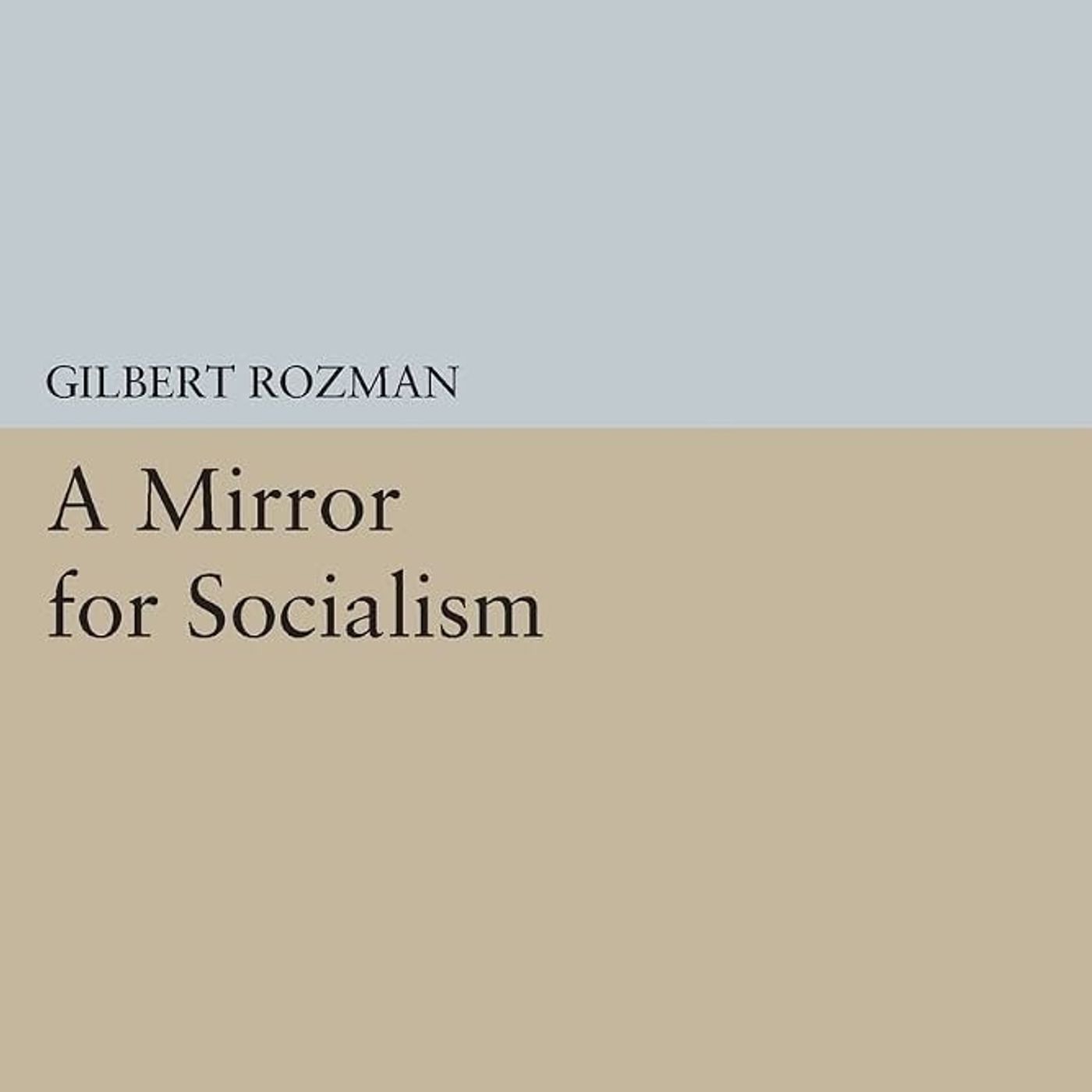
0:00 I want you to imagine a political thriller for a second. 0:03 Okay. I'm intrigued. Right. Set the scene for me. Right. 0:06 So the setting is this massive, heavily surveyed empire where state censors are monitoring like literally every published word. 0:14 Sounds incredibly intense. 0:15 It is. And there's this group of intellectuals trapped inside this strict system. And they realize that their society is heading straight toward a cliff. 0:24 And they have to do something about it. 0:25 Exactly. They need to smuggle a blueprint for revolution or revolution. 0:29 really this desperate plea for reform, out to the public. 0:32 But they can't just publish it, obviously. 0:34 Oh, for sure. That would mean prison or, you know, exile to a labor camp. 0:38 Right. So they hide this blueprint in plain sight. And their disguise? Dense, highly academic books analyzing the history and social policies of a rival foreign nation. 0:50 It is basically the ultimate academic Trojan horse. 0:54 It really is. So welcome to another deep dive. Today, we are exploring one of the most fascinating intellectual heists in modern history. And we're going to be guided by Gilbert Rosman's incredible book, A Mirror for Socialism, Soviet Criticisms of China. 1:08 It really is just a remarkable story. And treating it like a narrative, like this thriller of ideas, is exactly the right approach here. 1:16 I'm so glad you think so, because that's our mission today, right? 1:19 To reconstruct this whole narrative from Rosman's book. 1:22 Exactly. We are looking at how Soviet scholars in the 1970s and 80s used the cover of Analyzing China's Missteps to, well, secretly debate the fatal flaws and the potential reforms of their own Soviet system. 1:36 Which is just wild to think about. 1:37 It really is. But to truly understand how this Trojan horse worked, we first have to understand the heavily fortified wall it was trying to breach. 1:46 Right, the baseline ideology. 1:48 Yeah, we have to look at the fragile, almost theological illusion of what they called the Soviet worldview. 1:54 So set that scene for us. We're in the mid 20th century. And for a while, the Soviet Union and China are basically the twin titans of the communist world. 2:02 Right. They are absolute sworn allies. 2:06 But then by 1960, that relationship just violently ruptures. We get the Sino-Soviet split. 2:11 And this wasn't just like a minor disagreement over borders. 2:15 No, not at all. They were arguing over massive ideological shifts, things like de-Stalinization. where the Soviet leadership suddenly started denouncing Stalin's cult of personality and his brutal purges. 2:27 Which absolutely infuriated Mao Zedong. 2:29 Totally. They argued over how to deal with the West and over the basic mechanics of how to even develop their economies. So practically overnight, these allies become bitter geopolitical rivals. 2:41 Exactly. And this rupture created an enormous ideological crisis in Moscow. 2:46 I mean, it fundamentally threatened that deterministic Soviet worldview we mentioned. 2:51 Explain that worldview a bit more. What was the script they were supposed to be following? 2:55 Well, in the official state doctrine of the time, history isn't random. It is driven by four very specific moving forces. 3:02 Okay, what are they? 3:04 Advancing technology, class struggle, a scientific understanding of social change through Marxism-Leninism, and crucially, planned development under a communist leadership. Right. 3:15 So a very rigid path. Very rigid. 3:16 Very rigid. According to this script, once a communist party takes power, the society is supposed to march steadily, like inevitably forward toward a utopian communism. 3:27 But China deviated. Big time. 3:29 Mao launched the Great Leap Forward and later the Cultural Revolution. 3:32 They completely broke the script. 3:34 It honestly sounds like a rigid religious order trying to explain a massive schism to its followers. 3:41 That is a perfect analogy. 3:42 Because how do the Soviet leaders explain to the public that the Chinese leadership got it so catastrophically wrong without accidentally admitting that their shared underlying Marxist doctrine might be fundamentally flawed. 3:56 And that is the exact ideological trap they found themselves in. 3:59 So the Soviet state demanded that its China watchers, its historians, sociologists, economists, explain this Chinese heresy to domestic readers. 4:07 They give them a mandate, basically. 4:09 Yes. The mandate was, prove why China is failing while the Soviet Union is allegedly succeeding. 4:15 But the Soviet leaders had another major headache at the time, didn't they? I mean, Western critics. 4:20 Oh, absolutely. Western academics were constantly writing about the Soviet Union. 4:24 Accusing it of being a dictatorship, of relying on forced labor, being run by this bloated, corrupt bureaucracy. 4:32 Right. The Soviets labeled all of this anti-communism, and they ordered their scholars to aggressively fight back against these Western ideas. 4:39 But here comes the twist, right? Because When these Soviet scholars sat down to write about China's failures, a deeply ironic echo emerged. 4:49 A huge echo. In trying to expose the horrors of Mao's China, Soviet academics began utilizing the exact same arguments, the exact same structural critiques that the West was actively using against the Soviet Union. 5:04 Wow. 5:05 Yeah. To prove China had strayed from the path of true socialism, Soviet scholars had to prove that China had failed its people. 5:12 So they began dissecting Chinese society class by class. Exactly. 5:17 Revealing this tragic story of exploitation. 5:19 Let's really dive into that class by class dissection. So you listening can grasp the scale of this. We should start with the bedrock of China, right? The peasants. Right. 5:30 And the Soviet narrative painted a devastating picture of the Chinese countryside. They heavily leaned on this Marxist concept of the Asiatic mode of production. 5:39 Basically arguing that because China historically lacked private property and was ruled by a despotic central state, it was just stagnant. 5:47 Exactly. They argued it skipped the necessary phase of capitalist development, which made the transition to true socialism incredibly difficult. 5:56 So how did the Soviet scholars critique the way the Chinese state handled this? Because it was a very vulnerable, backward, rural population at the time. 6:05 They were ruthless in their critique. 6:07 Hmm. 6:07 They absolutely condemned China's forced collectivization. They argued that the Chinese state extracted immense amounts of grain from the peasants without offering any material incentives in return. You know, no consumer goods, no fair prices. 6:21 So just taking their crops and giving them nothing. Right. 6:25 They wrote that this system kept the rural population on the absolute verge of starvation, extracting their wealth solely to fund heavy industry and this aggressive military-industrial complex. 6:35 Which culminated in the catastrophic famine of the Great Leap Forward. 6:39 But hang on a second. 6:40 Yeah. 6:40 I'm listening to this and thinking, they're criticizing China for extracting grain by force to fund heavy industry at the expense of millions of starving peasants. But wasn't that the exact playbook the Soviet Union used under Stalin in the 1930s? 6:56 Are these Soviet scholars just accidentally criticizing themselves or is this intentional? 7:01 And that right there is the brilliant irony of the Trojan horse. On the surface, the scholar is safely, officially criticizing Mao Zedong. 7:10 Right. 7:10 But imagine being an educated Soviet reader in the 1970s. 7:14 You know your own country's brutal history of forced collectivization and the resulting famines. 7:19 So you would read those lines about China and immediately see a perfect mirror reflecting your own past. 7:24 Exactly. It was unmistakable. 7:26 Wow. So they've completely dismantled the illusion of a rural utopia. 7:31 But in classical Marxist ideology, the peasants are sort of secondary anyway, right? 7:36 Right. The real heroes of the revolution are supposed to be the urban proletariat. 7:40 So did the Soviet writers find that workers' paradise in China's cities? Or was that an illusion too? 7:46 Oh, it was an even darker illusion. Soviet writers described a Chinese working class that was small, technologically weak, and fundamentally oppressed. 7:54 Really? How so? 7:56 They described what they termed barracks communism. 7:59 Barracks communism? That sounds incredibly grim. 8:03 It was horrific. Soviet scholars narrated how the Chinese state effectively destroyed any semblance of independent trade unions. Wow. They instituted a system where wages were frozen for years at a time, and daily life was heavily militarized. 8:18 So they weren't just working. They were totally controlled. 8:20 Exactly. Exactly. workers were literally housed in barracks under strict supervision, completely alienated from any political process. 8:28 So the scholars argued that Chinese workers were treated merely as disposable cogs, producers for a massive state machine. 8:34 Right, rather than as the primary beneficiaries of the socialist system they supposedly owned. 8:40 Okay, so if the workers are just cogs, what happens to the minds of the society, like the educated class, the intelligentsia? 8:48 This part of the Soviet critique is overblown. 8:50 Yeah, they detail that 1957 anti-rightist campaign in China where Mao essentially lured intellectuals into voicing criticism only to violently purge them. 9:01 Setting literal quotas for how many quote unquote traitors had to be found and punished in every single workplace or university. 9:07 It's terrifying. And the Soviet literature meticulously documented the resulting horrors, especially during the Cultural Revolution. 9:15 They wrote about the closing of schools, the public pogroms against teachers and professors. the burning of books. 9:22 And they focused intensely on this clash between read versus expert, right? 9:26 Yes. In China at the time, political loyalty, being ideologically read, was prized over actual competence or scientific knowledge, being an expert. 9:37 So Soviet scholars pointed out that ignorant, ideologically driven officials were actively sidelining highly trained professionals. 9:45 Exactly. Completely paralyzing the country's developments. 9:48 I can so easily see how a Soviet scientist or academic reading this critique of China's red versus expert dynamic would just be nodding along. 9:57 Oh, 100 Thinking about the times Soviet party hacks interfered with their own research. Right. 10:03 Or dictated scientific truth based on party ideology rather than, you know, actual empirical evidence. 10:07 Exactly. But if you're listening to this and mapping out the society, the peasants are starving, the workers are trapped in barracks, and the intelligentsia is being persecuted. Right. 10:17 The classical Marxist script needs an oppressor. 10:20 Exactly. But they've supposedly eliminated the capitalists and the landlords. 10:24 So who do the Soviet writers cast as the new villain? 10:27 And that brings us to the core of the narrative. 10:30 The Chinese officials, the cadres, the bureaucrats. Yes. 10:34 Since a socialist society claims to have eliminated the traditional ruling class, Soviet writers identified a new parasitic oppressor. 10:42 They explicitly described a military bureaucratic dictatorship operating in China. 10:47 They did. They wrote extensively about the abuse of power, the widespread corruption, and the complete lack of democratic elections. 10:54 They portrayed a system where a small group of party leaders and military figures wielded totally unchecked power. 11:01 Recruiting followers based entirely on sycopency rather than merit. 11:05 And this is where that mirroring effect is just undeniable. 11:08 Unmistakable. 11:09 Because everything we just discussed, you know, starving peasants, alienated workers, oppressed intellectuals, and a corrupt, unchecked bureaucracy... That is a near-verbatim recitation of the Western, anti-communist critique of the Soviet Union itself. 11:25 Exactly. And this parallel reaches its absolute peak when Soviet scholars analyze China's treatment of its national minorities. 11:33 Right, the final devastating chapter of this societal dissection. 11:37 The Soviet writers detailed the forced signification of non-Han peoples in places like Tibet and Xinjiang. 11:44 So, suppressing local cultures, driven by what they termed Great Han chauvinism. 11:50 Yes. They described how minority regions were basically treated as internal colonies. Local populations were forced into hard labor to build military roads for the central government. 12:01 It's fascinating because the critiques these Soviet scholars laid out against China's minority policies, they are practically identical to the critiques Western historians leveled against Moscow regarding its treatment of its own vast minority populations. 12:16 Completely identical. Regardless of the historical debates around these specific policies today, the absolute mirroring in the rhetoric is undeniable. 12:25 The Soviet scholars were writing a script about China that reflected Western accusations against Moscow perfectly. 12:31 They really were. 12:32 The structural parallels are just staggering. Now, if you were listening to this, you might assume that this was just a massive, unified, state-sponsored propaganda effort attacking China. 12:43 That would be the logical assumption. Right. 12:45 But if we zoom in, If we look really closely at the footnotes, at the academic citations and the subtle phrasing in these books, Rosman reveals a hidden war. 12:56 A factional war between the Soviet scholars themselves. 13:00 Yes. This is where the Trojan horse truly opens up and the thriller aspect really peaks. 13:06 Because not all Soviet scholars were writing with the same underlying motives. The field of Soviet China watchers was deeply, bitterly divided into two main camps. 13:16 OK, tell us about the first camp. 13:18 First, you had the Orthodox camp, the hardliners. These were figures deeply entrenched in the state apparatus, people like Oleg Rokmanin and Mikhail Sladkovsky. 13:28 Mostly operating out of the Institute of the Far East, right? Exactly. 13:33 I imagine that for these Orthodox scholars deeply embedded in the state, admitting the communist system itself was broken was just impossible. 13:40 Right, they couldn't go there. 13:42 So they must have had to perform some serious mental gymnastics to blame this massive societal failure on the Chinese people rather than the underlying doctrine. How did they approach it? 13:53 You've hit the nail on the head. The hardliners used deductive logic. They started with their rigid ideology and just forced the facts to fit it. 14:01 So who did they blame? 14:02 They blamed China's failures on its history and culture, specifically on the petty bourgeoisie nature of the population and traditional Sinocentrism. 14:11 In their view, the Chinese peasants and small property owners were inherently conservative, greedy, and reactionary. 14:18 So the hardliners were basically looking at the disaster in China and saying, see, this is what happens when the central party isn't strict enough with a backward population. 14:27 Exactly. We need more control, not less. 14:31 It's a deeply conservative defense of the Soviet status quo, just using China as a cautionary tale of lax discipline. Right. 14:39 But then you have the other side, the reform camp. 14:41 The challengers. 14:42 Yes. Figures like Love Dalyusen and Vilene Gelbras. They were often associated with the Institute of Oriental Studies. 14:50 And their approach was entirely different, right? And incredibly brave. 14:55 Totally different. They didn't use rigid, top-down ideology. They used empirical sociology. 15:02 Meaning they actually looked at the data. 15:04 Yes. The historical facts, the lived reality of the Chinese people suffering on the ground. They vehemently rejected dogmatism. 15:13 And their conclusion about why China was failing was radically different. 15:17 Very different. They didn't blame the starving peasants or the so-called petty bourgeoisie. They blamed the officials. 15:24 They argue that China's disaster was caused by power-hungry bureaucrats who suppressed the people, ignored the experts, and ruled without any democratic checks and balances. 15:34 And that distinction changes everything. The reformers argued that the peasants weren't inherently reactionary. They were just starving and responding logically to a state that stole their grain. Right. 15:44 And the workers weren't unrevolutionary. They were just alienated by a system that treated them like machines and gave them no voice. Exactly. 15:51 By placing the blame squarely on the bureaucracy and the lack of democratic representation, the reformers completely flipped the script. 15:58 Wait. If the reformers are saying that the biggest threat to a communist state isn't the poor peasant and it isn't Western imperialism, but rather the state's own corrupt, unchecked officials, they are literally diagnosing the fatal illness of the Soviet Union. 16:14 They are writing a devastating critique of the Soviet Kremlin right under the censor's noses. 16:19 They absolutely were. The story of Soviet Chinese studies in the 1970s and 80s wasn't really about China at all. 16:25 It was a covert, desperate battle for the soul of the Soviet Union. 16:29 Exactly. Because the reformers couldn't openly write the Soviet bureaucracy is corrupt, we need free speech, and we need to stop squeezing our farmers. 16:36 No, they would have been sent straight to the gulag or a psychiatric ward. 16:40 Right. So instead they wrote, the Chinese bureaucracy is corrupt, the Chinese need free speech, and the Chinese need to stop squeezing their farmers. 16:48 It is mind-blowing. It's literally a secret blueprint for reform embedded entirely in the critique of an enemy. 16:55 It really is. 16:57 But I don't want to just list off abstract ideas here. 17:00 What exactly was the blueprint they were trying to smuggle into the minds of the Soviet intelligentsia? Like, how did these proposed reforms actually work? 17:08 Well, according to Rosman's analysis of the text, the reformers embedded a very specific six-step reform agenda. 17:15 OK, let's break those down. Step one? 17:17 Step one was a complete rejection of forced utopianism. They argued that socialism must be a gradual, patient process that respects individual rights. especially in societies that don't have a history of democratic institutions. 17:31 So you cannot violently force a utopia overnight. 17:34 Exactly. 17:35 Which is a direct attack on the endless paranoid purges that characterized both Mao's China and Stalin's Russia. 17:41 Yep. Which leads right into their second step, building broad coalitions. 17:46 Okay, so moving away from the violent, endless class struggle. Right. 17:51 You don't need to constantly hunt for internal enemies to justify the state's power. A healthy society works together. 17:57 That makes sense. What was step three? 17:59 Step three focused on the countryside, and this was radical. 18:03 They argued for voluntary collectivization. 18:06 Voluntary, meaning a state has to actually offer peasants material incentives. 18:11 Yes, let them sell surplus on an open market. Let them actually make a living. You cannot build a thriving society by extracting wealth from the rural population by brute force. 18:22 And step four feels incredibly personal for these writers. It does. 18:26 They demanded free speech for experts. 18:29 Ah, when we talked earlier about the red versus expert clash, this is where the Soviet scholars were basically fighting for their own survival. 18:36 Exactly. They argued that a society simply cannot function, cannot innovate, if ignorant bureaucrats constantly interfere with scientific research and creative thought. 18:46 The truth must be pursued without fear of political reprisal. 18:50 Which naturally brings us to step five. 18:53 Society must be a meritocracy. Positions of power and influence should be based on actual performance, education, and knowledge. 19:01 Not simply on who is the most loyal to the party ideology or who is best at sycophancy. 19:06 Right. 19:08 And the final step, step six. In the context of the Cold War, this might be the most subversive idea of all. 19:15 Oh, definitely. They argued that the state must fundamentally shift its priorities toward the people's well-being. 19:22 Meaning focusing on consumer goods, making daily life actually livable and prosperous. 19:28 Exactly. Rather than pouring all the nation's wealth into heavy industry and the military-industrial complex. 19:34 And they were essentially calling out the Soviet reality of having, like, thousands of tanks. But citizens waiting in line for hours just to buy basic necessities like bread. 19:43 Yes. When you look at this six-step agenda in its entirety, something really profound emerges. 19:50 What's that? 19:51 Well, the reformers were very careful to label this ideal system true socialism to appease the censors, but functionally, by advocating for individual rights, free speech, market incentives, meritocracy, and democratic representation. 20:05 This hidden agenda. subtly pointed toward convergence with Western democratic ideals. 20:11 It did. 20:11 It was a desperate, brilliant plea for fundamental structural change in the Soviet Union, hidden entirely inside a sociological critique of Mao Zedong. 20:22 It is genuinely awe-inspiring. You get such a vivid sense of the courage, the sheer intellectual agility, and the psychological weight it took to operate in that suffocating environment. 20:33 You really do. 20:34 Imagine being a reader in 1970s Moscow. picking up a dry academic text about Chinese agrarian policy, and slowly realizing you are reading a survival guide for your own society. 20:47 It gives you chills. 20:47 It really does. Which brings us all back to you, listening right now. Why does this deeply layered, slightly obscure academic history from the Cold War matter to you today? 20:59 Because it is a masterclass in human resilience and the enduring power of ideas. It shows us that truth and the fundamental human desire for self-reflection and freedom will always find a way out. 21:12 Even in the most tightly controlled, heavily monitored information environments in history. 21:17 Right. Intellectuals found a way to communicate. 21:20 Exactly. When the front door is locked, barred, and heavily guarded by state security, human ingenuity finds a way to slip the truth through a crack in the window. 21:29 Beautifully said. 21:30 Thank you. Understanding how these Soviet scholars used an external rival, China, as a mirror, it just shows us the extraordinary lengths human beings will go to advocate for common sense and human dignity. 21:43 It also serves as a potent warning about the nature of ideological blinders. 21:47 How so? 21:48 Well, think about the hardliners. They were so heavily committed to their rigid worldview that they couldn't or just wouldn't see the reality of human suffering right in front of them, whether it was happening in China or in their own backyards. Right. 22:00 The reformers proved that empirical truth, actually looking at the facts of how people live, how they struggle, and how they suffer, is the only way to genuinely diagnose and improve a society. 22:11 Which leaves us with a final thought for you to mull over long after we sign off today. The mirror of history might be dusty, but if you look closely at how we criticize our rivals, you might just see the reflection of our own deepest flaws staring back. If 22:26 the only way these Soviet scholars could safely critique their own society's fatal flaws... was by obsessively pointing out the exact same flaws in their biggest geopolitical rival. Well, what blind spots in our own modern society are we only 22:40 able to clearly see when we criticize our enemies today? 22:42 It's a great question. 22:45 When we point the finger across the border, or across the political aisle, are we really just looking into a mirror, using that conflict as the only safe way to voice the anxieties we feel about our own broken systems? It's a reflection worth looking at.






Community discussion