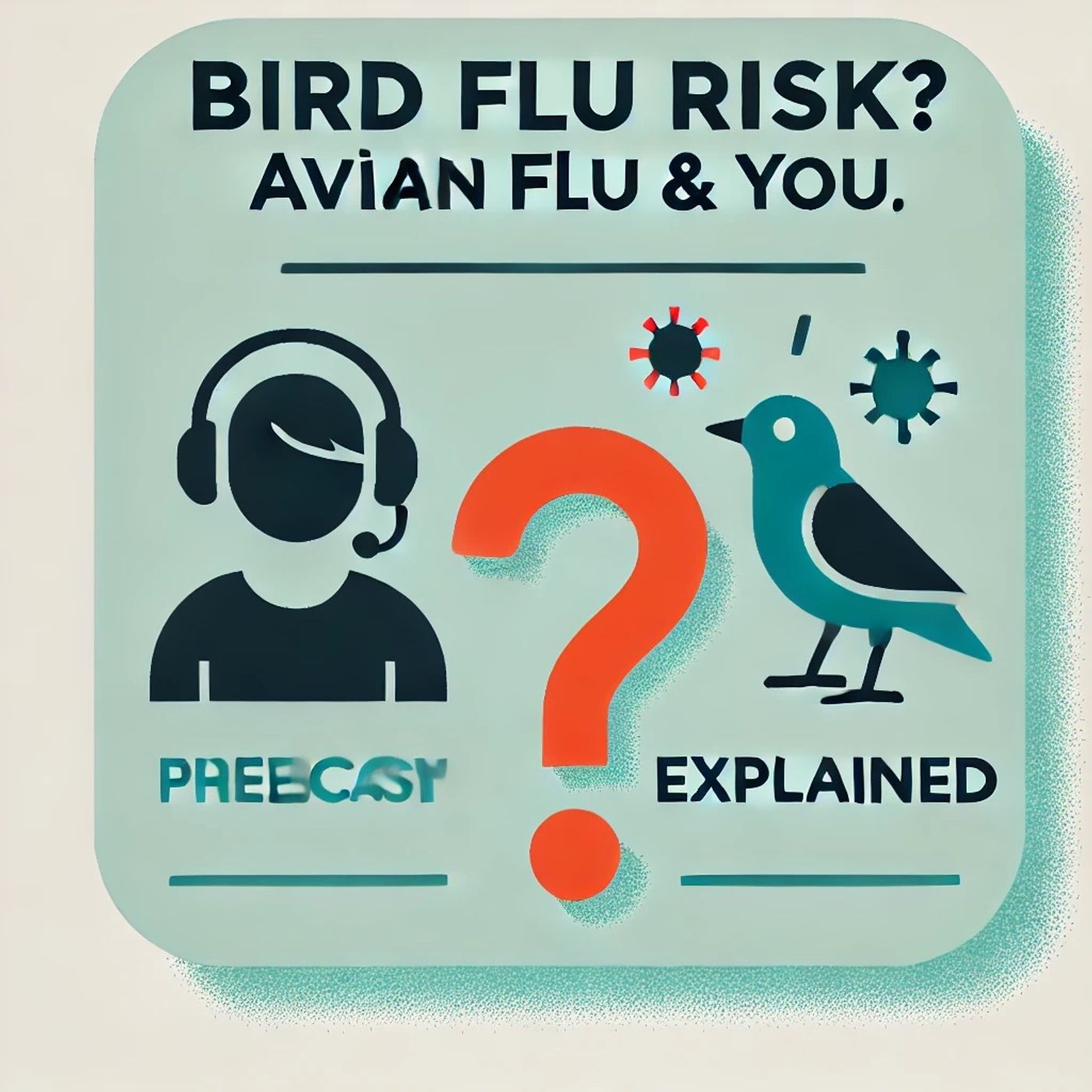
Bird Flu Risks Decoded: Essential Guide to Protecting Yourself from Avian Influenza Across Different Life Scenarios
Hello and welcome to our quick-hit podcast: "Bird Flu Risk? Avian Flu & You, Explained." In the next three minutes, we'll help you understand your individual risk related to bird flu, or avian influenza. First off, let's talk about occupation. If you work closely with birds, such as in poultry farming, veterinary services, wildlife conservation, or zoos, your risk factor is significantly higher than someone with an office job or a retailer gig. But even then, risk is manageable with the right precautions. Next, location plays a vital role. If you're living or working in regions with high concentrations of poultry farming or wet markets, your exposure risk increases. Urban dwellers typically face a lower risk, but it's always worth staying informed about local outbreaks through public health advisories. Age is another factor. While avian influenza can affect anyone, young children, the elderly, and individuals with compromised immune systems are more vulnerable. So, caregivers and healthcare providers, ensure that those at either end of the age spectrum are taking preventive steps. Speaking of health status, individuals with chronic health issues like respiratory diseases, heart conditions, or weakened immunity must exercise additional caution. Your body may not fend off infections as effectively, so consult with healthcare providers for personalized protective measures. Let me walk you through a so-called "risk calculator." Picture this: if you're a 30-something office worker living in a city, your personal risk is relatively low. You can go about your daily activities without undue worry. Just practice basic hygiene, like washing hands and avoiding touching your face. Now, compare that to a 60-year-old poultry farm worker with a history of asthma. In this case, it's crucial to wear protective gear, monitor health symptoms closely, and seek medical advice if feeling under the weather. For those of you at high risk, the key is regular monitoring and prevention. Stay updated on vaccine availability, ensure proper sanitation in workspaces, and consider wearing masks in high-exposure situations. Don’t hesitate to engage with healthcare professionals to tailor a proactive plan for your safety. If you find yourself in the low-risk category, here's some reassurance. While it's always good to stay informed, the likelihood of infection is minimal for you. Maintain your usual hygiene routines and don't let fear disrupt your everyday life. When deciding on personal protective measures, think of them as situational. When you're in a high-risk zone or your job involves contact with birds, wear masks and practice thorough hygiene. But for a casual walk in the park, relax. There's no need for extra precautions. A good rule of thumb is to stay vigilant when local health bulletins announce outbreaks or when you're traveling to affected regions. At other times, allow yourself the peace of mind that your regular preventive habits suffice. Thank you for tuning in to "Bird Flu Risk? Avian Flu & You, Explained." Being informed is the first step toward staying healthy. This content was created in partnership and with the help of Artificial Intelligence AI
You May Also Like

Real Ghost Stories Online
Real Ghost Stories Online | Paranormal, Supernatural & Horror Radio

The Grave Talks | Haunted, Paranormal & Supernatural
Ghost Stores, Haunted, Paranormal & Supernatural Stories

icqpodcast's Amateur / Ham Radio Podcast
ICQ Amateur / Ham Radio Podcast

The Michael Shermer Show
Michael Shermer

Vida Eterna. Respuestas desde la Ciencia | Dr. Manuel Sans Segarra
Dr. Manuel Sans Segarra
Время науки
Радио «Комсомольская правда»

Oncology Today with Dr Neil Love
Dr. Neil Love

Eye On The Sky
Vermont Public

The 365 Days of Astronomy
365DaysOfAstronomy.org

Stuff To Blow Your Mind
iHeartPodcasts
Real Ghost Stories Online
Real Ghost Stories Online | Paranormal, Supernatural & Horror Radio
The Grave Talks | Haunted, Paranormal & Supernatural
Ghost Stores, Haunted, Paranormal & Supernatural Stories
icqpodcast's Amateur / Ham Radio Podcast
ICQ Amateur / Ham Radio Podcast
The Michael Shermer Show
Michael Shermer
Vida Eterna. Respuestas desde la Ciencia | Dr. Manuel Sans Segarra
Dr. Manuel Sans Segarra
Время науки
Радио «Комсомольская правда»
Oncology Today with Dr Neil Love
Dr. Neil Love
Eye On The Sky
Vermont Public
The 365 Days of Astronomy
365DaysOfAstronomy.org
Stuff To Blow Your Mind
iHeartPodcasts
Community discussion