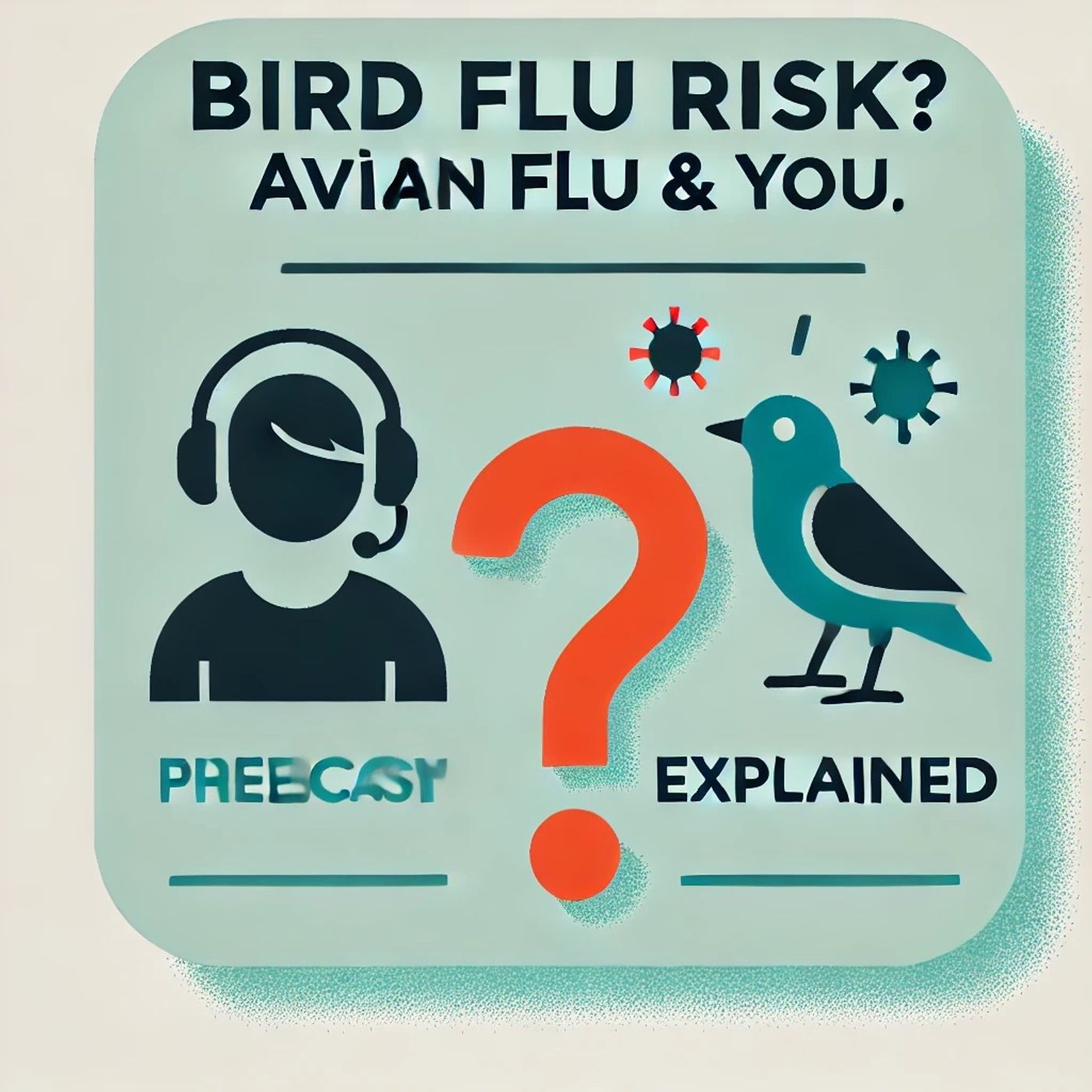
Bird Flu Risk Decoded: Your Essential Guide to Understanding Personal Exposure and Staying Safe
Welcome to Bird Flu Risk? Avian Flu & You, Explained. We're diving into how the bird flu might affect you personally. Let's break it down by occupation, location, age, and health status so you can understand your own risk and take the right steps. Starting with occupation, if you work directly with poultry, such as a farmer or a worker in a poultry processing plant, your risk may be higher due to potential exposure to infected birds. Veterinarians also face increased risk when dealing with animals. But if you're in an office, retail, or remote job with little contact with birds, your risk remains low. Location matters, too. Regions with dense poultry populations or recent bird flu outbreaks may pose higher risks. Rural areas with farms might have more potential exposure than urban areas, though urban centers can see infections spread from travel. If your local news mentions heightened bird flu cases nearby, be extra cautious. Now let’s consider age and health status. Young children and the elderly often have weaker immune systems, making them more susceptible to infections. Similarly, individuals with underlying health conditions that compromise their immune systems, like diabetes or heart disease, may face higher risks. For healthy adults, the risk is generally lower. Picture a risk calculator in action. Imagine you're an office worker in a big city with no underlying health issues; your risk is low. But if you're a poultry farmer in a community hit by a recent outbreak, and you're living with diabetes, the risk increases significantly. For high-risk individuals, guidance includes using personal protective equipment such as masks and gloves when interacting with birds and ensuring regular handwashing. Stay updated about local outbreaks and flu vaccinations, even though bird flu isn't the same as seasonal flu. For those at low-risk, there's no need for undue worry. Routine hygiene practices and being generally aware of your surroundings are usually sufficient. Bird flu rarely transmits to humans without direct contact, so you can feel reassured going about your daily activities. When it comes to personal protective measures, assess your environment and potential exposure. Consider whether your occupation or living situation puts you in contact with birds. And, when traveling to areas with outbreaks, taking extra precautions is wise. Stay vigilant during noted outbreaks and if local health advisories suggest it. However, when there's no immediate threat in your area or if you're not part of a high-risk group, there's no need to be overly concerned. Balance alertness with common sense, and remember that staying informed is your best defense. In summary, understanding your risk regarding bird flu involves recognizing factors like what you do, where you live, and your own health status. This knowledge allows you to make informed decisions about precautions. Stay aware, be proactive when necessary, and maintain your peace of mind where risk is low. This content was created in partnership and with the help of Artificial Intelligence AI
You May Also Like

Real Ghost Stories Online
Real Ghost Stories Online | Paranormal, Supernatural & Horror Radio

The Grave Talks | Haunted, Paranormal & Supernatural
Ghost Stores, Haunted, Paranormal & Supernatural Stories

icqpodcast's Amateur / Ham Radio Podcast
ICQ Amateur / Ham Radio Podcast

Vida Eterna. Respuestas desde la Ciencia | Dr. Manuel Sans Segarra
Dr. Manuel Sans Segarra
Время науки
Радио «Комсомольская правда»

Oncology Today with Dr Neil Love
Dr. Neil Love

Eye On The Sky
Vermont Public

The 365 Days of Astronomy
365DaysOfAstronomy.org

Stuff To Blow Your Mind
iHeartPodcasts

The Best of Coast to Coast AM
iHeartPodcasts and Coast to Coast AM
Real Ghost Stories Online
Real Ghost Stories Online | Paranormal, Supernatural & Horror Radio
The Grave Talks | Haunted, Paranormal & Supernatural
Ghost Stores, Haunted, Paranormal & Supernatural Stories
icqpodcast's Amateur / Ham Radio Podcast
ICQ Amateur / Ham Radio Podcast
Vida Eterna. Respuestas desde la Ciencia | Dr. Manuel Sans Segarra
Dr. Manuel Sans Segarra
Время науки
Радио «Комсомольская правда»
Oncology Today with Dr Neil Love
Dr. Neil Love
Eye On The Sky
Vermont Public
The 365 Days of Astronomy
365DaysOfAstronomy.org
Stuff To Blow Your Mind
iHeartPodcasts
The Best of Coast to Coast AM
iHeartPodcasts and Coast to Coast AM
Community discussion