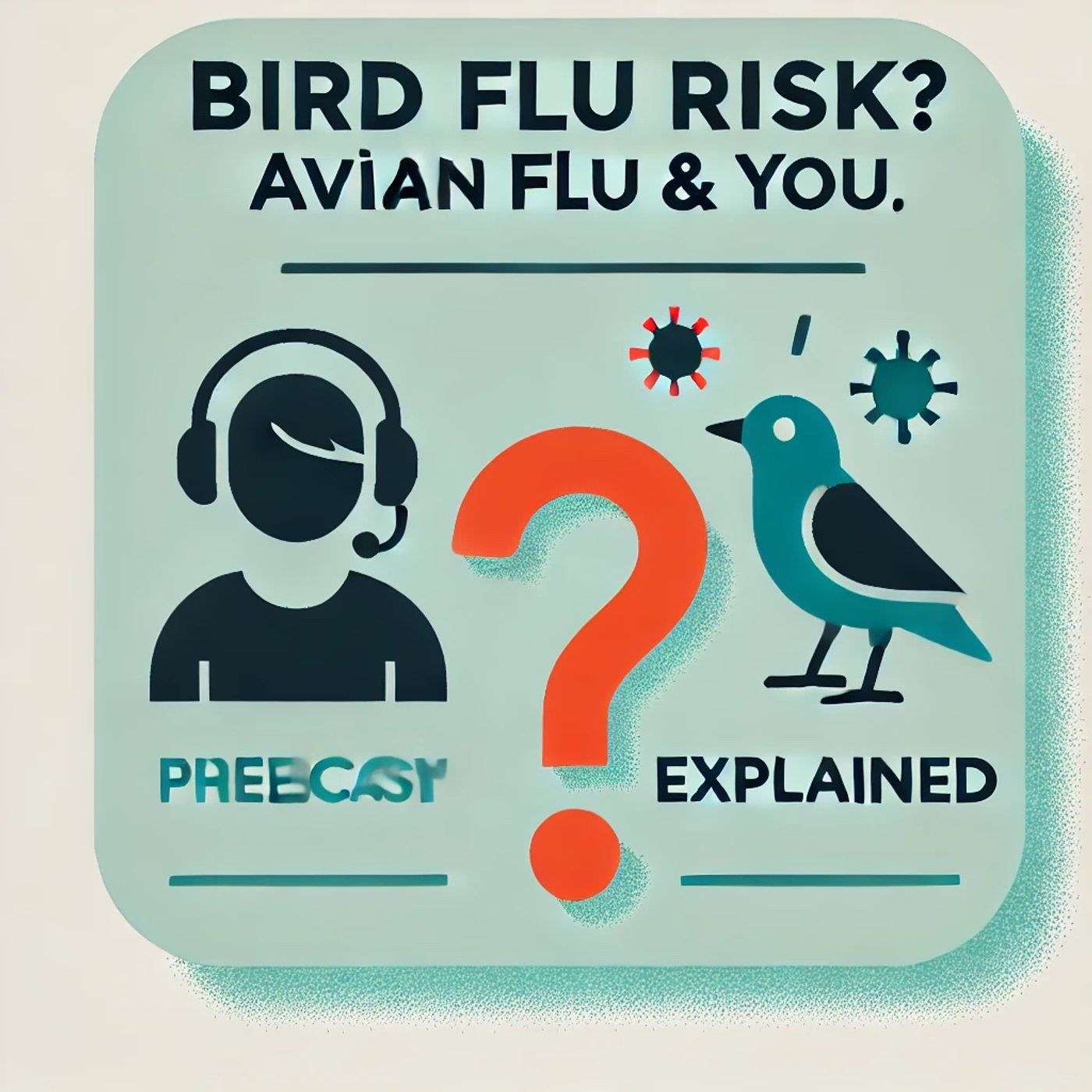
Avian Flu Risk Guide: Essential Tips to Protect Yourself Based on Occupation, Location, and Personal Health
Hello and welcome to today's special episode of "Bird Flu Risk? Avian Flu & You, Explained." We're here to guide you through understanding your individual risk when it comes to avian flu. Let's dive right into it. First, let's consider risk factors by occupation. If you're working in agriculture, especially in poultry farms, handling birds on a regular basis puts you at higher risk. Veterinarians and wildlife workers are also more exposed. Office workers, on the other hand, have lower risk, as their work environment typically doesn’t involve direct contact with birds. Location plays a critical role, too. Those living in areas with recent outbreaks, especially in rural settings or near wetlands where birds congregate, should stay informed about local health advisories. If you're in a big city, your risk is generally lower unless there are specific warnings issued. Age and health status are next. Older adults and young children, along with individuals with weakened immune systems, such as those with chronic illnesses, are more susceptible to complications if exposed. Healthy adults have a lower risk, but it’s always good to remain cautious. Let's walk through a few scenarios. Imagine you're a poultry farmer in a region experiencing an outbreak. Your risk is significantly higher, and it’s crucial for you to use personal protective equipment like masks and gloves. Now, if you're a teacher in an urban school with no outbreaks, your risk is minimal, so standard hygiene measures like handwashing are effective. For high-risk individuals, consider these guidelines. Follow veterinary public health advice closely. Ensure your vaccinations are up to date and discuss any additional precautions with a healthcare professional. Limit direct contact with birds and make sure environments like farms and markets are clean and secure. If you're in a low-risk category, there's reassurance. The likelihood is small, and by maintaining simple hygiene practices such as regular handwashing, you reduce your risk even further. While it's important to stay informed through credible sources, there’s generally no need to worry or alter your daily routines drastically. When deciding on personal protective measures, consider your exposure level. Those in high-risk occupations or areas should adopt more stringent precautions. For others, standard preventive actions suffice unless a new advisory suggests otherwise. Stay vigilant if you notice reports of unusual bird die-offs in your area or if your occupation involves frequent bird contact. For most, vigilance simply means staying updated on public health information. There's no need for undue concern if you're far removed from these factors. Thank you for tuning in, and remember that understanding your specific circumstances plays a key role in assessing your risk. Stay informed, but don't stress—sensible precautions go a long way. Stay safe, everyone! This content was created in partnership and with the help of Artificial Intelligence AI
You May Also Like

La Science, CQFD
France Culture
Radiowissen
Bayerischer Rundfunk

The House of Pod
Kaveh MD

Eye On The Sky
Vermont Public

The Poultry Podcast Show
Wisenetix

The 365 Days of Astronomy
365DaysOfAstronomy.org

Tom Nelson
Thomas Nelson

Breaking Down: Collapse
Kory & Kellan

The Why File งานวิจัยใช่ว่าไม่สนุก
Salmon Podcast

The Grave Talks | Haunted, Paranormal & Supernatural
Ghost Stores, Haunted, Paranormal & Supernatural Stories
La Science, CQFD
France Culture
Radiowissen
Bayerischer Rundfunk
The House of Pod
Kaveh MD
Eye On The Sky
Vermont Public
The Poultry Podcast Show
Wisenetix
The 365 Days of Astronomy
365DaysOfAstronomy.org
Tom Nelson
Thomas Nelson
Breaking Down: Collapse
Kory & Kellan
The Why File งานวิจัยใช่ว่าไม่สนุก
Salmon Podcast
The Grave Talks | Haunted, Paranormal & Supernatural
Ghost Stores, Haunted, Paranormal & Supernatural Stories
Community discussion