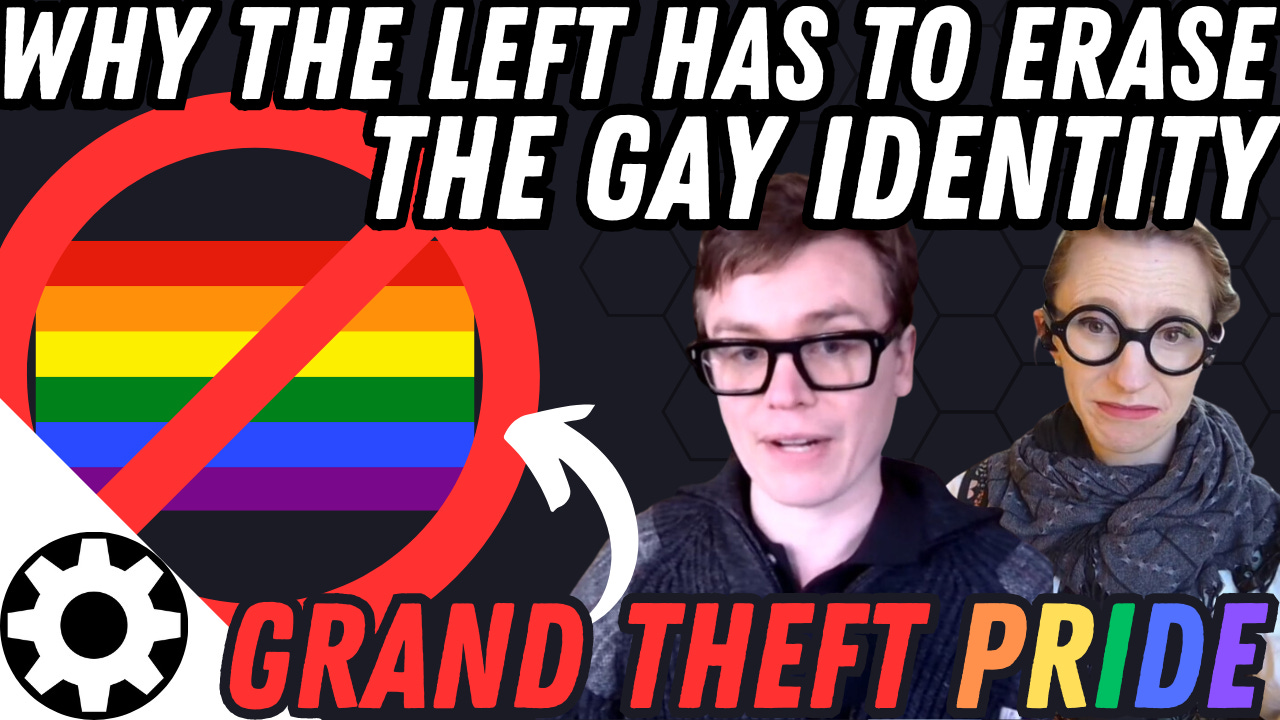
Why The Left Has to Erase the Gay Male Identity
In this passionate and eye-opening episode, Malcolm and Simone delve into the tragic history of how the progressive left has systematically co-opted and erased the identity of gay men within the LGBT movement. Drawing from their personal experiences and deep ties to the early gay community, they expose the hypocrisy and cultural imperialism that has led to the marginalization of the very group that fought hardest for acceptance and equality.
Malcolm begins by recounting his formative years, during which his closest friends and mentors were predominantly gay men. He explains how the early LGBT community was primarily driven by gay men who were fighting against discrimination and societal rejection, with other groups like lesbians and transgender individuals being a much smaller part of the movement.
The couple then discusses the original meaning behind the rainbow flag, which was designed to represent inclusivity and acceptance for all, rather than specific identities. They argue that the progressive left has since perverted this message by adding stripes and sections to elevate certain groups above others, thereby erasing the flag's original intent.
Malcolm draws parallels between the betrayal of gay men and the co-opting of the black community's identity by the Democratic Party. He cites the shocking statistic that 52% of black men voted for Trump in the 2020 election, demonstrating the growing disillusionment with a party that claims to champion their interests while simultaneously policing their identity.
Simone reflects on the resilience and resourcefulness of the gay community, expressing her confidence that they will continue to thrive and generate new cultural ideas despite the challenges they face. The couple concludes by noting the irony that flying the original rainbow flag now serves as a symbol of conservatism and dissent against the progressive establishment.
Throughout the episode, Malcolm and Simone's passion and empathy for the gay community shine through as they condemn the cultural imperialism and bigotry that has led to the erasure of gay men's struggles and sacrifices. They call for a return to the true spirit of the LGBT movement, one that celebrates diversity and inclusivity without elevating any one group above another.
Malcolm Collins: [00:00:00] the rainbow flag was not about Like, it wasn't like each color represented some sexuality. It was rainbow because it was everyone under the rainbow Be comfortable with who you are. Yeah. Everyone is accepted. Is it not fitting that that acceptance has been systemically
Simone Collins: erased? That's, yeah, actually, when you put it that way, it's pretty wild.
Malcolm Collins: As they took over this identity and begin to marginalize the actual individuals who fought to normalize
Simone Collins: all of this.
Malcolm Collins: here's this flag for how everyone matters. And then they're like, but some people do matter more than others.
Let's put some stripes on here for black and brown people. Let's put some stripes on here. Let's put a big section on here for the trans
Simone Collins: community, even for asexual.
Malcolm Collins: It's fucked up. It is genuinely fucked up and disturbing the way that the progressives had basically stabbed the gay rights movement in the back and then carved up its corpse [00:01:00] and then wear it like some sort of macabre outfit.
They've done the same to the black community. F*****g horrifying
. And it's the same that we've seen with the gay community, they have taken their identity away from them and said, this identity supports us. And if you don't support us, then you no longer have ownership over your own identity,
would you like to know more?
Simone Collins: Malcolm, what do you want to talk about today? The gays.
Malcolm Collins: Today we're talking about the gays. And what happened to their culture, which I think is really cruel and twisted. And so a lot of people, you know, they, they're watching our podcast and they may not realize how fully integrated both you and I were with early LGBT culture.
When I say integrated, you know, I lived in a boarding school since I was 13 every year in high school, except for one year, my roommate was a gay guy and he was my best [00:02:00] friend. So this means throughout high school, the room I was sleeping in and my best friend who I hung out was a good 90 percent of all of my social interactions was a gay man.
And I was in the GSA, and I was really, really, really engaged with gay culture. And then in college, again, my best friend and my academic father was a gay man. People don't know academic father.
It's sort of like your, it's seen Andrews student mentor, student mentor. Right. And. For a good chunk of my formative years in life, the person who I spent the most time with, talked the most to, and engaged with, was a gay man. And so, a lot of people are like, Malcolm, you have a lot of gay mannerisms, why is that?
And it was like, because I hung out with them all the time, in their friend group, and like, that was my core friend group growing up, was gay men. And a lot of men today, Now, gay culture was very different back [00:03:00] when I was growing up. They'll look at this and they'll be like, Oh, why would you do that? And I was like, You want to get a lot of hot female tail?
Have all of your friends be hot gay men. Because women hit on them, they're not interested, and they pass them off fairly frequently. I'm not saying this is why they were my friends. I actually went to a high school reunion and I was interested in meeting with everyone.
And I ended up only talking to this guy again. Because after I started meeting all the other people, I was like, Oh, this is why I only talk to you. You're the only, like, sentient, interesting person at the school. In my year, you know. But anyway.
Simone Collins: Well, yeah, and of course, I grew up in, The San Francisco Bay area.
So the only two parades I ever went to were the pride parade and the fourth of July parade in my small town, but the San Francisco pride parade, of course. And most of my friends had lesbian mothers. So I just thought people married like gender [00:04:00] had no influence over who you married, that I was equally likely to marry a woman as I was to marry a man.
It
Malcolm Collins: just didn't. Yeah. Well, and when in growing up, everyone thought you were gay because they
Simone Collins: would always say Simone will love whatever man or woman you end up with. And I wonder if they were kind of disappointed in you because you weren't a woman.
Malcolm Collins: You know, you, yeah, well, we, yeah, right. And then, no, I think they, they kind of were because at one point you told another girl in your class that you wanted to know, no,
Simone Collins: no, no, no.
That's just, this is like in the second grade or so. And in public school, I announced at one point that I was going to marry my best friend who was a girl and we were going to live in an RV. And have a hundred cats and no one took away the problem that I was apparently going to be a very dangerous hoarder of cats as an adult and be homeless.
Apparently. Oh, I'm sorry. Live hashtag band life. They were more concerned about the fact that I had apparently just come out of the closet [00:05:00] in the second grade. Hello.
Malcolm Collins: I am glad the trans movement didn't exist when you were a kid. Cause yeah, because they probably should in a hot second. Yeah.
Simone Collins: It's like, Oh, we got it.
pYou May Also Like

The Latest with Loren LoRosa
The Black Effect Podcast Network and iHeartPodcasts

Daily Inspiration: The Steve Harvey Morning Show
Peter Mutua

RADIO KULTURAEUROPA
RADIO KULTURAEUROPA

How Men Think
iHeartPodcasts

During the Break with Clint Powell
Clint Powell

Keeping It Real: Conversations with Jillian Michaels
Jillian Michaels

Coach Corey Wayne
Coach Corey Wayne

CAMINANDO POR EL MEDIO
Radio Trend Topic

Am I the Jerk?
youtube.com/amithejerk

Es Noticia
esRadio
The Latest with Loren LoRosa
The Black Effect Podcast Network and iHeartPodcasts
Daily Inspiration: The Steve Harvey Morning Show
Peter Mutua
RADIO KULTURAEUROPA
RADIO KULTURAEUROPA
How Men Think
iHeartPodcasts
During the Break with Clint Powell
Clint Powell
Keeping It Real: Conversations with Jillian Michaels
Jillian Michaels
Coach Corey Wayne
Coach Corey Wayne
CAMINANDO POR EL MEDIO
Radio Trend Topic
Am I the Jerk?
youtube.com/amithejerk
Es Noticia
esRadio
Community discussion