Studying Homeless Camps To Predict Future Governments (The Collapse is Coming)
Join us on Based Camp today to explore Dignity Village, a self-funded and self-governed community of tiny homes in Portland that has operated successfully for 25 years. We examine its rules, governance structure, shared facilities, and low operating costs compared to city-run alternatives.
Our discussion covers why this model has endured while other attempts failed, key factors for sustainable micro-communities, and practical lessons for building resilient groups amid declining urban services, highlighting membership requirements, dispute resolution, and the importance of exclusivity and clear boundaries.
We hope you enjoy it!
Show Notes
I learned about this from a NY Times article titled The Homeless Community That Became a Self-Governed Village (Portland’s Dignity Village has been a place for people without housing for more than 25 years.).
In this article, journalist Brian Barth explores this growing community; here are some choice quotes:
“One evening a few months ago, the awkward details of a love triangle spilled out in a humble plywood structure next door to a municipal composting facility in Portland, Ore.
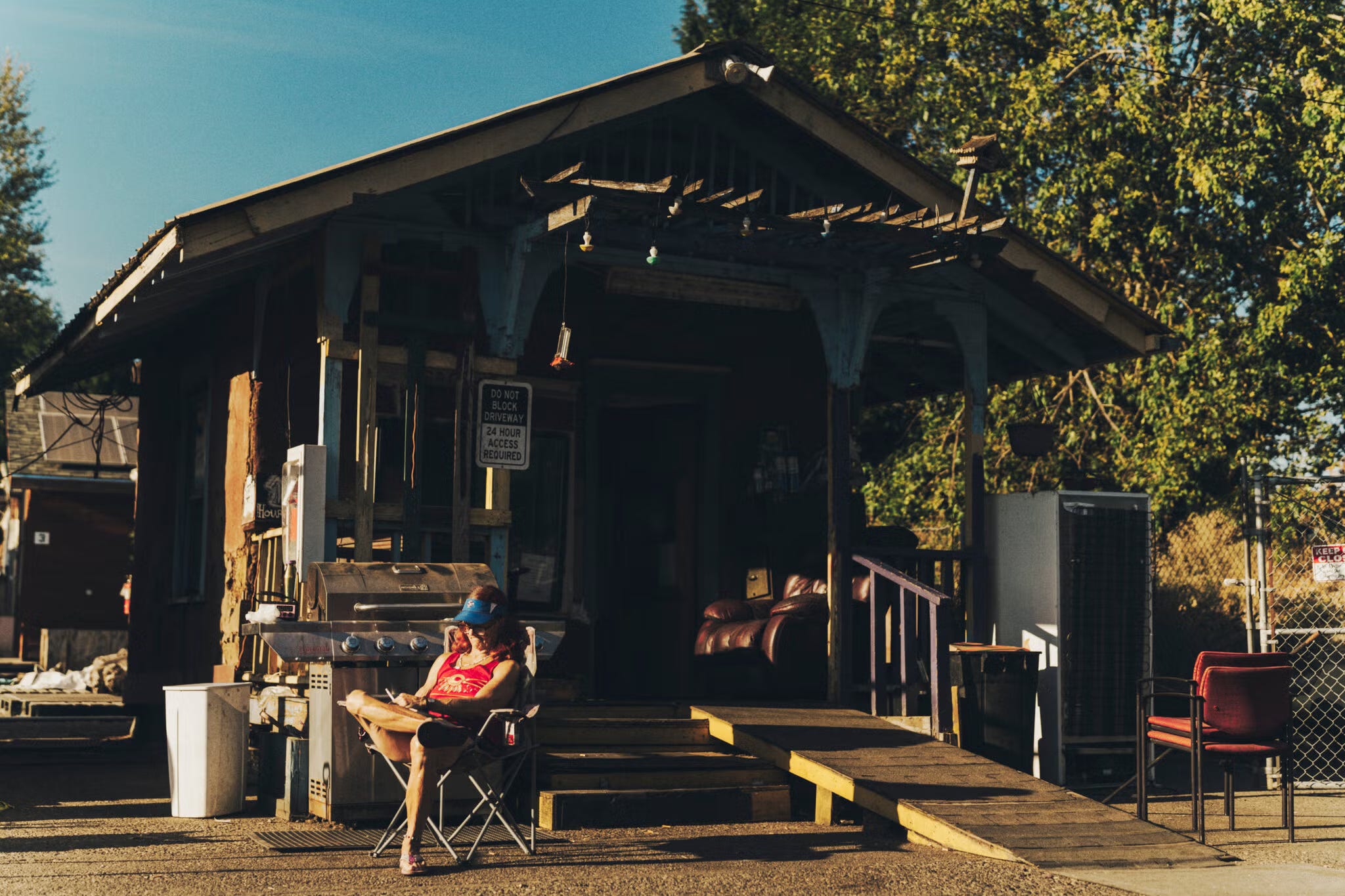
The building, known simply as the Commons, serves as the communal kitchen, living room and courtroom of Dignity Village, a community of approximately 60 people living in hand-built tiny homes on the site. All previously homeless, they manage the place on their own — likely the only such community in the country that is not just city-sanctioned, but fully self-funded and self-governed.
The village council had gathered that evening in the cluttered, dimly lit Commons to adjudicate a disagreement between a woman, her boyfriend and an ex. The ex had filed an incident report with the village’s security department which stated that the current boyfriend had been harassing and intimidating him.
The meeting was a curious blend of bureaucracy and bickering friends, much like the village itself — part homeless camp, part homeless services agency. After some debate, a compromise emerged: the ex-boyfriend pledged to stop sending the woman a constant stream of texts and the two men agreed to avoid each other for the foreseeable future. The words of village elders sealed the deal.”
* This sounds a lot more efficient and desirable than a normal court hearing
* If I were living in this community, I’d feel a lot more like there would be people out there, watching over me and making sure rules were enforced
““Welcome to our radical experiment in collective self-empowerment to end homelessness!” exclaims the village manual. Residents are expected to contribute 10 hours of work each week to maintain the village, substance use must be confined to private spaces, and disputes are resolved by an elected council.”
* You can review their entrance agreement and manual preview online
* It includes a medical questionnaire
* Five basic rules (breaking means permanent exclusion)
* “No violence to yourself or others
* No theft
* No public use of intoxicating substances allowed, except cannabis in designated area between the guard shack and computer lab. Responsible use of substances allowed inside personal structures. No inappropriate behavior in public spaces due to substance use. No pushing or sales allowed onsite.
* No constant disruptive behavior
* Everyone must contribute at least 10 hours per week to the operation and maintenance of the Village (unless show proof of school or work to obtain an exception).”
* Shows how they govern
* “Self-governance is the cornerstone of the Village Model. Each member has a vote and is responsible to participate. We are a membership based 501c3 nonprofit community organization providing a shelter program. The Village Council is elected by vote of the membership and responsible for 501c3 nonprofit operations, including election of the Board Officers. The Board Officers consist of the Chair, Vice Chair, Secretary, and Treasurer. Membership may elect no less than 3 or more than 25 councillors to serve a 1 year term. Most decisions require a membership vote (including adoption of new rules) and decisions made by Council may be overturned by a membership vote (except an exclusion for violence). All villagers are solely responsible for attending meetings and requesting minutes to keep up on new rules. Democracy is a core value of Dignity Village.”
* I’ll not get into it, but they also have a “Program Noncompliance & Grievance Procedure” that’s quite detailed
* Hints at what a slice of life is like
* “In the Guard Shack, a telephone and personal message board are provided. Phone and other messages are pinned to this board (meeting notices or other official Village business are posted in the Commons). Code of conduct for the Guard Shack as follows:
* Only the officially appointed mail deliverer or a board officer (Chair, Vice, Secretary, Treasurer) may touch the mail.
* While the phone is in use, no yelling, profanity, or otherwise inappropriate discussions are allowed in the vicinity. People may be making calls to family, children, jobs, courts, donors, etc.
* Phone calls are limited to 10 min unless for official Village business or by special arrangement.
* No leaving guard shack unattended if you are on shift (except doing rounds). Must wait until the next person shows (automatic 7 day out).
* No sleeping on guard shack duty (automatic 7 day out).
* Leave the Guard Shack cleaner than you found it.”
* Doesn’t sound like a terribly pleasant place to live:
* “Portable toilets are provided and serviced twice a week. Do not throw trash, other than toilet paper or paper seat covers, in toilets. Close the lid when you finish to prevent flies from spreading diseases in our food. Use trash containers for trash only, no biohazardous waste such as: needles, urine, feces, or vomit (needle disposal containers are available in the Guard Shack). If you miss the toilet or urinal, do not leave your mess for others to clean up. Disinfectants, bleach, and a hose are available from the Housekeeping Coordinator, if needed. Hand sanitizer is provided in the portable toilets and antibacterial hand soap at the sink. Please use them to prevent the spread of illness”
* “The shower and sink are located next to the portable toilets. Showers are strictly limited to 30 min because there is only 1 shower for 60+ people to share. The water is heated by individual propane tanks, you must provide your own or borrow a propane tank. Day guests may use the shower between 10am to 10pm. Leave the shower in a tidy and sanitary manner after use.”
““Peer support is the best way to lift yourself up,” says Scott Layman, a longtime resident who credits the “familyship” of the village with helping him coexist with the voices in his head, without medication, and recover from alcoholism.”
* Could it be that in earlier ages, schizophrenic people fared better because they were kept in check by tight-knit communities who very actively policed them?
THE COST!
“Representatives of villages attempting self-governance in Portland gather once a month as the Village Federation. At a recent gathering, they welcomed Mitch Green, an economist turned city councilor, whose downtown Portland district includes much of the city’s unhoused population. He was flabbergasted by Dignity Village’s annual operating budget: $60,000, or about $1,000 per person. He said Portland’s city-run tiny home villages cost taxpayers approximately $40,000 per person annually.
“I’m inspired by self-governed villages tha
You May Also Like

Estelle Midi
RMC

Madrid es noticia
esRadio

Money Making Conversations Master Class
Rushion McDonald
Podcasts | The Survival Podcast
The Survival Podcast
Woman's Hour
BBC Radio 4

綠豆搞Bean科
綠豆 Green Bean Media

How Men Think
iHeartPodcasts

Stuff They Don't Want You To Know
iHeartPodcasts

Rogue Energy
iHeartPodcasts

Aloula Radio
Aloula Radio
Estelle Midi
RMC
Madrid es noticia
esRadio
Money Making Conversations Master Class
Rushion McDonald
Podcasts | The Survival Podcast
The Survival Podcast
Woman's Hour
BBC Radio 4
綠豆搞Bean科
綠豆 Green Bean Media
How Men Think
iHeartPodcasts
Stuff They Don't Want You To Know
iHeartPodcasts
Rogue Energy
iHeartPodcasts
Aloula Radio
Aloula Radio
Community discussion