Study Africa to Understand The Future of Europe
Explore the fascinating and unsettling transformation of Johannesburg, South Africa—a city at the crossroads of decline and adaptation. In this episode, Simone Collins and Malcolm discuss how Johannesburg is crumbling in unexpected ways, with public infrastructure failing and private solutions rising to fill the gaps. From “crime hotspot” road signs to walled garden communities with private security and independent utilities, the city offers a glimpse into a possible future for urban centers worldwide.
We dive into personal experiences touring Johannesburg’s townships, the realities of daily life amid power and water outages, and the stark contrast between struggling neighborhoods and luxurious, self-sufficient estates. The conversation also draws parallels to other cities facing similar challenges, like Detroit, New York, and Lima, and examines how demographic shifts, government failures, and private enterprise are reshaping the urban landscape.
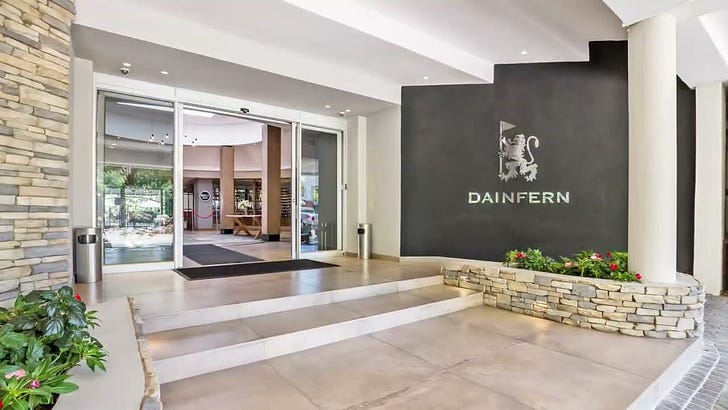
Discover why insurance companies are fixing potholes, why citizens are directing traffic, and how the wealthy are building their own modern-day fortresses. We also discuss the broader implications for anyone considering where to live, how to prepare for infrastructure decline, and what the rise of “walled gardens” means for society.
Whether you’re interested in urban planning, social trends, or the future of cities, this episode offers thought-provoking insights and real-world stories you won’t want to miss.
Don’t forget to like, comment, and subscribe for more deep dives into the world’s most pressing issues!
BTW, this was another Simone-outlined episode, so here’s the outline which includes links as more jumping off points. You’ll find the transcript at the end. :)
Based Camp - Johannesburg: Coming to a City Near You!
The Gist
* The G20 summit is being held in Johannesburg this month, which is putting it back in the news as the city scrambles to not humiliate itself when big deal people come to visit
* The WSJ did a hilarious piece on it—we’ll share the highlights
* Ironic side note: This year’s summit in South Africa is themed “Solidarity, Equality, Sustainability” and is focused on inclusive economic growth, food security, and technology-driven sustainable development.
* This is funny given both the nature of Johannesburg and the trends wer’e about to discuss
* This is a great time for us to remind people that Johannesburg represents the future for SO MANY cities
* So in this episode, we’ll
* Dive into a little more detail on the state of Johannesburg, which has some fascinating sci-fi dystopian vibes
* Explain why and how the Johannesburg model is coming to a city near you
Johannesburg—What’s Going On?
The Degradation
Some Visual Examples
* The sorry state of things https://x.com/AliceVLAuthor/status/1984968880851419589
* That famous Ponte Tower: https://youtube.com/shorts/65b3jQ_TTt4?si=sWBITkT3gaBp-8Cm
* Our Soweto township experience in 2018
* The school we visited; the school lunch
* The houses
* The landscape
* The…. ads
The WSJ Piece
Title: Welcome to Johannesburg. This Is What It Looks Like When a City Gives Up.
Subtitle: Tourists are dumbfounded by the many signs of apathy in the South African city; the ‘Jozi Jacuzzi’ pothole
The beginning of the article says it all:
JOHANNESBURG—What does it look like when a city stops trying? Visit Johannesburg, where instead of providing basic public services, the government just warns residents not to expect them.
Signs tell you what crime you’re most likely to fall victim to at highway exits and intersections; beware “Hi-Jacking Hot Spot” or “Smash and Grab Hot Spot.” Homeless people routinely direct traffic when the stoplights don’t work. Minibus taxis that ferry workers around the city often drive on the wrong side of the road to avoid rush hour traffic.
Johannesburg, South Africa’s biggest metropolis, markets itself as a “world class African city.” It’s home to some of the continent’s biggest companies and its largest stock exchange. But private firms have gradually taken over public services, from security to healthcare to mail delivery. Insurance companies fix potholes and sponsor fire brigades to reduce claims.
It’s all become a bit embarrassing for the South African government, which is set to host the G20 Summit meeting of heads of state here in November. In March, South African President Cyril Ramaphosa chided Johannesburg officials for what he called “not a pleasing environment” and told them to address a slew of issues ahead of the meeting.
“City of Joburg is as ready as it will ever be for G20 Summit,” said a spokeswoman for Johannesburg Mayor Dada Morero.
Morero, the city’s ninth mayor in 10 years, in May launched a task force dubbed the “Bomb Squad” to address service-delivery issues in various neighborhoods.
Some of the team’s achievements, according to Morero’s spokeswoman: The resolution of a 15-day water outage, the restoration of power to 1,000 households within one day of a substation failure, and the rectification of a seven-yearlong water blockage in 24 hours.
Decades of decline have pockmarked the city, including some now-famous failings.
In August, a popular investigative journalism show ran a segment on the “Jozi Jacuzzi” pothole, in the Randburg area of Johannesburg. The six-foot deep pothole had been filling with water for years, even causing low water pressure in nearby houses.
Some other highlights:
* Another nearby pothole, dubbed Kenny’s Canyon after a local politician, was dug by Johannesburg Water as it searched for a leak. Drainage pipes, fiber cables and piles of sand were left blocking a lane of traffic for more than a year, while the 26-foot deep hole filled with water. In July, South Africa’s biggest opposition party held a birthday party with cake for its one-year anniversary.
* In February, a borehole that was being drilled on private property in the Killarney suburb went straight into a tunnel used by the Gautrain, a 50-mile commuter rail system that operates partly above ground and partly underground. The tunnel flooded with water and soil, interrupting service for more than a week.
* “Think of it as a scenic surface route, a chance to see Johannesburg for a change!” Gautrain said in a statement after the mishap. “You may discover a new favorite coffee shop. Or a massive pothole. It’s Johannesburg, after all.”
* Sometimes, citizens clap back. In 2013, the provincial government that encompasses Johannesburg implemented an electronic toll system on major highways to recoup costs associated with expanding roads for the 2010 soccer World Cup. Since then, most of the city’s residents refused to pay, ignoring invoices and threats of legal action. Alasdair Condie, 66, works in construction and says he has never paid an e-toll. He estimates he owes around $3,000, but stopped getting bills years ago “because the postal system doesn’t work.” “If they prosecuted me, they would have to prosecute tens of thousands of others and the courts couldn’t handle it,” he said.
The Sorry State of Policing
Conversations with Tyler Episode
https://conversationswithtyler.com/episodes/jonny-steinberg/
Highlights:
* Tyler Cowen interviewed author Jonny Steinberg, who spent about 350 hours riding around in South African police vans from 2004-2007
* Basically, there was only policing with consent—police would only go when they were called (basically
You May Also Like

RADIO KULTURAEUROPA
RADIO KULTURAEUROPA

How Men Think
iHeartPodcasts

During the Break with Clint Powell
Clint Powell

CAMINANDO POR EL MEDIO
Radio Trend Topic

Am I the Jerk?
youtube.com/amithejerk

Es Noticia
esRadio

Fulda Kultur - Der Podcast
Fulda Kultur / Shaggy Schwarz

Con ánimo de lucro
esRadio

Estelle Midi
RMC

Madrid es noticia
esRadio
RADIO KULTURAEUROPA
RADIO KULTURAEUROPA
How Men Think
iHeartPodcasts
During the Break with Clint Powell
Clint Powell
CAMINANDO POR EL MEDIO
Radio Trend Topic
Am I the Jerk?
youtube.com/amithejerk
Es Noticia
esRadio
Fulda Kultur - Der Podcast
Fulda Kultur / Shaggy Schwarz
Con ánimo de lucro
esRadio
Estelle Midi
RMC
Madrid es noticia
esRadio
Community discussion