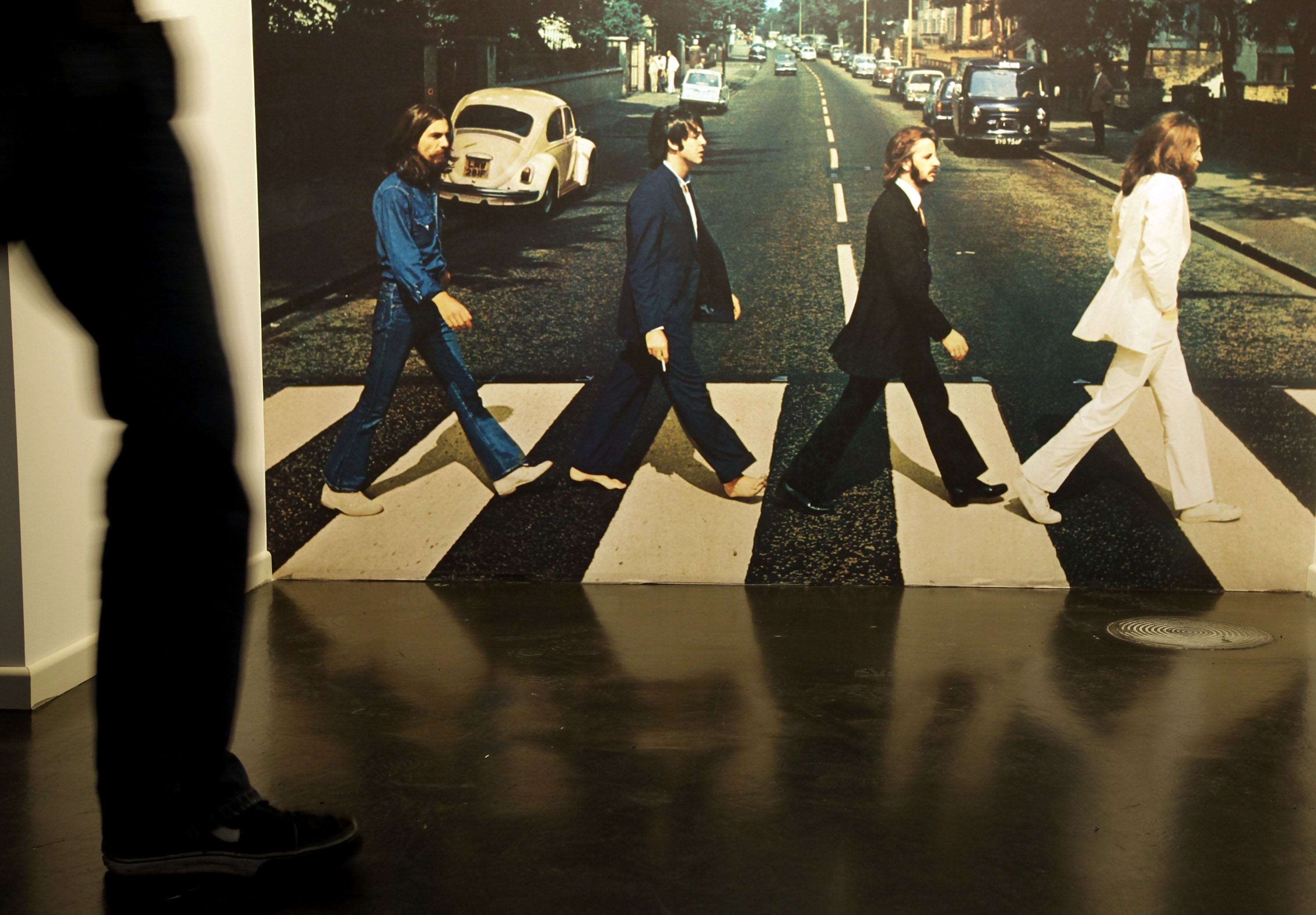
Last Words: Is ‘Abbey Road’ a fitting end to the Beatles?
In our previous explorations of famous “last words” — performances or compositions delivered with a certain end in view, with a sense of either culmination or parting, or with an eye to the future and hence to what one leaves behind — we limited ourselves to the words of individuals spoken to their followers or fellow-travellers. The words of the Prophet Muhammad and of Martin Luther King, Jr, were replete with exhortation; they functioned both as expressions of fidelity to a task, and as examples to be followed by others. Which is to say, the messages were oriented beyond their speakers, toward some greater goal their audience must take up and pursue — hence the Prophet Muhammad’s stress on fidelity and continuity (“All those who listen to me shall pass on my words to others and those to others again …”) and King’s on fearlessness and a “dangerous unselfishness” (“I’m not fearing any man …”). This next instalment is different in almost every way. The words are not of one individual but a group — perhaps the most famous group of the twentieth century. There is no “message” per se, and not really anything being communicated to others. Their words are largely self-referential, intensely personal, quasi-autobiographical or else plain nonsense. The goal of the composition, the “end” (telos) it has in view, is evidently nothing more than its own aesthetic perfection. It is not a performance as much as it is a production: bits and pieces of earlier ideas gathered together, elaborated, reworked, enhanced, added to and repeatedly overdubbed between 22 February and 19 August 1969. This is a reference, of course, to the last album recorded by The Beatles, Abbey Road. The album began amid the fragments, financial chaos and interpersonal strife of the infamous “Get Back” sessions of January 1969. And while Let It Be, which represents the uneven results of those recordings, appeared later in May 1970, Abbey Road is the album that has all the hallmarks of an “end”. But even this raises a number of questions. Does Abbey Road represent the culmination of their artistry as a band, the zenith of their formal innovation and musical experimentation? (Surely Sgt Pepper’s Lonely Heart Club Band can make a more compelling claim.) Does the album showcase an usual degree of creativity and invention? What are we to make of the clear borrowings (from Chuck Berry’s “You Can’t Catch Me” and Fleetwood Mac’s “Albatross”, to the first movement of Beethoven’s Piano Sonata No 14 in C Sharp Minor, a seventeenth-century song by Thomas Dekker and perhaps James Taylor’s “Something in the Way She Moves”) and moments of unadorned nostalgia — including doo-wop rock’n’roll throwbacks from their Hamburg days (such as “Oh! Darling” and “Polythene Pam”)? Or the fact that so much of the album is comprised of compositional orphans, off cuttings from The White Album and the “Get Back” sessions? As John Lennon would later complain: “Abbey Road was really unfinished songs all stuck together. None of the songs had anything to do with each other, no thread at all.” Moreover, Abbey Road is rife with contradictions and seemingly unreconciled elements. For instance, the album announces itself as a reunion of sorts, the getting back together of variously estranged band members who had been involved for months in side projects as solo artists, as movie actors, as music producers and studio musicians. But it then proceeds almost immediately to individuate them, featuring in quick succession songs that reflect their own peculiar style, voice and temperament — most apparent in George Harrison’s exquisite “Something” and “Here Comes the Sun”, whose delicacy and tenderness act as counterpoints to the sardonic edge and volcanic obsessiveness of Lennon’s “Come Together” and “I Want You (She’s So Heavy)”; but also evident in Ringo’s “Octopus’s Garden” which provides a playful complement to Paul’s persistent melancholy and nostalgia. And then there are Lennon’s intermittent absences d
You May Also Like

BIRNABEATZ
BIRNABEATZ

SmoothJazz.com Global
SmoothJazz.com, Inc

Voices from the Field
NCCIH-CCNSA

Teneki
Teneki
Worship & Wonder Daily Devotional
Westminster Presbyterian Church

NGN Radio
osa777

Book Friends Forever
HachetteAudio

Scrolls & Secrets
Scrolls & Secrets

AZense Guideline Updates
Azense Medical Education

Lumin
Geoff Lumley
BIRNABEATZ
BIRNABEATZ
SmoothJazz.com Global
SmoothJazz.com, Inc
Voices from the Field
NCCIH-CCNSA
Teneki
Teneki
Worship & Wonder Daily Devotional
Westminster Presbyterian Church
NGN Radio
osa777
Book Friends Forever
HachetteAudio
Scrolls & Secrets
Scrolls & Secrets
AZense Guideline Updates
Azense Medical Education
Lumin
Geoff Lumley
Community discussion