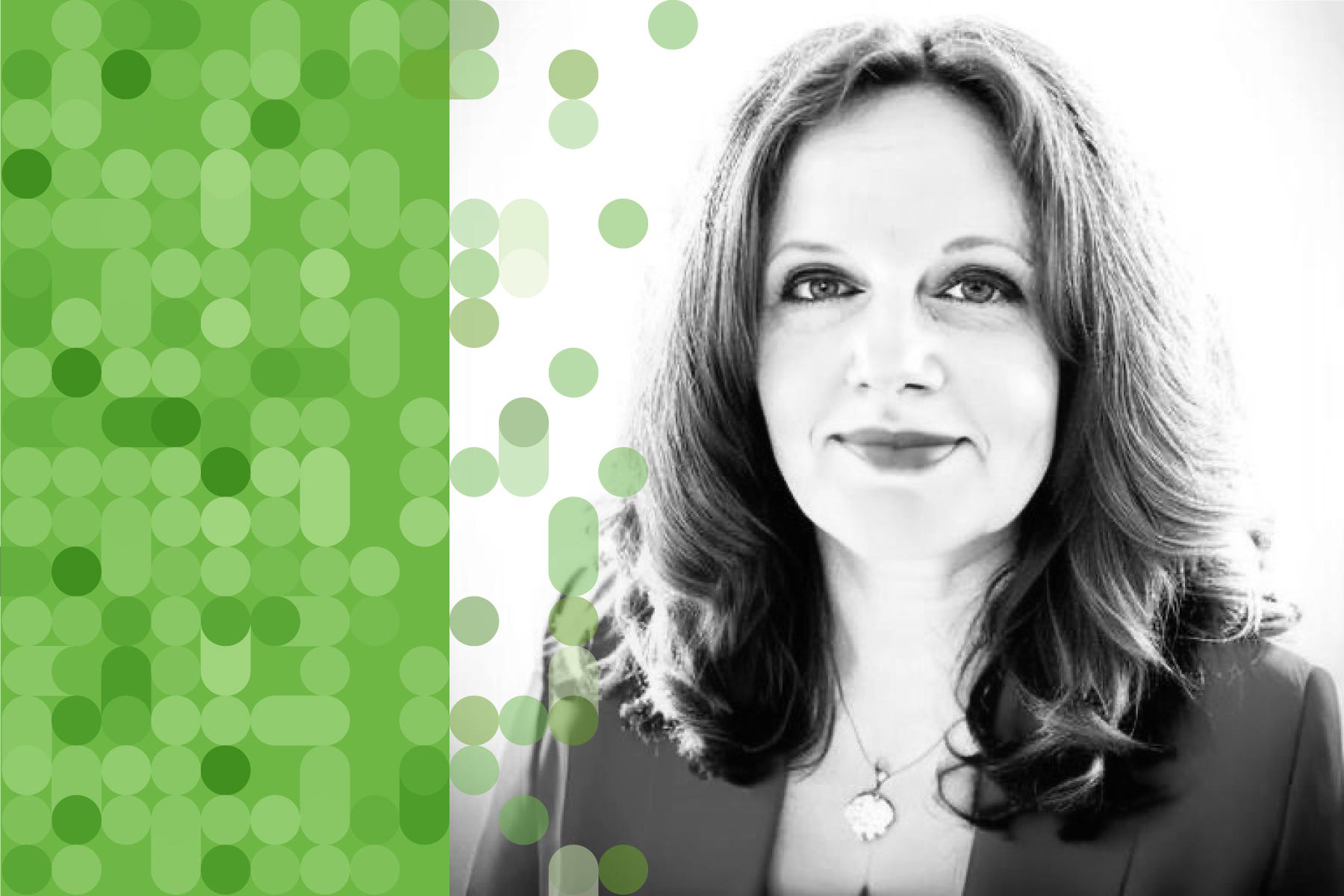
Svetlana Blitshteyn: On the Front Line With Long Covid and POTS
After finishing her training in neurology at Mayo Clinic, Dr. Svetlana Blitshteyn started a Dysautonomia Clinic in 2009. Little did she know what was in store many years later when Covid hit!
Ground Truths podcasts are on Apple and Spotify. The video interviews are on YouTube
Transcript with audio and external links
Eric Topol (00:07):
Well, hello, it's Eric Topol from Ground Truths, and I have with me a really great authority on dysautonomia and POTS. We will get into what that is for those who aren't following this closely. And it's Svetlana Blitshteyn who is a faculty member at University of Buffalo and a neurologist who long before there was such a thing as Covid was already onto one of the most important pathways of the body, the autonomic nervous system and how it can go off track. So welcome, Svetlana.
Svetlana Blitshteyn (00:40):
Thank you so much, Eric for having me. And I want to say it's a great honor for me to be here and just to be on the list with your other guests. It's remarkable and I'm very grateful and congratulations on being on the TIME100 Health list for influential people in 2024. And I am grateful for everything that you've done. As I mentioned earlier, I'm a big fan of your work before the pandemic and of course with Covid I followed your podcast and posts because you became the best science communicator and I'm very happy to see you being a strong advocate and thank you for everything you've done.
Eric Topol (01:27):
Well, that's so kind to you. And I think talking about getting things going before the pandemic, back in 2011, you published a book with Jodi Epstein Rhum called POTS - Together We Stand: Riding the Waves of Dysautonomia. And you probably didn't have an idea that there would be an epidemic of that more than a decade later, I guess, right?
Svetlana Blitshteyn (01:54):
Yeah, absolutely. Of course, SARS-CoV-2 is a new virus and we can technically say that Long Covid and post Covid complications could be viewed as a new entity. But practically speaking, we know that post-infectious syndromes have been happening for many decades. And so, the most common trigger for POTS happened to be infection, whether it was influenza or mononucleosis or Lyme or enterovirus. We knew this was happening. So I think it didn't take long for me and my colleagues to realize that we're going to be seeing a lot of patients with autonomic dysfunction after Covid.
On the Front Line
Eric Topol (02:40):
Well, one of the things that's important for having you on is you're in the front lines taking care of lots of patients with Long Covid and this postural orthostatic tachycardia syndrome (POTS). And I wonder if you could tell us what it's care for these patients because so many of them are incapacitated. As a cardiologist, I see of course some because of the cardiovascular aspects, but you are dealing with this on a day-to-day basis.
Svetlana Blitshteyn (03:14):
Yeah, absolutely. As early as April 2020 when everything was closed, I got a call from a young doctor in New York City saying that he had Covid and he couldn't recover, he couldn't return to the hospital. And his colleagues and cardiology attendants also had the same symptoms and the symptoms were palpitations, orthostatic intolerance, tachycardia, fatigue. Now, how he knew to contact me is that his sister was my patient with POTS before Covid pandemic. So he kind of figured this looked like my sister, let me check this out. And it didn't take long for me to have a lot of patience from the early wave. And then fairly soon, I think within months I was thinking, we have to write this up because this is important. And to some of us it was not news, but I was sure that to many physicians and public health officials, this would be something new.
Svetlana Blitshteyn (04:18):
So because I'm a busy clinician and don't have a lot of time for publications, I had to recruit a graduate student from McMasters and together we had this paper out, which was the first and largest case series on post Covid POTS and other autonomic disorders. And interestingly, even though it came out I think in 2021, by the time it was published, it became the most citable paper for me. And so I think from then on organizations and societies became interested in the work that I do because prior to that, I must say in the kind of a niche specialty was I don't think it was very popular or of interest to me.
How Did You Get Interested in Dysautonomia?
Eric Topol (05:06):
Yeah, so that's why I wanted to just take a step back with you Svetlana, because you had the foresight to be the founder and director of the Dysautonomia Clinic when a lot of people weren't in touch with this as an important entity. What prompted you as a neurologist to really zoom in on dysautonomia when you started this clinic?
Svetlana Blitshteyn (05:28):
Sure. So the reasons are how I ended up in this field is kind of a convoluted road and the reasons are many, but one, I will say that I trained at Mayo Clinic where we received very good training on autonomic disorders and EMG and coming back to returning back to Buffalo, I began working at the large multiple sclerosis clinic because Western New York has a high incidence MS. And so, what they quickly realized in that clinic is that there was a subset of women who did not qualify for the diagnostic criteria of multiple sclerosis, yet they had a lot of the same symptoms and they were certainly very disabled. Now I recognize that these women had autonomic disorders of all sorts and small fiber neuropathy, and I think this population sort of grew
You May Also Like

Strange Encounters with Rick Burgess
Blaze Podcast Network

Real Ghost Stories Online
Real Ghost Stories Online | Paranormal, Supernatural & Horror Radio
UAP Files Podcast
UAP Files Podcast

The 365 Days of Astronomy
365DaysOfAstronomy.org

The Grave Talks | Haunted, Paranormal & Supernatural
Ghost Stores, Haunted, Paranormal & Supernatural Stories

Trent Loos Podcast
Trent Loos

Farm Small Farm Smart Daily
The Modern Grower Podcast Network

The Best of Coast to Coast AM
iHeartPodcasts and Coast to Coast AM

Stuff To Blow Your Mind
iHeartPodcasts
Science Friday
Science Friday
Strange Encounters with Rick Burgess
Blaze Podcast Network
Real Ghost Stories Online
Real Ghost Stories Online | Paranormal, Supernatural & Horror Radio
UAP Files Podcast
UAP Files Podcast
The 365 Days of Astronomy
365DaysOfAstronomy.org
The Grave Talks | Haunted, Paranormal & Supernatural
Ghost Stores, Haunted, Paranormal & Supernatural Stories
Trent Loos Podcast
Trent Loos
Farm Small Farm Smart Daily
The Modern Grower Podcast Network
The Best of Coast to Coast AM
iHeartPodcasts and Coast to Coast AM
Stuff To Blow Your Mind
iHeartPodcasts
Science Friday
Science Friday
Community discussion