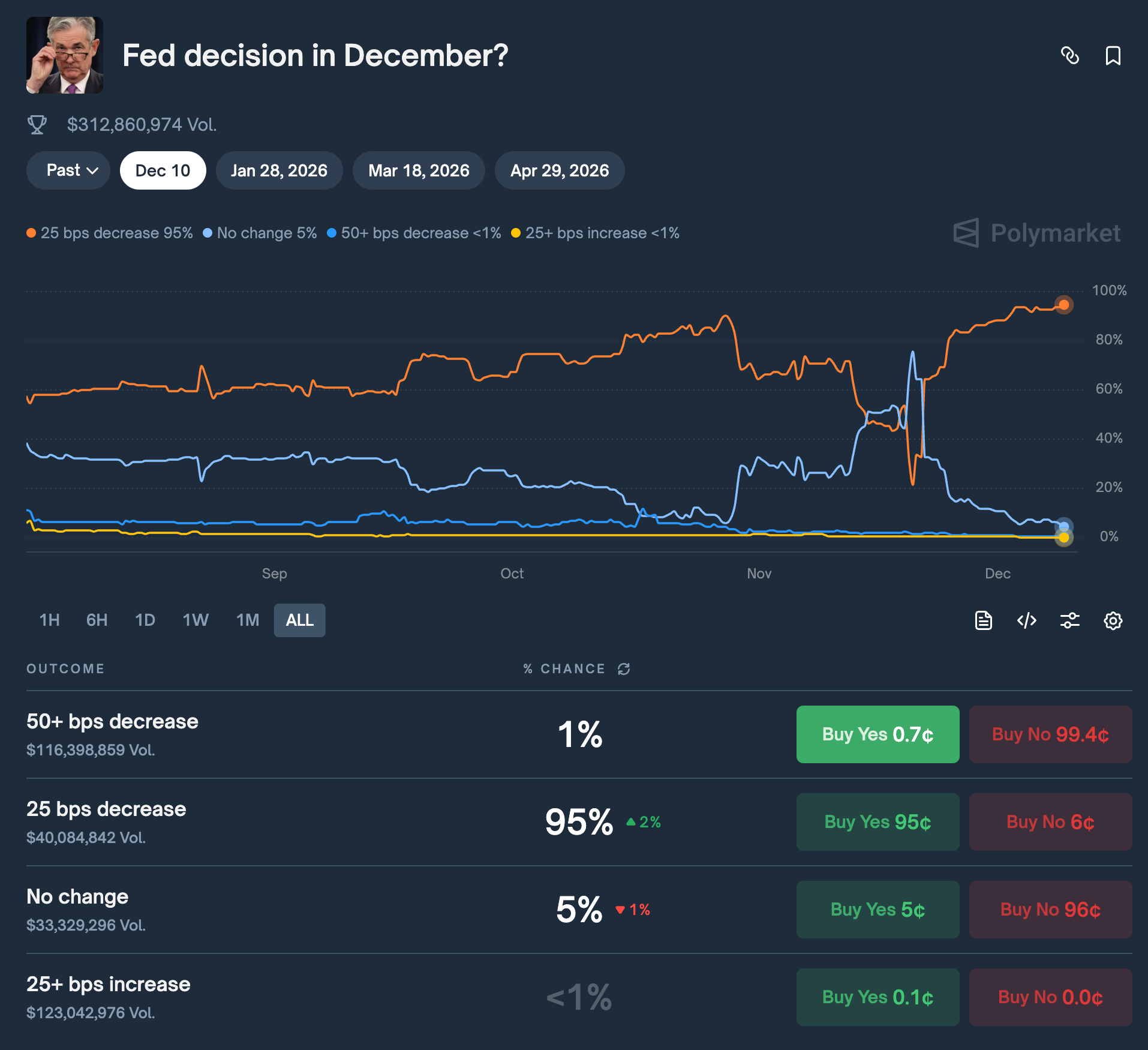
Today’s letter is brought to you by Lava ! Lava’s bitcoin line of credit (BLOC) allows you to unlock your bitcoin’s purchasing power— instantly, flexibly, and securely— without selling your bitcoin. Now through the end of the year, Lava is offering a special promotional rate to all borrowers. Anyone who opens a BLOC this month will lock in a 5% interest rate, fixed for a full year. This is the last month to secure this rate for 2026. With Lava Refinance , you can easily bring your existing loans over to Lava and access the lowest fixed interest rates in the industry. Their white glove client services team will help you through the whole process. Lava allows you to borrow dollars in real time with no monthly payments, open terms, and full flexibility. Plus, you earn 5% APY on your USD balance, buy bitcoin with zero fees, and off-ramp globally. Grow your bitcoin wealth— without ever selling your bitcoin. To investors, Jerome Powell and the Federal Open Market Committee start their two day meeting later today and the market is closely watching whether the Fed will cut interest rates or not. Polymarket odds have a 25 basis point cut at 95%, while no change sits at a 5% chance. If the Federal Reserve cuts rates, this will mark the third consecutive cut of the year (following 50 basis points in September and 25 basis points in October) and serve as “insurance” against deepening labor market risks, even as inflation remains sticky above the 2% target. But I want to lay out the argument for the Fed to actually make a 50 basis point cut tomorrow. First, we know the labor market is softening, which is raising fears of a broader slowdown or recession if the situation is not addressed aggressively. Nonfarm payrolls added only 119,000 jobs in September. This is a sharp deceleration from post-pandemic averages and the report came in below expectations. Due to this deceleration, the unemployment rate has ticked up to 4.4%. We have also seen layoff announcements surge to 1.17 million year-to-date. This is the highest level of layoff announcements we have seen since the 2020 pandemic. Simultaneously, hiring plans have reportedly hit their lowest level since the end of the Great Financial Crisis. Lastly, private-sector indicators like ADP jobs data and Challenger layoff reports have weakened even more in November. These trends suggest job growth is insufficient to match labor force expansion. The case for a 50 basis point cut related to the labor market is a larger cut would bolster employment and prevent a vicious cycle of reduced spending and further hiring freezes. But the argument for a 50 basis point cut doesn’t solely rely on the labor market. The government inflation metrics, which I believe to be wildly overestimating inflation, also provide support for a larger interest rate cut. Core PCE inflation is currently around 3% (about 1% above target), but disinflationary forces mitigate reacceleration risks. This should free the Fed to focus on their dual mandate employment goals. Critics claim goods prices remain sticky due to tariffs and fiscal stimulus, but falling crude oil prices, excess rental supply, and declining home prices introduce deflation risks that give the green light for deeper cuts in my opinion. On top of these converging forces, Fed projections and market-implied inflation show expectations anchored near 2%. This is obviously lower than consumer surveys which are projecting closer to 4% expectations, but we know the surveys are corrupted and likely further off than the market consensus. A 50 basis point cut would align with the Fed’s October statement committing to adjust policy “as appropriate if risks emerge,” so America’s central bank could easily frame the larger cut as targeted support rather than a policy pivot. So we have a weakening labor market and an inflation environment, but ultimately the decision to cut more than 25 basis points still has to be made by humans that make up the FOMC. Thankfully, there are a few common sense folks inside the building that seem to believe in the benefit of a larger cut. We know the FOMC is unusually divided right now and this could lay the foundation for a surprise aggressive cut. Governor Stephen Miran has recently dissented twice in favor of 50 basis point cuts. He argued in November it’s “appropriate” for a large December cut to counter labor risks. At the time, he said about the severity of the December cut “at a minimum 25 [basis points], but failing new information... 50 is appropriate.” Miran isn’t the only one. New York Fed President John Williams and San Francisco Fed President Mary Daly have signaled support for looser monetary policy. Williams explicitly said he views a cut as “insurance” against labor slippage without jeopardizing inflation goals. So what do analysts think is going to happen inside the Fed? Analysts at Nomura forecast a dovish dissent from Miran pushing for 50 basis points, while others will have potential hawkish dissents against