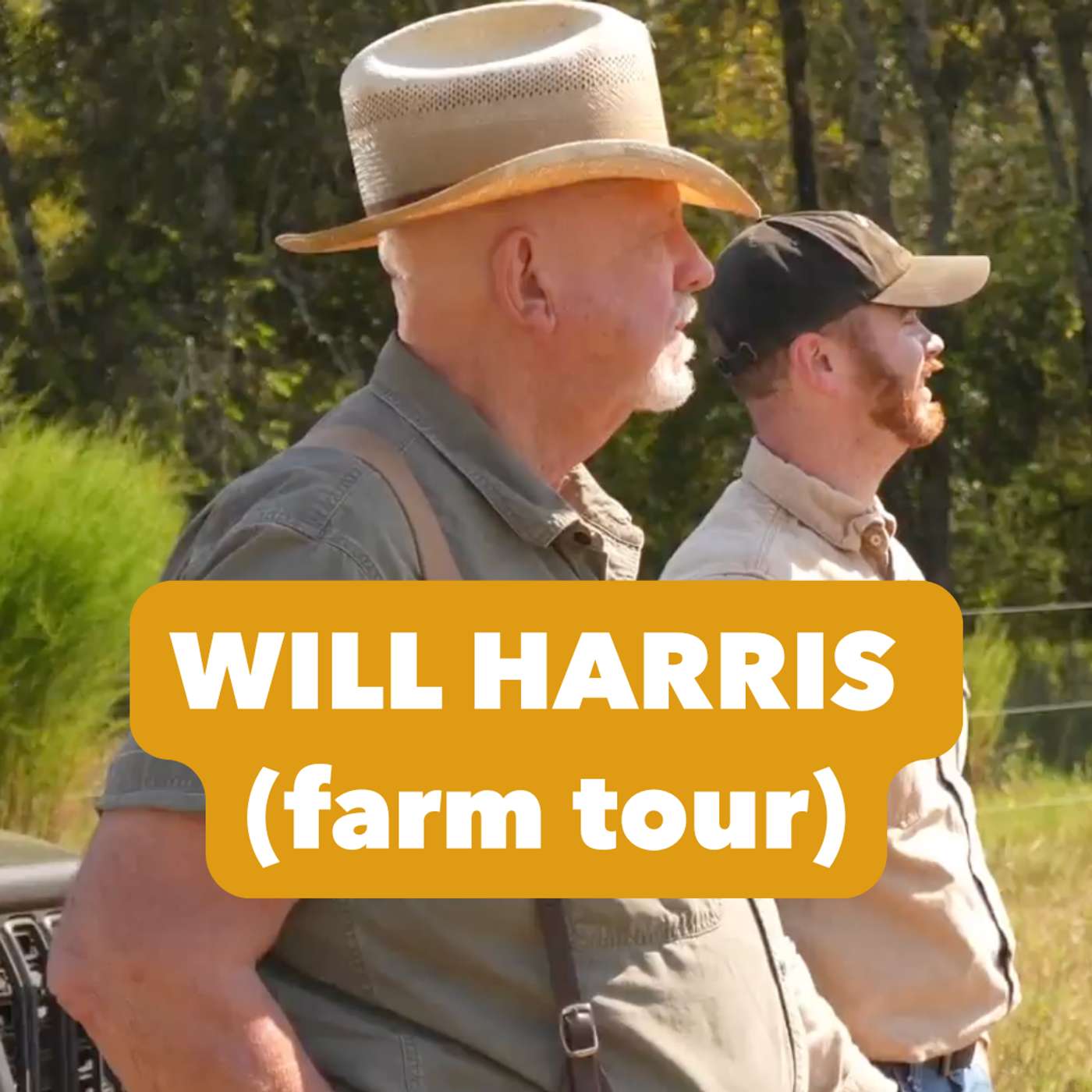
This episode comes from our recent farm tour at White Oak Pastures in Bluffton, Georgia, where Will Harris walked us through the land and the systems that support it. White Oak is a multigenerational operation that has shifted from conventional row-crop agriculture to a diverse, closed-loop ecosystem of grass-fed cattle, wildlife, and restored soils. Will explains how these relationships work in practice, the long-term effects of pesticides and monoculture, and why ecological cycles - not industrial extraction - determine the health and future of the land. Key topics: How birds, insects, and cattle interact in regenerative systems The long-term impacts of pesticides and monoculture farming Nature’s cycles vs. industrial extraction Carbon, organic matter, and lifecycle assessments at White Oak Pastures Grazing management, dung beetles, and nutrient cycling across the farm Why You Should Listen: - Clear, firsthand explanations of how regenerative grazing works in practice - A breakdown of pesticides’ long-term effects on soil, trees, and ecosystem balance - Real-world insight into carbon cycles, nutrient cycling, and dung beetle activity - A grounded comparison between industrial beef systems and regenerative cattle operations Connect With White Oak Pastures Website Instagram Timestamps: 00:00:00 Birds arriving on the farm and their symbiotic role with cattle 00:01:00 Seasonal patterns, migration, and fly pressure 00:02:00 What this land looked like 25 years ago 00:03:00 Monoculture, pesticides, and the mindset of killing “problems” 00:05:00 Pesticides’ short-term benefits and long-term ecological harm 00:07:00 Residual effects of crop-field chemicals on soil function 00:08:00 “Nature bats last” and long-term cycles of recovery 00:09:00 Abundance vs. extraction in modern agriculture 00:10:00 Passing land ethics to the next generation 00:12:00 Education, land-grant universities, and learning farming 00:14:00 Grass-fed timelines, weight, and national inventory reality 00:15:00 Why most ground beef tastes the way it does 00:18:00 Industrial supply chains vs. farm-level economics 00:19:00 Feedlots, methane, and lifecycle carbon science 00:20:00 Dung beetles, nutrient cycling, and soil structure 00:22:00 Daily cattle moves and grazing pattern 00:23:00 Agroforestry, thinning trees, and managing understory growth 00:24:00 Total herd size and the surrounding landscape