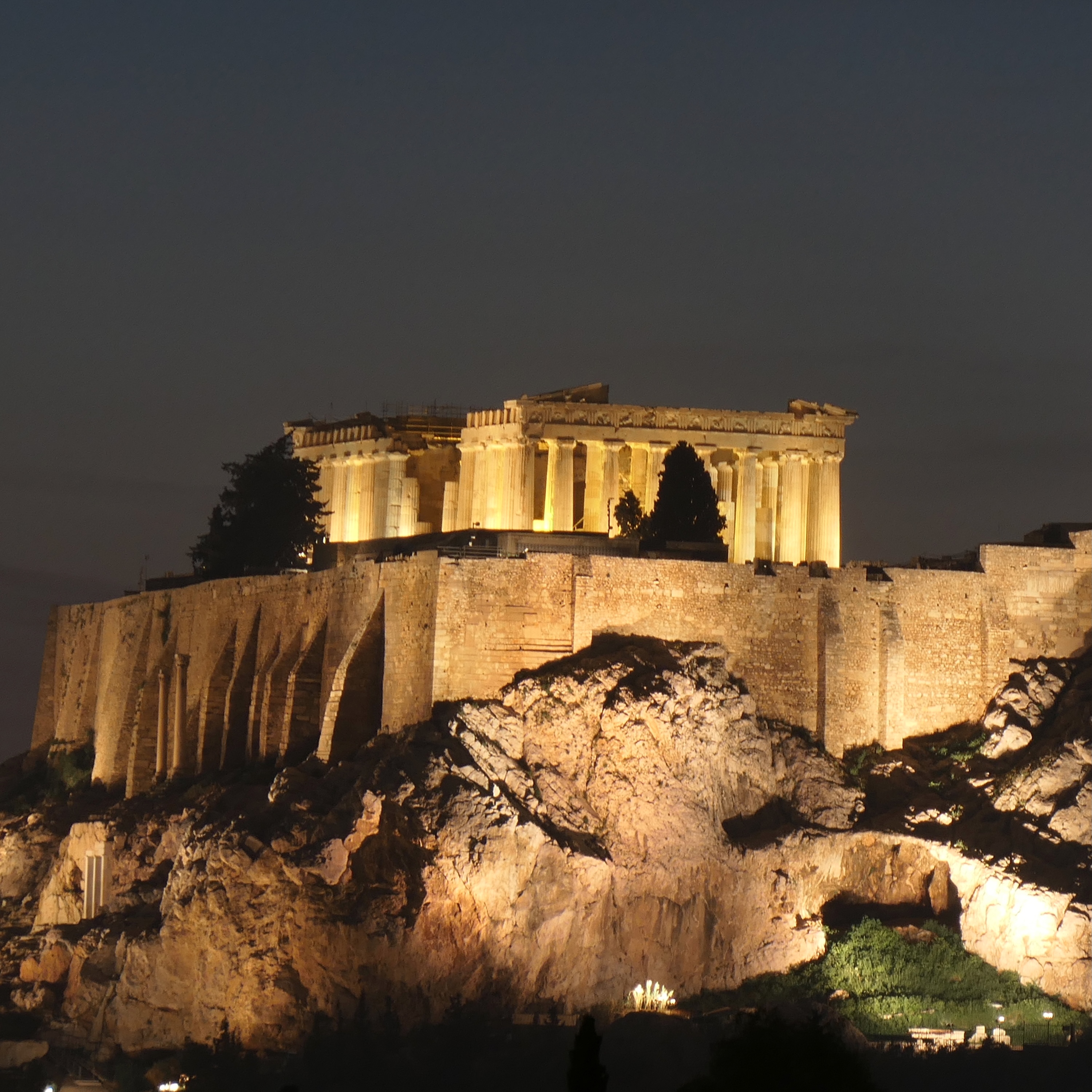
In this episode, Emily and Cam talk about what it’s like to visit the Athenian Acropolis today; how that experience compares to what visitors would have seen in the fifth century BCE; when and why the remains of the structures there today were created (especially the Parthenon and the Erechtheion); and what those structures meant to ancient Athenians. Visit our homepage to subscribe and to find us on social media: https://havetogawilltravel.com Episode Links: Our short blog post featuring pictures of Nashville’s replica of the Athena Parthenos statue. ---------- 00:11 - Introduction 02:05 - Visiting the Acropolis: the modern experience 02:32 - The geography of Attica 03:41 - Our first impressions of the Acropolis (and how Goethe did it better) 05:45 - What visiting the Acropolis is like: sacred and profane space; the temple of Athena Nikē (and aspects of the gods); the Propylaia; the Parthenon; the Erectheion; the Dörpfeld Foundations 14:23 - What visiting the Acropolis was like in the fifth century BCE 14:30 - The ramp 16:28 - Athena Promachos 17:01 - Colorful temples 17:38 - Dedications everywhere (and why dedications mattered) 20:20 - How and when the structures on the Acropolis came to be 20:25 - The basic context: Darius, Xerxes, and the Persian invasions of Greece 22:20 - The Oath of Plataia: the Greeks swear not to rebuild their temples 23:59 - What changed? War in the Aegean, the Peace of Kallias, and the Athenian Empire 29:01 - The Parthenon 29:26 - The basics of the Parthenon and Greek architectural orders 32:38 - The Parthenon’s pediment sculptures: the west pediment group and the east pediment group 37:31 - The metopes: the Amazonomachy (west), the Trojan War (north), the Gigantomachy (east), Lapiths vs. Centaurs (south) 40:37 - The Ionic frieze and various interpretations of its imagery 43:53 - Pheidias’ statue of Athena and its decoration 46:04 - The meaning of the Parthenon’s sculpture: the Athenians, their empire, and their imperial mission 49:41 - The Erechtheion 49:49 - The fundamental weirdness of the Erechtheion 52:08 - Why is it so strange? The persistence of ancient ritual. 52:54 - The most sacred image of Athena: the Xoanon 54:08 - Is the building we call the Erechtheion the building the ancient Athenians (and Pausanias) called the Erechtheion? Or is it the temple of Athena Polias? 56:48 - Emily delivers a fine rant about the perils of “received wisdom” in Classics 1:01:08 - Cam footnotes Emily’s rant with a digression on horror vacui 1:02:02 - Wrap-up