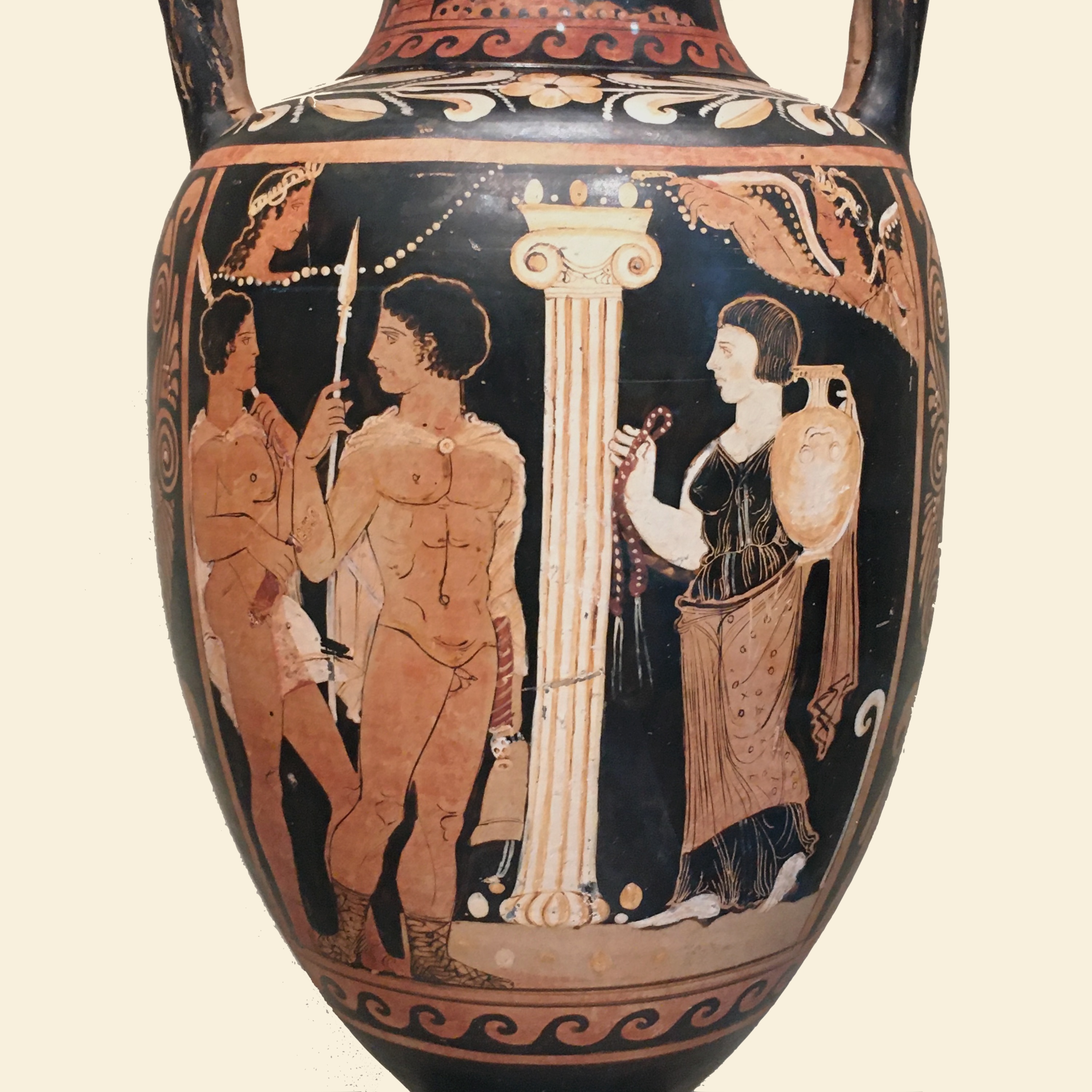
What’s a “hero”, and what kinds of stories do we tell about them? Emily and Cam explore how heroes were imagined in ancient Greece as they lay the groundwork for next episode’s discussion of Eleven’s heroic journey in Stranger Things. Visit our homepage to subscribe, to find us on social media, and to contact us by email: https://havetogawilltravel.com Links: NYPL’s list of “Heroines in Fairytales, Folklore, Fables and Legends for Young Readers ” Cover Image: Pylades, Orestes, and Elektra perform rites at the tomb of Agamemnon. Painted in the late fourth century BCE on an amphora made in one of the Greek cities of southern Italy (which is now held at the MFA in Boston). Photo by Emily. ---------- 00:11 - Introduction 01:15 - What is a hero? 01:33 - Some modern definitions of hero 02:52 - The roots of the word “hero” in ancient Greek (and maybe earlier) 04:12 - The various meanings of “hero” in ancient Greece: leaders, godlike heroes, and mortals given divine honors 13:09 – The flexibility of the hero concept in ancient Greece, and some examples: Achilles, Sarpedon, Theagenes of Thasos, and Kleomedes of Astypalaia 20:15 – Death and the hero in ancient Greece, and some strange cases: Asklepios and Herakles 26:51 - The stories we tell about heroes 27:39 – Two models of the “hero’s journey”: Joseph Campbell, “The Hero with a Thousand Faces”, and David Adams Leeming, “Mythology” 30:57 - A digression on problematic treatments of gender in hero studies 33:40 - Odysseus as the Cambell-style “everyman” hero 36:00 - Herakles as the Leeming-style “Chosen One” 42:26 – Coda: Alexander the Great and Herakles 44:17 - Wrap-up and teaser for our next episode on Stranger Things’ “Eleven”