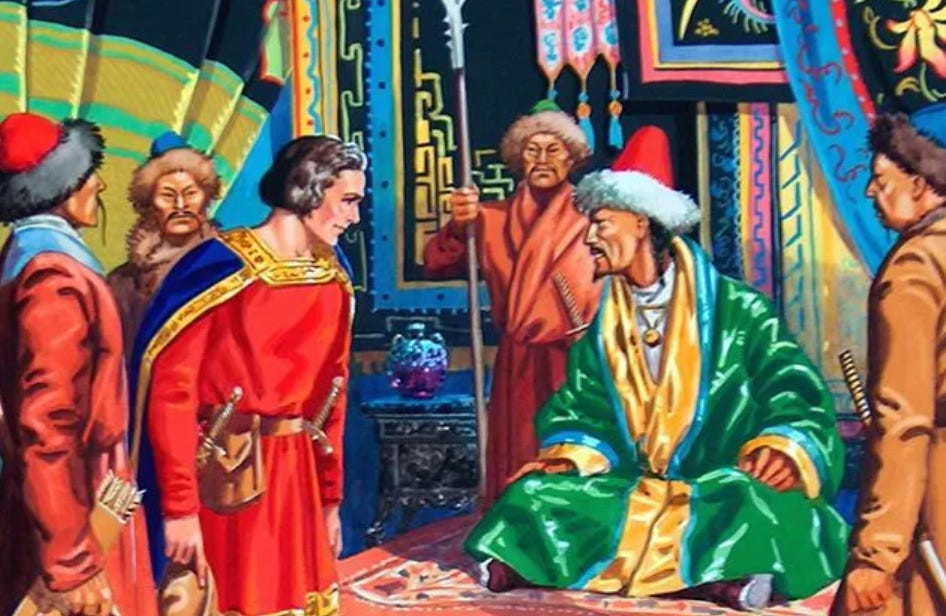
A poetic reflection on transits—woven into mystery, in the mystery. "𝗧𝗵𝗶𝘀—𝘀𝗼𝗺𝗲 𝘀𝗮𝘆—𝗰𝗼𝗻𝗳𝗶𝗿𝗺𝘀 𝘁𝗵𝗲 𝗵𝘆𝗽𝗼𝘁𝗵𝗲𝘀𝗶𝘀 𝘁𝗵𝗮𝘁 𝗲𝗮𝗰𝗵 𝗺𝗮𝗻 𝗯𝗲𝗮𝗿𝘀 𝗶𝗻 𝗶𝘁𝘀 𝗺𝗶𝗻𝗱 𝗮 𝗰𝗶𝘁𝘆 𝗺𝗮𝗱𝗲 𝗼𝗻𝗹𝘆 𝗼𝗳 𝗱𝗶𝗳𝗳𝗲𝗿𝗲𝗻𝗰𝗲𝘀, 𝗮 𝗰𝗶𝘁𝘆 𝘄𝗶𝘁𝗵𝗼𝘂𝘁 𝗳𝗶𝗴𝘂𝗿𝗲𝘀 𝗮𝗻𝗱 𝘄𝗶𝘁𝗵𝗼𝘂𝘁 𝗳𝗼𝗿𝗺, 𝗮𝗻𝗱 𝘁𝗵𝗲 𝗶𝗻𝗱𝗶𝘃𝗶𝗱𝘂𝗮𝗹 𝗰𝗶𝘁𝗶𝗲𝘀 𝗳𝗶𝗹𝗹 𝗶𝘁 𝘂𝗽." — 𝗜. 𝗖𝗮𝗹𝘃𝗶𝗻𝗼 The City of Chao and the Promise of Paper In the far reaches of the Khan’s empire, beyond the steppe and the great rivers, lies the city of Chao. Here, wealth is not measured in silver ingots or gold coins, but in slips of paper, pressed with the seal of the Khan himself. To walk through the city’s markets is to hear the rustling of promises—paper exchanged for silk, for spice, for jade, for the notion that value is something that can be written, rather than weighed. “ In Chao, ” Marco Polo tells the Khan, “ a merchant can buy a caravan of horses with a single slip. A spice trader, burdened with nothing but a scroll of inked characters, may cross the desert and return richer than before. The city thrives not on metal, but on belief. ” The Khan listens, tapping his fingers on the lacquered armrest of his throne. “ And what happens, ” he asks, “ when the belief fades? ” “ Then, ” Marco replies, “ the city finds itself full of paper and empty of trust. At first, the officials assured the people that each note could be redeemed for gold, for silk, for silver stacked high in the imperial vaults. But the scribes began to write more notes than there were vaults to hold them, and the markets filled with wealth that existed only in the ink of a promise. The more paper they printed, the less it was worth. The merchants of Samarkand, who once accepted Chao’s notes in good faith, began to demand metal again. The goldsmiths, who had once exchanged their bullion for the Khan’s slips, turned them away. The citizens, who had once bought their rice and fish with the mere signing of their names, found that their hands held nothing but weightless words. ” The Khan watches the candlelight flicker against the polished wood of the table. “ And the city? ” “ The city, Majesty, learned too late that the power of paper is only as strong as the trust behind it. When the illusion broke, the markets emptied. The people of Chao returned to barter—silk for grain, salt for iron, labor for protection. They set fire to the archives that had once promised them prosperity, and with them, the belief that wealth could be conjured with a brushstroke. ” The Khan exhales through his nose. “ This has happened before. ” “ And it will happen again. ” Zirma, the City of Mirrors There is another city, Majesty, where illusion is not only traded but reflected infinitely: Zirma, the City of Mirrors. “ Tell me of Zirma, ” the Khan commands, his curiosity piqued. Marco bows his head slightly. “ Zirma is built on reflections. Its streets are lined with mirrors that do not show what is, but what was, or what could be. The merchants there do not trade in goods, but in shadows of goods. A man may enter the market with an empty purse and leave believing himself richer than before. His pockets jingle with coins, but only in the reflection of a shop window. His wealth exists only in the gleam of the polished silver counters, in the nods of passing traders who accept his worth not for what he holds, but for what he appears to be. ” “ And what happens when he reaches the city gates, where there are no mirrors to confirm his fortune? ” “ Then he finds his hands empty. ” Ilithra, the City of Unwritten Light “ Majesty, ” Marco Polo continues, “ there is yet another city you have not seen, though its presence lingers in the air like the scent of ink drying on parchment. Ilithra is unlike Chao or Zirma. Here, the streets hum with the rhythm of artisans, their hands moving in time with unseen melodies. Gold does not dictate their worth, nor does the reflection of wealth in another’s eyes. Instead, value arises from the act of creation itself. ” The Khan raises an eyebrow. “ A city where wealth is neither held nor mirrored? What, then, do its people trade? ” “ They trade in breath and form. A sculptor carves a figure from alabaster, not to sell but to see the shape that emerges. A poet speaks a verse into the wind, and it is carried to another who needs its sound. Their wealth is not stored, for the act of creation is both its beginning and its end. It is in this cycle that they thrive—knowing that to bring spirit into matter is the highest exchange. ” The Khan considers this. “ But does not the absence of possession invite ruin? How does the city endure? ” “ Ilithra endures because its people know that what they create is never lost. A song, once sung, enters the ears of a thousand travelers. A painting, once seen, imprints itself on the memory of those who gaze upon it. Their wealth does not require vaults to hold it; it moves through the bodies of those who