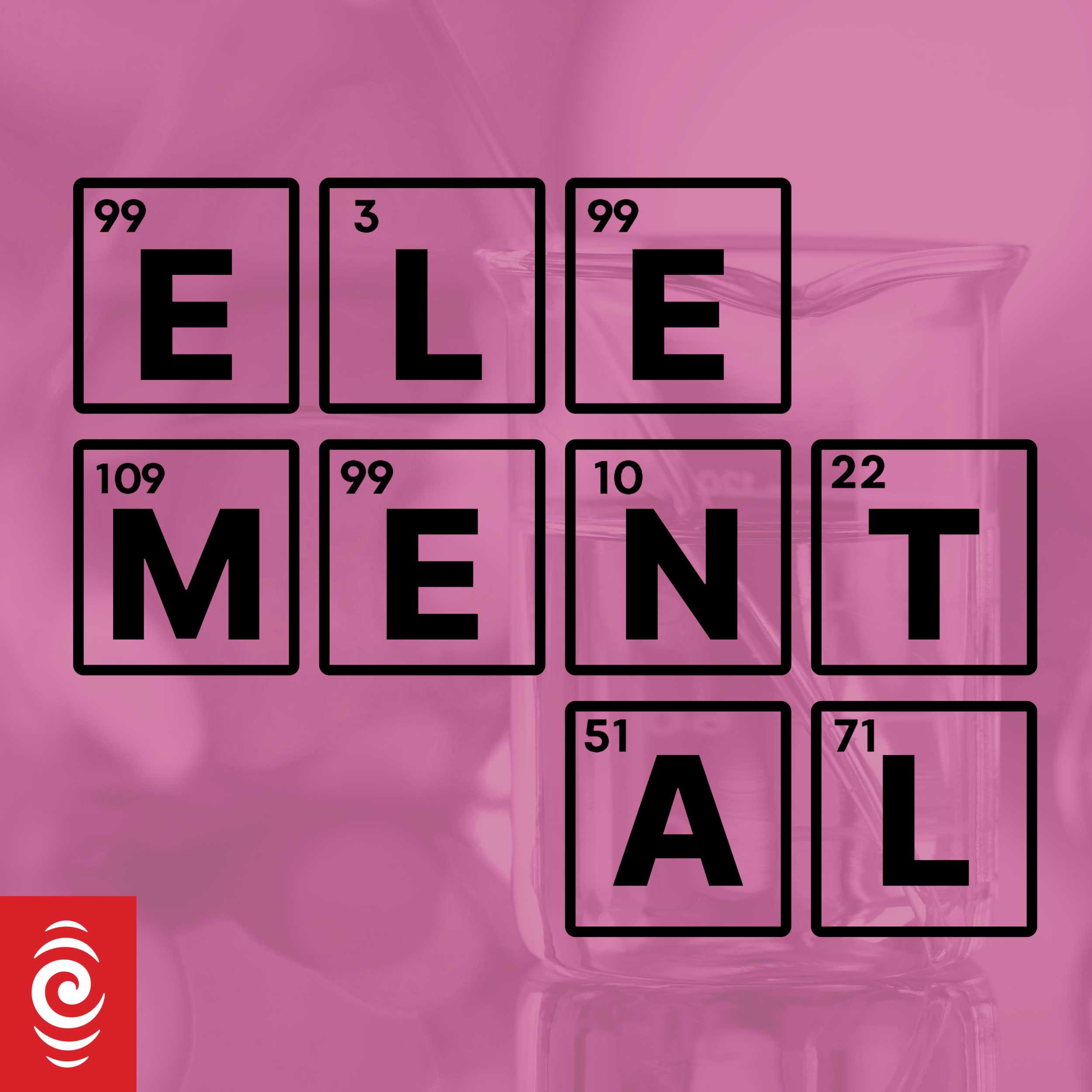
Tales from the periodic table
In the prequel to Elemental, AUT's Allan Blackman introduces us to Dmitri Mendeleev and chemistry's periodic table of elements.
Follow and listen to Elemental on Apple Podcasts, Spotify, YouTube or wherever you get your podcasts.
One hundred and fifty years ago the Russian chemist Dmitri Mendeleev published his version of the Periodic Table of the Elements.
To commemorate this, the United Nations has designated 2019 as the International Year of the Periodic Table.
Most of us haven't thought about the periodic table since high school, so why all the fuss?
Okay. Let's suppose you were going to build a Universe from scratch. How many fundamental building blocks would you use to create everything in your Universe? Millions, billions, surely?
No.
It transpires that our Universe consists of only 118 different fundamental building blocks. We call these atoms. And any collection of a single type of atom we call an element.
You will be familiar with some elements - hydrogen, carbon, aluminium and gold, for example. Others, such as promethium, technetium, erbium, and rhenium, for instance, will probably be a mystery.
Back in the 1800s, chemists wanted to find some order to these elements. However, not all of the elements we know today had been discovered. Only around 30 were known at the start of the 19th century and about 60 appeared on Mendeleev's Periodic table.
Despite the omissions, a number of chemists noticed that certain elements behaved chemically similarly; for example, the metals lithium, sodium and potassium were all known to react vigorously with water.
Mendeleev, and his contemporary Lothar Meyer, used these observations to independently order the known elements according to these similarities. However, Mendeleev gets the credit as he published first (there are no silver medals in science).
Mendeleev's stroke of genius was to leave gaps in his Periodic Table for unknown elements he was sure hadn't yet been discovered. He was spectacularly vindicated when the elements gallium and germanium were duly found a few years later.
Unbeknownst to Mendeleev, his Periodic Table (with a couple of small exceptions) ordered the elements according to their atomic number, which reflects the number of protons in the nucleus of the atom.
Given that the concepts of both protons and the atomic nucleus had to wait until New Zealand's own Ernest Rutherford in the early years of the 20th century, this further adds to the greatness of Mendeleev's discovery.
Both men are now immortalised on the Periodic Table: mendelevium is element 101 and rutherfordium is element 104)…
Das könnte dir auch gefallen

Engines of Our Ingenuity
Houston Public Media

StarTalk Radio
Neil deGrasse Tyson

The Grave Talks | Haunted, Paranormal & Supernatural
Ghost Stores, Haunted, Paranormal & Supernatural Stories

NRC Onbehaarde Apen
NRC

Der KI-Podcast
ARD

Aha! Zehn Minuten Alltags-Wissen
WELT

Astronomy Cast
Fraser Cain and Dr. Pamela Gay
Discovery
BBC World Service

Intelligent Design the Future
Discovery Institute

Real Ghost Stories Online
Real Ghost Stories Online | Paranormal, Supernatural & Horror Radio
Engines of Our Ingenuity
Houston Public Media
StarTalk Radio
Neil deGrasse Tyson
The Grave Talks | Haunted, Paranormal & Supernatural
Ghost Stores, Haunted, Paranormal & Supernatural Stories
NRC Onbehaarde Apen
NRC
Der KI-Podcast
ARD
Aha! Zehn Minuten Alltags-Wissen
WELT
Astronomy Cast
Fraser Cain and Dr. Pamela Gay
Discovery
BBC World Service
Intelligent Design the Future
Discovery Institute
Real Ghost Stories Online
Real Ghost Stories Online | Paranormal, Supernatural & Horror Radio
Community-Diskussion